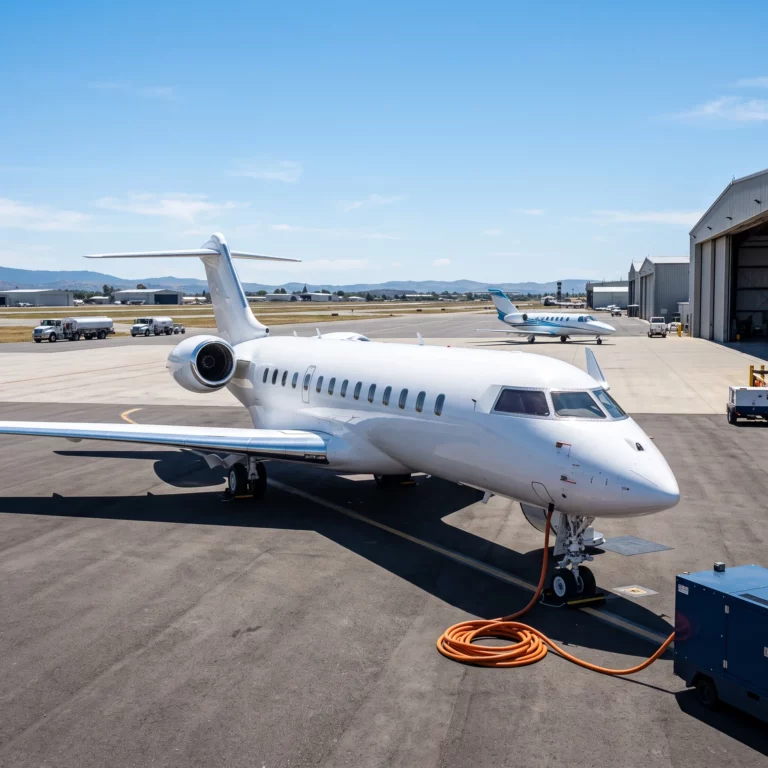
Ka-Band or Ku-Band: What Actually Powers Your Jet’s Wi-Fi
Ka-band, Ku-band, or Air-to-Ground? A clear, jargon-free breakdown of what actually powers private jet Wi-Fi, and why the difference matters the next time your video call drops mid-flight.
Essential aviation terminology explained in plain language. From aeronautical acronyms to technical flight terms, this comprehensive glossary helps pilots, passengers, and aviation enthusiasts understand the language of private aviation.
Ka-band, Ku-band, or Air-to-Ground? A clear, jargon-free breakdown of what actually powers private jet Wi-Fi, and why the difference matters the next time your video call drops mid-flight.
Ever wondered why a pilot rated on one jet can’t simply hop into another? Type ratings are the strict, model-specific certifications that shape how private aviation crews are trained, scheduled, and deployed.
Ever wonder why your private jet doesn’t fly straight to the runway even in perfect weather? Class B airspace, the restricted zones around major airports, dictates routing more than most flyers realize.
Ever wondered why a private jet still departs with a broken reading light but grounds for other issues? The Minimum Equipment List explains exactly how operators balance safety and schedule reliability.
That orange-and-green fluid sprayed on your private jet before a winter departure isn’t just expensive theater. Type I and Type IV de-icing fluids serve distinct, critical purposes, and understanding the difference helps explain both the safety standards and the invoices that follow.
That extra flight time on your jet card statement isn’t a mistake. It’s chock-to-chock billing, and it can quietly consume hours you didn’t plan for. Here’s exactly how private aviation billing works, where the time goes, and what questions to ask before you sign.
On ultra-long-range private jet missions to remote destinations, some aircraft carry their own onboard technician known as a flight mechanic. Here’s what they actually do, and why serious operators wouldn’t leave home without one.
Behind every seamless private aviation experience is a detailed contractual framework. Ground handling and interline SLAs define the precise performance standards — including IS-BAH certification requirements — that ensure consistent, luxury service regardless of airport or location.
That moment of crew silence before takeoff isn’t a mood shift. It’s one of the most important safety protocols in private aviation. Here’s what the Sterile Cockpit Rule actually requires and why it matters for every flight you take.
The APU is the small gas turbine engine tucked into your jet’s tail cone that runs before the main engines ever start. It powers the cabin, keeps you cool on the ground, and provides the compressed air needed to ignite the main engines. Here’s what it does and why it matters.
Hangar rash is the most common form of damage to private jets, and it never happens in the air. From towing incidents to tight hangar spaces, here’s what every aircraft owner and charter client should understand about ground damage risks, FBO protocols, and the insurance implications that follow.
Wet leases and dry leases might look similar on paper, but they carry very different legal and regulatory consequences. Understanding who holds operational control is the key to staying on the right side of FAA regulations and avoiding costly enforcement actions.