
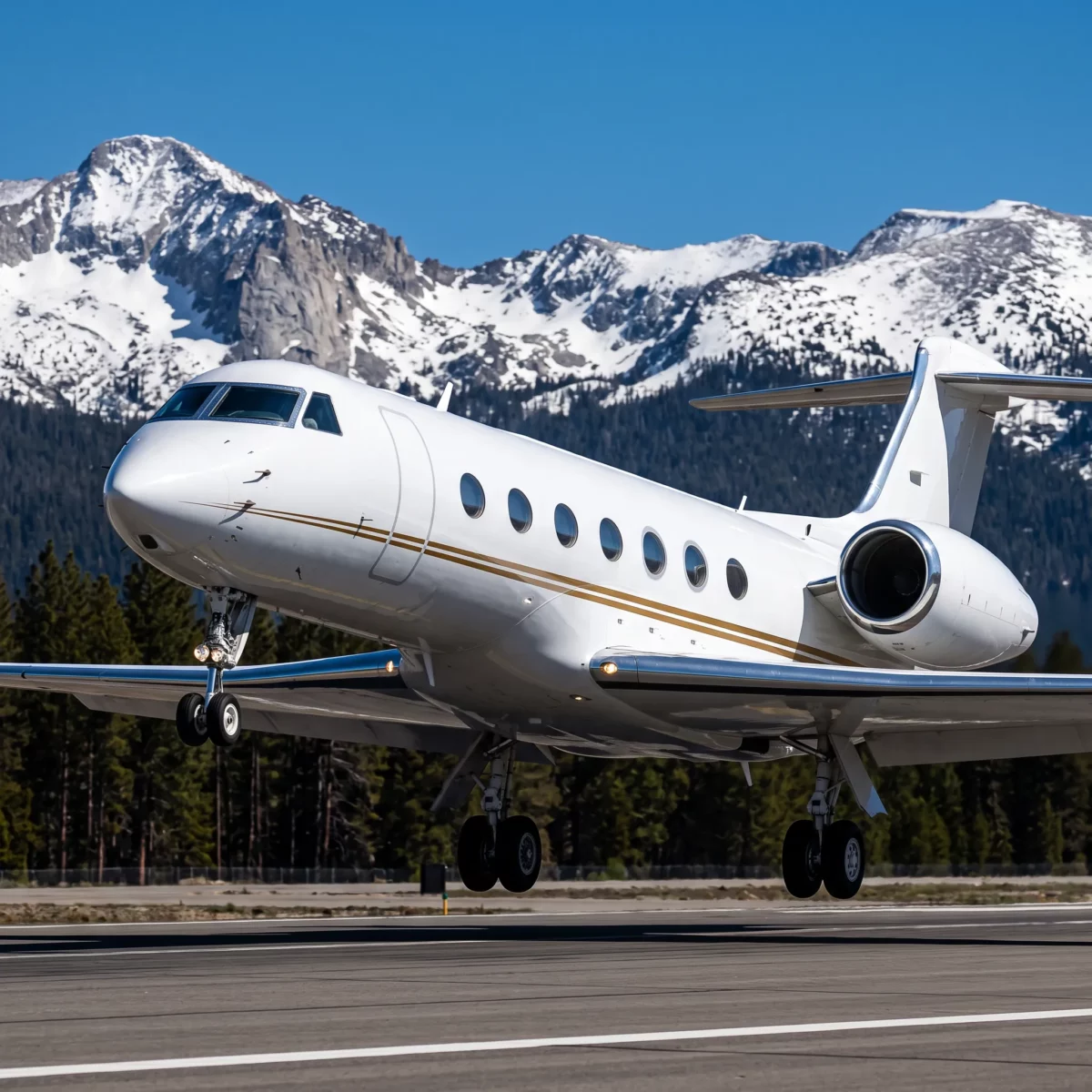
Ask any charter operator flying into Aspen, Telluride, or Eagle County in the middle of summer and you’ll hear the same phrase come up again and again: density altitude. It sounds like a footnote from a pilot’s textbook. In practice, it’s the reason your jet might need a fuel stop it wouldn’t need in January, or why the operator just called to say two passengers need to fly separately.
Density altitude isn’t a place on a map. It’s a number that tells an aircraft how thin the air actually is, factoring in temperature and elevation together. And thin air changes everything about how a jet performs.
What Density Altitude Actually Measures
Airplane wings and engines are designed around air density, not altitude alone. A wing generates lift by pushing air downward and an engine generates thrust by compressing and burning it. Thinner air means less lift per given speed and less oxygen for combustion. Density altitude converts real-world conditions, elevation plus temperature plus humidity, into an equivalent altitude the aircraft “feels” aerodynamically.
Here’s the part that surprises people: a hot day at a low-elevation airport can behave like a much higher airport on a cool day. Denver’s field elevation sits at 5,431 feet. On a 95-degree August afternoon, the density altitude there can climb past 9,000 feet. That’s the air performance the aircraft actually experiences, even though the runway itself never moved.
Why It Hits Payload and Range So Hard
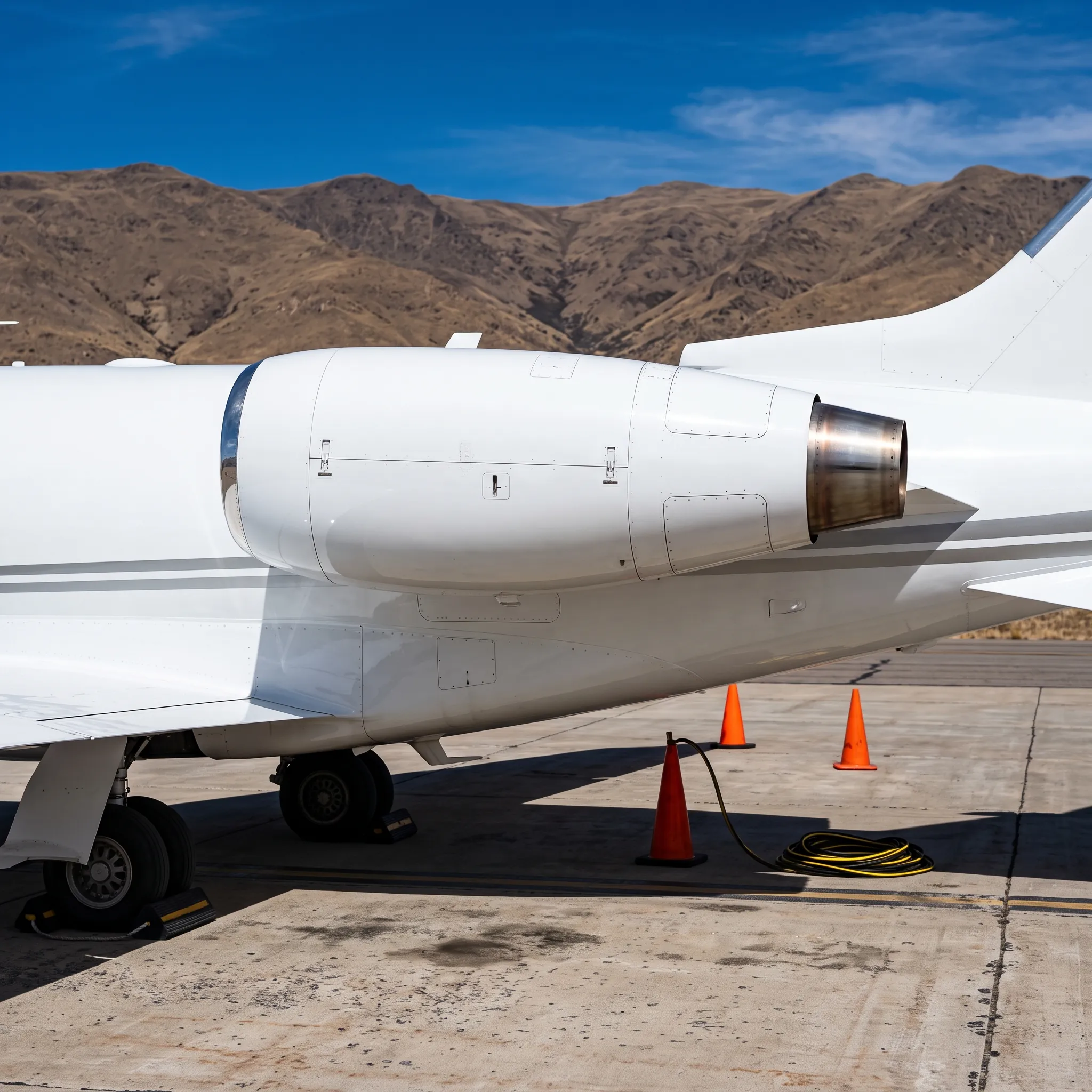
When density altitude rises, three things happen at once, and none of them are good news for a fully loaded jet. Engines produce less thrust because there’s less oxygen to burn. Wings produce less lift at any given speed, so the aircraft needs to accelerate to a higher true airspeed before it can leave the ground. And climb performance drops, meaning the jet needs more distance and more time to clear obstacles near the airport.
Pilots and dispatchers deal with this through a performance calculation before every high-and-hot departure, weighing runway length, obstacles, temperature, and aircraft weight against each other. Sometimes the math works out fine. Sometimes it doesn’t, and something has to change.
- Reduced payload: fewer passengers, less baggage, or less fuel loaded to keep takeoff weight within limits
- Longer runway requirements: some high-elevation airports simply can’t support a full-weight departure on certain aircraft types
- Adjusted departure timing: an early morning takeoff, when temperatures are cooler, can restore performance margin lost to afternoon heat
- Technical fuel stops: an intermediate landing to refuel at lower weight rather than departing heavy from the high-elevation field
Which Airports Feel It Most
Mountain resort destinations are the classic case, but density altitude affects far more of the charter map than most passengers realize. Hot, high-desert airports carry the same risk even without dramatic scenery.
| Airport | Field Elevation | Typical Summer Concern |
|---|---|---|
| Aspen Pitkin County, CO | 7,820 ft | Frequent payload restrictions on hot afternoons |
| Eagle County, CO | 6,547 ft | Surrounding terrain limits climb margin |
| Telluride, CO | 9,078 ft | One of the highest commercial-service fields in the country |
| Truckee-Tahoe, CA | 5,900 ft | Combines altitude with summer heat spikes |
Notice that none of these are exotic. They’re some of the most popular private jet charter destinations in North America, which is exactly why experienced operators plan around density altitude as a matter of routine, not an afterthought.
What This Means for Passengers
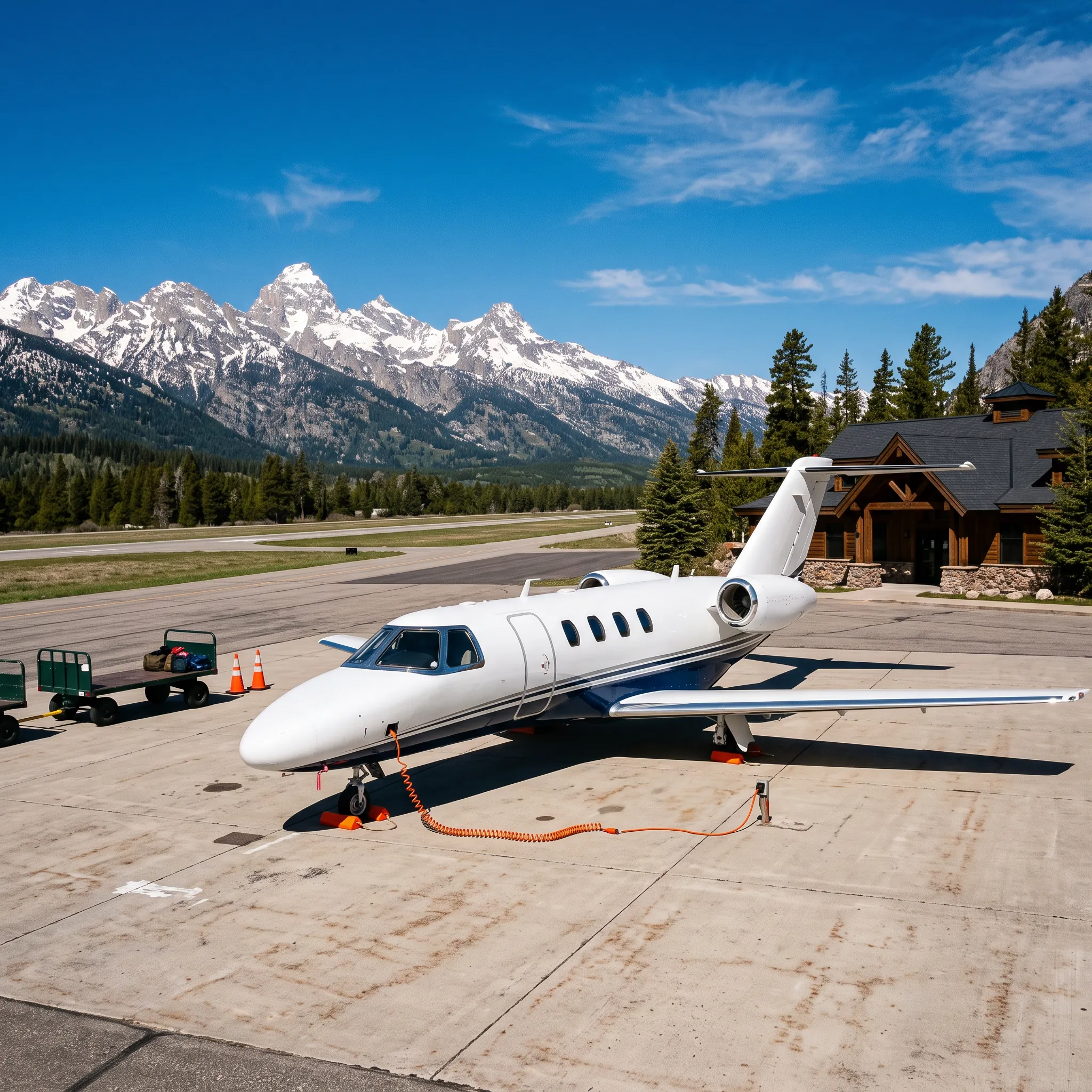
If you’re booking a summer trip into a mountain airport, a good charter broker or operator will flag density altitude concerns during scheduling, not after everyone’s bags are on the ramp. It’s worth asking directly: does this aircraft, on this day, at this weight, have full performance margin for departure?
Sometimes the answer changes the aircraft recommendation entirely. A midsize jet with strong high-and-hot performance, like a Citation Latitude or Challenger 350, may handle an Aspen afternoon departure with a full cabin where a larger, heavier aircraft can’t without a weight trade-off. This is one of the less obvious reasons the right aircraft for the mission isn’t always the biggest one available. It’s a similar logic to the aircraft-matching work brokers do around international private jet charter costs and aircraft for hire, where mission requirements, not just cabin size, drive the recommendation.
There’s also a scheduling angle passengers can influence. Requesting a morning departure instead of a 3 p.m. slot can be the difference between a nonstop flight and one requiring a fuel stop. Cooler morning air genuinely restores performance that afternoon heat takes away. It’s the same reasoning that shapes broader airport slot and scheduling constraints operators juggle across their fleets.
The Bigger Picture
Density altitude is a good reminder that private aviation, for all its polish, still runs on physics that don’t care about your schedule or your seat count. The best operators don’t fight that reality, they plan around it, sometimes weeks in advance for known summer routes into places like Aspen or Telluride.
For passengers, the takeaway is simple: if your trip involves a high-elevation, warm-weather airport, ask early. A five-minute conversation about weight, timing, and aircraft type can save you a surprise phone call the morning of departure. And it’s exactly the kind of operational detail that separates a charter provider who’s flown that route a hundred times from one who’s guessing.