

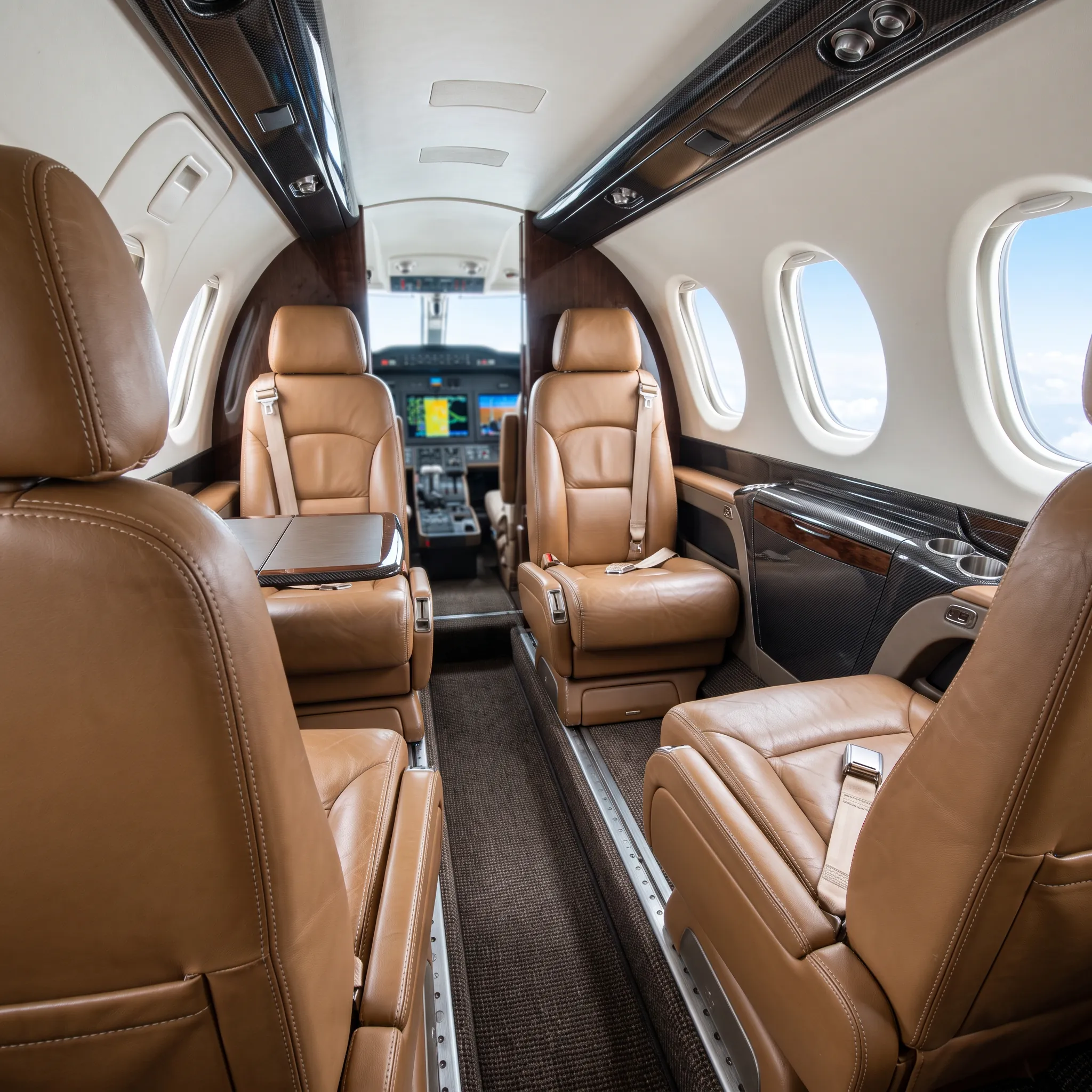
Ask a first-time charter passenger to swap seats mid-boarding on a light jet, and you might get a puzzled look. It seems like such a small request. But on an aircraft like a Citation CJ3 or Phenom 300, that one seat move can shift the entire aircraft’s balance point enough to matter. Physics, not crew preference, is behind the request, and it’s the reason your pilot might ask you to sit in a seat you didn’t choose.
Every aircraft, from a two-seat trainer to a Gulfstream G700, has to fly within a defined center of gravity range. Get outside that range, and the airplane becomes harder, sometimes dangerously so, to control. On larger cabin-class jets, the margin for error is generous. On light jets, where the difference between an empty seat and a filled one can represent a meaningful percentage of the total payload, that margin shrinks fast.
What Weight and Balance Actually Means
Pilots talk about three numbers before every flight: basic empty weight, zero-fuel weight, and useful load. Basic empty weight is the aircraft itself, airframe, engines, and standard equipment, including unusable fuel and full oil, but no crew, passengers, bags, or usable fuel. Useful load is everything you can add on top of that: crew, passengers, bags, and fuel, up to the aircraft’s maximum takeoff weight.
Here’s where it gets interesting for light jets specifically. A Phenom 300 has a useful load of roughly 6,000 pounds. Split that between fuel and payload, and there isn’t much room left for six adults plus their luggage. Every pound gets accounted for, and where that pound sits in the cabin matters just as much as how much it weighs.
Center of Gravity, Explained Simply
Think of the aircraft as a seesaw balanced on a single point, the wing’s lift center. Weight placed too far forward or too far aft shifts the balance point outside safe limits. Too far forward, and the aircraft becomes nose-heavy, requiring excessive elevator input to rotate on takeoff. Too far aft, and it becomes unstable, prone to pitching up unexpectedly, particularly during climb.
On a light jet with a short cabin, moving one passenger from a forward-facing seat near the cockpit to the aft-most seat can shift the CG by inches that translate directly into a percentage point of the allowable range. On a larger jet that shift might be a footnote; on a light jet, it can be the difference between a legal load and one the pilot has to reject.
- Zero-fuel weight: the weight of the aircraft with passengers and baggage loaded, before usable fuel is added (capped by the maximum zero-fuel weight)
- Useful load: total weight available for passengers, baggage, and fuel combined
- CG envelope: the forward and aft limits within which the aircraft remains controllable
- Moment: the product of weight and its distance from a reference point, used to calculate CG
Why Baggage Placement Gets Scrutinized
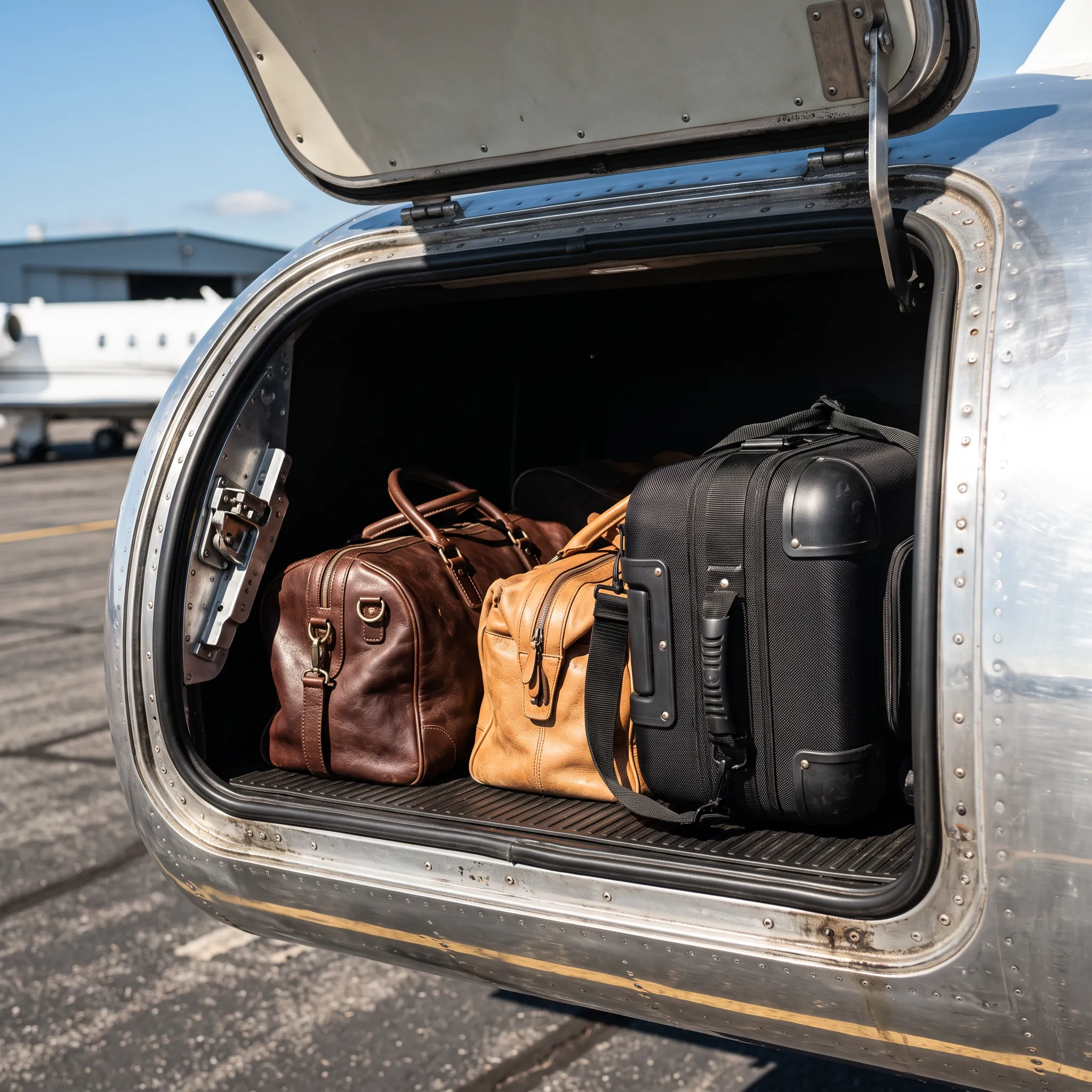
Passengers often assume baggage is an afterthought, tossed into whatever compartment is closest. On a light jet, placement is deliberate. Many aircraft in this category, including several models discussed in our piece on why light jets are making a comeback in private aviation, have baggage compartments both fore and aft of the cabin, and pilots will often split bags between them on purpose.
A single heavy golf bag placed in the wrong compartment can nudge the CG toward a limit that a passenger seat swap has already stressed. Crews doing their preflight math will sometimes ask to move a bag from the tail compartment to the nose, or vice versa, purely to keep the numbers inside the envelope. Crews aren’t worried about tidiness. They’re protecting a physical limit printed in the aircraft’s flight manual.
A Simplified Load Comparison
| Loading Scenario | Light Jet Impact | Large Cabin Jet Impact |
|---|---|---|
| One passenger moves to aft seat | Noticeable CG shift, may require adjustment | Minimal, within wide margin |
| 50 lb bag placed in wrong compartment | Can approach CG limit | Rarely significant |
| Full fuel, full passenger load | Often requires trade-off decisions | Usually accommodated easily |
How Pilots Solve the Puzzle Before You Board
Before every flight, pilots run a weight and balance calculation using the specific weights of passengers, bags, and fuel planned for that trip. This isn’t a rough guess. It’s a formal calculation, often done on an electronic flight bag or a printed load sheet, that produces a CG position expressed as a percentage of the aircraft’s mean aerodynamic chord.
If that number falls outside the certified envelope, something has to change. That’s why you might hear a pilot request a seat swap, ask about the exact weight of a heavy case, or even limit fuel load to keep a full cabin legal. There’s no judgment call involved, only a hard limit built into the aircraft’s certification, no different from a maximum takeoff weight.
This is one reason crews trained for these smaller aircraft develop a different instinct than those flying wide-body jets. The margins demand it. It’s also part of why maintenance teams and flight planners pay such close attention to accurate weight records, a theme that connects to broader conversations around aircraft utilization covered in flight hours versus flight cycles and how they affect aircraft value.

What This Means for Passengers
If you fly light jets regularly, a few habits make everyone’s day easier. Weigh your bags honestly when asked. Don’t be offended if the crew requests a seat change; it’s not personal. And if you’re traveling with an unusually heavy item, like sports equipment or extra electronics, mention it during booking rather than at the aircraft door.
- Confirm your total baggage weight with the operator before the flight
- Expect seat assignments to sometimes be fixed rather than open
- Understand that full fuel and full passenger loads don’t always coexist on light jets
- Trust that any seating request from the crew has a technical reason behind it
These constraints haven’t slowed demand for the Citation CJ4, whose Gen3 avionics upgrade is detailed in our coverage of how the CJ4 Gen3 is rewriting what a light jet cockpit can do, or the Phenom 300. Both remain some of the most efficient, capable aircraft in private aviation. If anything, savvy charterers see the tight math as proof of how precisely these jets are engineered.
The Bigger Picture
Weight and balance isn’t glamorous, but it’s foundational. Consider a six-passenger charter on a Phenom 300 booked with full fuel for a long leg: add a last-minute heavy bag or a seating preference, and the crew may have to trade fuel for payload before the doors even close. That’s the kind of tradeoff happening quietly on nearly every light jet departure. Frequent flyers who flag heavy items and flexible seating at booking, rather than at the curb, make that math easier for everyone on board.