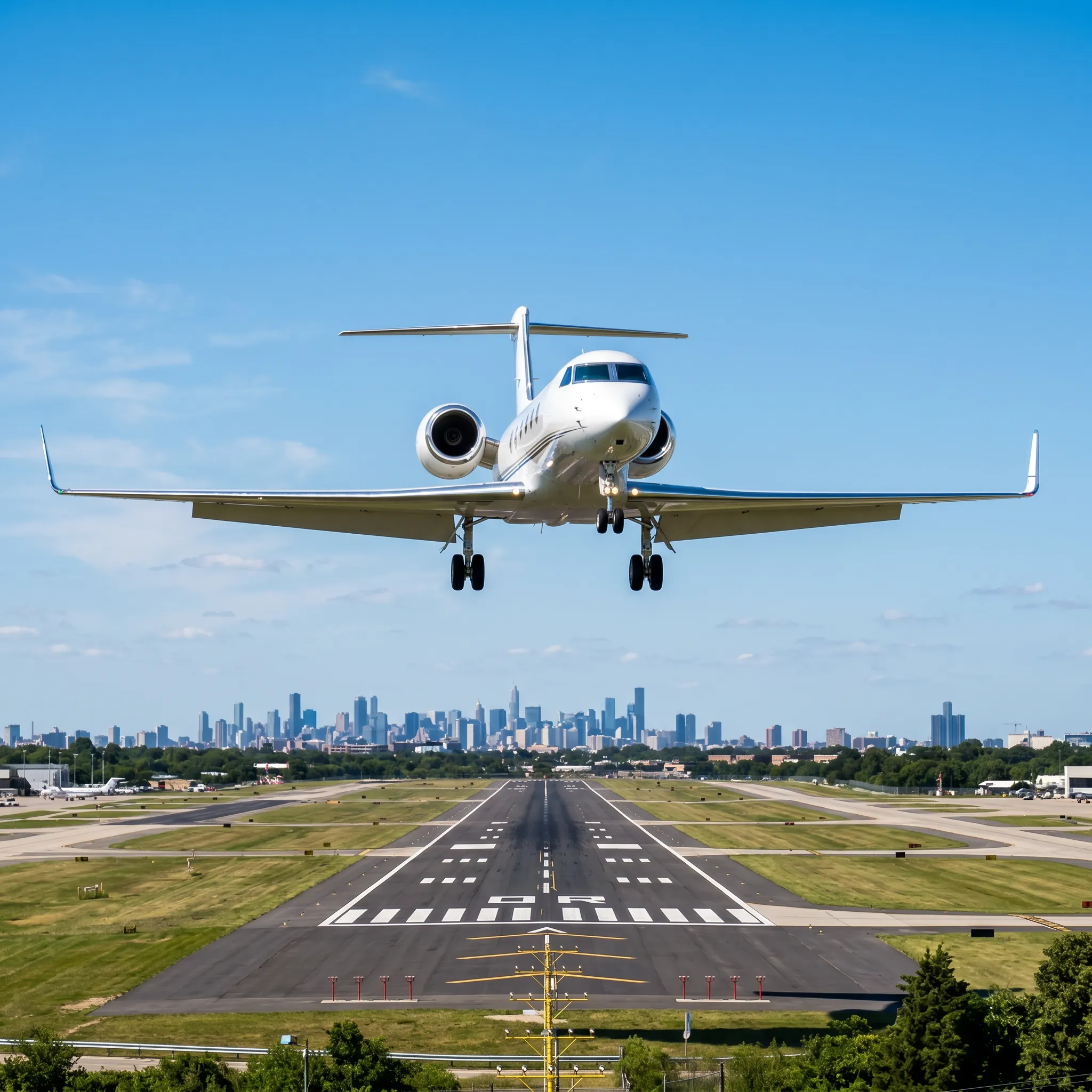
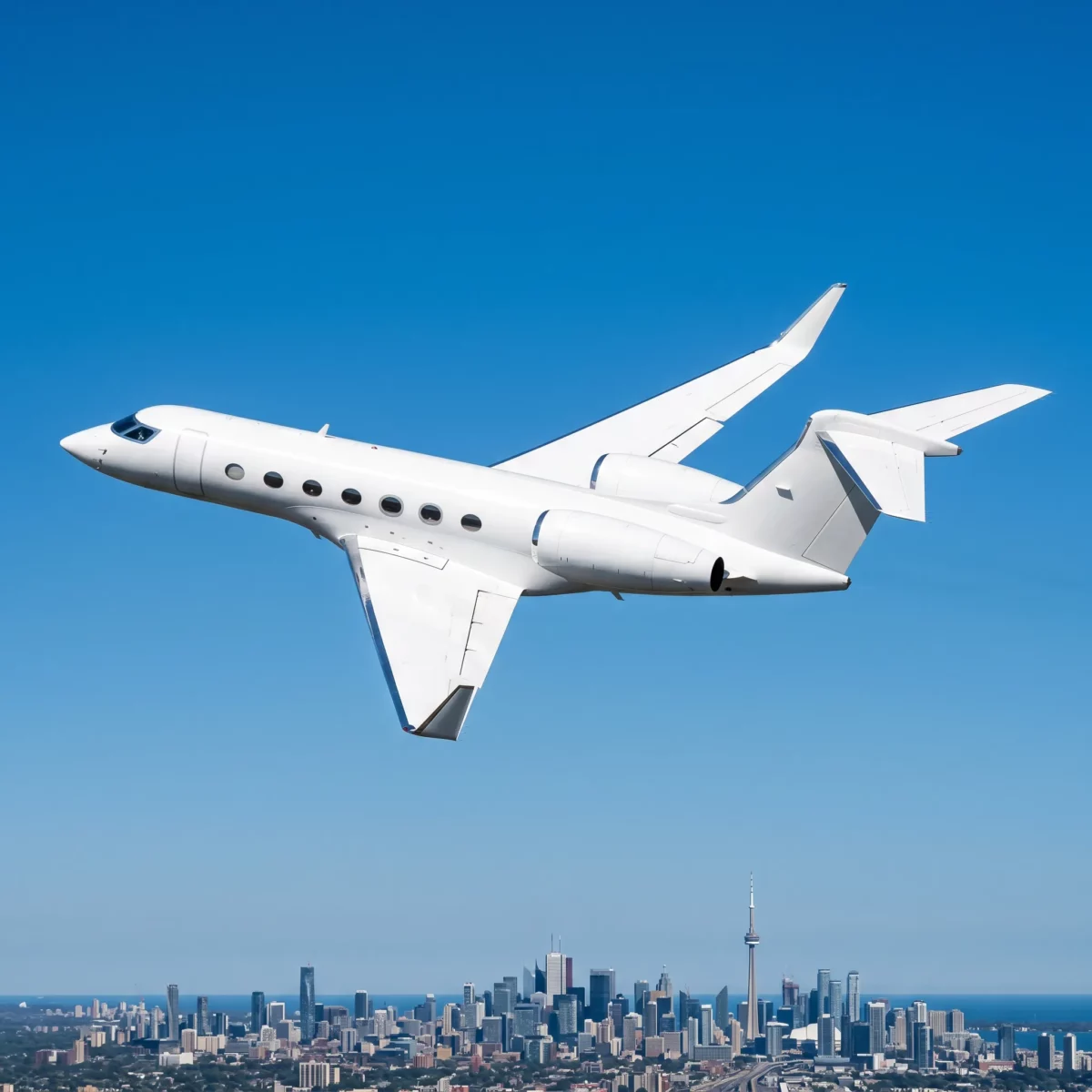
You’re on final approach into Teterboro, the weather’s clear as glass, and your pilot suddenly banks the aircraft away from what looked like a straight shot to the runway. No turbulence, no storm cell, nothing on the radar. So what gives? The answer has nothing to do with weather and everything to do with a piece of invisible architecture called Class B airspace.
If you’ve flown privately into New York, Los Angeles, or Chicago, you’ve experienced this without realizing it. Understanding why it happens changes how you think about flight times, and it explains a lot about why private aviation isn’t always as fast as people assume near major cities.
What Class B Airspace Actually Is
Picture an upside-down wedding cake sitting on top of the busiest airports in the country. That’s the shape controllers actually use to describe Class B airspace. It starts at the surface right around the airport, then expands outward and upward in tiers, usually topping out around 10,000 feet.
This airspace exists around roughly 37 major airports in the United States, including hubs like Kennedy, O’Hare, and LAX. Every aircraft entering it needs explicit clearance from air traffic control. No exceptions. Not for airliners, not for a Gulfstream G650, not for anyone.
The tiered design isn’t random. It mirrors the actual traffic pattern. Airliners climbing out and descending in need more protected space at higher altitudes, so the rings widen as you go up, like layers of that cake getting bigger toward the top.
Why Your Flight Path Bends
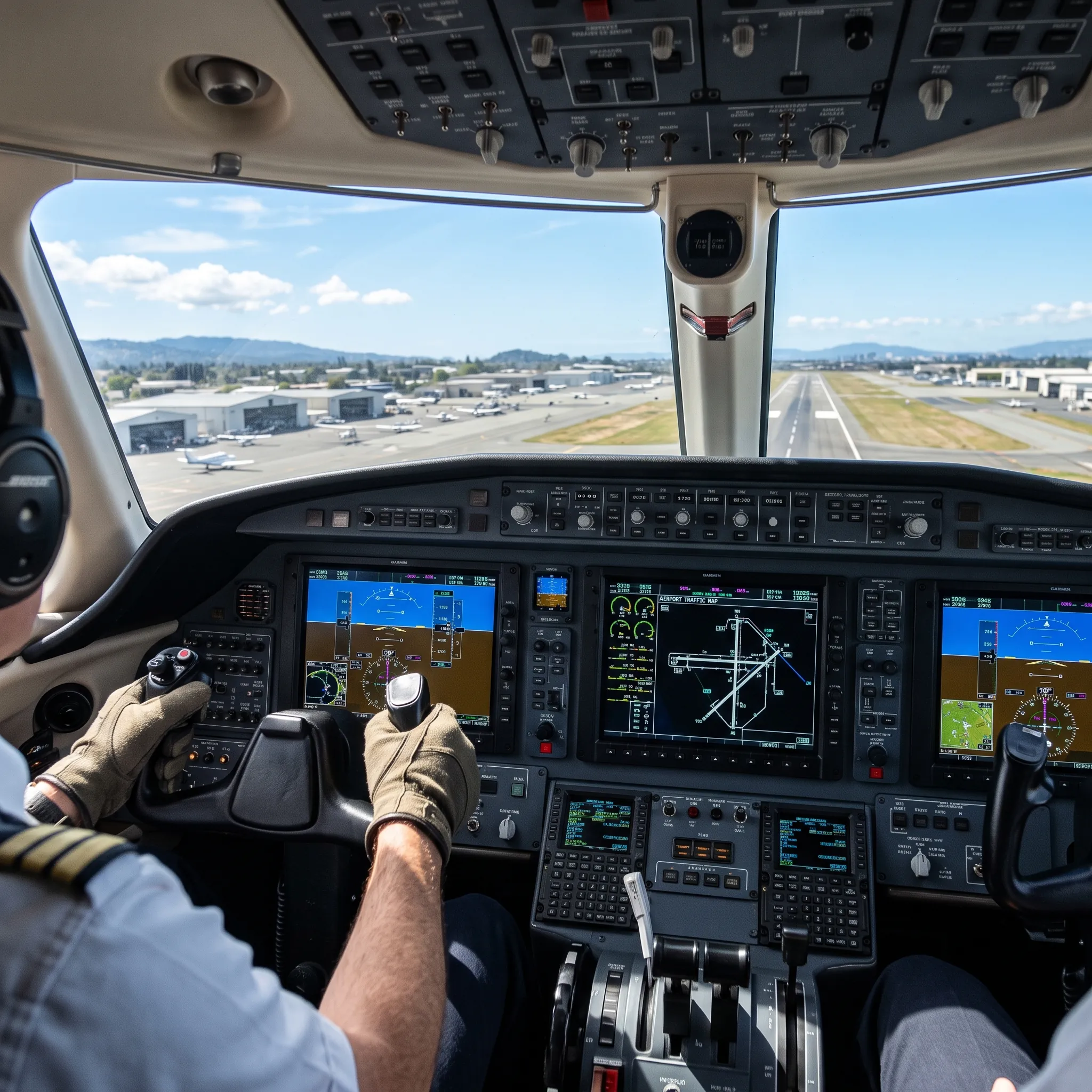
Here’s where it gets relevant to your travel time. Controllers manage an enormous volume of arrivals and departures inside these zones, often sequencing dozens of aircraft an hour into a single runway. A private jet requesting a direct route straight through the middle of that flow creates a conflict controllers simply won’t accept.
Instead, your pilot gets vectored. That means flying specific headings and altitudes assigned in real time, often looping around the edge of the Class B ring before being cleared to cut back toward the airport. It looks inefficient from the cabin window. It’s actually the opposite. It’s the system working exactly as designed to keep hundreds of aircraft safely separated in a small volume of sky.

Common Reasons for Rerouting
- Sequencing with commercial traffic: Your jet may need to wait its turn behind a string of airline arrivals
- Noise abatement procedures: Many Class B airports enforce specific departure paths to reduce noise over residential areas
- Parallel runway operations: Airports with multiple runways require precise lateral separation between arriving aircraft
- VIP or military restrictions: Temporary flight restrictions can appear with little notice, particularly near Washington, D.C.
The Difference a Good Pilot Makes
Experienced charter and fractional pilots know these corridors the way a New York cab driver knows shortcuts through midtown. They file flight plans anticipating likely routing before ATC even asks. That planning can shave real minutes off a flight, especially into congested airports like Van Nuys or White Plains during peak weekend departure windows.
This is one of the quieter advantages of flying with an established charter operator or fractional ownership program. Their pilots fly the same routes into the same handful of Class B airports constantly. They know which fixes tend to back up on a Friday afternoon and which FBOs have better ramp access to avoid extra taxi time once you’re on the ground.
How This Compares Across Airport Types
| Airspace Class | Typical Airports | Routing Flexibility |
|---|---|---|
| Class B | JFK, LAX, ORD, Teterboro area | Low, fully controlled |
| Class C | Mid-size hubs like Westchester County | Moderate |
| Class D | Smaller towered fields | High |
| Class G | Uncontrolled rural airports | Highest, minimal restriction |
That table explains a lot about why two flights of similar distance can feel so different in duration. A trip into a Class D field in Aspen or a private strip in the Hamptons often flows faster on arrival than one into a Class B giant, even though the airborne time might be nearly identical.
What This Means for Your Next Trip
None of this should discourage anyone from flying private into major cities. It’s still dramatically faster than commercial travel, door to door. But setting realistic expectations helps. A flight that covers 400 nautical miles in under an hour of cruise time might still take an extra 10 to 15 minutes near either end, purely from Class B sequencing.
Smart operators build that buffer into their scheduling. If your pilot mentions expecting vectors or a hold near arrival, that’s not a red flag. It’s simply how the busiest slice of American airspace operates, and it’s a sign your flight crew knows exactly what they’re doing.
The next time your aircraft banks away from what feels like the obvious path, you’ll know why. It’s not inefficiency. It’s hundreds of aircraft sharing a finite piece of sky, and a system built specifically to keep everyone moving through it safely.