
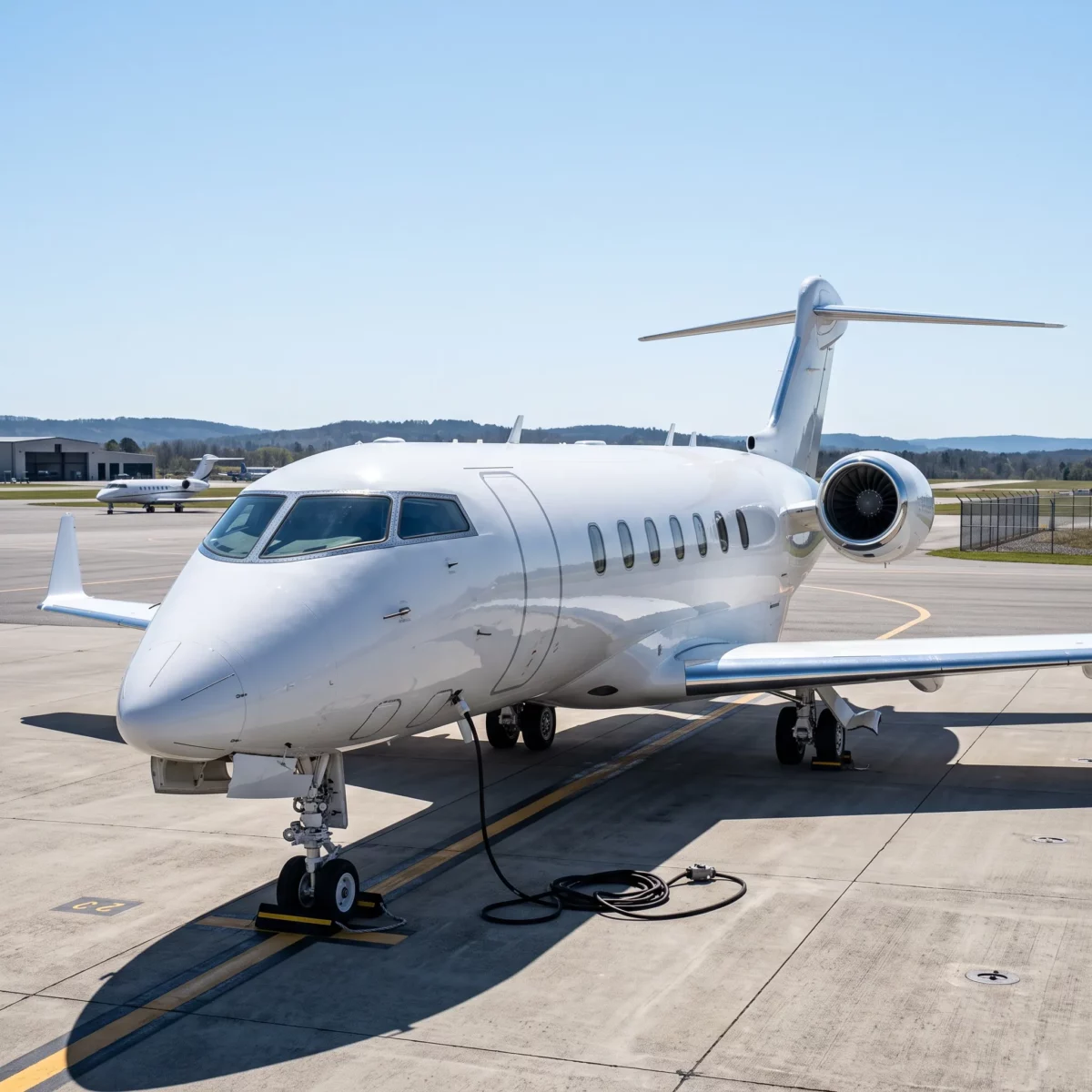
When the vice chairman of Ferrari needs to get to a Grand Prix, a scheduled airline seat won’t cut it. Piero Ferrari, son of company founder Enzo Ferrari, just took delivery of a new Bombardier Challenger 3500, and the timing couldn’t be more fitting. His aircraft happens to be the 200th unit delivered in the Challenger 350 series since Bombardier introduced the upgraded model. For a manufacturer that’s spent decades competing for supremacy in the super-midsize category, that’s a number worth pausing on.
Ferrari’s travel schedule reads like a world tour of racetracks: Monza, Silverstone, Spa, Suzuka, and a dozen other circuits scattered across continents. A super-midsize jet like the Challenger 3500 makes sense for exactly that kind of life. It’s fast enough for transcontinental hops, comfortable enough for a founder’s family member, and small enough to access airports the larger long-range jets can’t touch.
Why the 200th Delivery Actually Matters
Milestones like this get tossed around in aviation marketing all the time, but this one carries real weight. The Challenger 350, and now its updated sibling the Challenger 3500, has been Bombardier’s best-selling business jet for years running. Reaching 200 deliveries of the newer 3500 variant in a relatively short window tells you the super-midsize segment isn’t just holding steady, it’s thriving.
That’s notable because the super-midsize class sits in an awkward but valuable spot. It’s not a light jet, and it’s not a heavy long-range aircraft either. It’s the category built for buyers who fly often, fly far, but don’t need to cross oceans nonstop every time. Family offices, sports figures, entertainment executives, and yes, motorsport royalty, tend to gravitate here because the economics and the mission profile line up.
What Makes the Challenger 3500 Stand Out
Bombardier didn’t reinvent the Challenger 350 when it launched the 3500 in 2022. It refined it, focusing heavily on the cabin experience rather than chasing raw performance numbers. That’s a deliberate strategy, and it’s paid off with repeat buyers and fleet operators alike.
- Range: 3,400 nautical miles, enough to connect most major cities across a continent nonstop
- Cabin height: 6 feet 1 inch, giving taller passengers room to stand comfortably
- Seating: Configurable for up to 10 passengers, with a signature four-place club seating arrangement
- Cabin materials: First application of PūrePāth air purification and antimicrobial surfaces in the segment
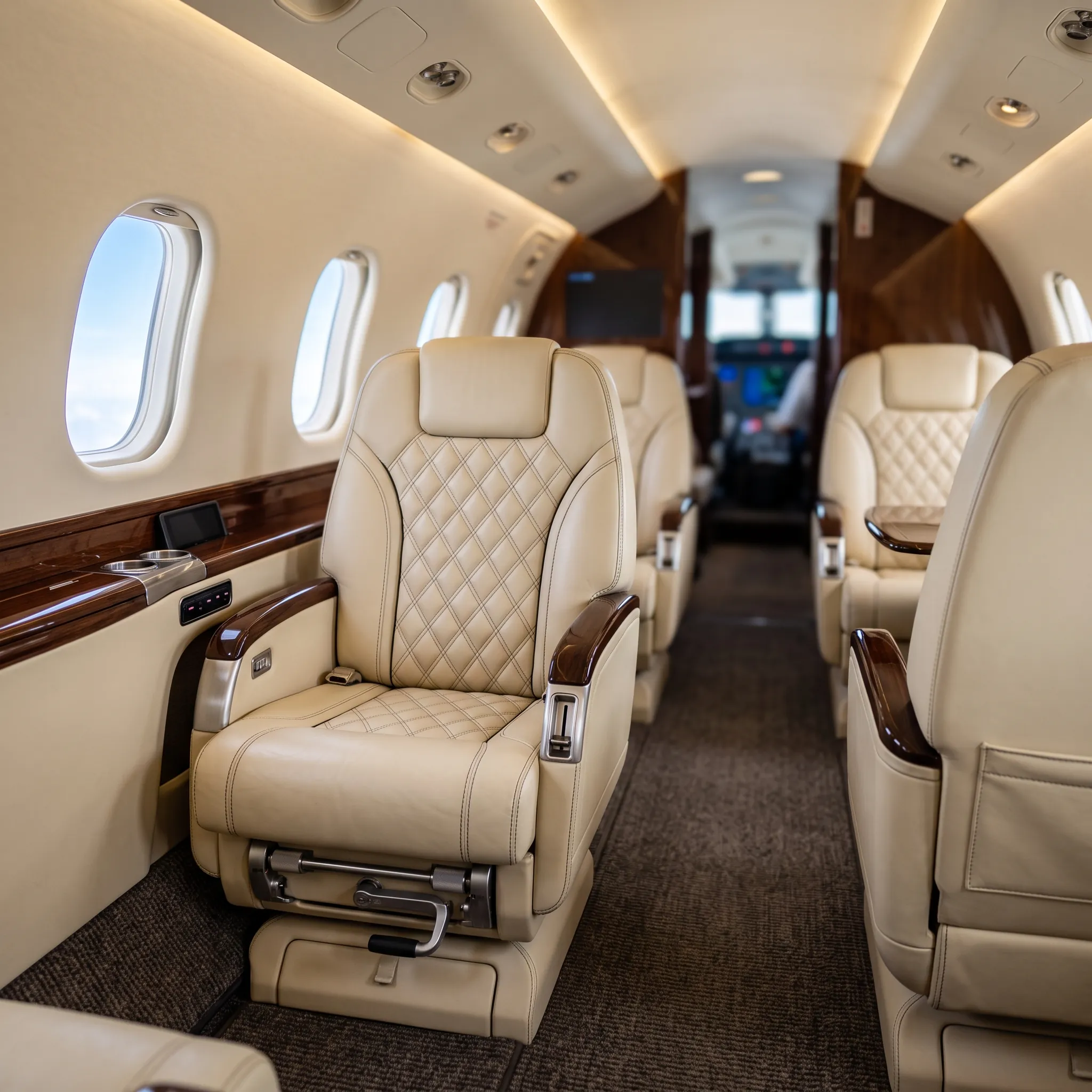
- Nuage seat design: A tilt-link recline mechanism that adjusts seat depth automatically as it reclines
That last detail sounds small until you’ve sat in one for four hours. Most business jet seats recline by simply tipping backward, which pushes your knees into the seat ahead of you. Bombardier’s Nuage seating extends the seat pan as it reclines, so the whole thing feels more like a proper lounge chair than an airline recliner with better leather.

How It Stacks Up Against the Competition
The super-midsize category has gotten crowded, and buyers comparing the Challenger 3500 against rivals from Gulfstream and Cessna will find the decision isn’t as obvious as Bombardier’s sales figures might suggest. Readers curious about how these numbers hold up against a rising challenger should check out Could a Gulfstream G300 Challenge Bombardier’s Super-Midsize Dominance for a deeper breakdown.
| Spec | Challenger 3500 | Gulfstream G280 |
|---|---|---|
| Range | 3,400 nm | 3,600 nm |
| Max Speed | Mach 0.83 | Mach 0.85 |
| Cabin Height | 6 ft 1 in | 6 ft 3 in |
| Typical Passengers | 8 to 10 | 8 to 10 |
The G280 edges ahead on range and speed, but the Challenger 3500 has an edge in cabin comfort details and a lower acquisition cost, which explains why so many repeat buyers, including fleet operators like Flexjet, keep coming back to it.
What This Means for Charter and Fractional Buyers
For readers who aren’t in the market to buy outright, the Challenger 3500’s popularity has a practical upside. With 200 units now flying just in the 3500 variant, and hundreds more Challenger 350s already in service, availability across charter and fractional programs is strong. That translates to easier scheduling and more competitive hourly rates compared to less common aircraft types. Anyone weighing charter against fractional options should take a look at How to Hire a Private Jet before locking in a decision.
It’s also worth remembering that pilots need a specific type rating to fly the Challenger 3500, just like any business jet. The training pipeline for popular aircraft tends to be faster and cheaper simply because more instructors and simulators exist. Curious readers can find more on that topic in Why Your Pilot Can’t Just Fly Any Private Jet on the Ramp.
Looking Ahead
Piero Ferrari’s new jet is a nice story on its own, a racing family staying connected to circuits worldwide in style. But the real headline is what it represents for Bombardier. Hitting 200 deliveries of the Challenger 3500 in just a few years confirms the super-midsize category isn’t a compromise segment anymore. It’s where a growing number of serious buyers, from sports executives to corporate flight departments, actually want to be. Expect Bombardier to lean into that momentum, and expect Gulfstream and Cessna to keep pushing back with sharper offerings of their own.