
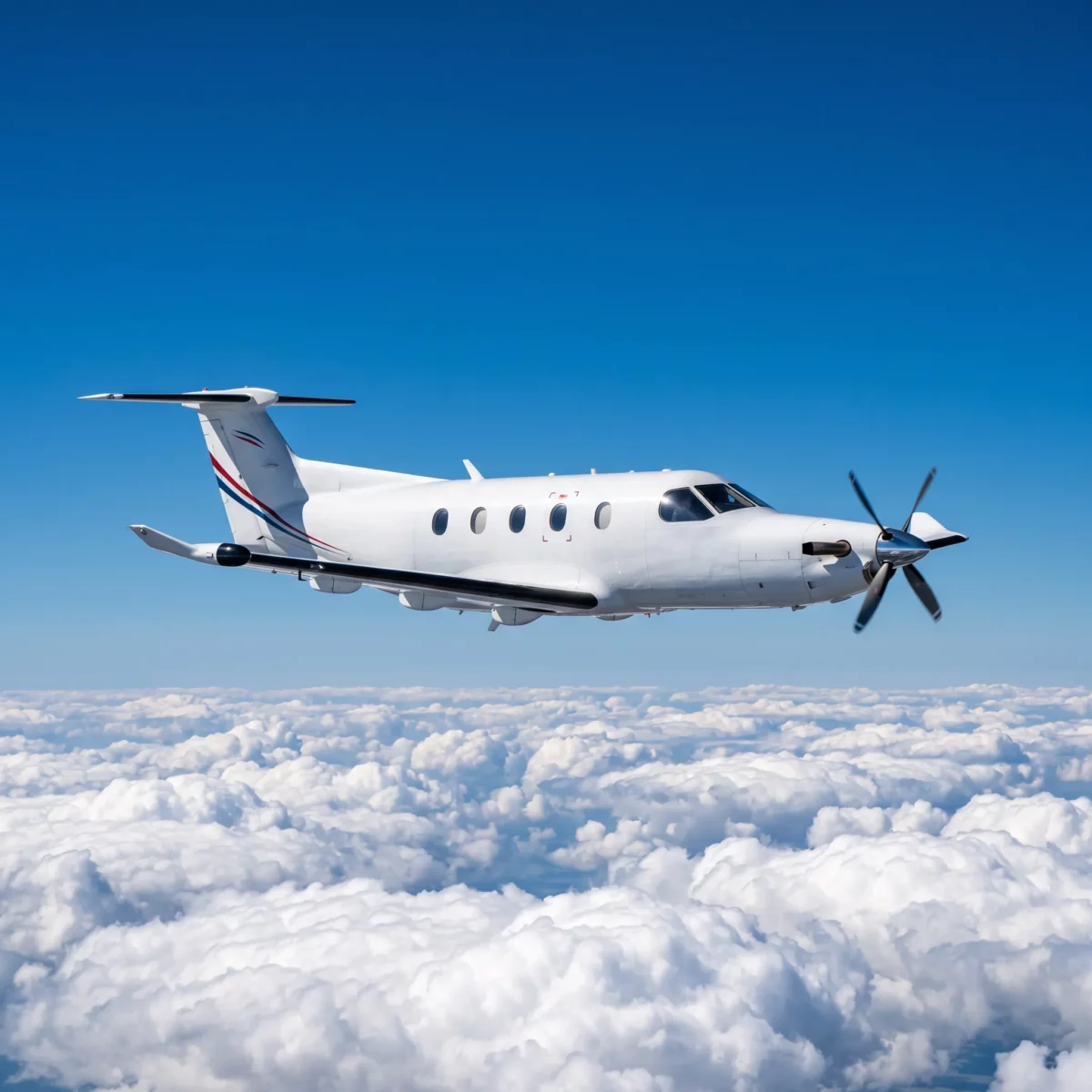
Turboprops used to be the practical choice for people who needed to reach a gravel strip. In 2026, a growing group of buyers is looking at a Pilatus PC-12 PRO or a Daher TBM 980 and asking why they would pay more for a light jet.
The answer depends on the trip. These aircraft now offer customizable interiors, modern touchscreen-era cockpits and, on the TBM, emergency autoland technology that was unheard of in the category a decade ago. Add the ability to land where jets can’t, and the private aviation math gets interesting.
The Cabin Has Grown Up
Start with the PC-12 PRO. Its cabin is among the largest in single-engine turboprops, with a big rear cargo door, club seating and a wide choice of leathers, veneers and finishes, so the interior can reflect personal taste rather than a catalog. Large windows matter more than you’d expect on a low-altitude flight, where the scenery is half the point.
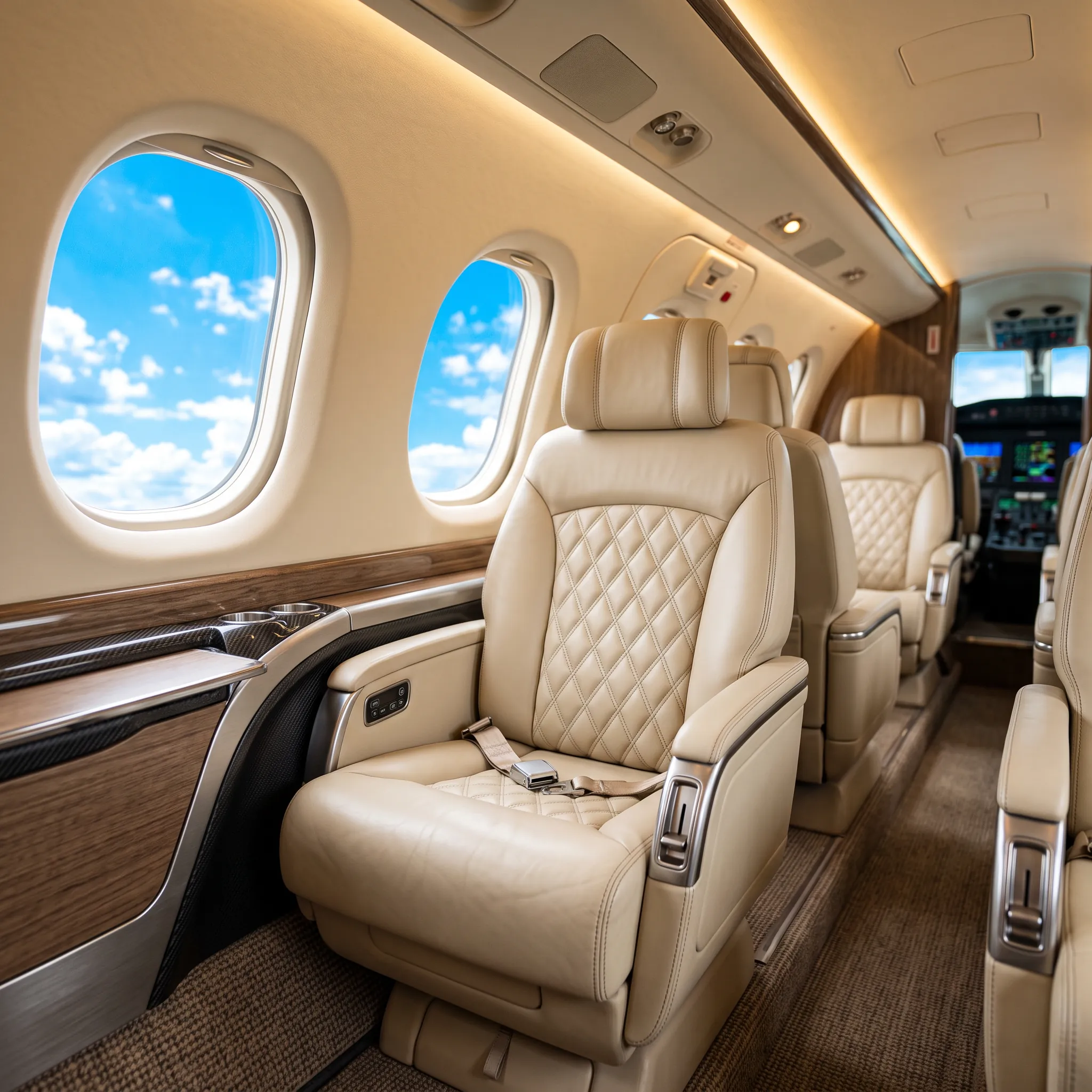
Connectivity depends on how each aircraft is equipped. Satellite and cellular systems are offered as options, so ask for the installed hardware and real-world performance before assuming video calls will work end to end.
The twin-engine Beechcraft King Air 360ER is a roomy, proven workhorse with the redundancy of two engines, which many buyers who fly over water or mountains prefer. It flies with Collins Pro Line Fusion avionics. It also costs more than a single-engine turboprop to buy and operate, so it suits buyers who value the second engine enough to pay for it.
Where Turboprops Beat Jets Outright
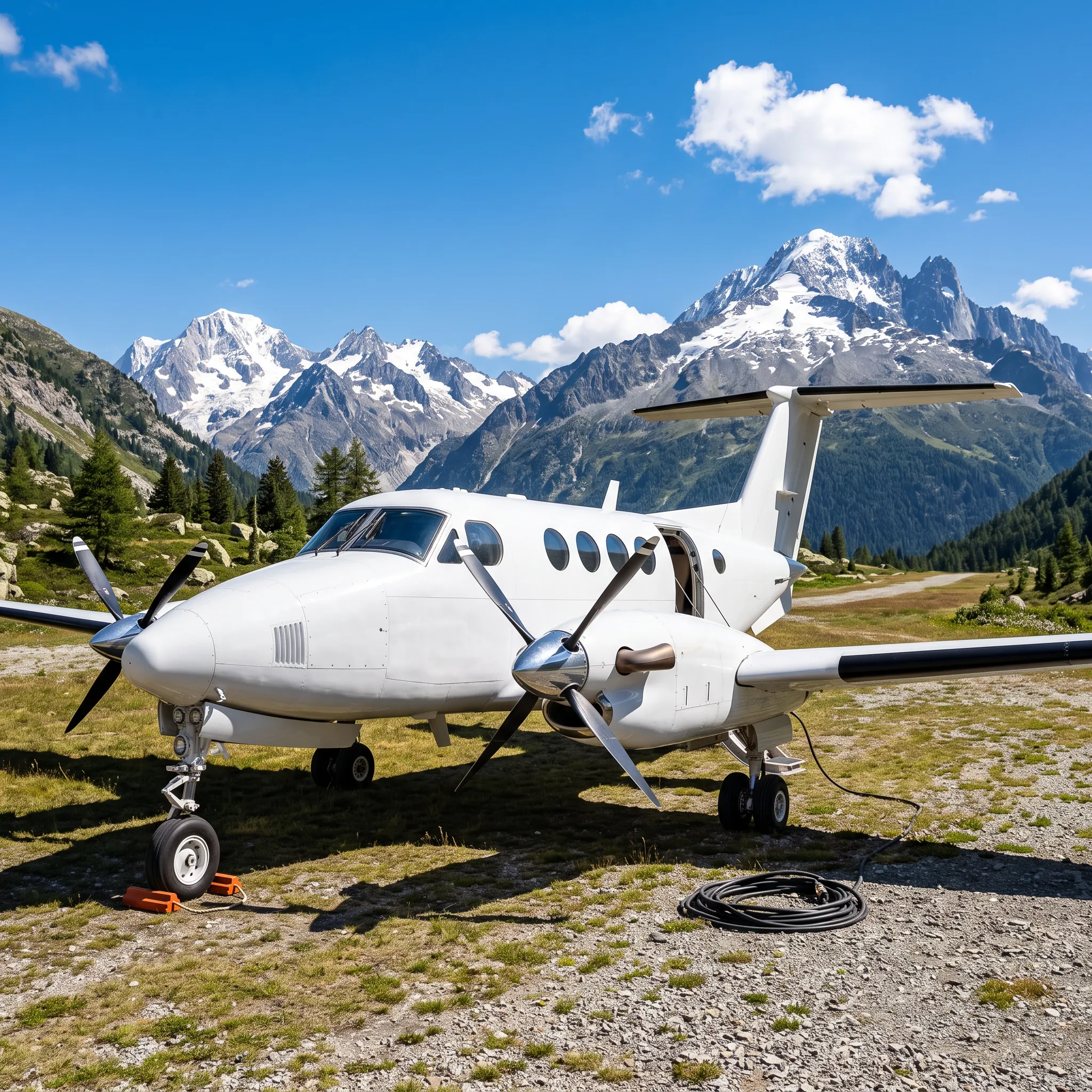
The PC-12 needs roughly 2,500 feet of runway for takeoff, while most light jets want 3,500 feet or more, and it handles unimproved surfaces that jets avoid. Resort towns in the Rockies, remote lodges and island strips become direct destinations instead of a drive after landing at a bigger airport.
High elevation hurts jets more than most people realize. Thin air cuts engine thrust and lengthens takeoff rolls, a topic we covered in our look at what density altitude means for your private jet trip. A turboprop loses performance there too, but it starts from a much shorter baseline.
Operating cost is where the numbers get concrete. The figures below are approximate typical values, so check them against manufacturer data for the exact aircraft. A PC-12 burns roughly 60 gallons per hour and cruises near 270 to 280 knots. A Phenom 300E or Citation CJ4 cruises at 450 knots or more but burns roughly 200 to 250 gallons per hour. On a 500 nm trip, the PC-12 takes about 1 hour 50 minutes and uses around 110 gallons. The jet takes about 1 hour 10 minutes and uses roughly 235 to 290. You trade about 40 minutes for roughly half the fuel or better.
That saving does not always reach the passenger. For charter flights, hourly rates reflect aircraft value, crew and demand as well as fuel, so a turboprop is not automatically cheaper per hour. The TBM 980, a single-engine aircraft that cruises faster than the PC-12, sits in its own price bracket and is best compared on trip time and total cost rather than hourly rate alone.
Safety Tech That Changes the Conversation
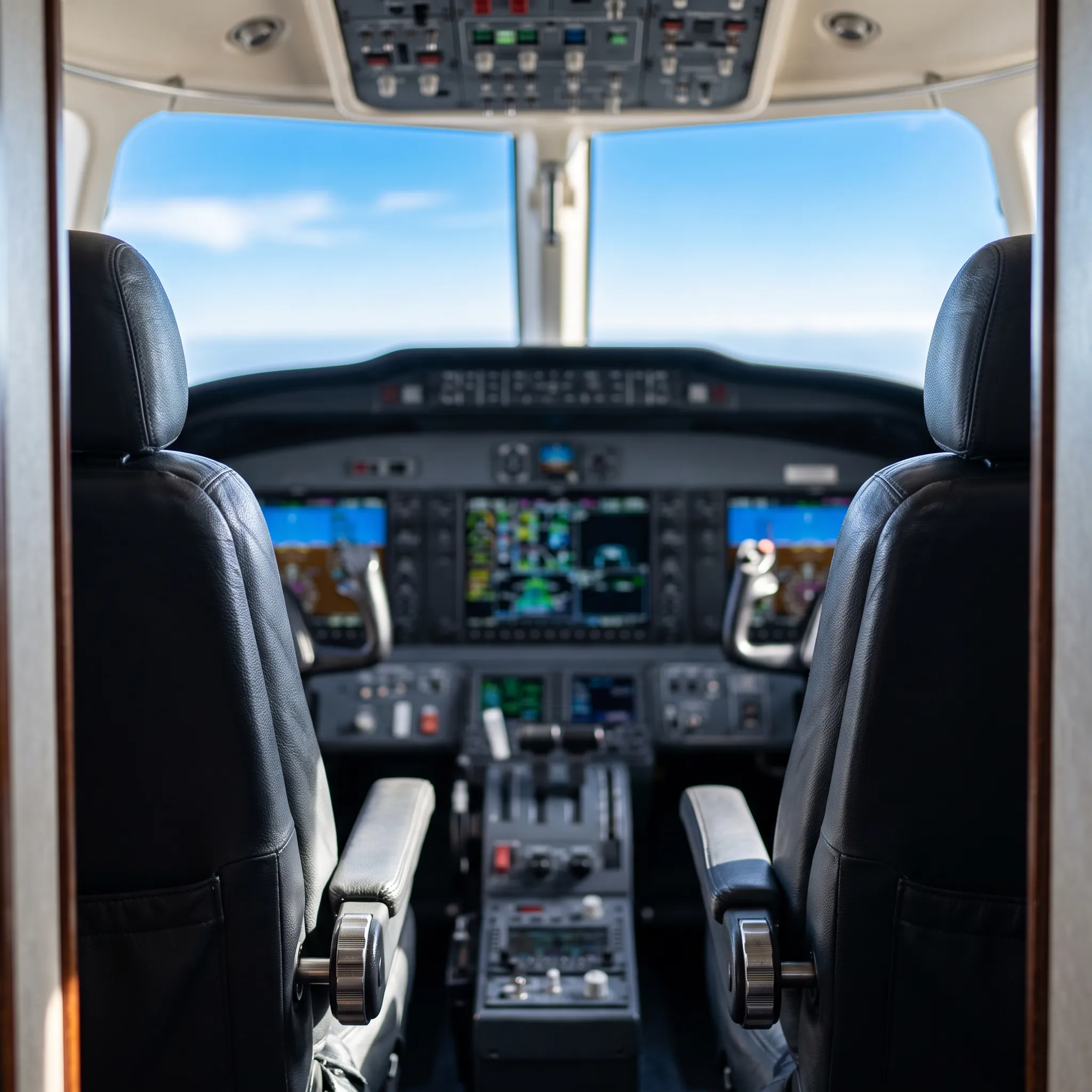
The TBM 980 uses the Garmin G3000 integrated flight deck, with large touchscreen controls that reduce pilot workload. Its headline feature is emergency autoland. If the pilot becomes incapacitated, the system picks a suitable airport, navigates there, talks to air traffic control and lands the aircraft on its own. For owner-pilots flying with family, that is real peace of mind.
The PC-12 PRO takes a different route. Its Advanced Cockpit Environment (ACE) is a Honeywell Apex-based flight deck that is modern and highly integrated. As of this writing, Pilatus has not announced a certified autoland system for the PC-12 PRO, so confirm the current status with the factory. Buyers who rank that feature first should weigh it against the PC-12’s larger cabin and cargo capability.
The Denali and What Comes Next
The Beechcraft Denali is the one to watch. It is built around GE Aerospace’s Catalyst engine, which GE says delivers about 10 percent more cruise power and 20 percent better fuel efficiency than comparable engines in its class, along with lower emissions. Those figures come from the manufacturer, and no independent tests have confirmed them.
The Denali’s entry into service has slipped more than once, so treat any delivery date as provisional until certification is complete. If GE’s numbers hold up, the Denali would push turboprop speed and range closer to what used to belong to light jets.
Turboprop or Light Jet: A Quick Comparison
| Factor | Luxury Turboprop (PC-12 class) | Light Jet (Phenom 300E / CJ4 class) |
|---|---|---|
| Takeoff runway | About 2,500 ft, unimproved surfaces possible | About 3,500 ft or more, paved |
| Fuel burn | About 60 gal/hr | About 200 to 250 gal/hr |
| Cruise speed | About 270 to 280 knots | 450 knots or more |
| Cruise altitude | Lower, more weather exposure | Higher, above most weather |
| Typical new price | Roughly $6 to $7 million | Roughly $10 to $11 million |
Jets still win on speed and on flying above weather, a point worth weighing against how weather conditions shape your trip. The time penalty grows with distance. At 500 nm it is about 40 minutes, and it passes an hour at roughly 700 nm, which is why the turboprop case starts to weaken beyond that range.
What It Means for Buyers
If your longest regular leg is under 600 nm and you often use short or high-elevation fields, buy the turboprop. You will save several million dollars up front and roughly half the fuel, and give up less time than you expect. If you routinely fly 1,000 nm or more, or need to consistently climb over weather, the jet wins. In between, buy for the trip you make most often.
Before you commit, have the specific aircraft inspected (our overview of private jet types can help frame the options) and ask owners and operators of your short-list models what they actually burn and cruise at. The Denali’s certification is worth following too, since it will show whether the speed gap between turboprops and light jets keeps narrowing.