
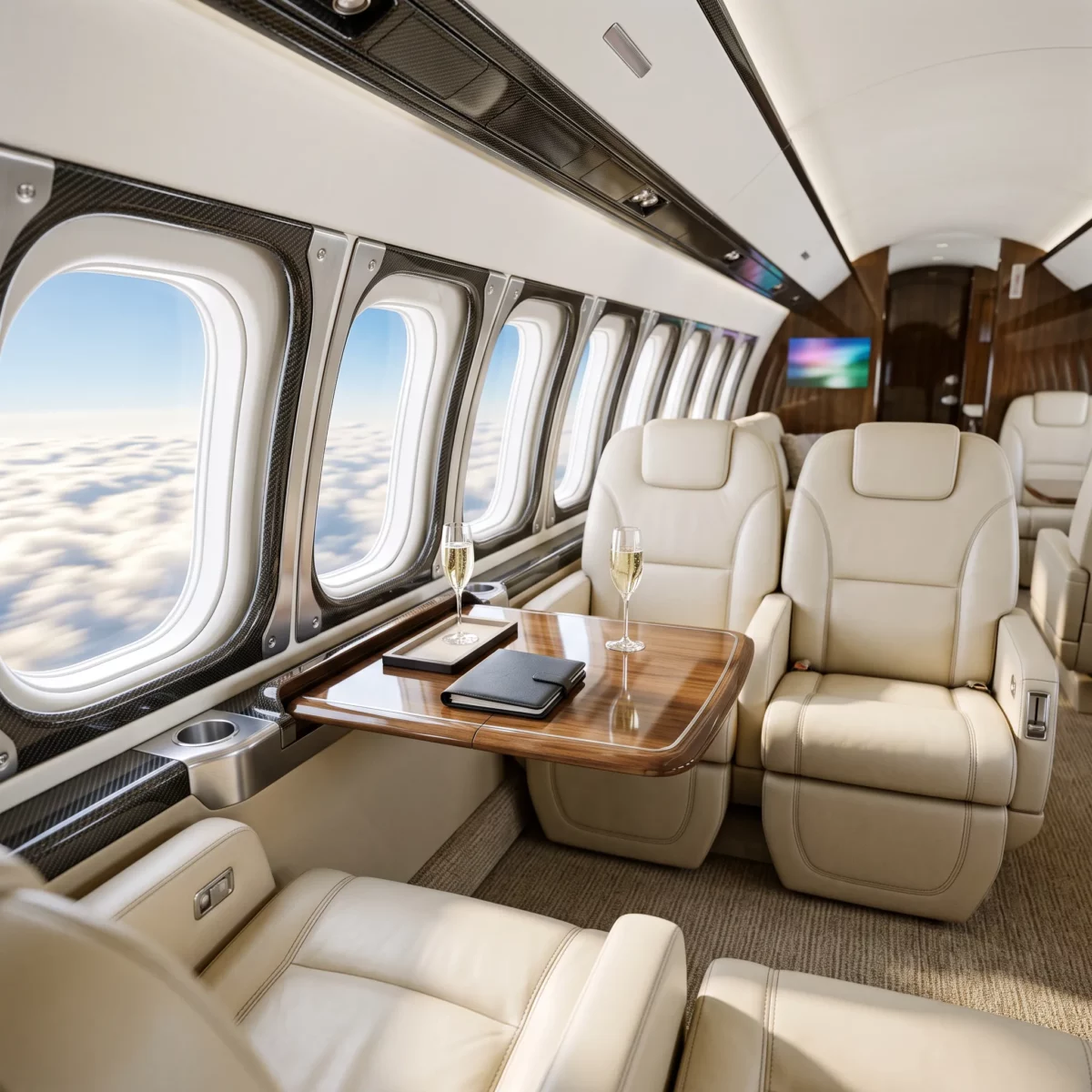
A Challenger 350 seats up to nine in some layouts, and typically eight. On most charters it carries two or three. A new app called FlyWith sees those empty seats as a problem worth solving, and it is betting on your address book to fill them.
The platform, conceived by Sound Ventures co-founder Guy Oseary and led by CEO Brian Corbett, is rolling out in North America this month, October 2026. It is an invitation-only app where members organize trips, pick the aircraft, and split the cost with people they actually know. Access is by invitation only, so most readers will need a member to bring them in.

How FlyWith Works
The app offers three ways in, each suited to a different kind of traveler.
- Host: You charter the aircraft and offer seats to friends, mutual connections, or the wider member community.
- Join: You book an open seat on an itinerary someone else is hosting.
- Propose: You float a trip first and gauge interest before anyone commits to a jet.
Propose is the clever one. It removes the biggest risk of sharing, which is booking an aircraft and hoping people show up.
According to the company, it ran a test program in August 2026 and completed initial flight trials in September 2026. International expansion is the next target once the North American rollout settles.
Why This Isn’t Another Empty-Leg Marketplace
Seat-sharing apps aren’t new. Several launched over the past decade, and most struggled, largely because strangers on a private jet defeat much of the point. People pay for privacy and for control of the cabin.
FlyWith builds a closed circle instead. The company is recruiting members through partnerships with Discovery Land Company, Zero Bond, and Crane Club, places where members already share a social world. A seat next to someone from your club feels different from a seat next to a stranger who found the same listing.
Corbett says roughly 40 percent of private fliers want to share flights. He cited internal figures, and the company did not detail the source or methodology, so treat the number cautiously. Anyone who has tried to organize a ski weekend over a group chat and split the bill knows why the idea appeals.

The Aircraft Behind It
FlyWith sources its fleet through Executive Jet Management, the charter and management arm of NetJets. EJM operates under NetJets’ safety program, though FlyWith has not published details of its own vetting. If you’re weighing any operator, our guide on vetting a private jet operator’s financial health covers what to check.
The company describes super midsize and large-cabin jets seating up to 10. The Challenger 350 is a super midsize type; larger Gulfstream and Global models fall in the large-cabin class. FlyWith has not said which specific aircraft it uses. Cabin size matters, since splitting a flight four ways works only when nobody feels crowded.
What It Means for Owners, Card Holders, and Charter Clients
Corbett says FlyWith is built to complement ownership, jet cards, and charter rather than replace them. Nobody with a fractional share wants to feel their model is under threat.
The practical effects differ by traveler.
- Charter clients can cut per-seat cost on popular routes without giving up the group they travel with.
- Owners and card holders could fill seats on trips they’d make anyway, though how that works inside the app is still unclear.
- Group travelers get a single organized booking instead of a messy group chat.
When peak dates sell out, groups with flexibility look for alternatives. We covered that pressure in our look at last-minute private jet booking. A tool that matches seats to a trusted group could ease some of it.
The Questions Worth Asking
Pricing is the big unknown. FlyWith hasn’t spelled out fees, or how liability and cancellations work when a cost-split trip loses a passenger. Experienced flyers will want those answered before they host a flight.
There’s also the matter of who’s in charge on board. Whoever hosts books the aircraft, but the pilot in command holds final authority once the door closes. Our piece on pilot in command authority explains why that never changes, no matter how social the booking gets.
Then there’s the invitation model itself. Fewer members means fewer open seats on any given route, which limits seat availability. The network has to get dense enough to be useful on a Tuesday departure from Teterboro.
The Bigger Picture
Earlier seat-sharing services such as JetSmarter sold seats to strangers through a large public membership. FlyWith goes the other way and keeps the cabin among people who already know each other.
If the model works, expect competitors and operators to copy it. Watch the first few months after launch, in particular how many hosted flights actually fill and whether members come back for a second trip. If a Propose request for a Teterboro-to-Aspen weekend can’t draw four yeses, the idea will have a harder time.