
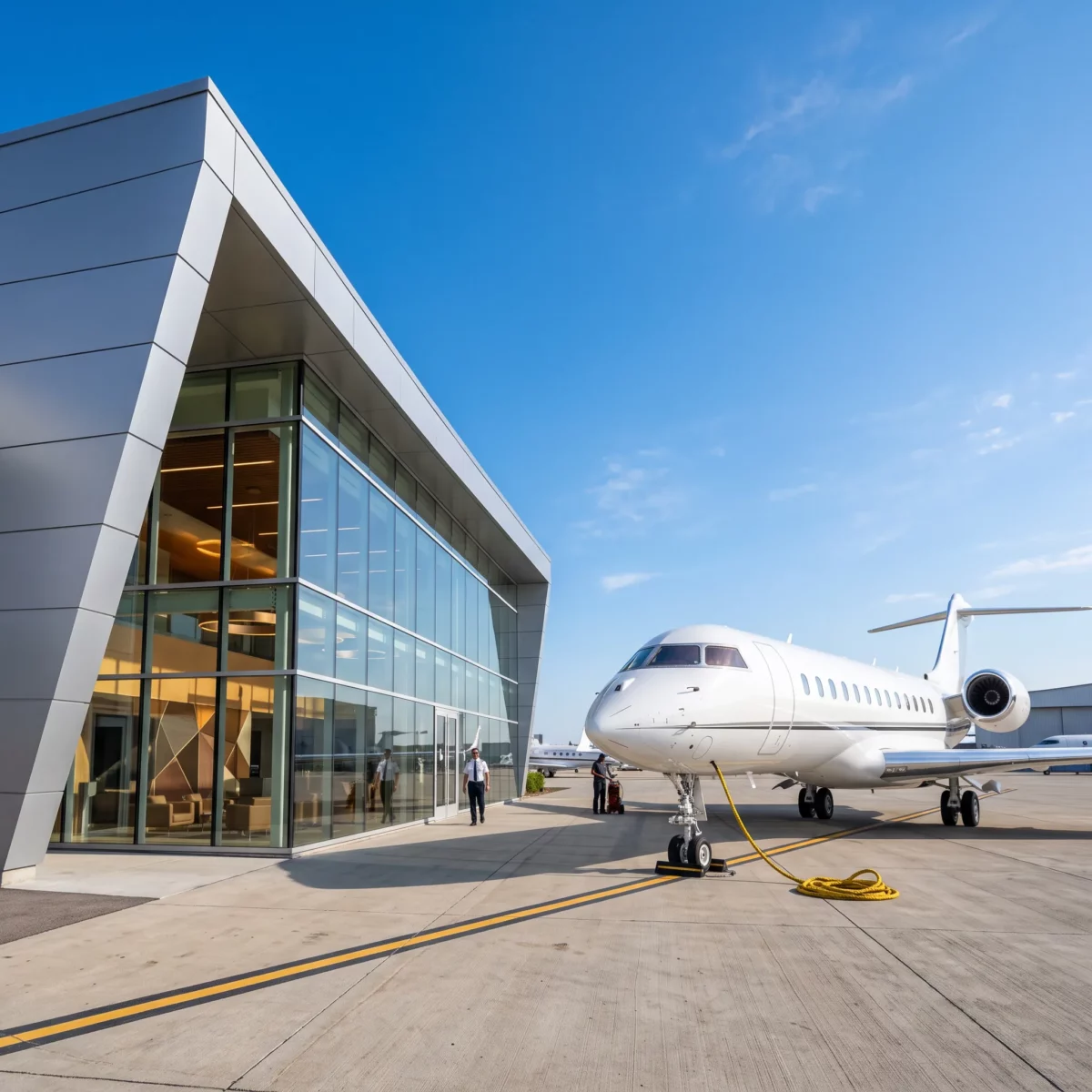
Most private jet passengers still pass through someone else’s building before they reach their own aircraft. That’s about to change for a lot of Flexjet owners flying through the UK. The fractional giant has opened a dedicated terminal at Farnborough Airport, and it’s not a lounge tucked inside a shared FBO. It’s a standalone facility that Flexjet says cost $34 million to build for one purpose: getting owners from car door to cabin without touching anyone else’s infrastructure.
At 22,583 square feet, according to Flexjet, the building is the company’s first purpose built terminal in Europe. Flexjet is betting that owners will pay for total control over every step of the journey, and that a dedicated building is the surest way to deliver it.
Why a Private Terminal Matters More Than It Sounds
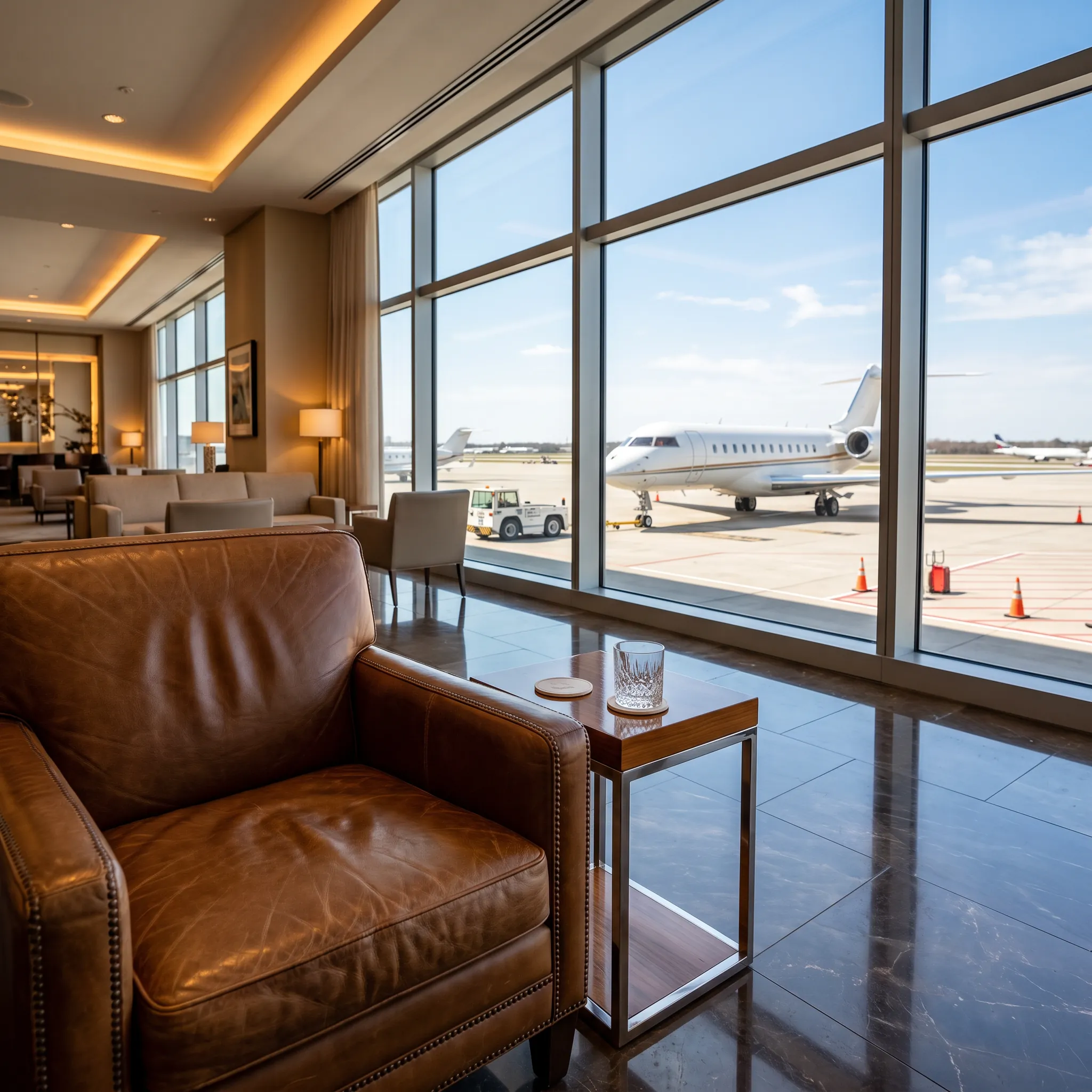
A shared FBO lobby means waiting with strangers, sharing a customs line, and walking across an open apron behind whoever else happens to be boarding. Flexjet’s terminal offers a short, direct walk from a private lounge straight to the aircraft steps, with no shared apron crossing. For owners who already pay a premium for fractional ownership, that gap matters. It’s the last piece of the journey that, until now, operators couldn’t fully control.
Farnborough itself is no accident. It sits roughly 35 miles southwest of central London, has no scheduled commercial traffic, and has spent two decades building a reputation as Europe’s answer to Teterboro or Van Nuys. For owners flying in and out of the UK capital, it already beats fighting through Heathrow or Gatwick queues. Flexjet’s move simply raises the ceiling on what that access can feel like.
What’s Actually Inside
Flexjet has described the terminal as a ground to air hospitality space, which in practice means the building is designed around the passenger, not the paperwork. Expect the kind of details that owners notice on repeat visits rather than first impressions.
- Private arrival and departure suites: separate spaces so groups aren’t mixing with other owners
- Dedicated customs and security processing: handled on-site rather than in a shared hall
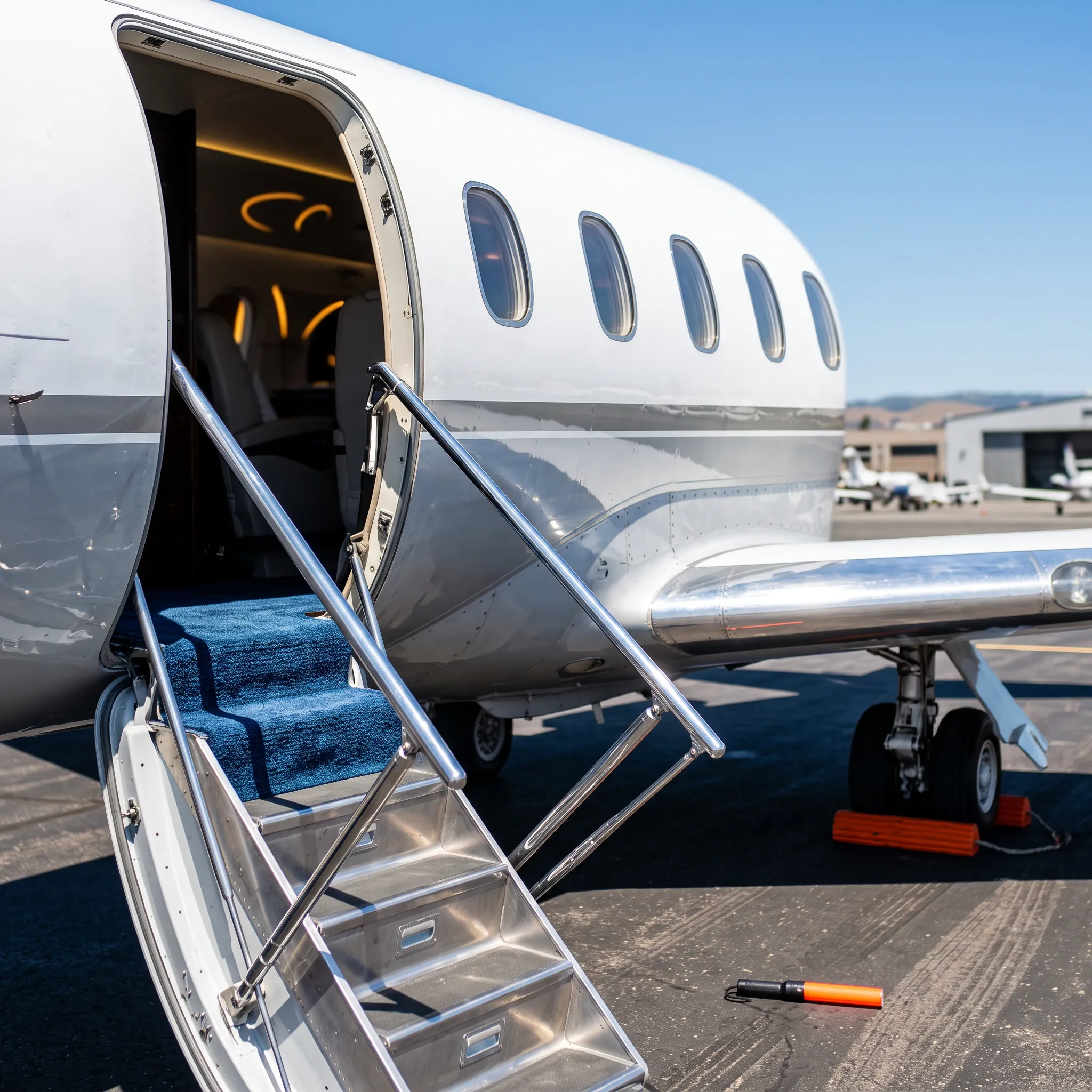
- Direct tarmac access: a short, sheltered walk from lounge to aircraft steps
- Concierge and catering services: tailored to the individual passenger, not a general menu
- Exclusive use for Flexjet owners: no shared access with charter clients or other operators
The Bigger Trend: Owning the Whole Journey
Flexjet isn’t the first operator to bet on real estate. NetJets and VistaJet have both invested in dedicated lounges at key airports, and the broader industry has been moving toward exclusive terminal infrastructure for years. Our guide to exclusive terminals around the world covers how this shift has taken shape across major hubs.
What makes the Farnborough project notable is the scale of the commitment. A reported $34 million for a single facility, dedicated entirely to one operator’s owners, is a serious bet on brand loyalty over shared cost efficiency. It’s the kind of infrastructure spend that only makes sense if you believe your client base will keep growing, and keep expecting more.
This mirrors a pattern playing out globally. Saudi Arabia opened its first dedicated private jet terminal in Dammam earlier this year, part of a wider push by governments and operators alike to treat private terminal access as a genuine differentiator rather than a nice-to-have.
How This Stacks Up Against Shared FBOs
| Feature | Shared FBO Lounge | Flexjet Farnborough Terminal |
|---|---|---|
| Passenger mix | Multiple operators and charter clients | Flexjet owners only |
| Customs processing | Often shared, can queue | Dedicated, on-site |
| Tarmac access | Shared apron walk | Direct, sheltered access |
| Build cost | Shared operator investment | $34 million (reported), single operator |
What This Means for Owners and the Market
For current Flexjet fractional owners flying through the UK, the practical upside is obvious: less friction and more privacy, in a facility built entirely around their expectations rather than a lowest-common-denominator FBO experience. For everyone else watching the industry, it’s a signal. Competition among the major fractional and jet card providers has moved beyond aircraft type and hourly rates. It’s now about who owns the ground experience too.
Expect rivals to respond. NetJets has expanded its own terminal footprint in the US, and it wouldn’t be surprising to see a similar European announcement within the next year or two. If Farnborough performs the way Flexjet expects, don’t be surprised to see similar buildings breaking ground at Teterboro or Van Nuys within two years.