

A 2020 Cirrus SF50 G2 Vision Jet just hit the pre-owned market at $2,845,000, and it’s worth pausing on. Not because of the price tag alone, but because of what this single aircraft says about how far the barrier to jet ownership has fallen. Listed by Lone Mountain Aircraft and flagged as a top pick on FLYINGMag.com’s Aircraft For Sale platform, this airplane has logged just 260 total airframe hours. It has never been damaged. It has always lived in a hangar. For an aircraft that’s six years old, that’s a remarkably light flying history, and it tells you exactly the kind of owner this Vision Jet has had.
The Vision Jet occupies a strange and interesting spot in private aviation. It’s the only single-engine personal jet in production, and it was built from day one for owner-pilots, not charter operators or fractional fleets. This particular example, with its executive interior and high-altitude capability, makes a strong case for why that category still matters in 2026.

What Makes This Listing Stand Out
Numbers matter in the pre-owned jet market, and this one has good numbers. The Williams International FJ33 engine has only 206 hours since new, meaning it’s essentially tracking alongside the airframe. It’s enrolled in the TAP Blue program through JetStream Concierge, paid through December 2026, which caps the owner’s exposure on scheduled maintenance and unscheduled repairs alike. That’s the kind of detail a buyer’s broker checks first, because engine coverage on a single-engine jet isn’t a nice-to-have. It’s peace of mind you’re paying for twice: once at purchase, and once every time you fly.
Inside the cockpit, the Garmin Cirrus Perspective Touch+ suite runs on dual 14-inch displays and includes Safe Return Autoland, a feature that lets a passenger with zero flight training bring the aircraft down safely if the pilot becomes incapacitated. Add Auto-Throttle, Synthetic Vision Technology, and Flight Stream 510 connectivity, and you’ve got an avionics package that feels closer to what you’d expect in a much larger cabin-class jet.
Cabin and Configuration
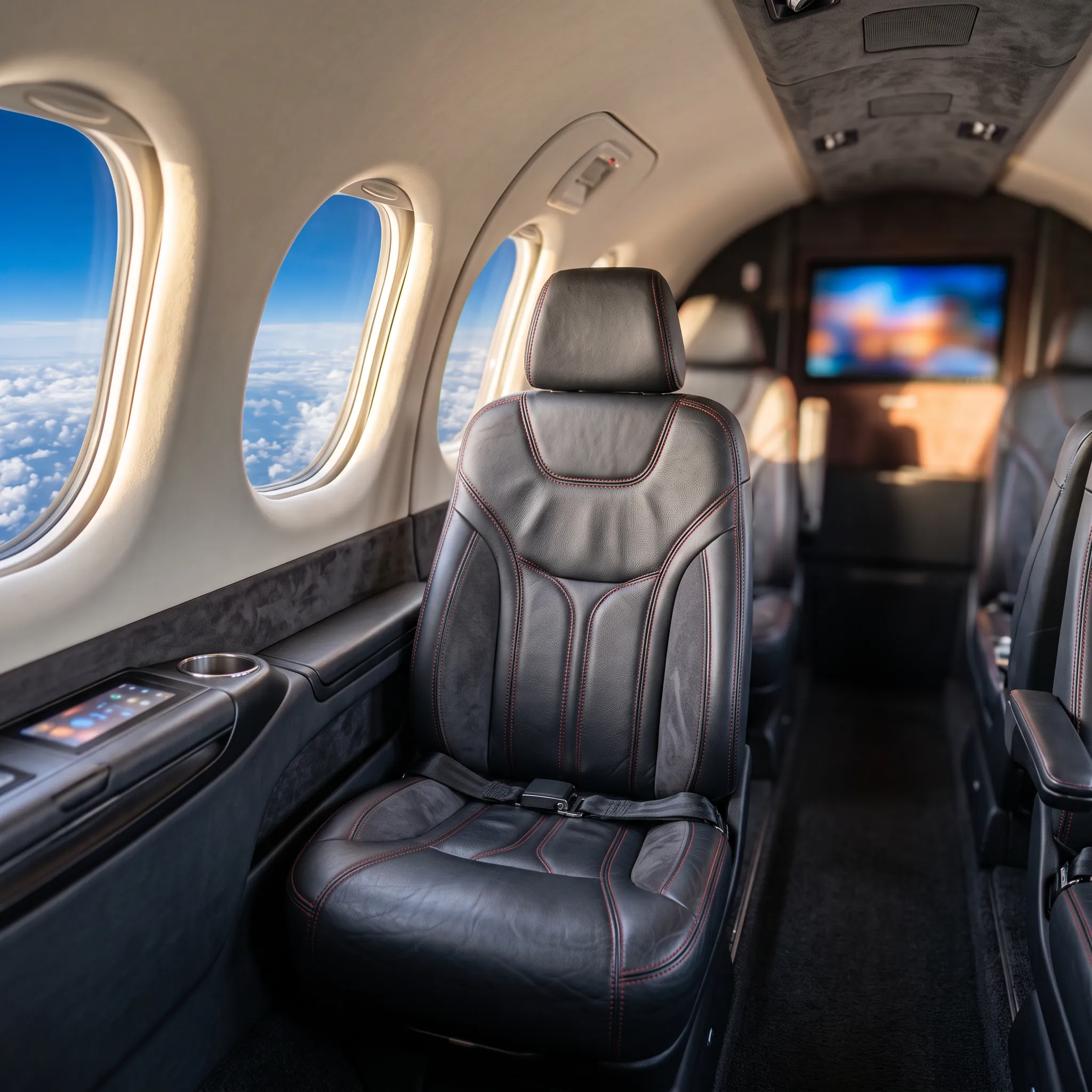
The interior is where this specific aircraft earns its premium over a base-spec Vision Jet. It carries a custom Xi design with leather and Alcantara accents, red seat belts, and an executive layout that includes a center console plus the optional sixth and seventh cross-country seats. There’s multizone climate control, a 22-inch entertainment screen, and Cargo X-Tend for extra baggage room, a detail that matters more than people expect once you’ve tried to pack for a week in a jet this size.
- Engine: Williams International FJ33, 1,846 pounds of thrust, dual-channel FADEC
- Ceiling: RVSM-certified, cruises at Flight Level 310
- Airframe hours: 260 total, no damage history, always hangared
- Interior: Custom Xi design, executive configuration, 22-inch entertainment screen
- Safety: Cirrus Airframe Parachute System (CAPS) standard
Why Owner-Pilots Keep Choosing the Vision Jet
The Vision Jet’s biggest selling point isn’t speed or range. It’s accessibility. Single-engine turbine aircraft run on Jet-A, which is cheaper and more widely available than piston fuel, and Cirrus designed the whole airplane around the idea that a pilot moving up from a high-performance single like an SR22 shouldn’t need years of additional type-specific training to feel comfortable in the left seat.
Then there’s CAPS, the whole-airframe parachute system that’s been a Cirrus signature since the SR20. On a personal jet flown by an owner-pilot, often solo or with family aboard, that redundancy changes the risk conversation entirely. It’s part of why insurance underwriters treat the Vision Jet differently than other single-engine jets, and why buyers who might otherwise hesitate at flying single-engine over open water or mountainous terrain feel comfortable doing it here.
How It Stacks Up Against the Entry-Level Field
The Vision Jet doesn’t really have a direct competitor. The nearest comparisons are twin-engine light jets like the Citation M2 or Phenom 100, but those come with a different cost structure and, in most cases, a requirement for a professional crew rather than true owner-pilot operation.
| Factor | Cirrus Vision Jet SF50 G2 | Typical Light Twin Jet |
|---|---|---|
| Engines | Single (Williams FJ33) | Twin |
| Owner-flown viability | High, designed for it | Limited, often requires crew |
| Parachute safety system | Standard (CAPS) | Not available |
| Typical cruise altitude | FL310 | FL410+ |
That table tells you where the tradeoffs sit. You give up some altitude and speed compared to a twin-engine light jet, but you gain a lower operating cost, a simpler maintenance profile, and an aircraft engineered from the start for one pilot in the front seat. If you’re weighing that decision more broadly, our piece on the Vision Jet’s role in personal aviation goes deeper into how Cirrus built the platform around owner-pilots specifically.
The Pre-Owned Market Angle
Buying pre-owned rather than new is where a lot of first-time jet buyers find their footing, and this listing shows why. A new Vision Jet G2 runs close to $3.4 million depending on configuration. Landing one at $2,845,000 with only 260 hours and a fully paid engine program through the end of 2026 is a meaningful discount for an aircraft that’s barely broken in.
Buyers should still do the homework any pre-owned jet purchase demands. Confirm logbook continuity, verify the TAP Blue enrollment transfers cleanly to a new owner, and get an independent pre-purchase inspection regardless of how clean the listing looks. Always hangared and no damage history are strong selling points, but they’re also exactly the phrases a good pre-purchase inspection is designed to confirm, not just take on faith.
For readers weighing a jet against other forms of personal air travel, it’s worth comparing the ownership experience against alternatives covered in our helicopter versus private jet breakdown, particularly if shorter regional trips make up most of your flying.
What This Means Going Forward
The Vision Jet’s pre-owned market is maturing. Aircraft like this one, with low hours, clean history, and a well-maintained engine program, are becoming easier to find as the fleet ages into its second ownership cycle. That’s good news for buyers who’ve watched entry-level jet ownership feel increasingly out of reach. It’s still a significant purchase, but the Vision Jet remains one of the clearest paths into owner-flown jet travel that business aviation currently offers, and listings like this one make the case better than any brochure could.