

Three programs. Billions in combined fleet value. Vastly different approaches to getting you in the air. Choosing between NetJets, VistaJet, and Flexjet has never been straightforward, and 2026 has added a new wrinkle most buyers weren’t expecting: geopolitics.
With traditional air corridors across the Middle East and Eurasia increasingly unstable, and Iran, Russia, and parts of the UAE creating operational headaches for international operators, the calculus around private aviation programs has shifted. Guaranteed access and genuine global flexibility aren’t marketing language anymore. They’re real differentiators. And which program delivers them depends entirely on how you fly.
The Three Programs, Plainly Put
Before comparing costs, it helps to understand what each program actually is, because these companies are not interchangeable.
NetJets pioneered fractional ownership and still dominates the segment. You buy a share of a specific aircraft, typically a 1/16th share representing roughly 50 annual hours, and the company manages the aircraft for you. You pay an initial acquisition cost, a monthly management fee, and an occupied hourly rate when you fly. You’re an actual owner, with the tax implications that brings.
Flexjet operates a similar fractional model but with a deliberately smaller, more curated fleet. Their Red Label program, focused on Bombardier Challengers and Globals, has built a loyal following among frequent flyers who want a smaller-operator feel with large-operator resources. Flexjet positions itself on service quality above fleet quantity.
VistaJet takes a different path entirely. There’s no ownership. Their Program membership is a guaranteed access agreement where you commit to a minimum number of annual hours and pay a flat hourly rate. The appeal is simplicity and their distinctively branded silver-and-red fleet of Bombardier aircraft, available globally with consistent standards.
What Things Actually Cost
This is where most buyers get surprised. The sticker price rarely tells the whole story.
A 1/16th fractional share with NetJets on a midsize aircraft like a Citation Longitude runs approximately $450,000 to $600,000 upfront, plus monthly management fees around $10,000 to $14,000, plus occupied hourly rates near $3,500 to $4,200. At 50 hours annually, your all-in year-one cost lands somewhere between $425,000 and $500,000. That includes the acquisition amortized appropriately for comparison purposes.
Flexjet’s fractional structure runs comparably, with slightly higher per-hour costs offset by what the company argues is superior service. Their minimum entry point is also a 1/16th share, though they push buyers toward larger aircraft where their fleet genuinely shines.
VistaJet’s Program pricing starts around $9,500 per hour on a midsize Challenger 350, with a minimum annual commitment of roughly 50 hours. No acquisition cost. No management fee. No residual value worry. At entry level that’s approximately $475,000 annually, which tracks closely with fractional when you strip out ownership benefits.

Side-by-Side: What the Numbers Look Like
| Factor | Fractional, NetJets or Flexjet | VistaJet Program |
|---|---|---|
| Upfront cost | $450,000 to $600,000 per 1/16th share | None |
| Monthly fees | $10,000 to $14,000 | None |
| Occupied hourly rate | $3,500 to $4,200 | $9,500 to $18,000 depending on aircraft |
| Minimum annual hours | 50 hours per 1/16th share | 50 hours typical entry |
| Asset ownership | Yes, with depreciation benefits | No |
| Fleet consistency | Varies by operator age and rotation | Standardized across global fleet |
| Global reach | Strong in North America and Europe | Strongest truly global footprint |
The table simplifies things, intentionally. What it can’t capture is the qualitative gap. VistaJet’s standardization means the Challenger 650 you board in London looks and operates identically to the one waiting in Singapore. Fractional programs source from shared fleets, which introduces variability. That matters to some clients enormously and to others not at all.
The Geopolitical Factor Nobody Talked About Last Year
Here’s what’s changed the conversation in 2026. The instability across Russia, Iran, and parts of the UAE isn’t just a news story. It’s a route planning and operational reality for anyone flying internationally. Eurasian corridors that once shortened transits between Europe and Asia now require significant rerouting. Middle East hubs that served as convenient fuel stops are suddenly unreliable.
For private aviation, this matters in two specific ways. First, range requirements have quietly increased. Aircraft that were adequate for a given route six months ago may now face longer legs due to airspace avoidance. Second, operators with genuine international infrastructure, meaning ground teams, overflight permits, and fuel arrangements in alternate countries, have a measurable operational advantage.
VistaJet benefits most visibly here. Their global infrastructure, built specifically for intercontinental private jet operations, includes trip support capabilities that cover complex routing. For a client flying London to Hong Kong, or New York to Mumbai, that matters.
NetJets and Flexjet are primarily North American and European operators. Their international capabilities exist but are more limited. A fractional owner who flies mainly within the US or within Europe will not feel this gap. Someone planning regular intercontinental travel absolutely will.
The Hours Equation: Where Each Program Makes Sense
Most advisors will tell you the same thing, and they’re not wrong. Flying hours drive the decision more than any other single factor.
- Under 25 hours annually: A jet card from a broker or operator makes more sense. Fractional minimum commitments and VistaJet’s program floor will have you paying for access you won’t use.
- 25 to 75 hours annually: This is the sweet spot for all three programs. The math works, and the guaranteed access pays for itself even if you don’t hit maximum hours every year.
- 75 to 150 hours annually: You’re buying multiple fractional shares or committing to a heavy VistaJet program. At this level, full ownership starts entering the conversation seriously.
- Above 150 hours annually: Full ownership almost always wins on pure economics. The question becomes whether you want the management responsibility that comes with it.
The honest answer is that most first-time fractional buyers overestimate their flying hours and underestimate their total costs. Work backward from actual trips you’ve taken over the past two years, not aspirational ones. That number is your anchor.

Service Differences That Actually Show Up at the Tail
Flexjet has invested heavily in crew continuity, specifically their Lease a Pilot program, which assigns dedicated crews to fractional owners when possible. For clients who value a consistent relationship with their flight crew, that’s genuinely meaningful. It’s also a point of real differentiation versus NetJets, where crew assignments rotate through a large pool.
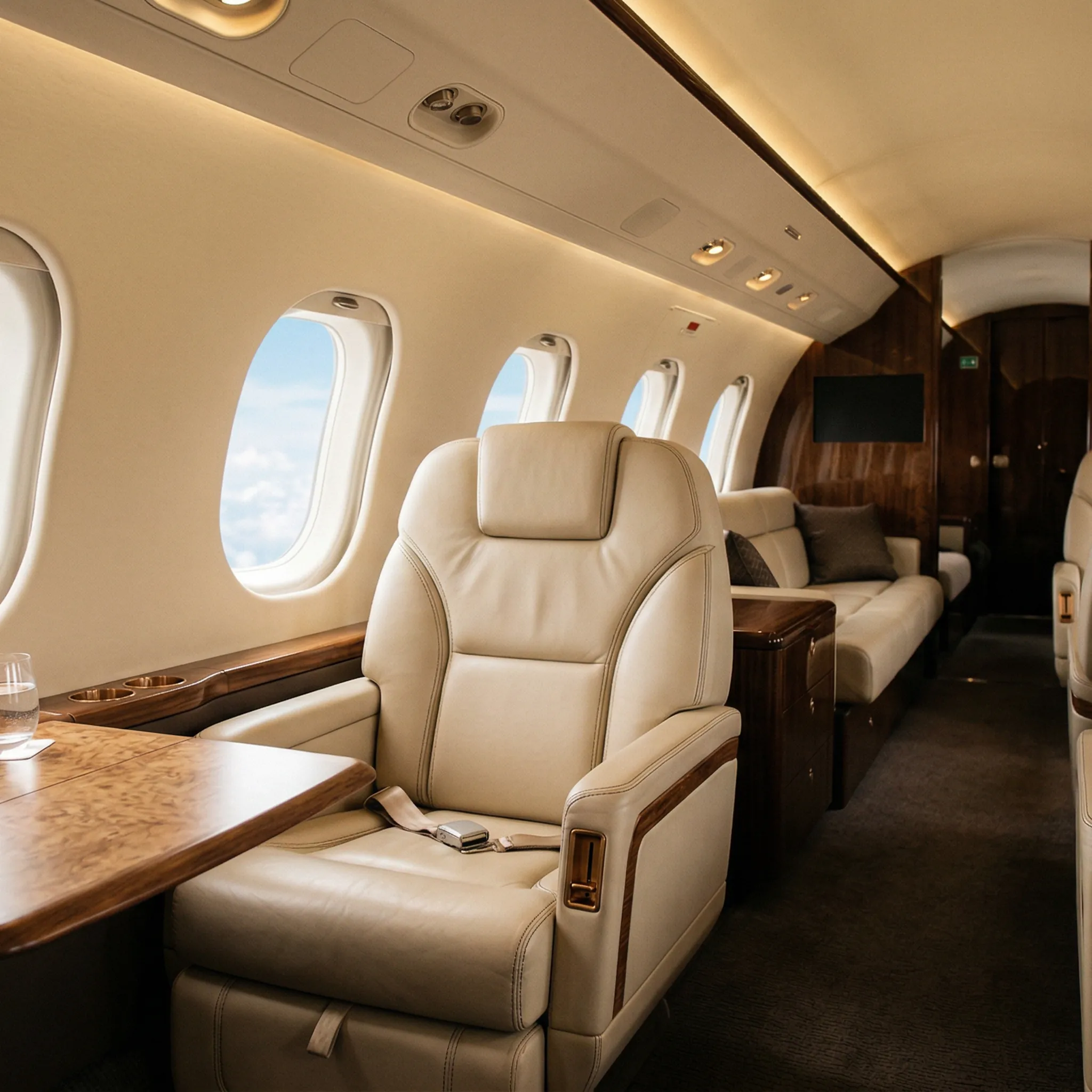
VistaJet counters with what they call seamless service standardization. Every cabin attendant completes the same training program. Catering arrives through centrally managed partners. The brand experience doesn’t vary by tail number or crew assignment. Some clients find this impersonal. Others find it reassuring.
NetJets, for all the competitive noise, still carries the benefit of the largest and most diverse fleet in private aviation. When you need a light cabin aircraft for a short domestic hop and a large-cabin jet for a transatlantic the following week, having access to that range within a single program has operational value that smaller operators simply cannot match.
Making the Call in 2026
The geopolitical shake-up has made one thing clear: flexibility and geographic reach are worth more today than they were two years ago. If your travel patterns include significant international flying, especially outside the North Atlantic corridor, give VistaJet a harder look than you might have previously. Their operational infrastructure for complex international routing is genuinely ahead of the fractional providers.
If you fly primarily within North America or within Europe, the fractional argument remains strong. NetJets offers unmatched fleet depth, and Flexjet offers a more personalized experience within a tighter aircraft selection. Both reward clients who log consistent annual hours and value asset ownership.
The worst outcome is choosing a program built for someone else’s flying profile. The right program isn’t the most prestigious one. It’s the one that matches how you actually travel, where you actually go, and what you actually value when you step onto the aircraft. Start with those answers, and the comparison becomes considerably simpler.