
You booked a two-hour flight. You land, check your jet card balance, and notice you’ve burned two hours and forty minutes. Nothing went wrong. No mechanical delays. No holding patterns. The flight itself took exactly what the schedule promised. So where did that extra forty minutes go?
This is one of the most common surprises for new private aviation clients, and it comes down to three words buried in your contract: chock-to-chock billing.
Two Clocks, Two Very Different Numbers
Private jet programs generally measure flight time in one of two ways. The first is wheels-up to wheels-down, meaning the clock starts when the aircraft lifts off and stops the moment the wheels touch the runway. This is clean, intuitive, and exactly what most clients assume they’re paying for.
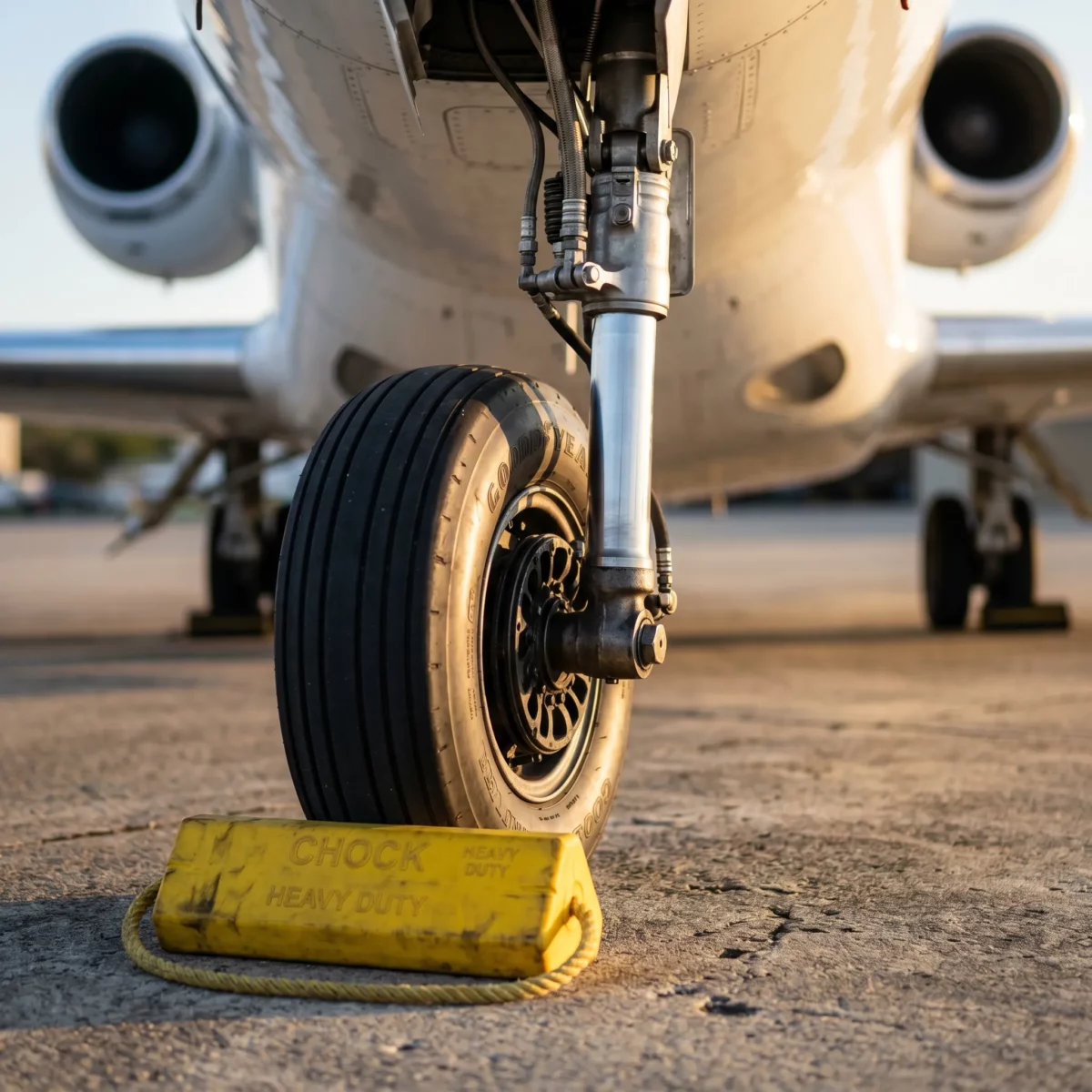
The second method is chock-to-chock, also called block time. Here, the clock starts when the ground crew removes the wheel chocks and the aircraft begins moving, and it doesn’t stop until the chocks go back on after landing. Everything in between counts: taxiing to the runway, waiting in a departure queue, the flight itself, and taxiing to the gate at your destination.
At a busy airport on a normal day, that difference can easily add 20 to 45 minutes per flight segment. At a congested hub during peak hours, it can be more. Over a year of flying, those minutes compound into hours, and hours in a jet card or fractional program translate directly into dollars.
Why Ground Time Matters More Than You Think
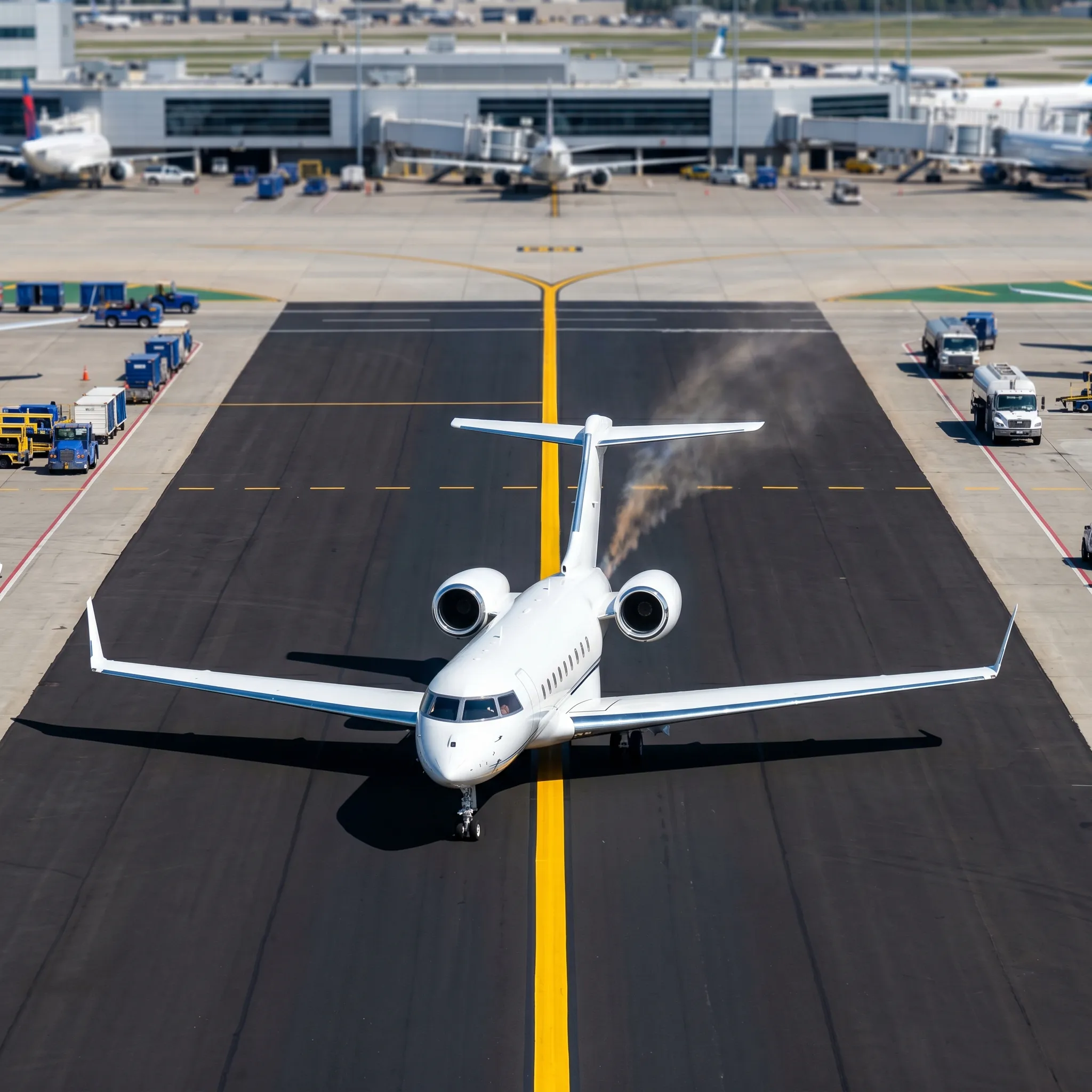
Taxiing feels like nothing. You’re barely moving. But from a billing standpoint, the aircraft is in operation, the crew is on duty, and the operator is burning fuel. Most programs argue, reasonably, that the cost to them begins before the wheels leave the ground.
A few specific scenarios hit hardest:
- Runway queues at major airports: Departing from Teterboro, Van Nuys, or Opa-locka during busy periods can mean 15-25 minutes of taxi time before wheels-up.
- Ground stops and ATC delays: Air traffic control sometimes holds aircraft on the ground rather than in the air. Under chock-to-chock billing, you pay for that wait.
- Large airports with distant FBOs: At places like Dallas Love Field or Miami International, the distance from the FBO ramp to the active runway adds meaningful taxi time.
- Deicing procedures: In winter, de-icing can add 20 minutes or more while the aircraft sits with chocks off.
Regulatory Minimums: The Billing Floor You May Not Know About
Here’s a nuance that catches even experienced private flyers off guard. Many jet card programs and fractional ownership contracts include minimum flight time charges, regardless of how short your actual trip was.
A typical light jet card might carry a one-hour minimum. Some ultra-long-range programs set their floor at two hours. So if you fly from Palm Beach to Nassau, a trip that wheels-up to wheels-down takes about 45 minutes, you may still be billed for a full hour or more depending on your program’s terms.
These minimums exist partly for operational reasons and partly for economics. Short legs burn a disproportionate amount of fuel during climb and descent, and positioning the aircraft to and from your departure airport carries its own costs. Still, knowing that minimum exists before you book a quick regional hop can change your planning entirely.
How the Programs Stack Up
Not every program bills the same way. Here’s a simplified look at how the major billing approaches compare:
| Billing Method | What the Clock Measures | Best For |
|---|---|---|
| Wheels-up / Wheels-down | Airborne time only | Short regional routes, high-traffic airports |
| Chock-to-chock (Block time) | Full ground-to-ground operation | Long-haul routes where taxi adds minimal percentage |
| Scheduled block time | Published schedule, regardless of actual duration | Predictable budgeting, can favor or hurt depending on actual conditions |
Some programs use a hybrid approach: they bill scheduled block time based on published route estimates rather than actual elapsed time. This creates predictability, but also means the program has already built average taxi and ground time into their math. You’re still paying for ground operations. The number just looks cleaner on your statement.

Reading Your Contract Before It Reads You
When you’re evaluating a jet card program or finalizing a fractional ownership agreement, these are the specific questions worth asking:
- Does the program bill chock-to-chock or wheels-up to wheels-down? Get this in writing, not as a verbal assurance during a sales call.
- What is the per-segment minimum? A one-hour minimum on a 90-minute route is meaningless. On a 35-minute hop, it changes your entire cost calculation.
- How are ATC ground holds handled? If the FAA holds your aircraft on the ground for an hour due to weather at your destination, does that count against your balance?
- Are fuel surcharges calculated on billed hours or actual flight hours? The distinction matters when surcharges run $200 to $400 per hour.
- Does the program offer any credits for excessive taxi delays? A small number of operators do cap client exposure on unusual ground delays.
None of these questions are adversarial. Reputable programs expect them. Any provider that gets defensive about billing methodology is telling you something important.
The Bigger Picture for Your Flying Budget
If you fly 50 hours per year on a chock-to-chock program and average 20 minutes of ground time per segment, that’s roughly 8-10 extra hours billed annually. At $6,000 to $8,000 per hour for a midsize jet, that’s $48,000 to $80,000 in ground time you might not have budgeted for.
That’s not a complaint about the industry. It’s a reflection of real operating costs. But it is a number worth knowing before you compare programs purely on the stated hourly rate.

The smartest private aviation clients approach billing methodology the same way they approach range figures on an aircraft brochure: as a starting point, not the whole story. Dig one level deeper, and the true cost of your program becomes a lot clearer.