
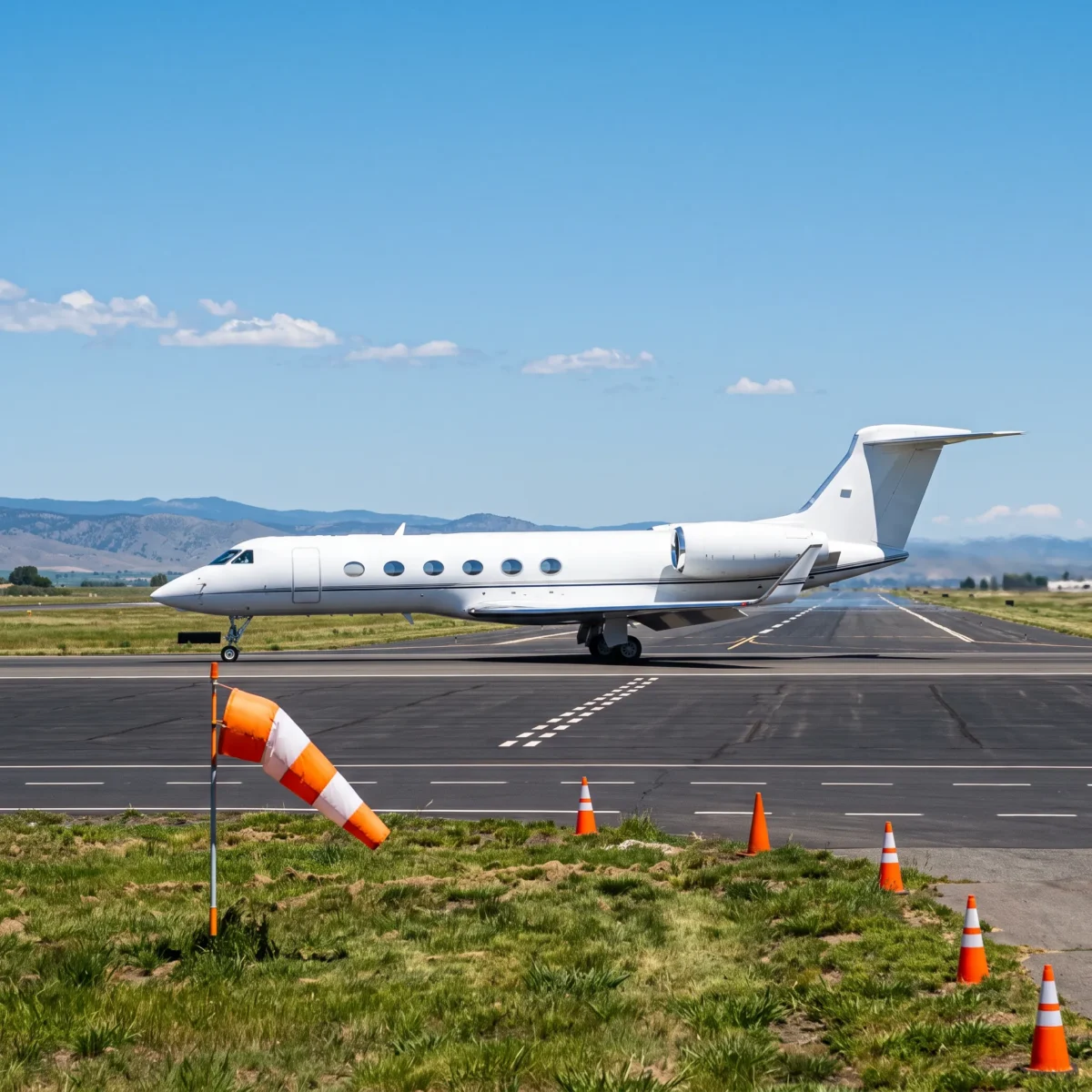
Your charter broker says the jet needs only 3,000 feet to land. The airport has 5,000. So why did the operator just decline the trip? Landing isn’t the hard part. Taking off is, and the rules that govern it have little to do with the number in the brochure.
The concept behind that decision is balanced field length, or BFL. It rarely shows up in marketing material, yet it shapes almost every airport choice in private aviation.
What Balanced Field Length Actually Means
Picture the worst moment on a takeoff roll: an engine fails just as the jet is accelerating toward liftoff. The crew has two choices. Stop on the remaining pavement, or keep going on one engine and climb away. Either choice needs runway.
Under FAR 25.113, the required takeoff field length is the longest of three figures: the accelerate-go distance, the accelerate-stop distance, and 115 percent of the all-engine takeoff distance. Balanced field length is the special case where the go and stop distances are equal, so the same stretch of pavement serves either decision. Stopways and clearways let those two figures differ, because a jet can use that extra surface to stop or to climb out. For the go case, the jet must clear a 35-foot screen height at the far end on a dry runway, and 15 feet on a wet one.
V1, the Commitment Speed
The speed that separates the two choices is V1. Below it, the crew aborts. Above it, they generally continue, even with a failed engine. Pilots brief V1 before every departure, and it moves with weight, temperature, elevation, and runway condition.
The figures here are illustrative only. On a typical midsize jet, V1 might be around 120 knots on a cool day with a light load. At maximum weight on a hot afternoon, it could climb toward 135 knots or more, and the runway needed grows with it. Actual numbers vary by aircraft type and are computed for each departure.
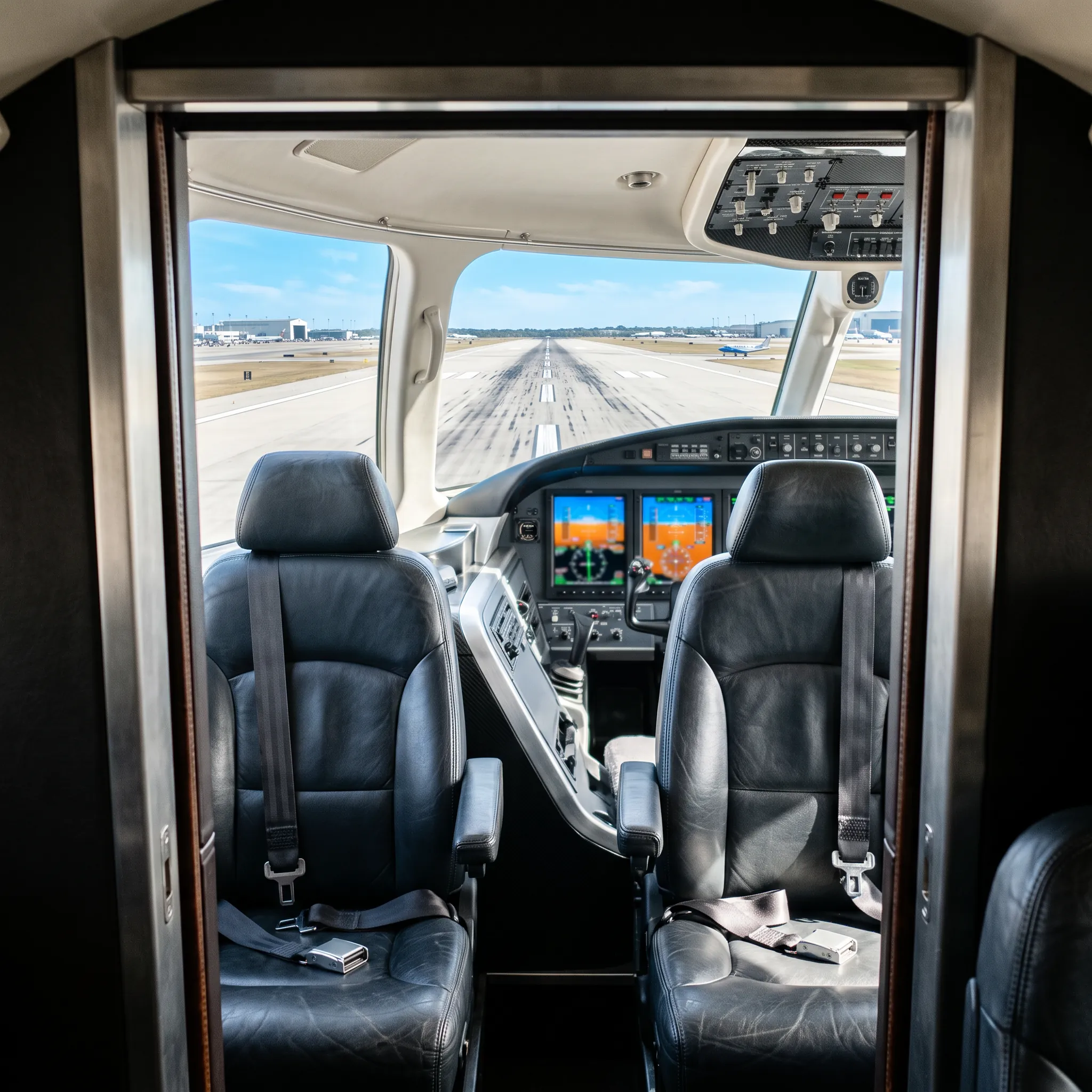
Why the Same Airport Can Work in January and Limit You in July
Three factors drive balanced field length up the most. Wind, runway slope, and a wet or contaminated surface also change it, and a tailwind hurts while a headwind helps. Pilots watch all of them closely.
- Weight: Full fuel and a full cabin mean more speed to reach, and more energy to shed if the crew aborts.
- Field elevation: Thinner air at altitude cuts both engine thrust and wing lift, so the jet rolls longer.
- Temperature: Hot air is thin air. Every degree above standard erodes performance.
Aspen sits at roughly 7,800 feet. On a 90-degree afternoon, the effective altitude feels much higher. That’s density altitude, and our piece on density altitude and its effect on payload and range explains why a jet that departs easily in winter may leave bags or fuel behind in summer.
| Condition | Effect on BFL | What you notice |
|---|---|---|
| Cold, sea level, light load | Shortest | Nearly any runway works |
| Hot, sea level, full cabin | Longer | Fuel stop on long legs |
| Hot, high elevation, full load | Longest | Fewer passengers or a bigger jet |
Landing Distance Is a Different Number
Landing is factored differently. Under FAR 135.385, a turbojet charter flight must be able to land within 60 percent of the effective runway length at the destination, so the runway must be about 67 percent longer than the certified dry landing distance. Separately, when the runway is wet or contaminated, operators must add at least 15 percent to the required runway length. Check current CFR text for the exact wording that applies to your operation.
Takeoff has no such simple cushion. It depends on that single-engine scenario, which is why a runway can pass for landing and fail for departure. Obstacles matter too. A mountain or a row of hotels off the departure end can force a steeper climb and a lower allowable weight.
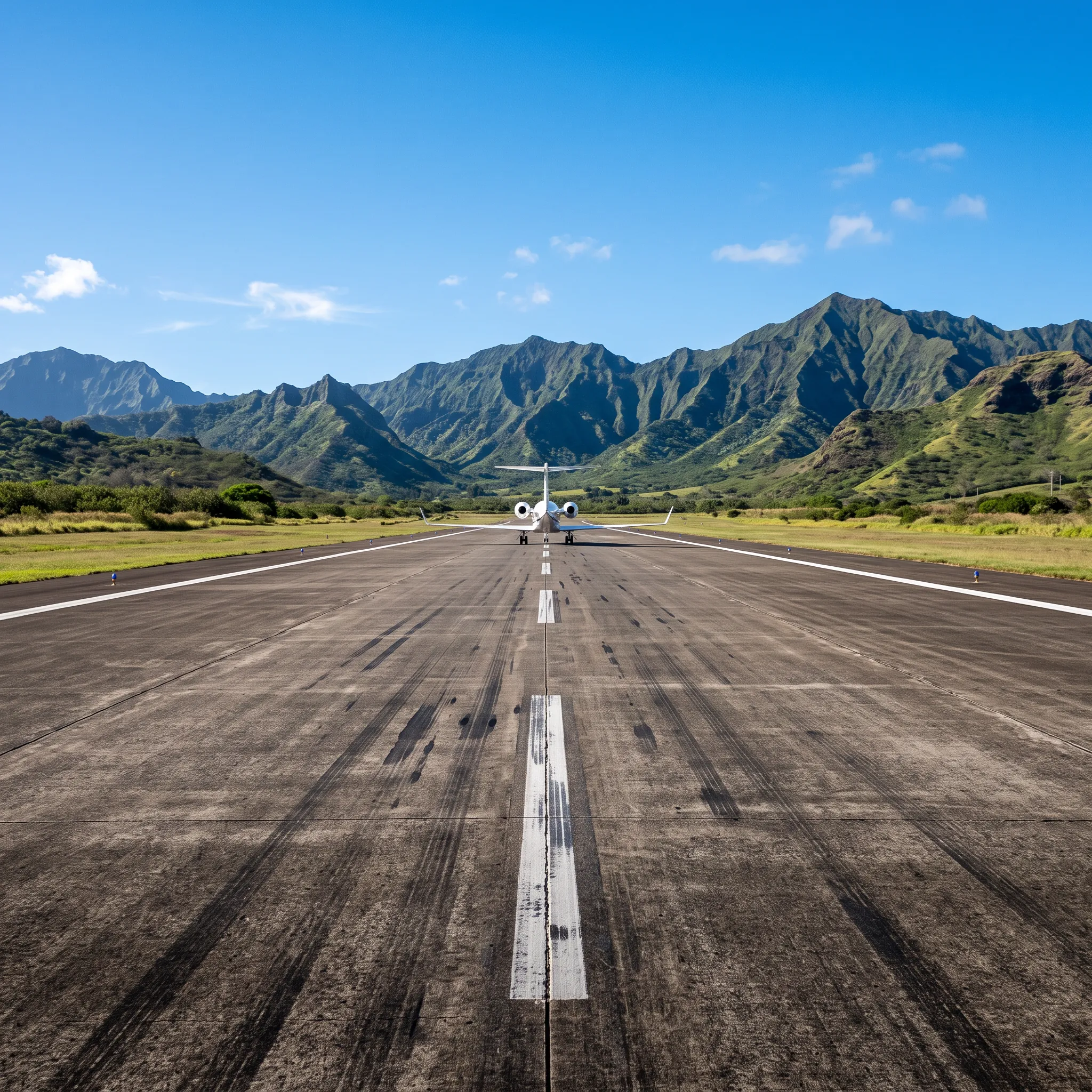
What This Means for Your Trip
You rarely need to run the math yourself. But understanding it helps you ask better questions and avoid last-minute surprises.
Short or high runways at popular destinations, such as Teterboro, Aspen, Telluride, Sun Valley, and London City, drive a lot of aircraft selection. Our guide to where private jets can land covers the broader access picture. For a hot-weather trip, your operator may suggest a larger or more powerful jet, even for a small group. That isn’t upselling. It’s often the only safe way to carry the load.
A few practical habits help:
- Tell your broker the exact departure airport, not just the city.
- Share realistic bag counts and any heavy items early.
- Expect passengers or bags to shift if afternoon temperatures spike.
- Ask whether a nearby alternate airport with a longer runway makes sense.
Weight is also a seat-by-seat issue on smaller aircraft, as explained in weight and balance for light jet seat assignments.
The Bigger Picture
Better engines, improved wings, and more precise performance software keep expanding what business aviation can do at tough airports. Many operators now run real-time performance calculations on tablets, using current weather rather than forecast averages, which helps crews find safe margins without guessing.
Even so, a full-fuel midsize jet departing Aspen in July may leave two bags on the ramp. If you’re booking charter flights into a short or high-altitude field, ask your broker early what the operator’s departure-weather limits are, and whether a lighter bag count or a second airport would keep everyone on board.