

The routes tell the whole story. VistaJet’s latest demand data isn’t just a set of impressive percentages. It’s a window into how the global elite actually moves now, and the picture looks nothing like it did five years ago. Long-haul intercontinental missions are surging. Regional hubs are reshaping. And the aircraft being ordered to handle all of this are getting meaningfully bigger and longer-legged.
The Routes Nobody Expected to Dominate
Start with the number that surprised almost everyone: Africa-to-Asia routes grew 42% in demand last year. Not Europe to the US. Not the Middle East to London. Africa to Asia. That tells you something about where business capital is flowing and who’s flying it.
Ultra-long-haul travel connecting the Middle East, North America, and South America climbed 28%. These are missions that can push past 14 hours in the air. They require specific aircraft, specific crew rest setups, and cabins genuinely designed for sleep, not just seat recline.
Then there’s Saudi Arabia. The kingdom’s decision to open its domestic market to foreign operators created an almost immediate effect: flights between Jeddah and Riyadh jumped 269%. That’s not gradual market penetration. That’s pent-up demand finding an outlet overnight. VistaJet was positioned to capture it, and they did.
The Abu Dhabi to London corridor grew 238%, driven by sovereign wealth activity and the movement of students attending UK universities. If you’ve spent time around the FBOs at Farnborough or Luton, you’ve watched this shift happen in real time. The Nice to Palma route, a staple of Mediterranean summer circuits, grew 137%. The superyacht crowd isn’t just bringing luggage anymore. They’re coordinating multi-leg routes that stitch together Monaco, Ibiza, Sardinia, and the Balearics in a single week.
What VistaJet Is Actually Ordering
Operators don’t order aircraft because their marketing department likes the numbers. They order because they need specific capability to match where demand is going. VistaJet’s fleet moves are worth paying attention to here.

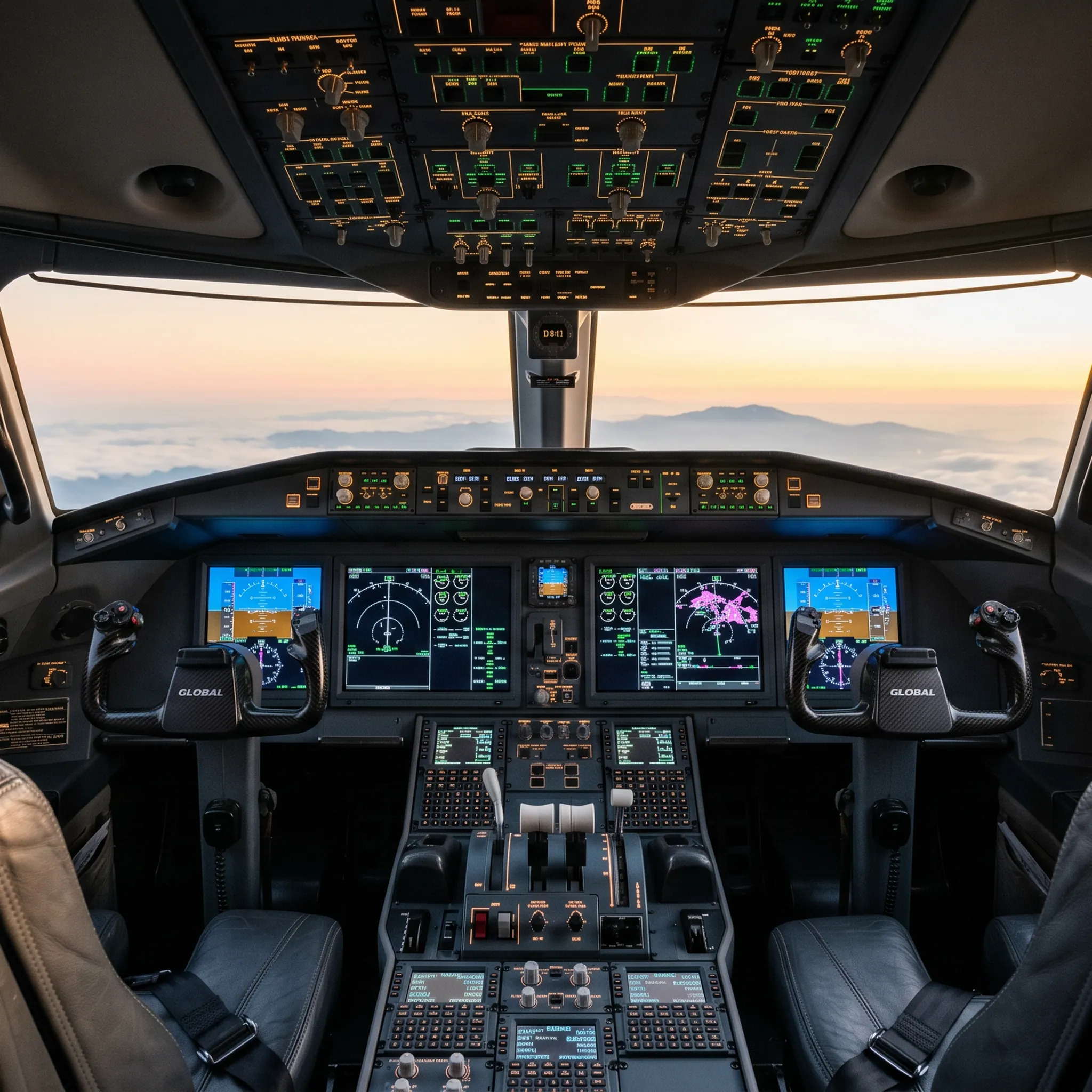
The company is upgrading its entire fleet of 18 Bombardier Global 7500 aircraft to Global 8000s by year end. The cost: roughly $3 million per aircraft. That’s a total commitment of around $54 million just in upgrade costs. The Global 8000 pushes range to approximately 8,000 nautical miles, making nonstop routes like Singapore to New York or Dubai to Los Angeles genuinely feasible without a fuel stop. When you’re seeing Africa-to-Asia demand surge, that range matters enormously.
They also placed a firm order for 40 Bombardier Challenger 3500s. That’s the regional side of the equation. Jeddah to Riyadh isn’t a Global 8000 mission. It’s a 45-minute hop that needs a capable, comfortable midsize aircraft ready to fly multiple legs a day. The Challenger 3500 handles exactly that kind of high-frequency regional flying while offering a cabin quality that matches client expectations.
| Route Corridor | Growth Rate | Demand Driver |
|---|---|---|
| Jeddah to Riyadh | 269% | Saudi domestic market opening |
| Abu Dhabi to London | 238% | Sovereign wealth, education |
| Nice to Palma | 137% | Mediterranean luxury circuit |
| Africa to Asia | 42% | Global capital flows |
| Middle East, US, South America | 28% | Ultra-long-haul connectivity |
The Demographic Behind the Demand
Here’s a stat worth sitting with: 47% of first-time private jet users are now under 45, according to the Knight Frank Wealth Report. Nearly half. That’s a meaningful shift from even a decade ago, when private aviation was largely the domain of established executives in their 50s and 60s.
These younger wealth creators aren’t flying the way their predecessors did. They’re not doing two or three business trips a year from a fixed home base. They practice what the industry has started calling multi-location living: splitting time between multiple residences, attending global festivals and events, and treating the aircraft as infrastructure rather than indulgence. The jet isn’t a status symbol to this group. It’s how they make their lifestyle actually work.
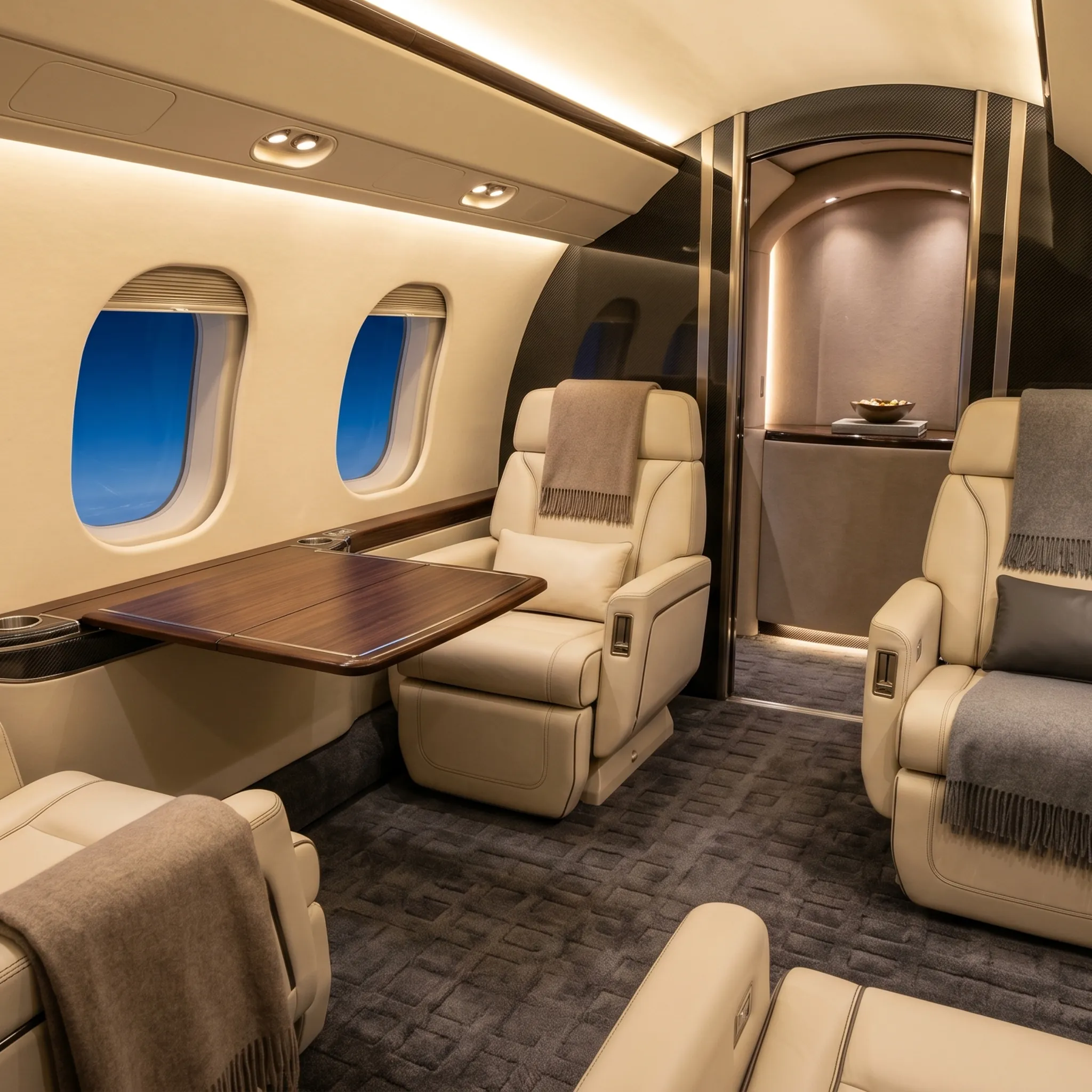
That changes what they want from a cabin. Long-haul missions demand proper beds, not fold-flat seats. They expect full connectivity that actually holds at altitude. A dedicated workspace. A galley capable of real meal preparation. And increasing attention to sleep environments, including lighting systems tuned to adjust circadian rhythms across time zones.
What This Means If You Fly Privately
A few practical implications from all of this.
- Peak availability in key corridors will tighten. Routes like Abu Dhabi to London and intra-Saudi flights are seeing extraordinary demand growth. If you fly these routes regularly, booking lead times through programs like VistaJet will matter more than they used to.
- Ultra-long-haul capability is now a baseline expectation, not a premium feature. Operators investing in Global 8000-class aircraft are responding to clients who expect true nonstop range, not technical stops in Shannon or Goose Bay.
- Regional networks are expanding fast. The Challenger 3500 order signals serious investment in short-to-medium range flying. If you do frequent regional hops, you’ll have more options and likely better aircraft than you did two years ago.
- Cabin design is evolving around younger buyers. Expect more aircraft featuring high-speed connectivity, biophilic design elements, and circadian lighting as operators compete for the under-45 client.
The Direction Things Are Heading
Private aviation has always followed wealth. And right now, wealth is moving faster, farther, and between more places than the industry’s traditional route assumptions ever anticipated. The surge in intercontinental demand isn’t a blip from one unusual year. It reflects a structural shift in how globally mobile people organize their lives.
Operators who read this correctly, investing in genuine ultra-long-range capability while maintaining strong regional coverage, will define the next decade of business aviation. Those who don’t will find their fleet increasingly mismatched to where their clients actually want to go.
The route map the global elite is drawing today looks nothing like the one from 2019. And the aircraft orders being placed right now are the industry’s answer to that new reality.