
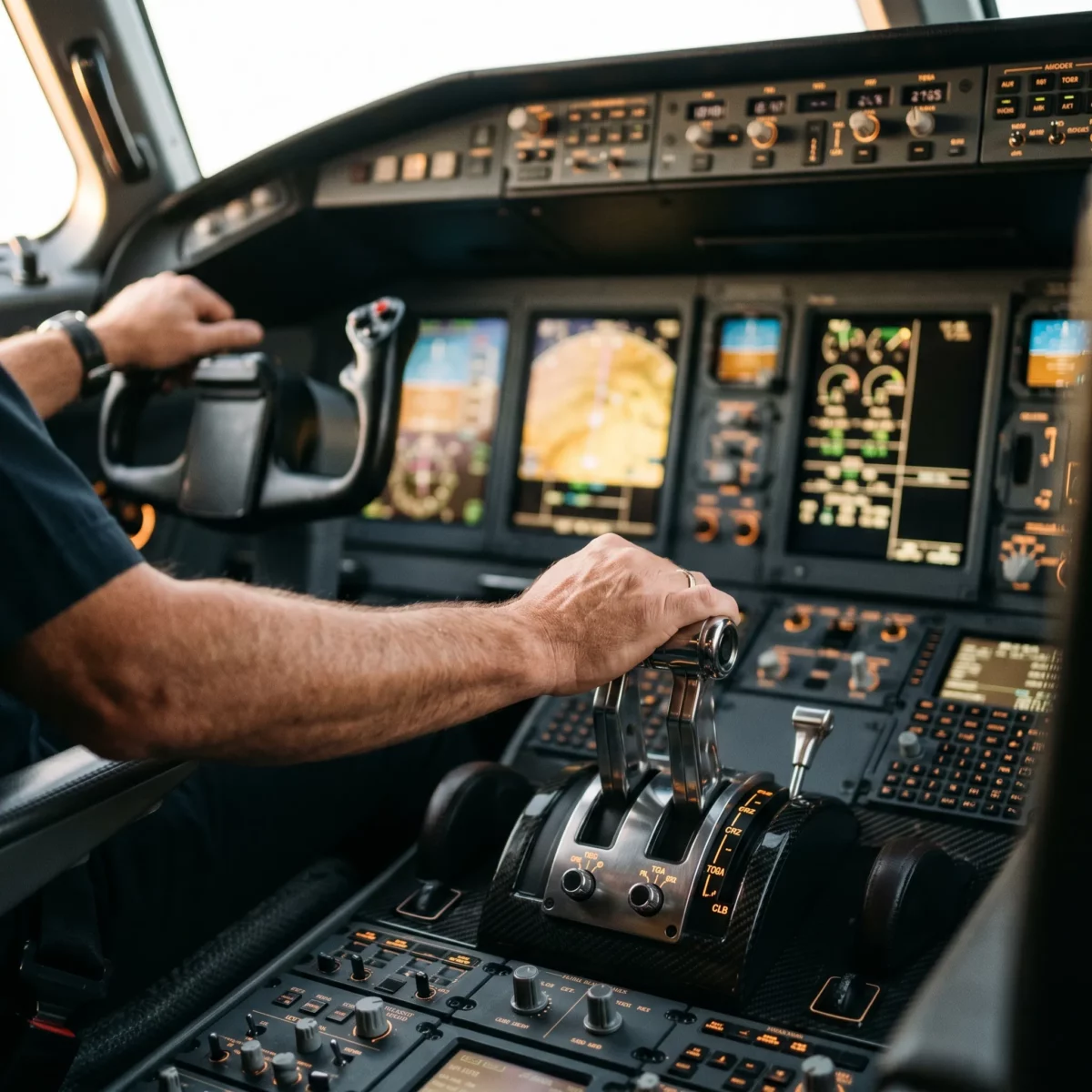
You’ve chartered a jet to close a deal in Geneva. Your schedule is tight, the stakes are high, and you’re the one signing the check. Then the captain walks over and says the flight needs to divert. Or delay. Or, in some cases, not go at all. And there is absolutely nothing you can do about it. That authority the captain holds isn’t a matter of airline policy or corporate hierarchy. It’s federal law.

The Regulation Behind the Rule
The legal foundation is 14 CFR 91.3, a short but unambiguous section of the Federal Aviation Regulations. It reads: the Pilot-in-Command is directly responsible for, and is the final authority as to, the operation of the aircraft. That’s it. No exceptions for the size of your net worth. No asterisks for fractional owners. No carve-outs for CEOs who own their aircraft outright.
The designation of Pilot-in-Command goes to the qualified pilot who legally assumes responsibility for the flight. On a typical charter or fractional operation, that’s the captain listed on the flight plan. Once the aircraft door closes and operations begin, the command structure is completely clear.
What PIC Authority Actually Covers
Most passengers understand the concept in theory. The reality is broader than many expect. The PIC‘s authority covers the entire flight operation, from the preflight walk-around through engine shutdown at the destination. That includes decisions most passengers never think about.
- Departure timing: The PIC can delay a flight for weather, mechanical concerns, or fatigue without passenger approval
- Route changes: En route diversions are the captain’s call, full stop
- Altitude and airspeed: Performance decisions mid-flight belong to the cockpit
- Passenger removal: A PIC can refuse to transport, or remove, any passenger who creates a safety concern
- Emergency authority: In a declared emergency, the PIC may deviate from any rule necessary to handle the situation
That last point gets its own regulation: 14 CFR 91.3(b) explicitly permits the PIC to deviate from any rule in this part to the extent necessary to meet that emergency. The captain doesn’t need to ask anyone. Not the dispatcher, not the aircraft owner, not the charter broker.

The Tension Most Clients Don’t Anticipate
Private aviation attracts people who expect control over their environment. That’s part of the value proposition. No lines, no schedules imposed by someone else, no gate agent telling you to sit down. So when a captain says the flight isn’t going as planned, the reaction can be frustration or, in some cases, pushback.
That pushback puts everyone in an uncomfortable position. Captains flying charter are, to some degree, customer-service providers. The pressure to keep clients happy is real. But any captain who lets a passenger override a legitimate safety call isn’t just being unprofessional. That captain is violating federal law and accepting personal liability for whatever follows.
Reputable operators build this into client communications from the start. VistaJet, NetJets, and similar programs train their crews to handle these conversations with clarity and professionalism. The message is always the same: the captain’s decision stands. The client will be accommodated through every means available, but the safety decision is not on the table.
A Glossary of PIC Authority Terms Worth Knowing
If you spend time in private aviation circles, you’ll hear related terms that connect to this framework. Here’s how they fit together.
| Term | What It Means | Who It Applies To |
|---|---|---|
| Pilot-in-Command (PIC) | The pilot with final legal authority and responsibility for the flight | All flight operations under FAA jurisdiction |
| Second-in-Command (SIC) | The co-pilot, required on most jet operations under Part 135 | Charter and fractional operations |
| Part 91 Operations | Private, non-commercial flying, including owner-operated aircraft | Aircraft owners flying their own planes |
| Part 135 Operations | Commercial charter flights | Charter clients, jet card holders |

The Part 91 versus Part 135 distinction matters here. If you own your aircraft and hire a flight crew, the operation typically falls under Part 91. The PIC still holds final authority. What changes is the regulatory environment around crew rest, maintenance requirements, and dispatch rules. Under Part 135, charter operators carry additional oversight responsibilities, including dispatch release requirements, but PIC authority over the actual flight remains unchanged.
Why This Benefits You as a Passenger
It’s easy to frame PIC authority as a limitation on the passenger. The smarter way to look at it: this is the system that keeps you safe and keeps operators accountable.
A captain who faces real legal consequences for bad decisions is a captain with strong incentives to make good ones. The FAA certificate an airline transport pilot carries represents years of training and is the foundation of their career. A captain who bends to passenger pressure and flies into deteriorating weather isn’t just risking the flight. That pilot is risking everything they’ve worked for.
The final authority structure also protects passengers from operators who might otherwise pressure crews to push limits for commercial reasons. When you charter through a reputable Part 135 operator, the captain’s independent authority is a feature, not a bug. It means no one above the captain in the company hierarchy can instruct the crew to fly an unsafe trip.

What to Expect as a Client
Good operators never leave clients feeling blindsided. If a weather delay is likely, you’ll hear about it before you arrive at the FBO. If a diversion becomes necessary en route, the crew will keep you informed and work to get you to your destination or arrange alternatives on the ground.
What won’t happen, at any quality operation, is a captain being pressured or overruled in the cabin. If you ever encounter a situation where a crew member seems uncertain about a safety call because of passenger pressure, that’s a signal about the operator’s culture, not a feature of the system.
The best thing a private aviation client can do is understand this framework clearly and trust it. The captain who tells you the flight needs to wait an hour for weather to clear isn’t ruining your trip. That captain is doing exactly what the law requires, and exactly what you should want.