
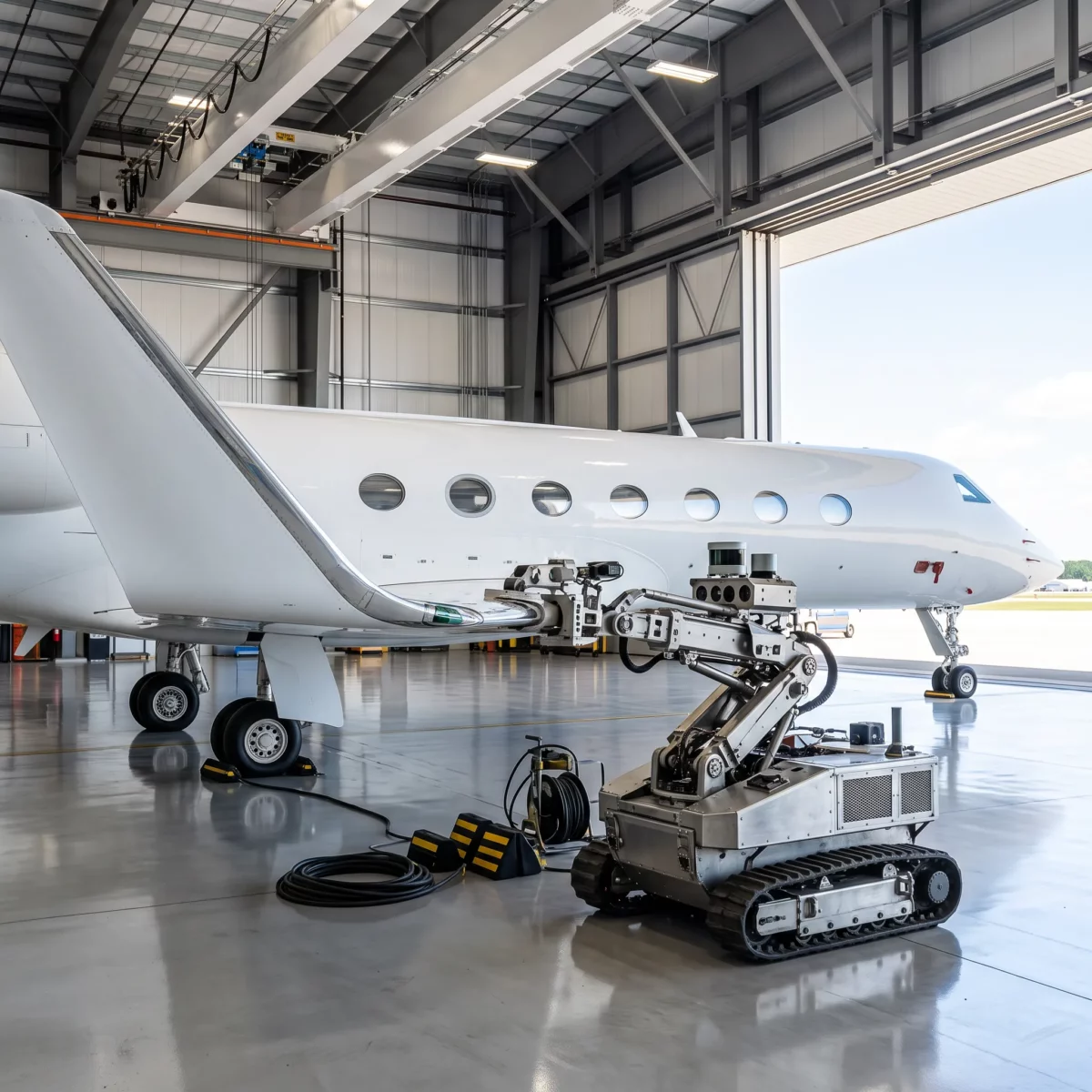
Hangar rash. Every operator dreads it and every insurer prices for it. A wingtip clips a fuel truck, a tail strikes a hangar door, and suddenly a routine tow becomes a five-figure repair bill and a grounded aircraft. Pentastar Aviation just gave the industry a new answer to that old problem, and it doesn’t involve hiring more ramp staff. It involves robots.
The Waterford, Michigan-based FBO has become the first in the country to put autonomous wingwalking robots into daily operations, working alongside its ground crews to move multi-million-dollar aircraft without the margin for human error that comes with fatigue, blind spots, or a rushed shift change.
What These Robots Actually Do
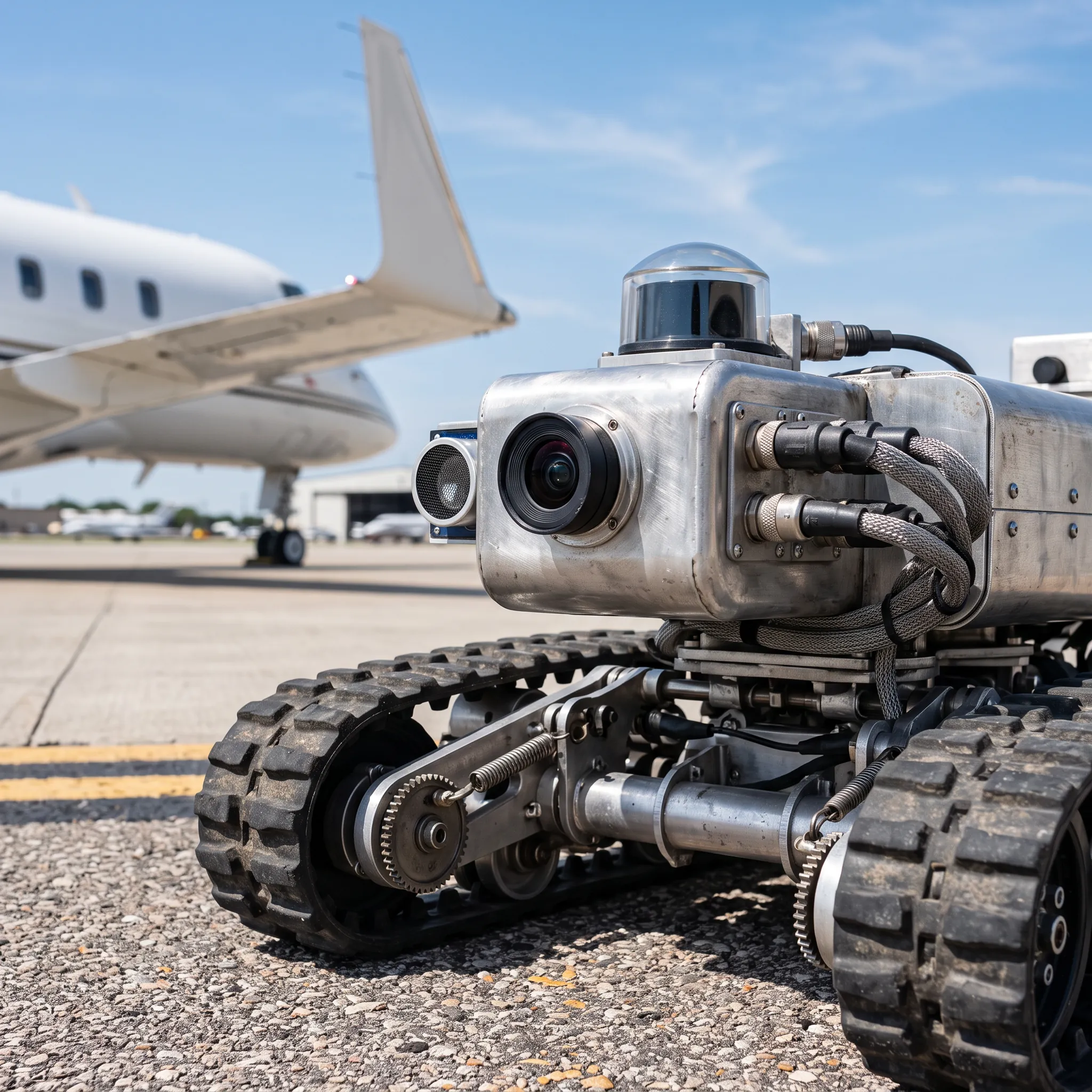
Pentastar has not published the name of the robotics manufacturer behind the units, but the company’s release is specific about what the technology does and how it’s being rolled out: a fleet of ground-based units now operates alongside human crews on every tow and pushback at the Waterford ramp, using onboard sensors to track wingtip and tail clearance in real time. Rather than relying solely on a human wingwalker pacing beside the aircraft, the autonomous units flag risk before contact occurs and log the maneuver as they go.
That distinction matters more than it might sound. A wingwalker squinting into afternoon glare on the fortieth tow of a July shift is the exact profile of a hangar rash claim. The robots don’t get tired. They don’t lose focus scrolling a phone between tows. They do one job, continuously, with sensor precision a human eye can’t match at close range.
- Continuous clearance monitoring during tows, pushbacks, and hangar positioning
- Real-time alerts to ground crew before a wingtip or tail gets close to an obstacle
- Consistent performance regardless of shift length, weather, or ramp congestion
- Data logging that gives operators a record of every move, useful for insurance and training
Why This Matters Beyond One FBO
Pentastar isn’t a small operator playing with gadgets. It runs one of the more respected FBOs in the Midwest, handling everything from Gulfstream flagships to fractional fleet aircraft, and its moves tend to get watched by peers. This deployment lands at a moment when ground handling has quietly become one of the most scrutinized parts of the private aviation experience, precisely because it’s the part clients never see but always feel the consequences of.
Think about what a single hangar rash incident actually costs. There’s the direct repair, which on a wide-body cabin or a composite winglet can run well into six figures. There’s the aircraft being out of service, which for an owner flying 300 hours a year is a real scheduling headache. And there’s the insurance claim, which nudges premiums upward for everyone on that policy. Automated wingwalking attacks the root cause rather than the aftermath.
A Broader Shift in Ramp Technology
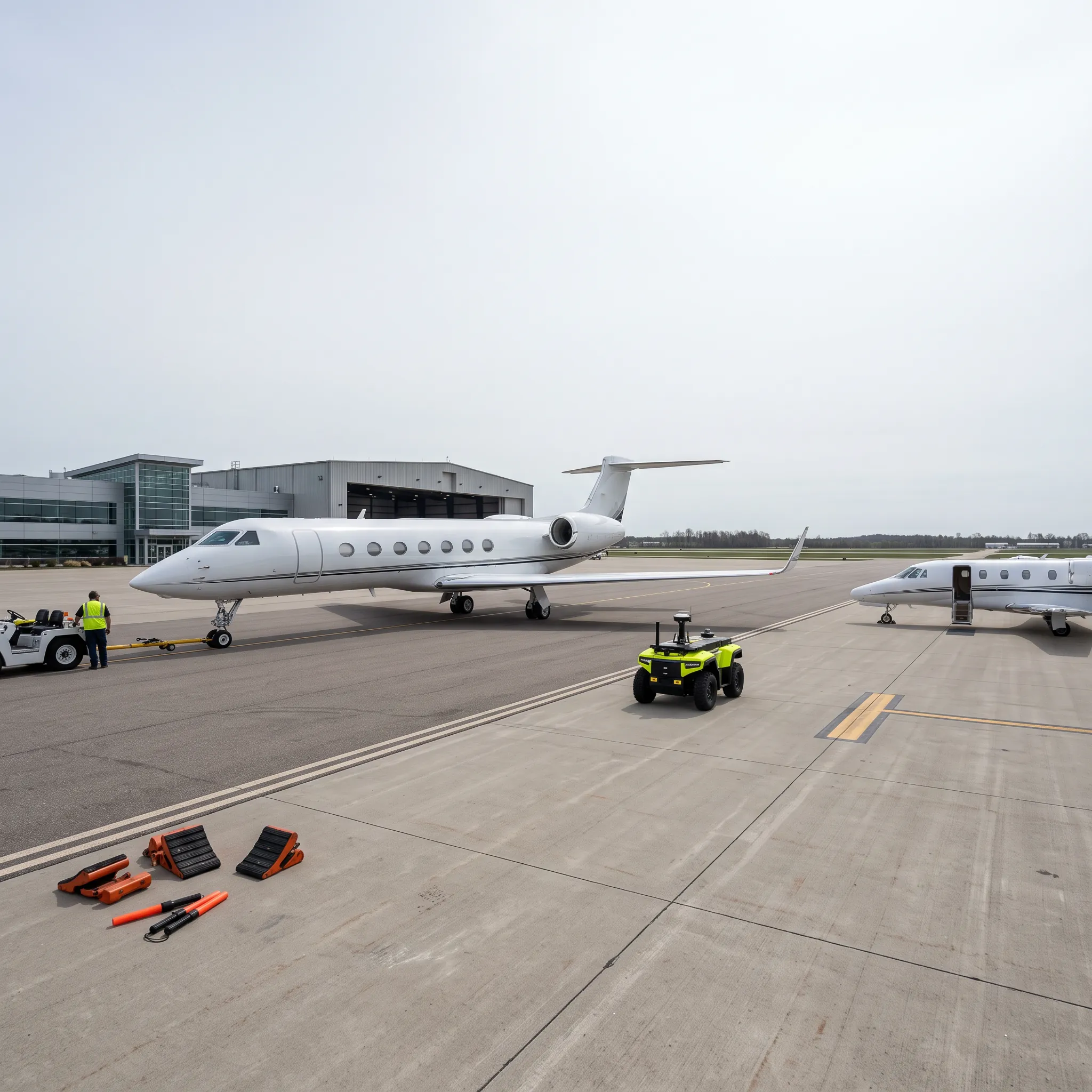
This isn’t happening in isolation. FBOs and ground handlers across the country have been layering in more sensor-driven safety tools over the past few years, from proximity-detection systems on tow tractors to camera-assisted docking guidance in tight hangars. The connection between reliable ground handling and the service-level agreements operators sign with each other has become a bigger conversation industry-wide, and it’s covered in more depth in this look at ground handling and interline SLAs shaping private aviation service.
What makes Pentastar’s move notable is the scope. This isn’t a pilot program running on one aircraft type during business hours. It’s built into daily operations, covering everything that rolls across the Waterford ramp on a given day.
| Ramp Approach | Traditional Wingwalking | Autonomous Wingwalking |
|---|---|---|
| Response Time | Dependent on human reaction and line of sight | Continuous sensor tracking with instant alerts |
| Fatigue Risk | Rises over long shifts and repeated tows | None; performance stays constant |
| Data Logging | Rarely documented beyond incident reports | Every move recorded for insurance and training |
| Coverage Consistency | Varies with staffing and weather conditions | Uniform across all tows, day or night |
Whether other FBOs follow Pentastar’s lead will likely come down to cost and insurer response as much as the technology itself. If underwriters begin offering premium credits for documented, sensor-verified tows, the calculus for the rest of the Midwest’s flagship FBOs changes quickly — and Pentastar’s own logged data from Waterford, accumulating tow by tow, may end up being the evidence that makes that case for them.