

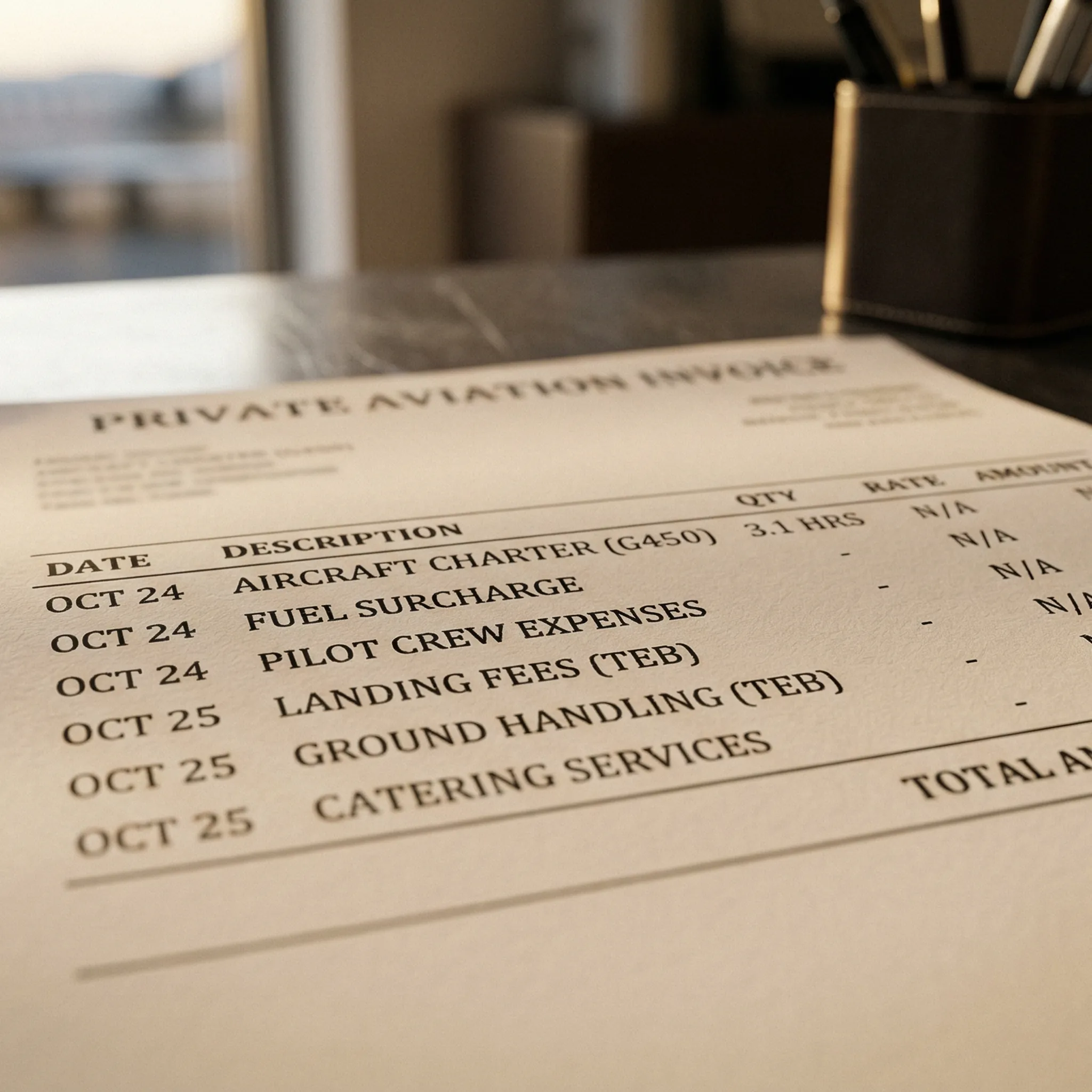
At some point, every private aviation client stares at a post-trip invoice and wonders why there are two separate line items that both seem to be about the aircraft sitting on the ground. One says landing fee. One says ramp fee. They look similar. They’re not. Understanding the difference will save you money and prevent you from asking the wrong people the wrong questions when something looks off.
Two Different Entities, Two Different Bills
The confusion starts with a simple misconception: that the FBO (fixed base operator) and the airport are the same thing. They’re not. These are two entirely separate entities with two entirely different financial relationships with your aircraft.
The airport authority owns and operates the airfield itself. The runways, the taxiways, the instrument approaches. When your aircraft lands, the airport authority charges a landing fee based on the aircraft’s certified maximum takeoff weight. A large-cabin jet like a Gulfstream G650 weighing in at roughly 99,600 pounds will pay more than a light jet at 13,000 pounds. That weight-based formula is the airport’s way of charging for runway wear, air traffic infrastructure, and operational costs. The airport collects this fee directly, and it applies whether you use any FBO services at all.
The ramp fee is something else entirely. That’s the FBO’s charge for letting your aircraft park on its ramp and use its facilities. The terminal lounge, the crew rest area, the fuel trucks, the passenger handling. The FBO is a private business operating on leased airport land, and the ramp fee is how it covers costs when an aircraft shows up but doesn’t necessarily buy fuel or request services.
Why the Ramp Fee Exists at All
Think of an FBO like a hotel with a parking lot. If you just want to leave your car in the lot without staying in the hotel, there’s a parking charge. The ramp fee works on the same logic. The FBO dedicates ground crew to marshal your aircraft in, sets up the jetway or stairs, keeps the ramp clear, and provides a secure environment. That costs money regardless of whether you fill up with Jet-A or order a catered lunch.
Ramp fees vary significantly by location, FBO brand, and aircraft size. At a busy metropolitan airport with a single premium FBO, you might see ramp fees of several hundred dollars for a short stop. At a smaller general aviation airport with competing FBOs, the same stop might cost considerably less or nothing at all with a minimum fuel purchase.
The Fuel Uplift Waiver: How the Numbers Actually Work
Here’s where most clients get frustrated on invoices. Both the landing fee and the ramp fee can sometimes be waived or discounted, but through different mechanisms and not always simultaneously.
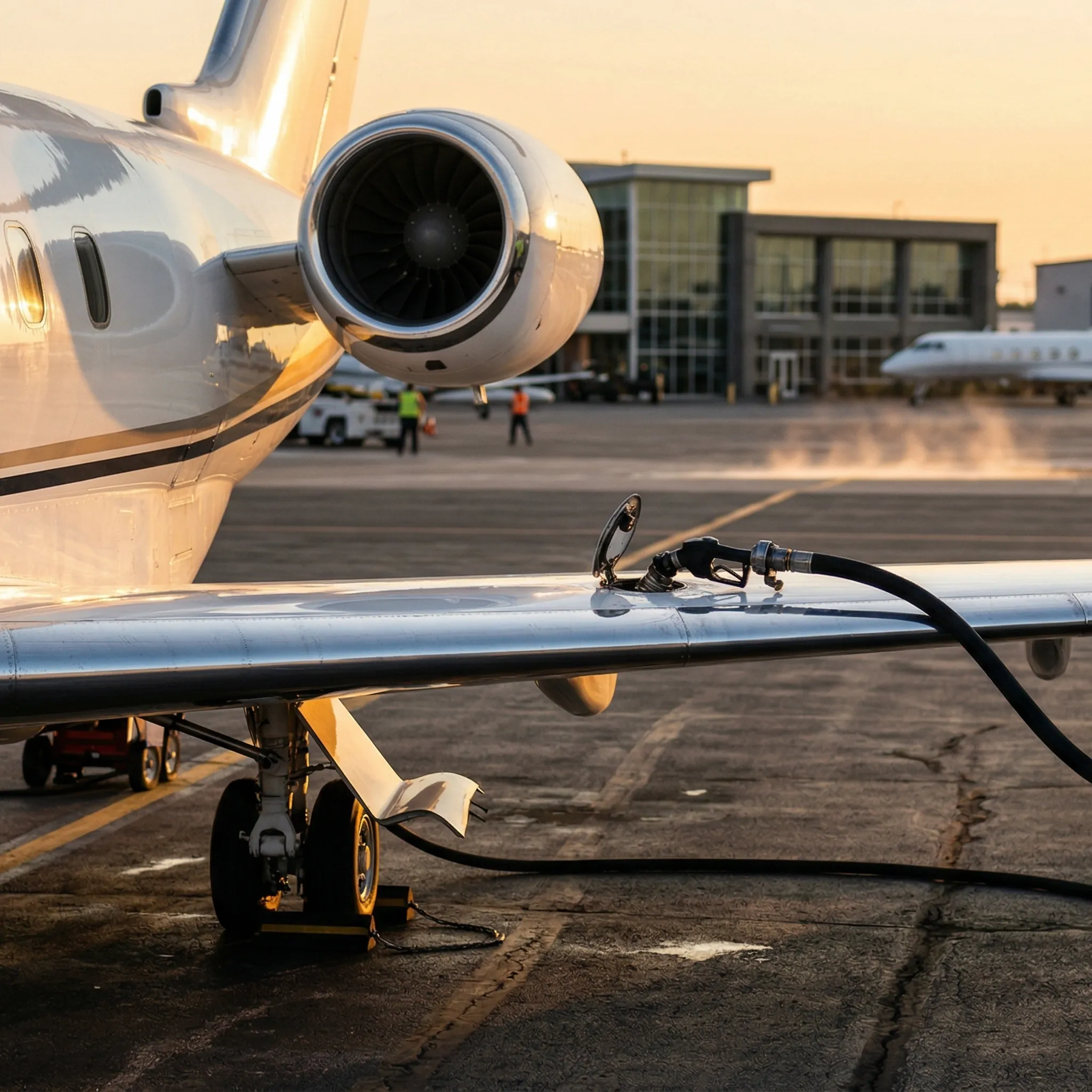
Most FBOs will waive or credit the ramp fee if you purchase a minimum number of gallons of fuel. That threshold varies. At some locations it’s 50 gallons. At others it’s 200 or more. The FBO makes its margin on fuel, so if you’re already a fuel customer, the ramp fee becomes redundant from their perspective. This is called a fuel uplift waiver, and it’s standard practice in business aviation.
The landing fee, though? That’s the airport authority’s revenue. The FBO cannot waive it on the airport’s behalf. Some FBOs will offset it as a credit against your total bill as a competitive incentive, but the underlying charge still gets paid to the airport. Understanding that distinction matters when you’re negotiating with an FBO or reviewing what’s actually covered under a jet card or charter agreement.
What the Typical Invoice Breakdown Looks Like
- Landing fee: Charged by the airport authority, based on maximum takeoff weight, non-negotiable and applies at every landing
- Ramp fee: Charged by the FBO for ground access and facilities, often waivable with sufficient fuel purchase
- Fuel surcharge: Separate from ramp fees, this reflects the FBO’s per-gallon margin above the base fuel cost
- Handling fee: Some FBOs break out passenger handling, baggage loading, and catering coordination as distinct line items
- Overnight fee: If the aircraft stays on the ramp overnight, expect an additional charge beyond the standard ramp fee
How Charter Operators and Jet Card Programs Handle These Costs
If you fly on a charter flight or through a jet card program, these fees are usually bundled into your hourly rate or quoted as trip-specific add-ons. The operator negotiates bulk fuel agreements with FBO networks like Signature Aviation or Atlantic Aviation, which often means better pricing on ramp fees than an individual aircraft owner would get walking in cold.
Fractional ownership programs typically absorb landing fees into the occupied hourly rate for domestic travel, though international trips often break them out separately because landing fees at major European or Asian airports can run into the thousands of dollars. A landing at London Heathrow or Geneva International carries a very different cost profile than touching down at a regional U.S. airport.
If you own your aircraft outright and use a management company, those fees pass through directly on your monthly statement. A good management company will flag unusual charges and ensure the fuel uplift waivers were properly applied. If you’re seeing both a ramp fee and a fuel purchase on the same stop, that’s worth a phone call.

The Practical Takeaway for Savvy Flyers
When you’re reviewing a trip invoice, the first question is simple: did the aircraft take on fuel at this stop? If yes, was the ramp fee waived? If the ramp fee is still showing up alongside a meaningful fuel purchase, that’s a billing error or an FBO with a higher waiver threshold than expected. Either way, it’s worth questioning.
The landing fee, on the other hand, will always be there. It’s as fixed as the runway itself. What changes is who absorbs it. Your charter operator, your management company, or you directly, depending on how your arrangement is structured.
Knowing the difference between these two charges doesn’t just help you read an invoice. It gives you a clearer picture of the actual cost structure behind every private aviation trip. And when you understand the structure, you can ask smarter questions, spot the errors, and negotiate from a position of knowledge rather than confusion.