
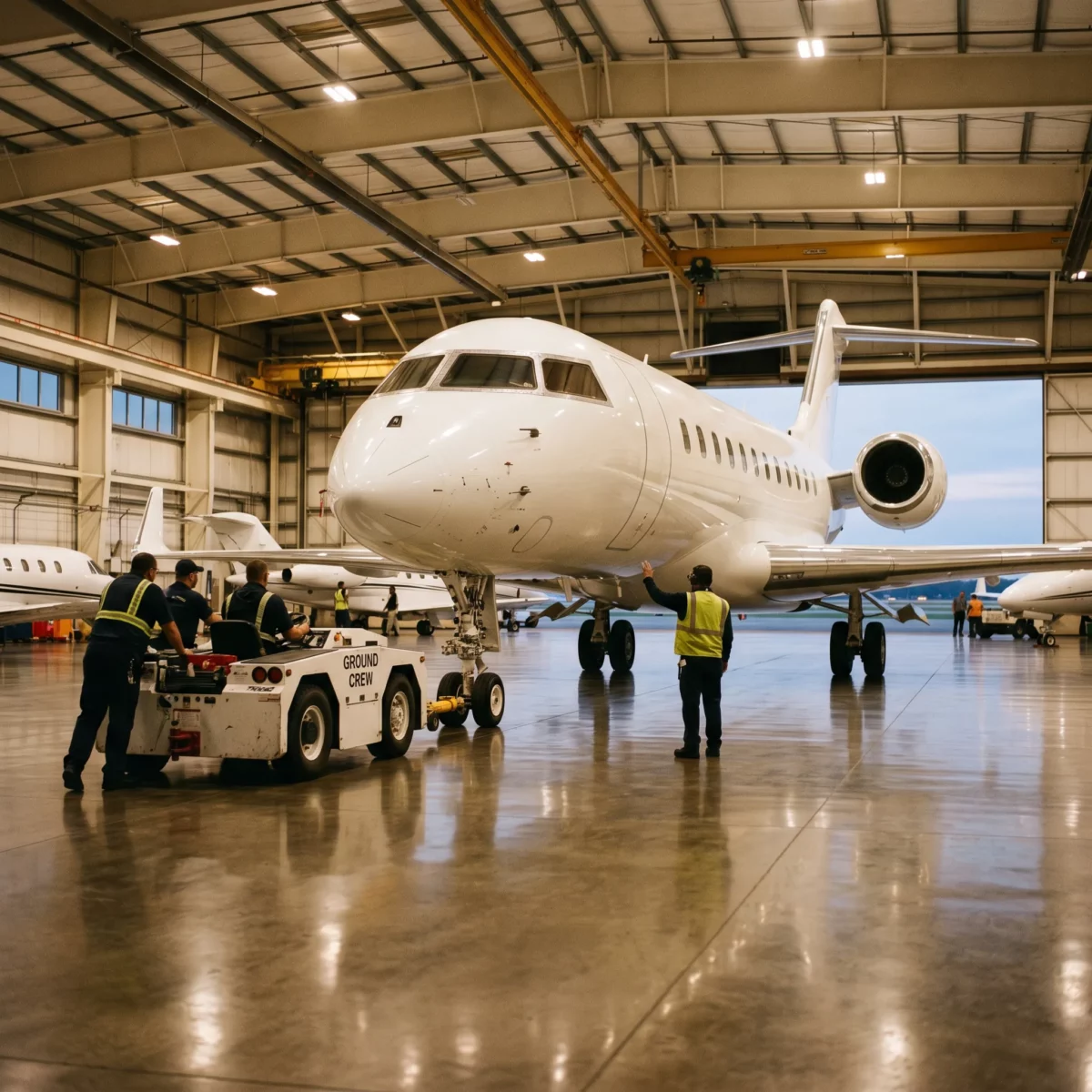
The most expensive repairs to private jets often have nothing to do with flying. A wingtip catches a hangar door frame. A tug pulls a nosewheel at the wrong angle. A ground crew member miscommunicates during a repositioning push. These moments produce what the industry calls hangar rash, and they happen more often than most owners realize.
For anyone who owns, charters, or manages a private aircraft, understanding how ground damage occurs, and how responsible operators prevent it, is genuinely useful knowledge. Not just industry trivia.
What Hangar Rash Actually Means
The term hangar rash is a catchall in business aviation for any cosmetic or structural damage that occurs while an aircraft is on the ground. Scratches, dents, scraped paint, cracked composite surfaces caused by contact with other aircraft, ground support equipment, hangar structures, or fuel trucks. The causes vary. The frustration for owners is consistent.
You won’t find the phrase in FAA documentation. It’s not a regulatory term. But every flight department manager, FBO operator, and aviation insurance adjuster knows exactly what it means when someone uses it.
The damage ranges from cosmetic scratches requiring a paint touch-up to significant composite repairs on winglets, radomes, or tail sections. Even minor repairs on a Gulfstream G650 or Bombardier Global 7500 can run into tens of thousands of dollars once you factor in inspections, certified repair station labor, and aircraft-on-ground time that disrupts your schedule.
Where Ground Damage Actually Happens
The hangar itself is the primary culprit. Modern business jets have long wingspans relative to hangar widths, and busy FBOs often pack aircraft in tight. When ground crews tow a jet in or out, the margins can be surprisingly thin.
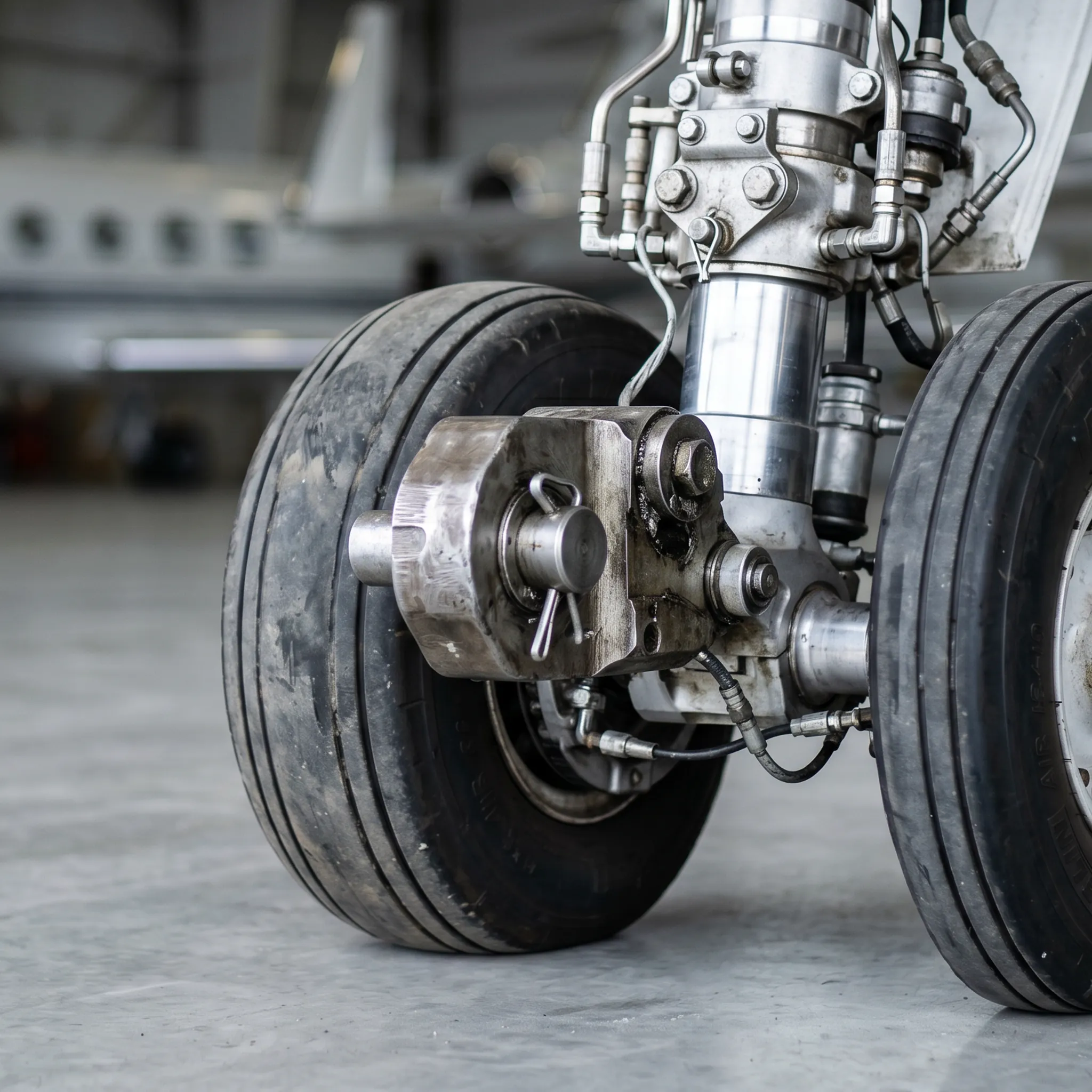
Towing operations are where hangar rash most commonly originates. Moving a multi-million-dollar aircraft requires a specialized tug, a tow bar connected to the nosewheel, and trained personnel who understand each aircraft’s specific turning limits. Different jets have different nosewheel steering limits built into their maintenance manuals. Push a Citation slightly too far in one direction and you can shear the tow bar fitting. Apply the same pressure to a Falcon and you may be looking at landing gear damage.
Wing-walking is the practice where dedicated crew members walk alongside an aircraft’s wingtips and tail during towing, maintaining visual clearance from obstacles. It sounds straightforward. In practice, wing-walkers carry serious responsibility, especially in crowded hangars with limited sightlines and a tug operator focused on what’s ahead.
Here are the scenarios ground crews and owners encounter most frequently:
- Towing incidents: Nosewheel oversteering, tow bar failures, or incorrect tug attachment cause the majority of serious ground damage events
- Hangar crowding: Wingtips and tail surfaces are most vulnerable when aircraft are repositioned in densely packed hangars, particularly during bad weather when everything moves inside simultaneously
- Ground support equipment contact: Fuel trucks, lavatory carts, baggage loaders, and air start units all operate near aircraft surfaces and occasionally make unintended contact
- Overnight repositioning: Aircraft moved after dark or with reduced crew have higher incident rates, a well-documented pattern in ground handling safety reviews
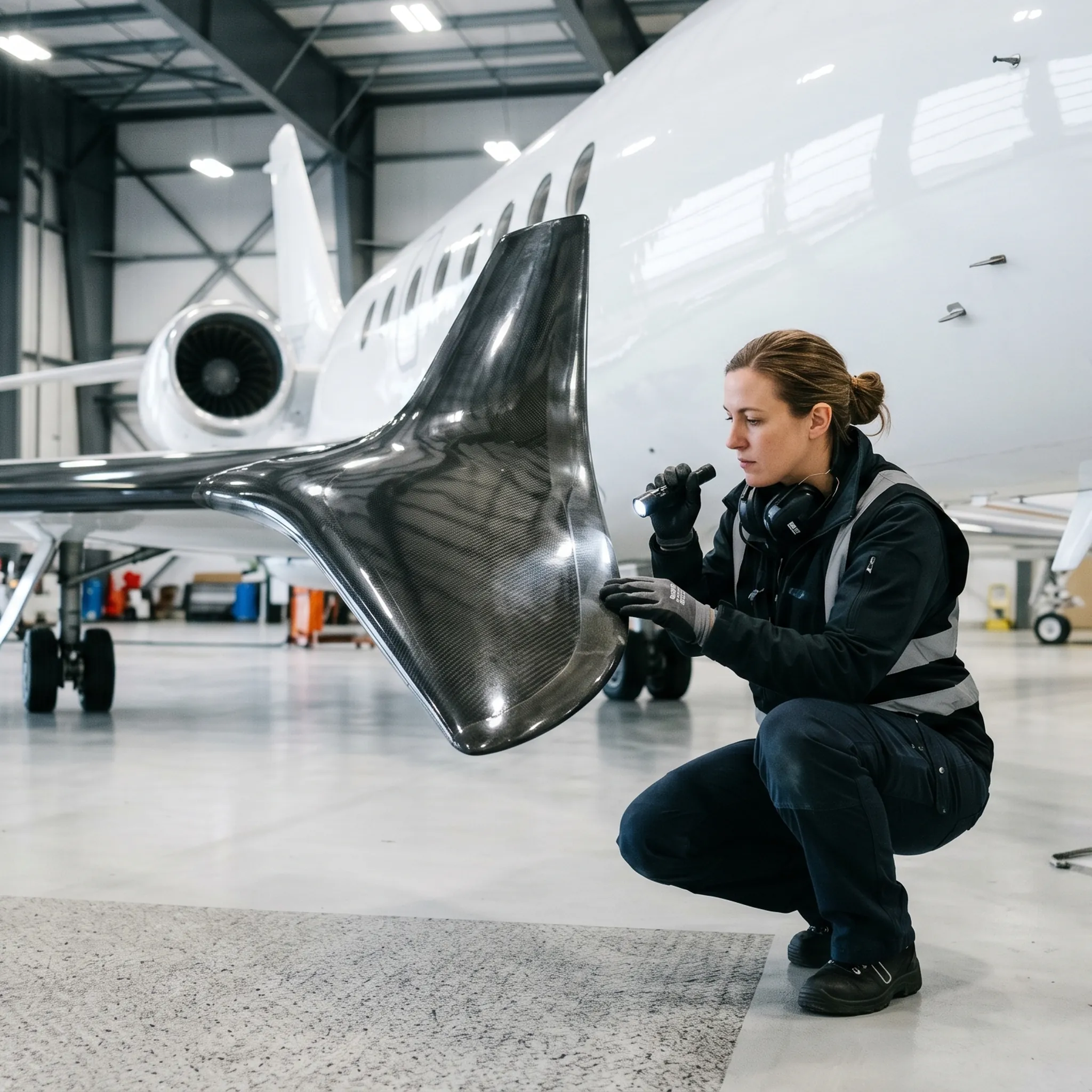
- Composite surface sensitivity: Modern jets use extensive carbon fiber and composite materials that don’t dent visibly the way aluminum does. Damage can be invisible to the naked eye but structurally significant enough to require a repair before the next flight
How FBOs Manage the Risk
Serious FBOs treat ground handling like a flight operation. The procedures are formal, documented, and trained. At top-tier facilities, every tow involves a crew briefing before the aircraft moves an inch. Aircraft movement logs track every push, who performed it, and the documented condition of the aircraft before and after.
Some operators use pre-movement walkaround checklists similar to a pilot’s pre-flight inspection, specifically to capture existing condition and catch any new damage immediately. Photos get timestamped and filed. It’s the kind of operational discipline that separates a serious facility from one that treats ground handling as a secondary concern.
The equipment matters as well. Aircraft tugs come in tow bar and towbarless configurations. Towbarless tugs cradle the nosewheel assembly directly, eliminating the mechanical leverage of a traditional tow bar. They’re widely considered safer for composite nosewheel doors and offer better maneuverability in tight spaces. Many premium FBOs and dedicated flight departments have made the shift, though the equipment investment is significant.
Training certifications from organizations like the National Air Transportation Association set baseline competency standards for ground handlers. The best FBOs go beyond those minimums, running recurrent training, conducting damage review sessions after any incident, and building safety performance into ground crew evaluations.
The Insurance Side of Hangar Rash
This is where aircraft owners often get surprised. Standard aviation hull insurance covers damage that occurs in flight. Ground damage falls under different provisions, sometimes called ground risk hull, not in motion or ground risk hull, in motion, depending on whether the aircraft was stationary or being moved at the time of the incident.
The distinction matters because deductibles and coverage limits can differ significantly between those categories. Some policies exclude certain types of ground handling damage entirely, particularly if the aircraft was moved by a third party without proper authorization or if the handling didn’t comply with the manufacturer’s ground servicing manual. Reading the fine print on this specific policy language is worth your time.
| Damage Scenario | Coverage Type | Key Consideration |
|---|---|---|
| Aircraft stationary, third party contact | Ground risk hull, not in motion | Third-party FBO liability may apply |
| Aircraft being towed, ground crew error | Ground risk hull, in motion | Authorization and procedure compliance matter |
| GSE contact during fueling or servicing | Ground risk hull, not in motion | FBO general liability typically engaged |
If an FBO employee or contract ground handler damages your aircraft, the FBO’s general liability insurance should cover it. Getting them to accept responsibility quickly and cleanly is not always straightforward, though. Documentation of the aircraft’s pre-existing condition, including timestamped walkaround photos taken on arrival, is the single most useful protection an owner can maintain.
Charter clients have less direct exposure here since the aircraft operator carries hull insurance. But ground damage can cause last-minute maintenance holds that ground trips with little notice. It’s practical knowledge for anyone who charters frequently.
What Smart Owners Do Differently
Owners who avoid hangar rash headaches tend to share a few consistent habits. They ask specific questions when placing their aircraft at any FBO: What is your towing protocol for this aircraft type? Do you use towbarless equipment? Who authorizes after-hours movements, and how is that logged?
They also review their hull insurance language carefully, particularly the ground risk provisions and any exclusions tied to third-party handling. And they keep a standing practice of documenting their aircraft’s condition with a full walkaround photo series on every arrival at an unfamiliar facility.
For those placing aircraft on charter programs or with management companies, the management agreement should address ground handling standards and liability allocation explicitly. Vague language about industry-standard care rarely helps when you’re holding a five-figure repair invoice.
Ground handling is one of those areas where the risk stays invisible until it doesn’t. Understanding it puts owners in a position to protect a significant asset and avoid the kind of delays and disputes that no one wants to deal with between flights.