
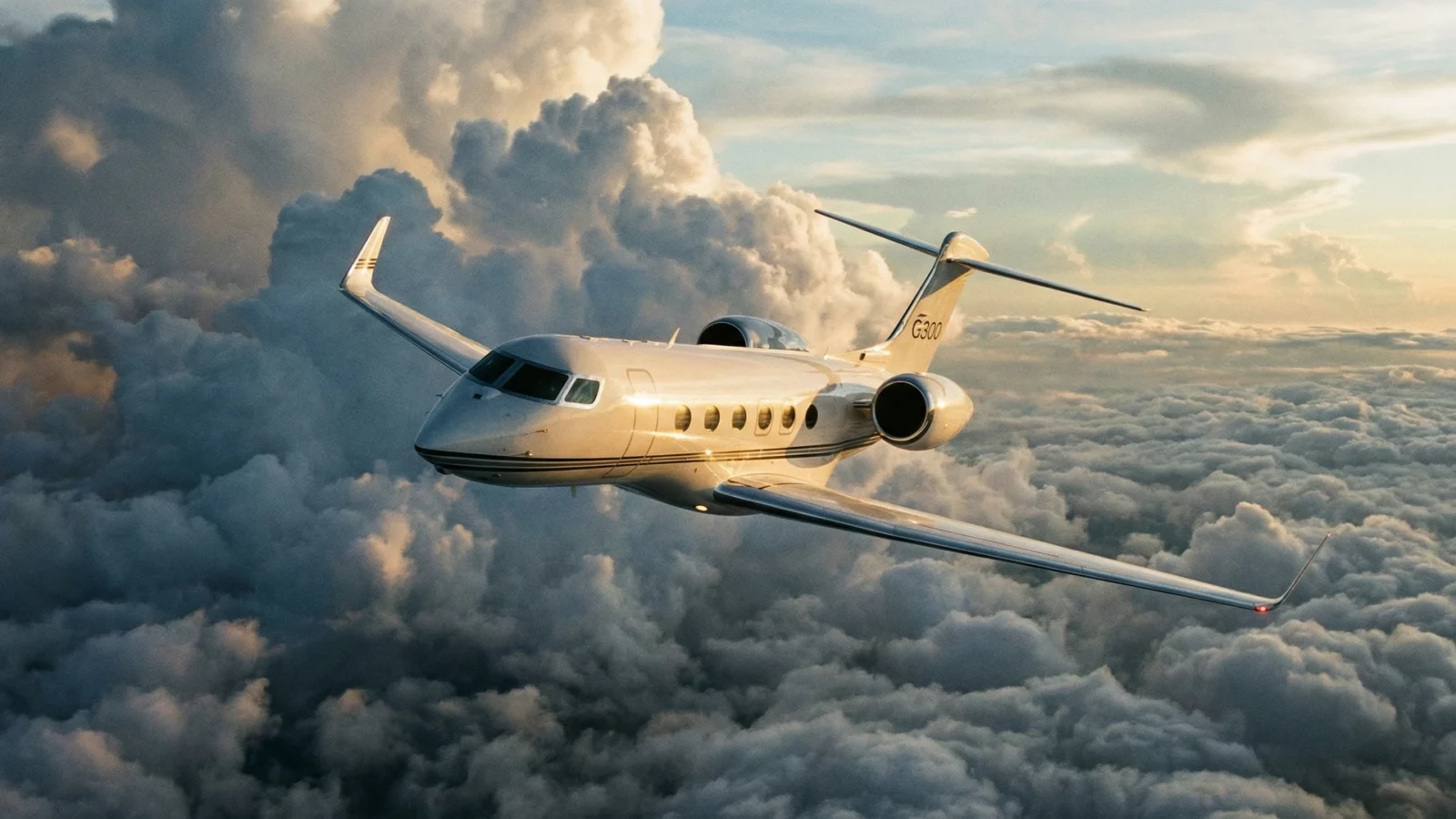
Gulfstream doesn’t typically play in the super-midsize segment. The company built its reputation on large-cabin, ultra-long-range jets. But industry rumors suggest the manufacturer may be developing a G300 that could change that calculation. If these reports prove accurate, this aircraft would represent Gulfstream’s first serious attempt to disrupt a market that Bombardier’s Challenger 3500 has dominated since its 2022 launch.
The strategy would be smart. Rather than developing an entirely new platform, speculation suggests Gulfstream could leverage technology from its flagship G700 and apply it to a smaller, more accessible package. For operators who want Gulfstream capabilities without the G700’s $75-78 million price tag, a rumored G300 could offer an intriguing alternative—if the circulating performance projections prove accurate.
Editor’s Note: Gulfstream has not officially announced a G300 model. This analysis examines how such an aircraft might compete based on industry speculation and leaked performance targets. All G300 specifications referenced here are unconfirmed and should be considered preliminary projections rather than verified data.
Technology That Could Trickle Down
If developed, a G300 would likely borrow heavily from the G700 playbook. Industry sources suggest the flight deck could feature the same Symmetry Flight Deck architecture that debuted on Gulfstream’s flagship. Pilots transitioning from larger Gulfstreams would find the interface instantly familiar. That matters for flight departments operating mixed fleets.
Reported specifications indicate the avionics package might include predictive landing performance and Enhanced Flight Vision System technology. These aren’t standard features in the super-midsize category. Most competitors still charge extra for synthetic vision or advanced weather radar. If Gulfstream follows its typical approach, these would likely be baseline equipment.
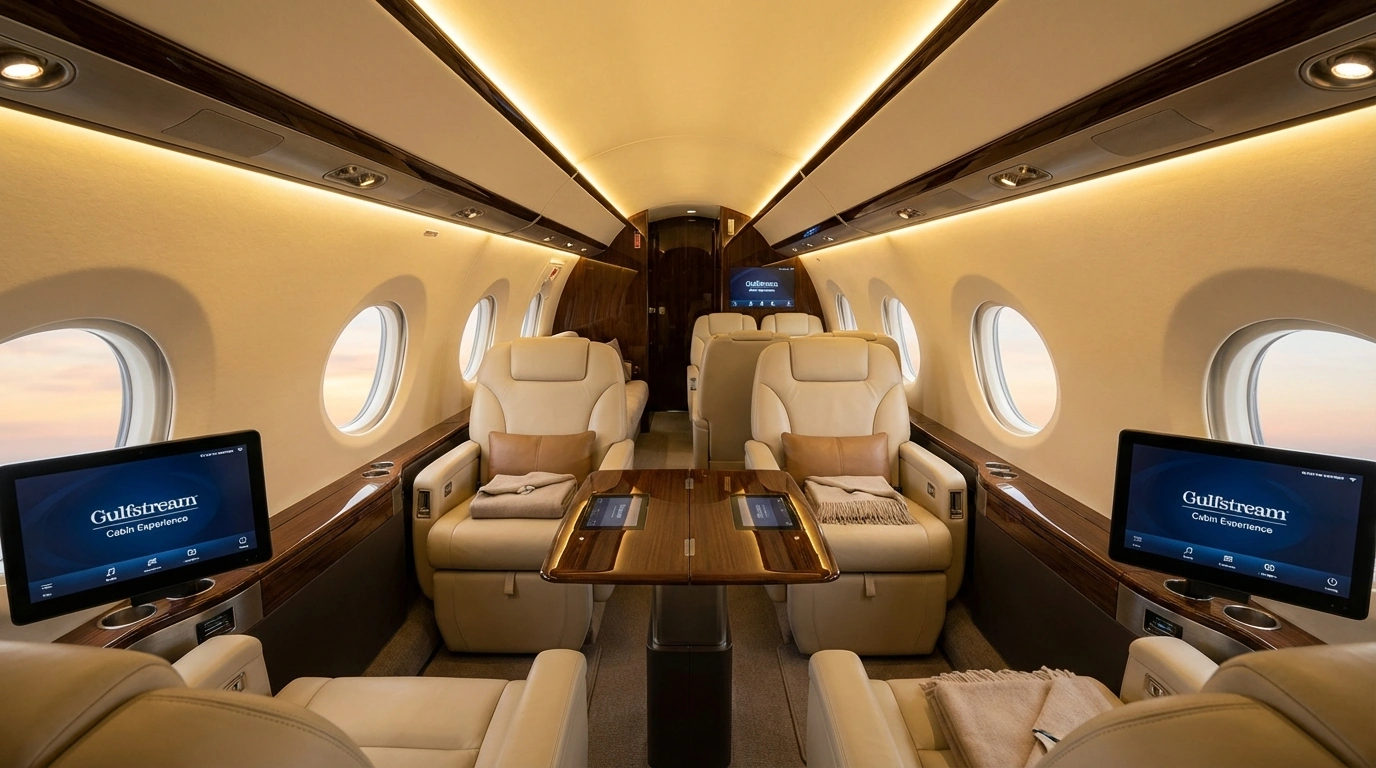
More importantly, leaked details suggest the G300 could inherit the Gulfstream Cabin Experience environmental control system. This is where such an aircraft would separate itself from traditional super-midsize competitors.
The Cabin Altitude Advantage
At 45,000 feet, the rumored G300 would reportedly maintain a cabin altitude of 4,850 feet, according to circulating performance projections. The Challenger 3500 holds its cabin at 4,850 feet as well when cruising at 41,000 feet. On paper, that looks identical. But here’s what the specifications don’t show: the G300 would reportedly achieve this pressurization while flying significantly higher.
Higher cruise altitude means better fuel efficiency and smoother rides above weather systems. It also provides more options when air traffic control needs to reroute aircraft. Pilots appreciate the operational flexibility.
The environmental system would also reportedly cycle fresh air through the cabin every two minutes, based on typical Gulfstream design philosophy. That’s faster than most competitors. For passengers spending five or six hours in the air, the difference is noticeable. You arrive feeling less fatigued, less dehydrated, and more alert.
Cabin Comfort Beyond Altitude
Reported specifications suggest the G300 cabin could stretch 25.5 feet in length and offer 6.2 feet of headroom. The Challenger 3500 provides slightly more space at 28.5 feet long with 6.1 feet of cabin height. Bombardier maintains the edge in pure volume.
Where Gulfstream could pull ahead is noise management. Leaked performance data suggests the G300 cabin might register at 47 decibels during cruise. That would be remarkably quiet for a super-midsize jet. You could hold a normal conversation from opposite ends of the cabin without raising your voice. The Challenger 3500 comes close but doesn’t quite match that acoustic performance.
Range and Mission Versatility
Circulating specifications suggest the G300 could deliver a maximum range of 3,600 nautical miles at Mach 0.85. That would connect New York to London or Los Angeles to Cabo and back without refueling. The Challenger 3500 offers 3,400 nautical miles at similar speeds. Both aircraft handle typical North American missions with ease.
But range tells only part of the story. If performance projections prove accurate, the G300 could operate from shorter runways more effectively than most competitors. Reported capabilities suggest it might depart from 5,000-foot strips at sea level in standard conditions with typical passenger loads. That would open access to airports like Aspen and Telluride that challenge larger jets.
For fractional operators and charter companies, this versatility matters. The aircraft would work equally well for quick regional hops or coast-to-coast missions. Fleet planners wouldn’t need to maintain separate aircraft types for different mission profiles.
Speed and Efficiency
Leaked specifications suggest maximum cruise speed could reach Mach 0.90, matching the Challenger 3500. Neither aircraft would sacrifice speed for efficiency. But fuel burn tells a different story. Reported performance data indicates the G300 might consume approximately 250 gallons per hour during typical cruise. The Challenger 3500 burns slightly less at 240 gallons per hour.
Over a five-hour flight, that’s about 50 gallons difference. At current Jet-A prices, the cost delta is negligible for most operators. But for high-utilization charter fleets flying 500-plus hours annually, those savings compound.
What This Could Mean for Buyers
If launched, the G300 likely wouldn’t try to undercut the Challenger 3500 on price. Industry estimates suggest list pricing around $30-32 million, roughly equivalent to Bombardier’s offering. Instead, Gulfstream would be betting that buyers will pay similar money for superior technology and brand cachet.
That calculation works for certain buyers. Flight departments already operating Gulfstreams would gain fleet commonality. Training costs decrease. Maintenance procedures align across aircraft types. Parts inventory overlaps.
For first-time buyers choosing between the two aircraft, the decision becomes more nuanced. The Challenger 3500 offers a slightly roomier cabin and lower operating costs. A G300 would likely deliver better high-altitude performance and more advanced avionics. Your mission profile determines which advantages matter most.
Charter operators face a different equation. Industry sources suggest Gulfstream aircraft often command premium booking rates over comparable models, with some operators reporting 8-12% higher charter prices. That brand perception drives booking decisions, even when the functional differences are modest.
The Competitive Landscape Could Shift
Bombardier has owned the super-midsize segment for years. The Challenger 300 series became the default choice for operators who needed something between light jets and large-cabin aircraft. A Gulfstream entry would test that dominance.
A G300 wouldn’t replace the Challenger 3500 overnight. Bombardier’s established customer base, proven reliability record, and extensive service network provide substantial advantages. But Gulfstream brings manufacturing execution and customer support that few competitors match.
For the private aviation market, this competition would benefit everyone. It pushes both manufacturers to improve their products, enhance their service offerings, and sharpen their pricing. Buyers gain more options. Performance standards rise across the segment.
The super-midsize market has never been more sophisticated. If Gulfstream does enter with a G300, it would join the Challenger 3500 at the current peak of what’s possible in this size category. For operators prioritizing fleet commonality and high-altitude performance, a G300 could deliver compelling advantages. For those maximizing cabin volume and proven operating economics, the Challenger 3500 remains the established choice. Until Gulfstream makes an official announcement, the super-midsize segment remains Bombardier’s domain to defend.