

Fourteen years running the same aircraft as the best-selling light jet on earth is not luck. It’s a pattern. Embraer just gave the world another reason to keep buying the Phenom 300 lineage, unveiling the Phenom 300EV with deliveries slated for 2028. For an aircraft that’s dominated its category since 2012, the question isn’t whether it’ll sell. It’s what Embraer changed to keep it winning.
The short answer: safety systems that used to live only in much larger jets, a smarter cockpit, and a cabin that finally addresses the small annoyances longtime owners have quietly complained about for years.
Same Legs, Smarter Brain
Performance numbers haven’t moved much, and that’s fine. The Phenom 300EV keeps roughly the same top speed as its predecessor, around 533 mph according to Embraer’s published specifications, and holds onto the title of fastest and furthest-flying light jet on the market. Range comes in at approximately 2,055 nautical miles, enough to connect New York to Denver or Miami to Los Cabos nonstop, with a payload capacity of roughly 3,066 pounds.
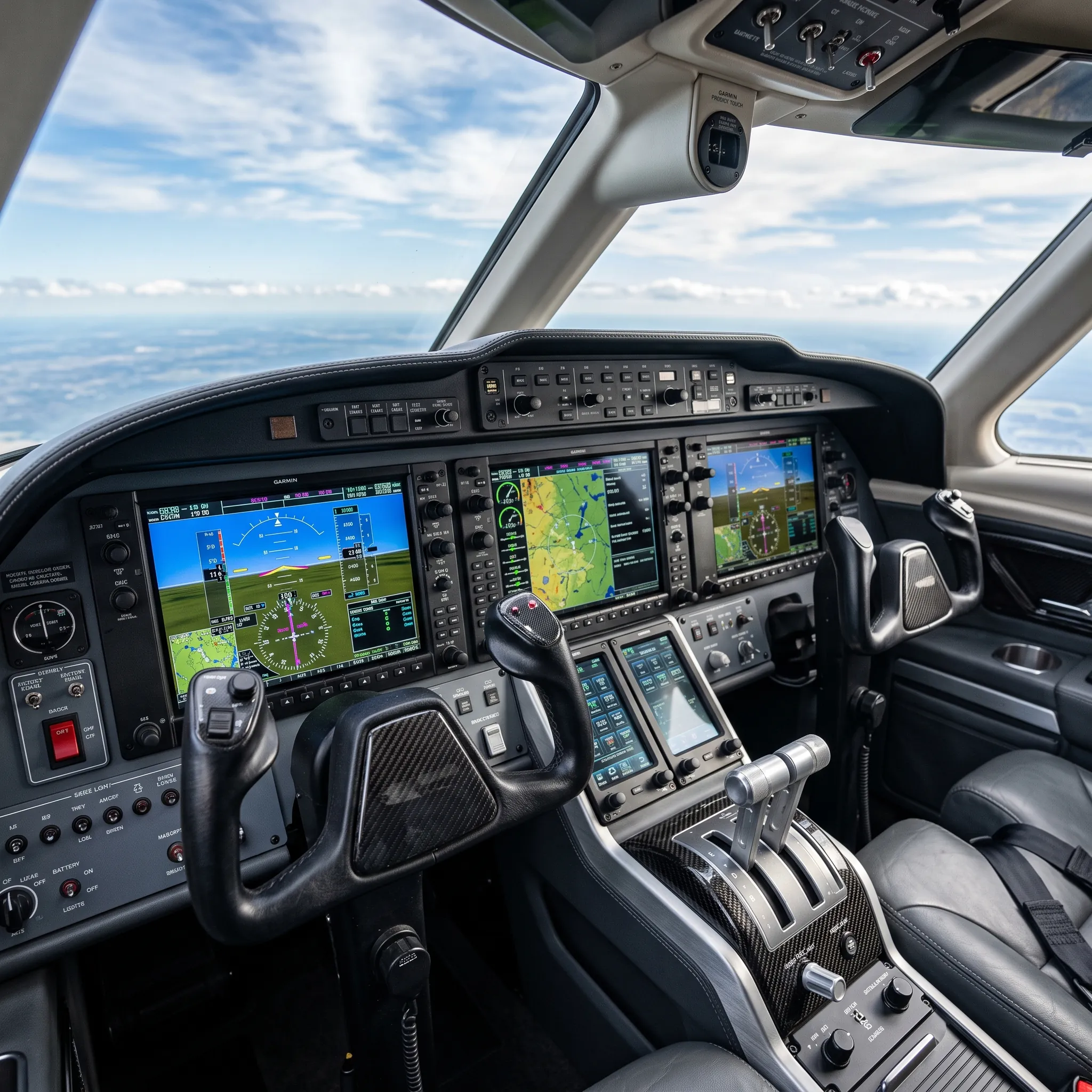
What changed is what happens up front. The jet gets a customized Garmin G3000 Prodigy Touch flight deck, and buried in that upgrade is something genuinely significant: the Phenom 300EV now offers Emergency Autoland, joining a small but growing group of cabin-class jets with the capability. If the pilot becomes unresponsive, the aircraft can land itself. That technology debuted in smaller single-pilot aircraft, and its arrival on the Phenom 300EV says something about where the whole light jet category is headed.
Under the Skin
Embraer didn’t stop at the autoland headline. The company added an Autobrake system for more consistent stopping performance on shorter or wet runways, and a Multi-Purpose Electronic Controller that brings rudder-by-wire into the aircraft. That last piece sounds technical, and it is, but the practical effect is simple: less physical workload for the pilot on crosswind landings and during single-engine scenarios. For owner-flown Phenoms, and there are plenty of them, that’s the kind of change you feel on a gusty approach into Aspen or Nantucket.
What Changed Inside the Cabin
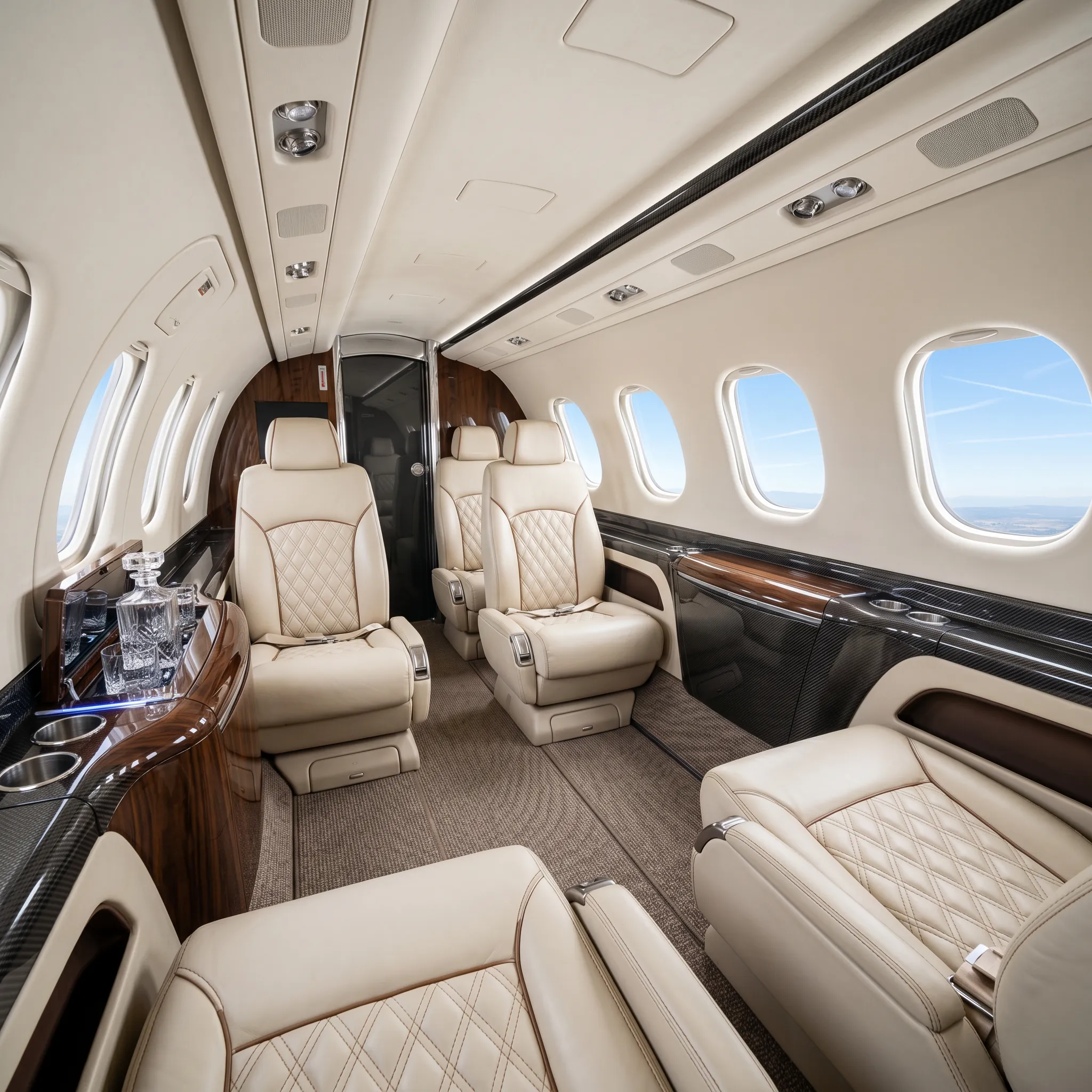
Light jet cabins live and die on small details, because there’s no room to hide a bad one. Embraer clearly went through the Phenom 300E’s known irritations and worked down the list.
- Redesigned refreshment center with improved storage and access for crew and passengers
- Upgraded temperature control for more even cabin climate on longer legs
- New air ionizer aimed at cabin air quality, a feature more buyers are asking about post-2020
- Full vacuum lavatory that’s odorless, a genuine upgrade over older belted systems
- Best-in-class cabin pressurization and the largest windows in the category, both carried over from the outgoing model
The air ionizer alone probably won’t sell a jet. But ask any owner who’s flown into a smoky FBO in the Rockies during wildfire season whether cabin air quality matters, and you’ll get a quick answer. These are the details that separate a jet people tolerate from one they actually enjoy flying.
How the 300EV Stacks Up Against Its Predecessor
For current Phenom 300E owners weighing an upgrade, or buyers deciding whether to wait for the newer model, here’s the side-by-side that matters most. Figures for both models reflect Embraer’s published specifications and should be confirmed against final certification data as deliveries approach.
| Spec | Phenom 300E | Phenom 300EV |
|---|---|---|
| Top speed | Approx. 533 mph | Approx. 533 mph |
| Range | Approx. 2,010 nm | Approx. 2,055 nm |
| Payload capacity | Approx. 3,020 lbs | Approx. 3,066 lbs |
| Flight deck | Garmin G3000 Prodigy Touch | Customized G3000 Prodigy Touch with Emergency Autoland |
| Lavatory | Belted lavatory option | Full vacuum, odorless lavatory |
Refinement, not raw performance, separates the two jets. Embraer is future-proofing an aircraft that competitors have spent over a decade failing to dethrone.
Why This Matters for the Charter and Fractional Market
The Phenom 300 family isn’t just a favorite among private owners; charter operators and fractional programs lean on it too, drawn to its speed, short-field performance, and relatively low operating cost for a cabin-class jet. When Embraer upgrades safety systems at this level, the effect doesn’t stop with new buyers. Charter clients feel it within a few years, once these features become the baseline they expect on any jet card flight.
Emergency Autoland on the Phenom 300EV means Embraer is catching up rather than leading. Honda’s HondaJet Elite II, a direct rival on size and mission, was certified with Garmin Emergency Autoland in early 2026, the first twin-engine jet to get it. Cessna is bringing the same system to its Citation Gen3 light jets, starting with the CJ4 Gen3. Within a few years, expect autoland to be standard equipment across the light jet class.
What to Watch Before 2028
Deliveries are still roughly two years out, which gives Embraer time to firm up pricing and gives buyers time to decide whether waiting makes sense. Current Phenom 300E owners considering resale should pay attention to how the market prices outgoing units once the 300EV timeline solidifies. Aircraft with strong safety upgrades tend to hold value better, and buyers increasingly shop by avionics generation, not just airframe age.
For anyone shopping the light jet category over the next few years, the Phenom 300EV just reset the bar again. Catching up on speed or range was never going to be the hard part for rivals. The real question is whether they can match a safety feature set that, until recently, only showed up in jets built for a different price bracket.