
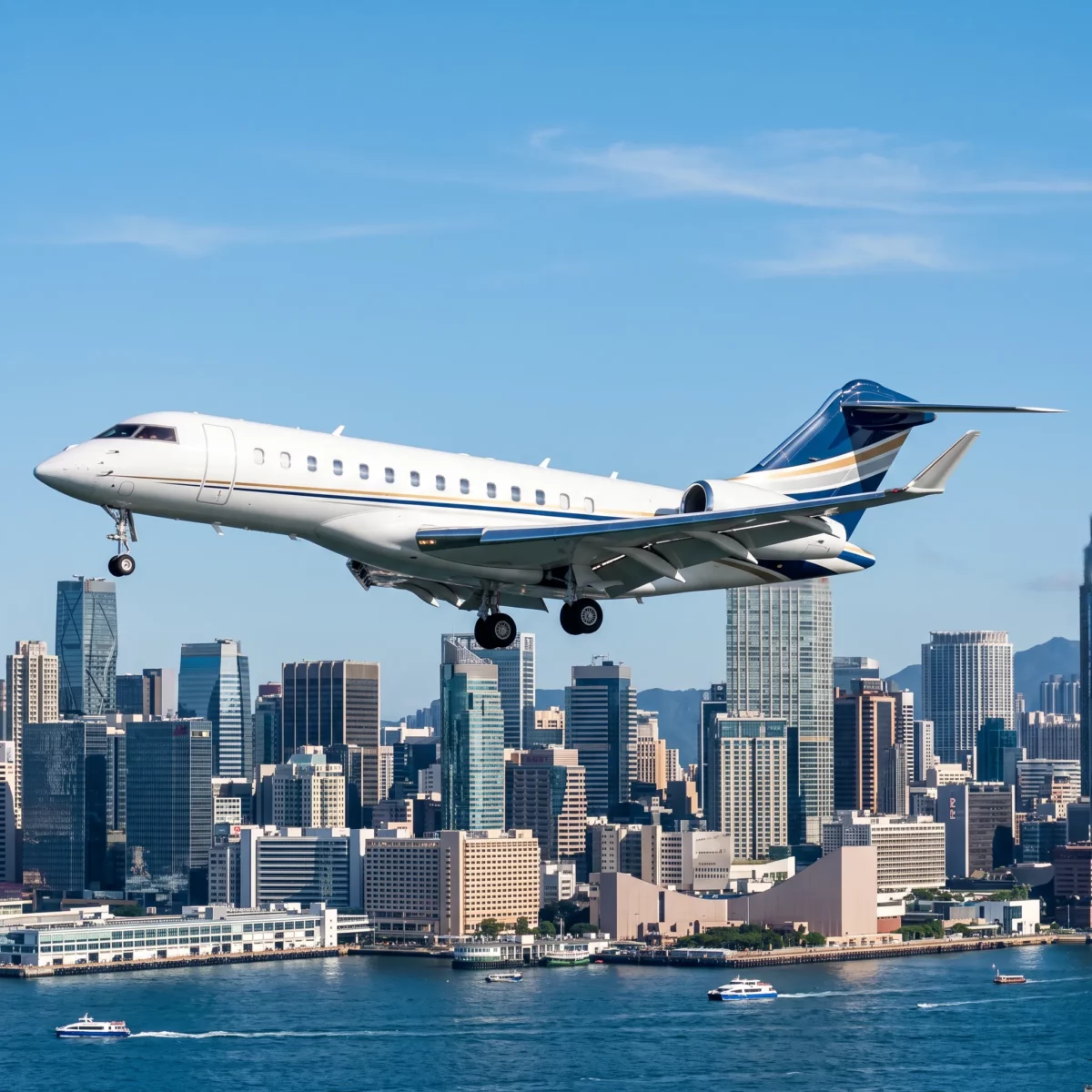
London City Airport has always been the private aviation equivalent of a locked door for ultra-long-range jets. The runway is short, the approach is steep, and the surrounding neighborhoods leave zero margin for error. Now that door has opened. Bombardier confirmed in a company statement that the Bombardier Global 8000 has secured UK Civil Aviation Authority approval for steep-approach operations at London City Airport, putting Bombardier’s flagship in a category previously reserved for a handful of specially certified regional jets.
For owners and charter clients, this is not a paperwork footnote. It means a true intercontinental aircraft can now drop passengers into the financial heart of London, minutes from Canary Wharf and the City, instead of routing them through Luton and into a 45-minute car ride.
Why London City Has Kept Big Jets Out
London City’s runway measures just 1,508 meters, short enough that most large-cabin jets need not apply. The bigger challenge is the glide slope. Standard airports use a 3-degree approach. London City demands a 5.5-degree steep approach, nearly double the descent angle, to clear noise-sensitive residential zones and stay clipped away from the Docklands skyline.
That steep angle changes everything about how a jet flies its final two minutes. Descent rate increases. Sink rate near the runway threshold gets aggressive. And the flare, that final nose-up moment before touchdown, has to happen faster and more precisely than on a normal approach. Get it wrong and you either land too hard or float past the usable runway. There’s no room for either.

The Engineering Behind the Approval
Bombardier didn’t just get lucky here. The Global 8000 inherited a fly-by-wire flight control system from its Global 7500 predecessor, and that system is what makes steep-approach certification possible on an aircraft this size.
- Fly-by-wire flight controls: Computer-mediated inputs allow far more precise handling during the compressed timeline of a steep descent than traditional hydraulic-mechanical linkages.
- High-lift wing design: The Global 8000’s wing generates enough lift at lower approach speeds to keep the aircraft controllable on the steeper glide path without demanding excessive thrust changes.
- Advanced autobrake and ground spoiler deployment: Critical for stopping within London City’s short runway once the aircraft touches down at a higher-than-normal sink rate.
- Reinforced landing gear geometry: Built to absorb the firmer touchdown that a steep approach inevitably produces.
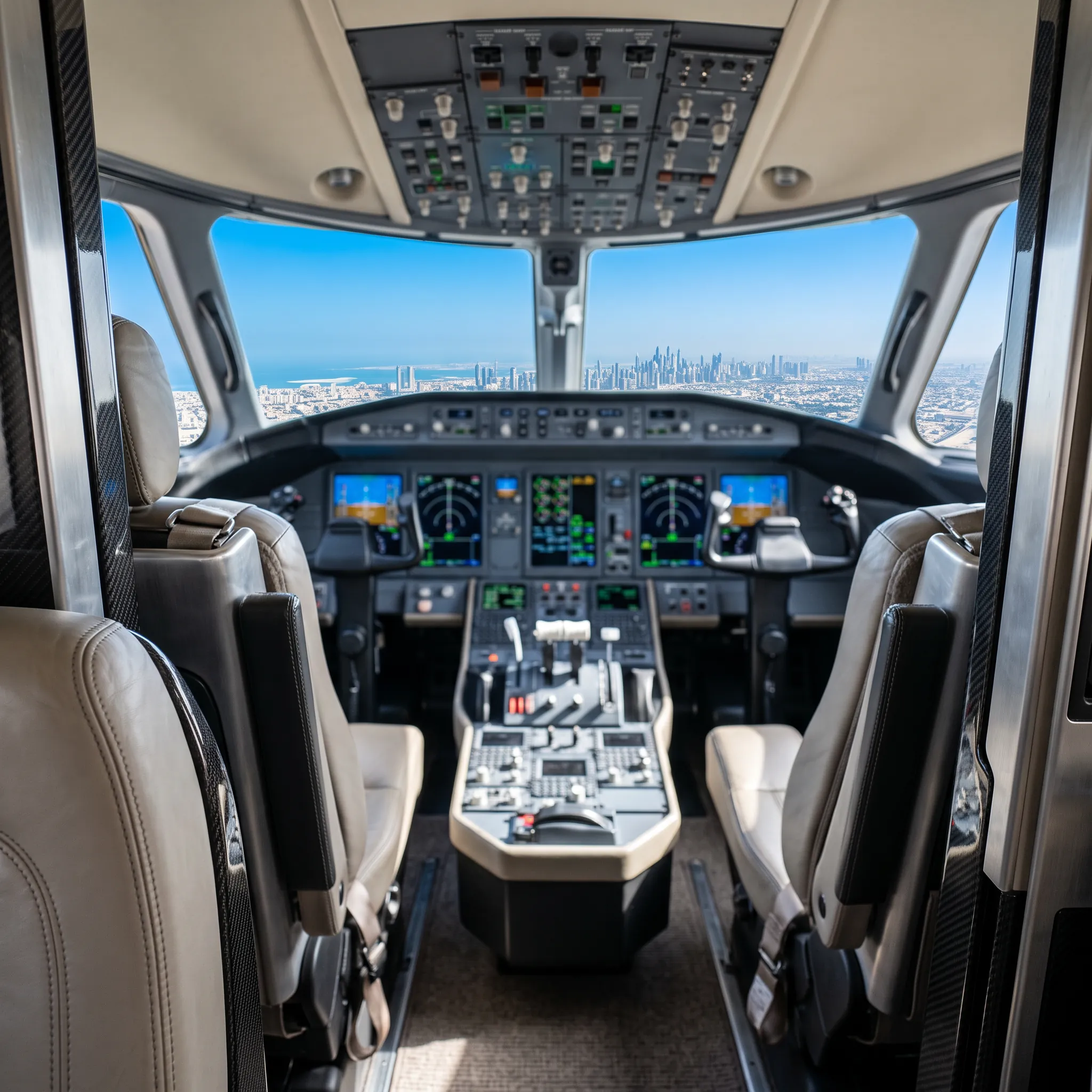
Pilots flying into London City on the Global 8000 will notice the workload difference immediately compared to a standard approach. The aircraft’s envelope protection features, part of the fly-by-wire architecture, act as a safety net during a maneuver that leaves very little margin for pilot error.
What This Means for Owners and Charter Clients
The practical upside is time. A financier flying in from New York on a Global 8000 can now land inside London’s financial district rather than adding a 45-minute ground transfer from Luton through traffic. For clients who measure trips in minutes saved, that’s the entire value proposition of owning or chartering a jet in this class.
This also reshapes the competitive conversation. Gulfstream’s flagship models have long dominated headlines around range records, something covered in our look at Gulfstream vs. Bombardier’s ongoing battle of ranges. Airport access, though, is its own competitive battlefield, and London City approval gives Bombardier a genuine edge in a market where every minute of ground transfer counts.
Quick Comparison: Standard vs. Steep Approach
| Metric | Standard Approach | London City Steep Approach |
|---|---|---|
| Glide slope angle | 3 degrees | 5.5 degrees |
| Typical runway length required | 6,000+ feet | 1,508 meters (about 4,948 feet) |
| Descent rate at threshold | Moderate | Steeper, requires precise flare timing |
A Broader Signal for Business Aviation
Regulatory approvals like this rarely make front-page news outside the trade press, but they quietly reshape where private jets can actually go. London City Airport joins a short list of steep-approach-certified destinations, and the Global 8000’s addition to that list expands options for anyone chartering or operating in this segment. Airport access, not range or speed, often determines whether an ultra-long-range jet earns its keep. Our guide on where private jets can land covers just how much runway length and approach category can limit an owner’s itinerary, even on a jet capable of flying halfway around the world.
The Global 8000 has already made headlines this year for speed, including a widely discussed Los Angeles to London speed record. Pairing that kind of performance with access to one of Europe’s most restrictive airports gives Bombardier a rare combination: an aircraft that flies farther and faster than almost anything in its class, and can now land closer to where its passengers actually need to be.
Looking Ahead
Expect other operators serving London’s financial and diplomatic clientele to push for similar access as the Global 8000 fleet grows. Steep-approach certification is expensive and time-consuming to earn, which means this advantage will hold for a while. Gulfstream, still chasing Bombardier on range and now facing this access gap too, will likely be the next manufacturer under pressure to pursue London City certification for its own long-range models.