
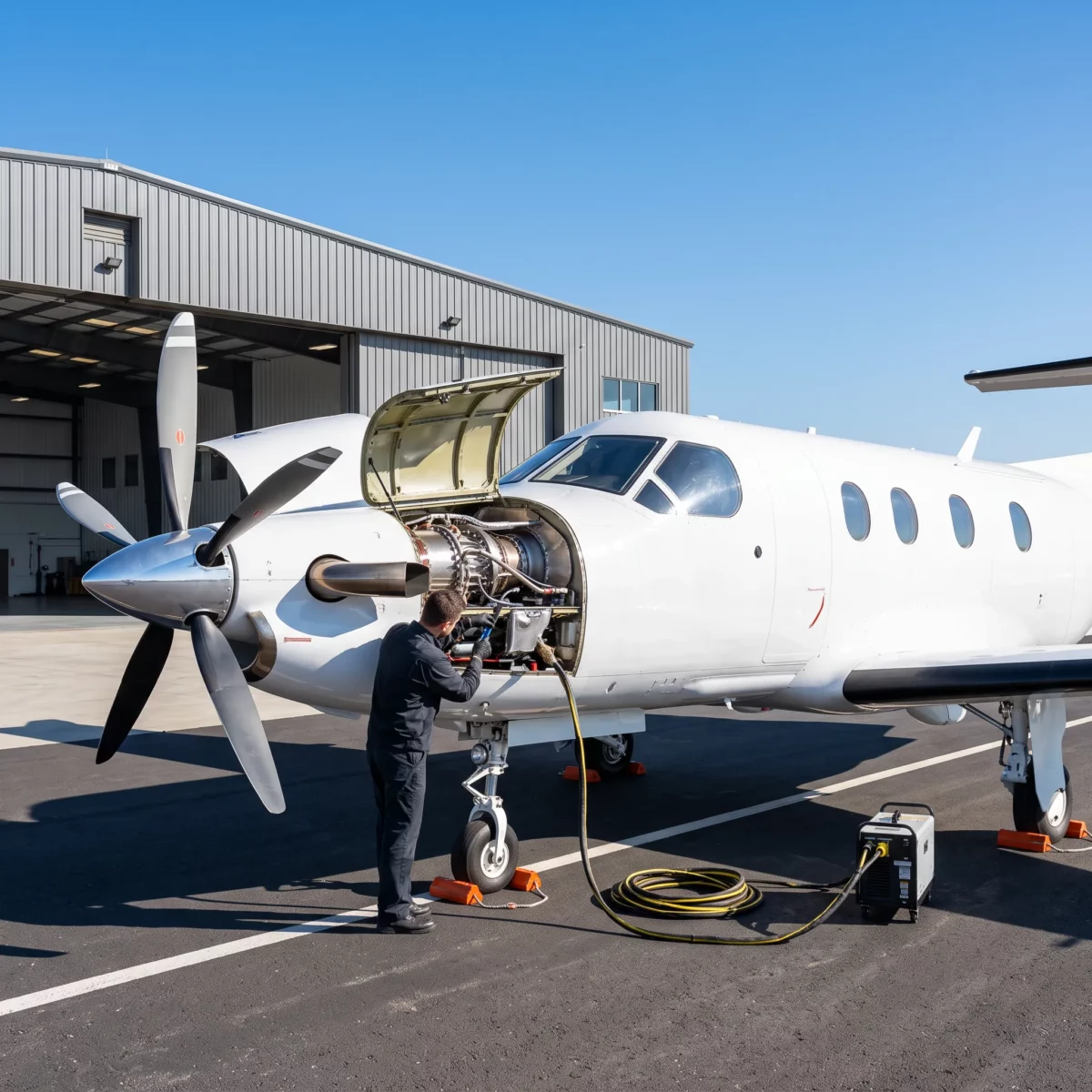
Walk the flight line at EAA AirVenture Oshkosh long enough and you start noticing which conversations draw a crowd. This year, it wasn’t a new jet. It was two decades-old turboprops with new engines strapped to their noses, both promising performance numbers that used to require a trip to the factory order desk.
Blackhawk Aerospace brought the receipts. At the 2026 show, one of the best-attended in recent years at Wittman Regional Airport, the company showed off its freshly FAA-approved XP66D program on a customer’s TBM 700, alongside a heavily modified Pilatus PC-12 owned by airshow performer Mark Patey, running an engine upgrade developed by Finnoff Aviation Products. Neither aircraft rolled off the line looking like this. Both now perform closer to jets than the turboprops they started as.
What Actually Changed Under the Cowling
The TBM 700 conversion is the headline item. Blackhawk pulled the original 700-horsepower Pratt and Whitney Canada PT6A-64 and replaced it with an 850-horsepower PT6A-66D, the same engine family that powers the factory-new TBM 850. That’s not a tweak. It’s a full powerplant swap under a Supplemental Type Certificate, and it brings a 27-year-old airframe up to current production performance without touching the airframe itself.
The numbers tell the story better than any marketing copy could, though the cruise-speed gain in particular is worth confirming against Blackhawk’s published test data before you quote it to a mechanic:
- Climb to FL 310: down from 28 minutes to 22 minutes
- Cruise speed: a meaningful increase over the stock TBM 700’s baseline, with Blackhawk citing gains in the 20-plus-knot range depending on conditions
- Engine platform: matches factory-standard TBM 850 output
Six minutes off a climb to altitude sounds small until you’re the one flying it. It’s less time in turbulence and less fuel burned at low altitude. And if there’s weather to climb above quickly, it’s less exposure while you do it. For an owner-flown aircraft, that margin matters every single flight, not just the dramatic ones.
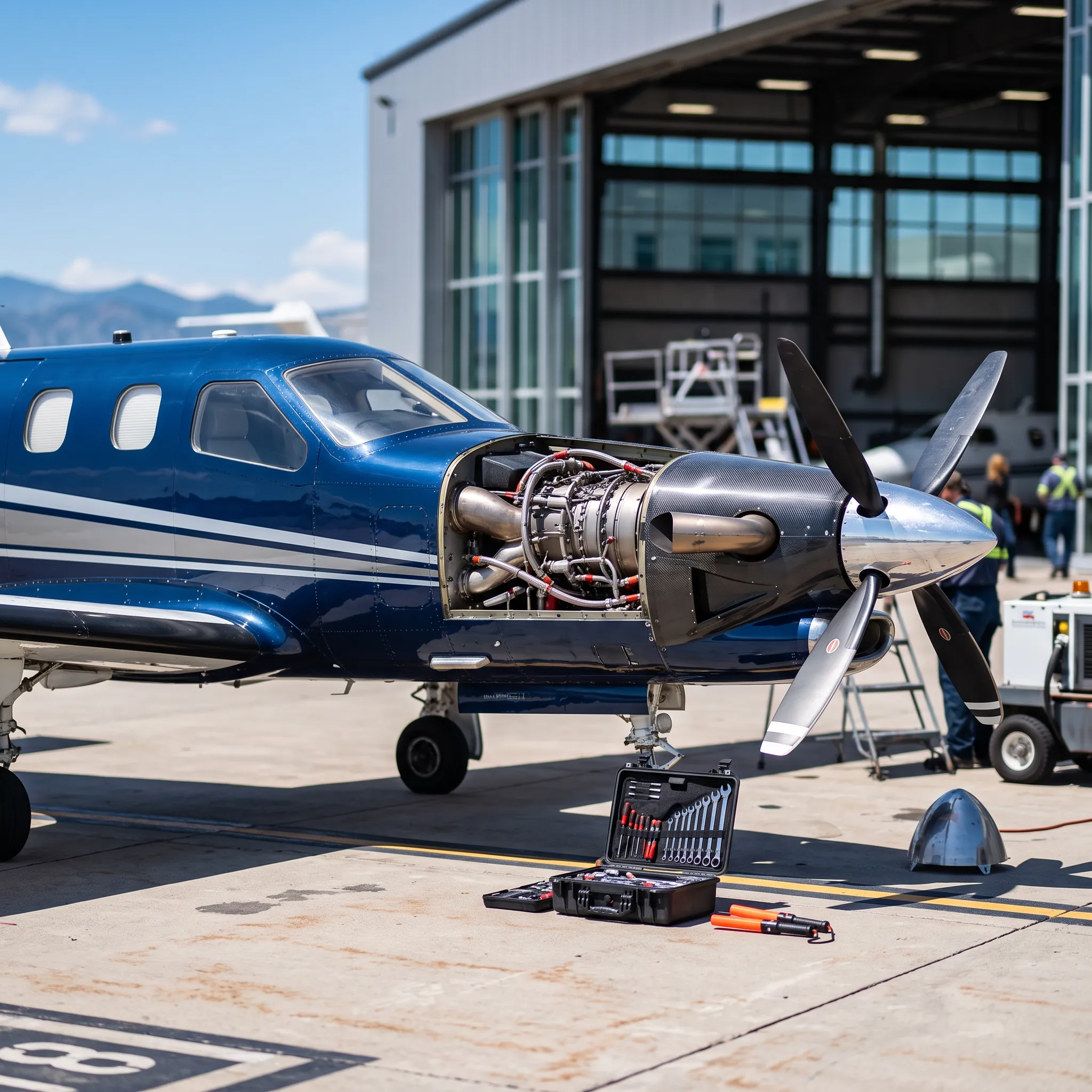
The PC-12 Gets Its Own Upgrade Path
Sitting nearby was Mark Patey’s Pilatus PC-12, a fixture on the airshow circuit and something of a proving ground for aftermarket ideas. This aircraft carries a Finnoff-developed conversion that, according to the company, trades the stock PT6A-67B for an uprated PT6A-67P. The gain is more than 100 additional thermodynamic horsepower, and the more interesting number isn’t peak power. It’s altitude.
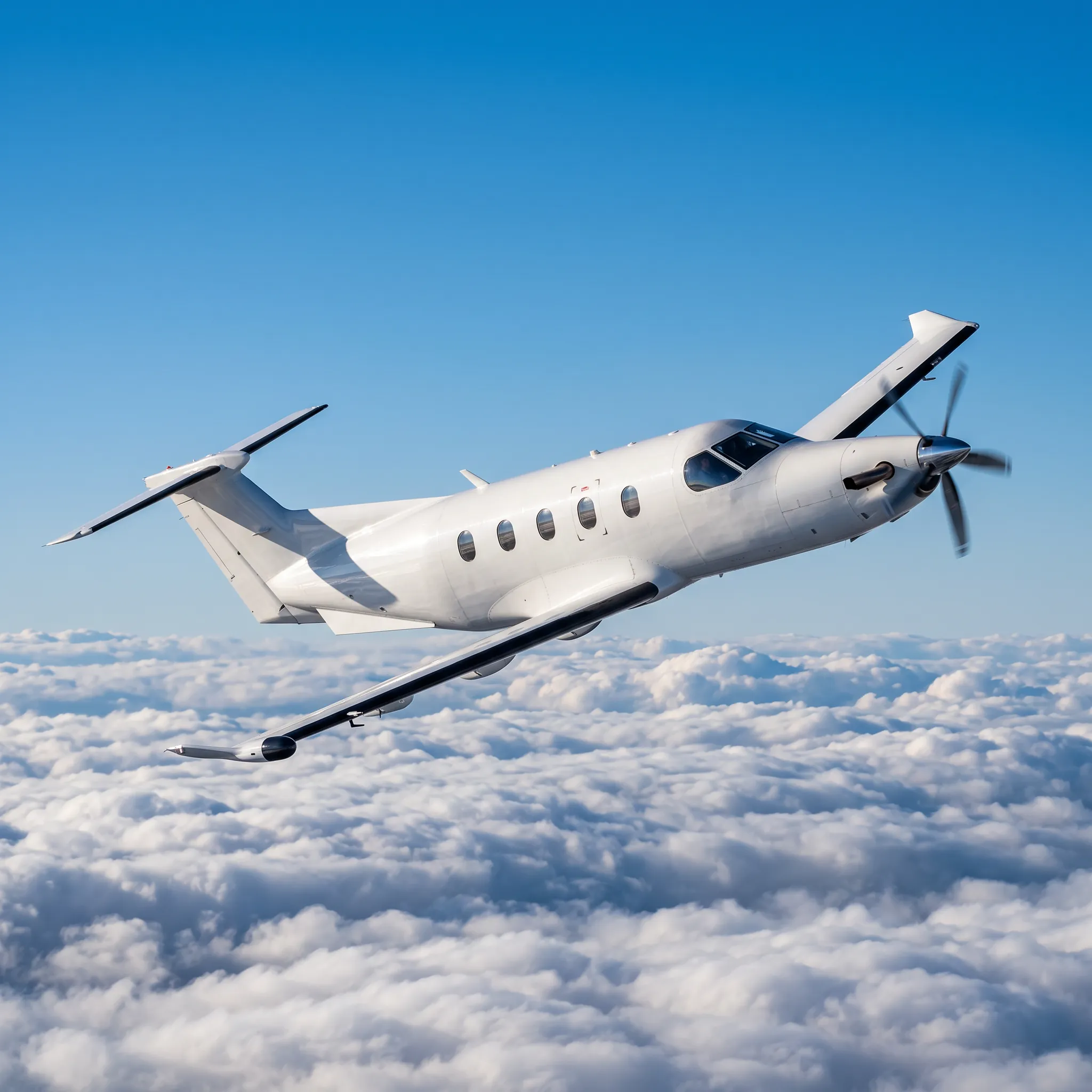
The stock PC-12 holds full rated power up to 15,000 feet. The modified engine sustains that same full power to 25,000 feet, according to figures presented at Oshkosh. That’s a real shift in how the airplane behaves at the top of its envelope, particularly for owners who regularly fly over mountainous terrain in the West or push toward the aircraft’s ceiling to get above weather. If you’ve read our deeper look at the Pilatus PC-12’s place in single-engine turboprop aviation, you already know this airframe has always punched above its weight. This upgrade just moves the ceiling on what “above its weight” means.
Why This Matters Beyond the Spec Sheet
There’s a practical financial logic here that owners understand instinctively even before they see the invoice. A factory-new TBM 850 or PC-12 NGX costs several million dollars. An engine conversion on an aircraft you already own runs a fraction of that, and it resets the performance clock without resetting the ownership clock. You keep your avionics, your interior, your maintenance history, your familiarity with the airplane. You just get a meaningfully stronger heart.
That distinction, upgrading in place rather than trading up, is becoming its own category in business aviation. It sits somewhere between buying new and simply flying an aging airframe until it depreciates into charter fodder. For owners who fly their own turboprops, as opposed to chartering, that middle path has real appeal. Our guide on choosing between light jet charter and turboprop ownership covers some of that math, and engine conversions are quietly shifting the calculation in favor of keeping a turboprop longer.
A Quick Comparison
| Aircraft | Stock Configuration | Blackhawk / Finnoff Upgrade |
|---|---|---|
| TBM 700 | 700 hp PT6A-64, 28 min to FL 310 | 850 hp PT6A-66D, 22 min to FL 310, meaningful cruise speed gain |
| Pilatus PC-12 | PT6A-67B, full power to 15,000 ft | PT6A-67P, full power to 25,000 ft, 100+ additional thermodynamic hp |
The Bigger Industry Signal
Oshkosh has always been part trade show, part proof-of-concept lab, and this year’s turboprop conversions fit that pattern. Blackhawk built its name on King Air upgrades, and the fact that the company is now certifying programs for TBMs and pushing single-engine turboprops toward jet-like climb performance says something about where owner expectations are heading. Nobody wants to feel like they’re flying yesterday’s airplane, even when the airframe underneath is genuinely excellent.
It also says something about the used turboprop market generally. An aircraft that can be brought to current-production performance standards holds its value differently than one that simply ages. Buyers evaluating a used TBM or PC-12 now have to ask about engine pedigree and upgrade eligibility, not just hours and cycles, a distinction we unpack in our piece on what actually wears out a jet. That’s a new line item on the pre-purchase checklist.
If you’re shopping a used TBM or PC-12 this year, ask the seller or your broker for the engine logbooks first, not last. Whether an STC conversion has already been done, or could be, may matter more to resale value than the paint job.