
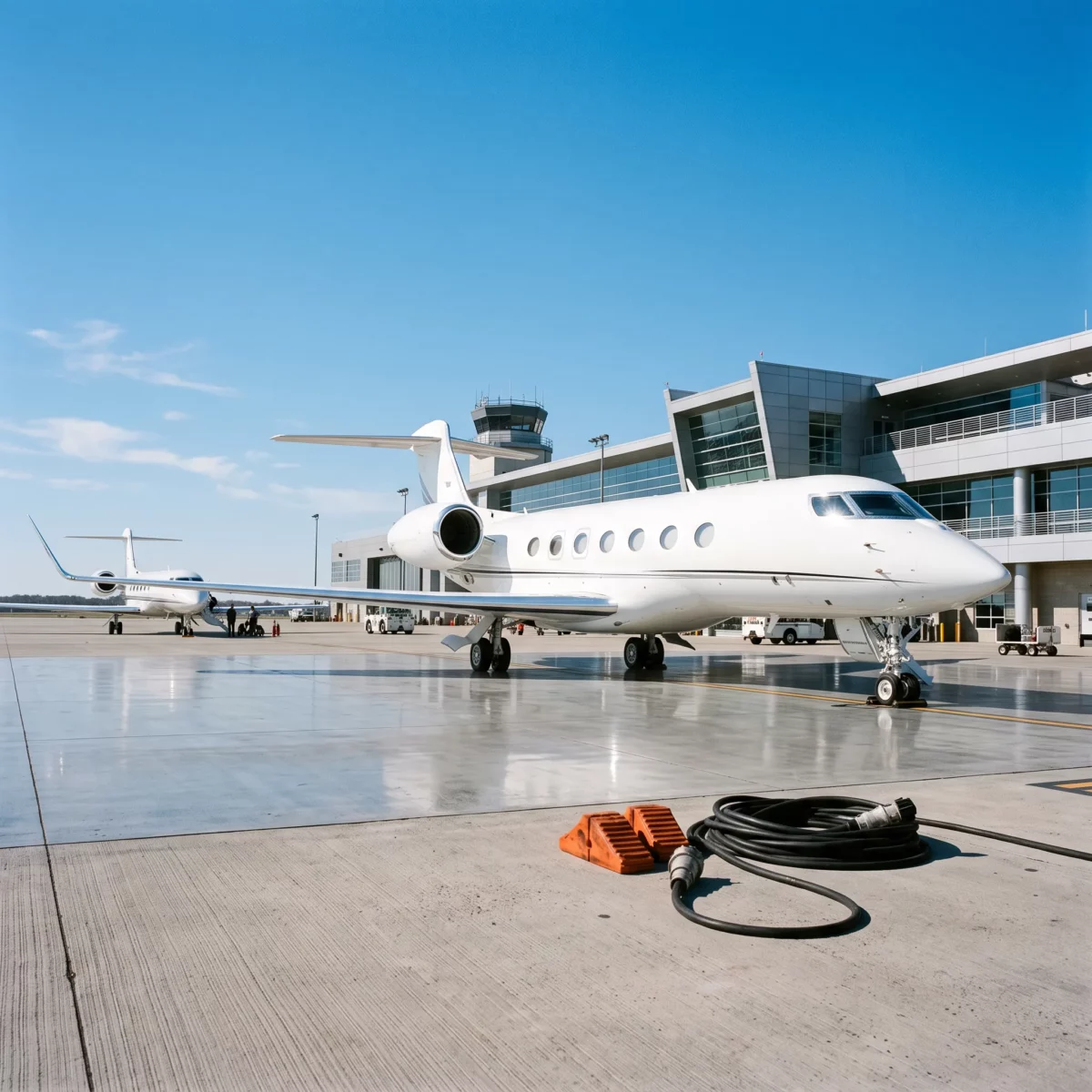
Private equity just placed another massive wager on the infrastructure that keeps private aviation running. Apollo Funds has joined KKR as a major investor in Atlantic Aviation, the FBO chain that operates at 105 locations across North America. The deal values the company at roughly $10 billion. If you fly private with any regularity, this is one of those behind-the-scenes stories that eventually shows up on your invoice.
KKR bought Atlantic Aviation back in 2021 and will stay on as a substantial shareholder. Apollo partner David Cohen and Atlantic CEO Jef Foland both pointed to private aviation’s structural tailwinds, meaning the sustained demand for private flying since the pandemic, as the reason for doubling down now. The deal reportedly involved a roster of Wall Street advisors and legal counsel on both sides, the kind of army of dealmakers that shows up whenever a transaction of this size gets done. Whatever the exact roster, it’s a lot of billable hours for what amounts to a bet on the ramps, fuel trucks, and terminal lounges you pass through on nearly every trip.
The FBO Business Has Become a Financial Asset Class
FBOs used to be a fairly boring corner of aviation. Fuel, hangar space, a coffee bar, maybe a nice couch. That changed once private equity realized these facilities sit on some of the most valuable, hardest-to-replicate real estate in the country. You can’t just build a new ramp next to Teterboro or Van Nuys. Airport slots are finite, and permitting alone can take years before an incumbent’s long-term lease even enters the picture.
That scarcity is exactly what makes FBOs attractive to firms like Apollo and Blackstone. Blackstone and Cascade Investments bought Signature Aviation, Atlantic’s biggest rival, back in 2021 for around $4.7 billion. Now Atlantic is valued at more than double that. Together, these two companies control a huge share of the FBO footprint that private jet operators, fractional programs, and charter companies depend on every single day.
- Atlantic Aviation: 105 locations, valued at approximately $10 billion under the new Apollo-KKR structure
- Signature Aviation: Acquired by Blackstone and Cascade Investments in 2021 for roughly $4.7 billion
- Combined footprint: The two chains now touch a majority of major private aviation hubs in North America
The Cost Question Owners and Operators Are Asking
Here’s where the enthusiasm from Wall Street runs into frustration on the ramp. Operators, including Flexjet Chairman Kenn Ricci, have been vocal about rising FBO costs tied to private equity ownership. The most visible symptom is the special event fee, a surcharge that can appear during major sporting events, holiday weekends, or anytime demand spikes at a given airport.
For a large cabin jet, those fees have reportedly climbed past $20,000 at some locations. That’s not a landing fee or a fuel charge. It’s essentially a premium for parking and handling on a busy weekend, layered on top of everything else. When you multiply that across a fleet flying dozens of trips to a single high-demand weekend, the numbers get serious fast.
Private equity owners will tell you these fees reflect genuine capacity constraints. Ramps only hold so many aircraft, and event weekends push demand well past supply. There’s truth to that. But operators argue the fee structures have become a profit center in their own right, layered on top of already-elevated FBO margins that emerged once consolidation reduced competition at key airports.
What This Looks Like in Practice
| Cost Driver | Typical Scenario | Who Feels It |
|---|---|---|
| Special event fees | Major sporting events, holiday weekends | Charter clients, jet card holders |
| Ramp and handling fees | Standard trips at consolidated FBO markets | Owners, fractional shareholders |
| Ground handling delays | Peak-day congestion at limited-slot airports | Everyone flying that weekend |
Why This Matters Beyond the Balance Sheet
If you’re a frequent charter client, jet card holder, or fractional owner, you don’t interact with Apollo or KKR directly. You interact with the pricing decisions those owners eventually push down through the FBOs their portfolio companies control. Fee structures set at the corporate level ripple through every operator and management company that has to pay them, and those costs rarely stay absorbed at the top. They land in your quote.
There’s also a service dimension worth watching. Consolidation brings capital for ramp upgrades and better fuel logistics. Staffing consistency is the harder problem, and no amount of private equity money fixes that overnight. It can also mean less competitive pressure to keep prices in check at airports where one operator controls most of the ramp space, and that tension is exactly what’s playing out at Atlantic and Signature-controlled airports right now.
For readers weighing how to access private flying, this is a good moment to revisit the trade-offs between the various private jet ownership and access models available today. Fractional programs and jet cards often negotiate fuel and handling terms at scale, which can soften some of this pressure compared to booking ad hoc charter at a busy FBO during a big event weekend.
What to Watch Next
Deals like this one tend to accelerate the pace of consolidation rather than slow it. Expect more private equity interest in the remaining independent FBO networks, and expect operators to keep pushing back publicly on fee structures they see as excessive. Some management companies are already exploring long-term fuel and handling contracts to lock in predictable pricing regardless of what happens at the ownership level above them.
Super Bowl LX in February 2026 already offered a preview of this dynamic: operators reported special event fees at host-market FBOs that matched or exceeded what they paid for the previous two Super Bowls, even as ramp capacity remained just as tight as expected. The next real test arrives with Super Bowl LXI in February 2027, and with the holiday travel surge closing out this year. If you’ve got a trip planned around either one, or around any major event weekend on your calendar, ask your operator now what the ramp costs look like at your destination rather than finding out when the invoice lands.