
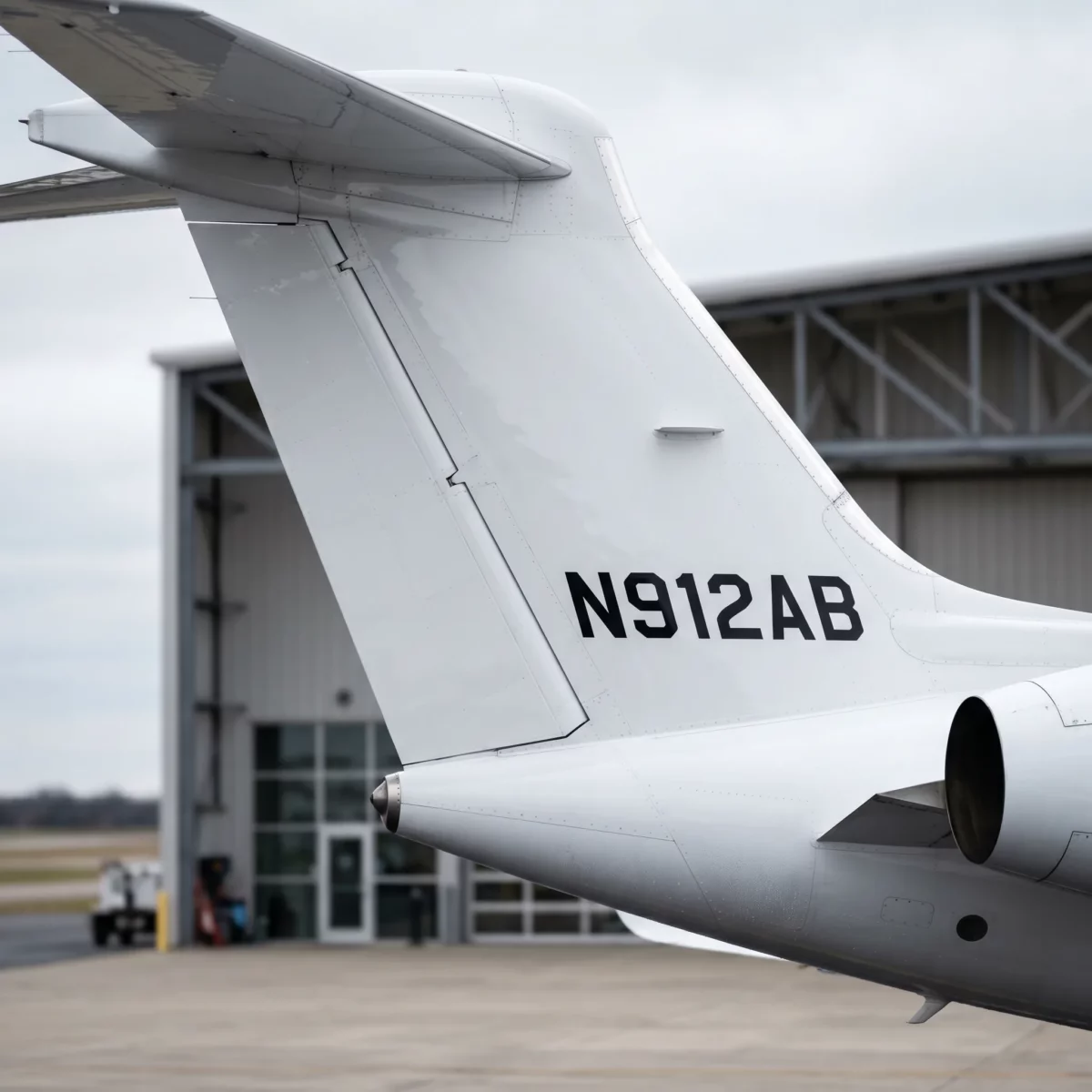
That string of letters and numbers painted on the tail of every aircraft is easy to overlook. You’ve probably noticed them without thinking much about them. But those characters, called the registration, with a nationality prefix up front, tell you something far more significant than just which plane is which. They tell you which country’s laws govern everything happening on board.

The Flag the Aircraft Flies Under
Think of an aircraft registration the way you’d think about a ship’s flag. A vessel registered in Panama operates under Panamanian maritime law regardless of where it sails. Aircraft work exactly the same way. The International Civil Aviation Organization, the UN body that governs global aviation, sets the rules for these markings, and each country’s unique prefix is drawn from the radio call-sign blocks allocated by the International Telecommunication Union. When a country registers an aircraft, it assumes legal responsibility for overseeing that aircraft’s airworthiness, its crew licensing standards, and its operational safety.
For private jet owners, this isn’t just trivia. The country of registration determines which agency certifies the pilots flying you, how frequently the aircraft must undergo maintenance inspections, and what documentation you need to cross international borders. That prefix on the tail ripples through every aspect of operating the aircraft.
Reading the Prefix
Most prefixes give away their origin immediately. N-numbers belong to the United States, overseen by the FAA. A G-registration is British, governed by the UK Civil Aviation Authority. F-registrations are French, D-registrations are German, and so on through the alphabet. Two-letter prefixes dig into more specific territories. VP-B is Bermuda. VQ-B is also Bermuda, a separate series. 9H is Malta.
Here’s a quick reference for the registrations you’ll encounter most often in private aviation:
| Prefix | Country | Oversight Authority |
|---|---|---|
| N | United States | FAA |
| G | United Kingdom | UK CAA |
| F | France | DGAC |
| D | Germany | LBA / Luftfahrt-Bundesamt |
| VP-B / VQ-B | Bermuda | BCAA |
| 9H | Malta | Transport Malta |
| VP-C | Cayman Islands | CAACI |
| T7 | San Marino | SMAC |

Why Some Owners Choose Offshore Registrations
This is where it gets interesting. A significant number of large-cabin private jets operating in and out of European airports carry a VP-B, VP-C, 9H, or T7 registration rather than the flag of the owner’s home country. That’s not an accident.
Offshore registrations in jurisdictions like Bermuda, the Cayman Islands, Malta, and San Marino have become genuinely popular among private aircraft owners for several overlapping reasons. The regulatory environment in these jurisdictions tends to be pragmatic and commercially friendly without sacrificing safety standards. Malta is an EASA member state, and registries such as Bermuda and the Cayman Islands are widely accepted across Europe.
The tax picture matters too. Depending on the owner’s structure and residency, registering in an offshore jurisdiction can create legitimate VAT efficiencies and reduce the tax exposure on the aircraft itself. This gets complex quickly and requires qualified aviation tax advisors, but the broad principle is well established. It’s one reason why some of the most expensive jets in the world wear a 9H prefix even when their owners are based in London or Geneva.
What Registration Means for Crew and Operations
Here’s what gets overlooked in most discussions of tail numbers: the country of registration directly dictates which pilot licenses are valid on your aircraft. An N-registered jet requires FAA-certificated crew. A VP-B aircraft requires BCAA-validated crew. Operators can’t simply swap pilots between registries without additional validation, and that process takes time and paperwork.
Registration also governs cabotage rights, the rules about who can fly passengers for hire within a given country. This matters to charter operators especially. A foreign-registered aircraft generally cannot operate domestic-for-hire flights within another country. An N-registered aircraft flown by a U.S. Part 135 certificate holder can carry paying passengers between New York and Los Angeles. A 9H-registered aircraft doing the same trip would be in violation of U.S. cabotage rules. Private, owner-operated flights face different rules, but charter operations must navigate this carefully.
The N-Number: America’s De Facto Global Standard
The FAA’s N-number system deserves its own mention. The United States has one of the largest general aviation fleets on earth, and the N-number has become something of a default for business aviation globally. Many foreign owners deliberately choose U.S. registration because FAA oversight is rigorous, internationally recognized, and the paperwork ecosystem around it is mature.
N-numbers also offer a layer of useful discretion. In the U.S., you can request a privacy trust arrangement through a registered trustee, which keeps the beneficial owner’s identity off the public registration record. The aircraft is formally owned by the trust, which is why you’ll sometimes see a string of corporate names rather than an individual when you look up an N-registered tail. This structure is entirely legal and widely used among high-profile owners who’d rather not have their travel patterns tracked through public registration databases. The tail number is also what every private flight tracker uses to follow an aircraft in real time.

What Charter Clients Should Know
If you’re chartering rather than owning, the registration still matters to you. It affects the safety oversight the aircraft operates under, which in turn affects your level of protection as a passenger. Aircraft registered in well-regulated jurisdictions like the U.S., UK, European member states, Bermuda, and the Cayman Islands operate under frameworks that mandate rigorous airworthiness and crew standards.
Some registries carry less regulatory credibility. A tail number from a jurisdiction with a weak oversight record is a yellow flag worth investigating before you board. Reputable charter brokers and operators stick to recognized registries, and the top-tier operators are typically ARGUS Platinum or Wyvern Wingman certified regardless of where the aircraft is registered.
- FAA (N-prefix): Rigorous oversight, large infrastructure, privacy trust options, required for U.S. domestic charter
- EASA member states: Standardized across EU, easy intra-European operations, mandatory for some European charter routes
- Bermuda BCAA: Strong reputation, internationally recognized, common for large-cabin jets owned by non-U.S. residents
- Cayman CAACI: Similar to Bermuda, preferred by some operators for tax structuring in Latin American contexts
- Malta Transport Malta: EU member state registry with historically favorable tax environment, popular with European private owners
The Tail Number Is a Starting Point
When you’re evaluating a private jet purchase or signing off on a charter flight, the tail registration is worth a second look. It tells you which regulator signed off on the airworthiness, which licensing standards the crew must meet, and often something about the ownership structure and tax planning behind the aircraft.
For most buyers working with reputable manufacturers and established operators, the registration question comes down to where you operate and how you want to structure ownership. Your aviation attorney and tax advisor should weigh in before anything gets painted on the tail. But understanding what those letters mean, really mean, gives you a more complete picture of the aircraft you’re flying in and the system that keeps it safe.