

When the FIFA World Cup brings its matches to Seattle from June 15 through July 6, 2026, the city’s airports will face a challenge that goes well beyond stadium logistics. Think of the international team owners, the global soccer stars flying in on personal aircraft, and the ultra-high-net-worth fans who wouldn’t dream of flying commercial to one of the most anticipated sporting events in a generation. All of them will be pointing their jets at the Pacific Northwest, and airspace managers have been quietly working for months to make sure the skies don’t become a bottleneck.
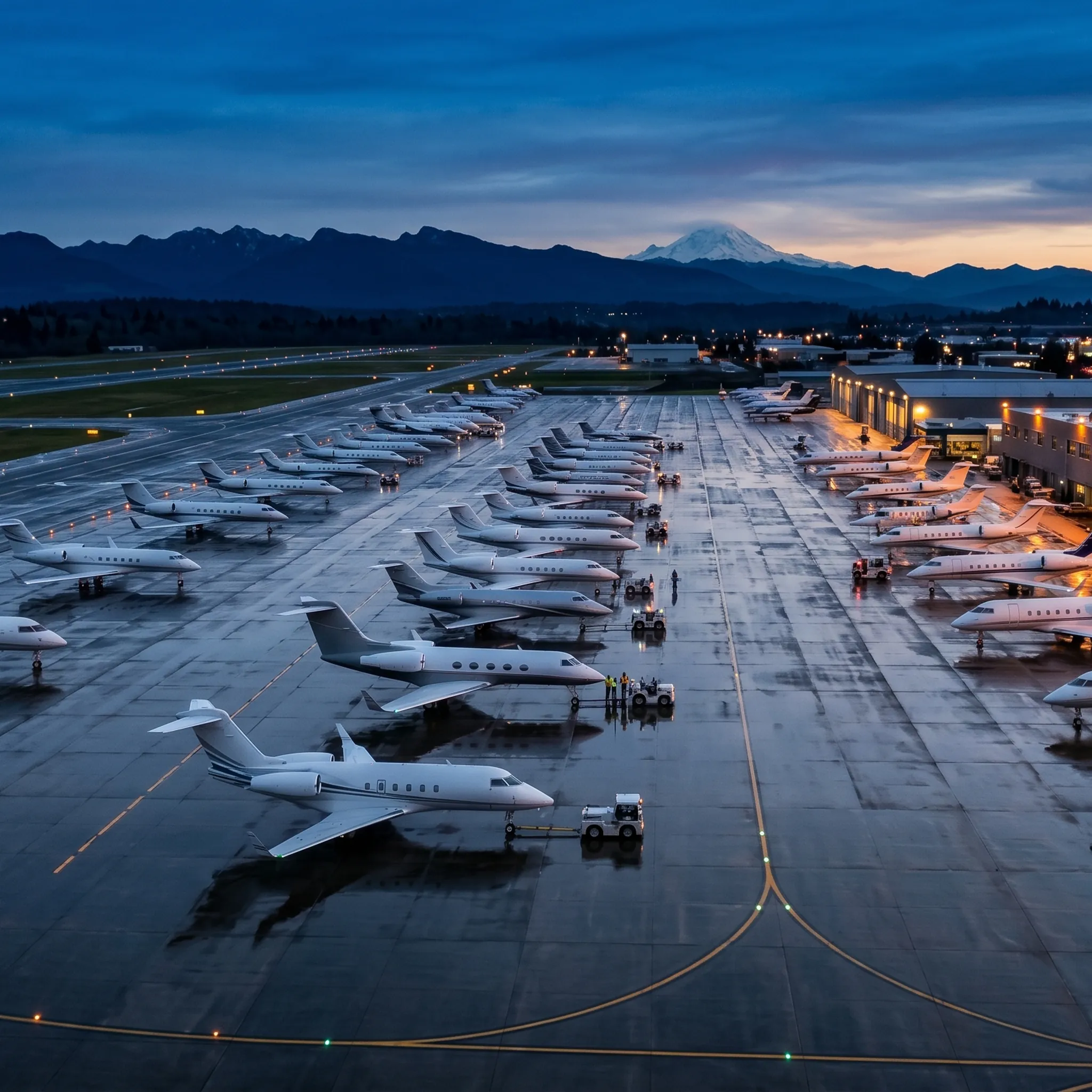
Why Boeing Field Is the Center of Attention
King County International Airport, Boeing Field (KBFI), sits just five miles south of downtown Seattle. For the private aviation crowd, it’s the obvious choice over Seattle-Tacoma International (KSEA). No commercial airline queues. No TSA lines stretching through a public terminal. You step off the aircraft and you’re in a car within minutes. During a major international event, that kind of access is worth a premium in itself.
But KBFI is already one of the busiest airports in the country under normal conditions. Heavy freight, military operations, active flight schools, and a healthy base of business aviation traffic all share the same airspace every day. Add a World Cup surge to that mix and the math gets complicated fast.
That’s why the FAA, in collaboration with Boeing Field operators and neighboring airports at KSEA and Renton Municipal (KRNT), has published a new set of VFR arrival and departure procedures specifically designed to absorb the incoming wave of private and charter flights. The new routes went live this spring and cover five distinct arrival paths and seven departure routes.
The New Routes: What Pilots Are Learning
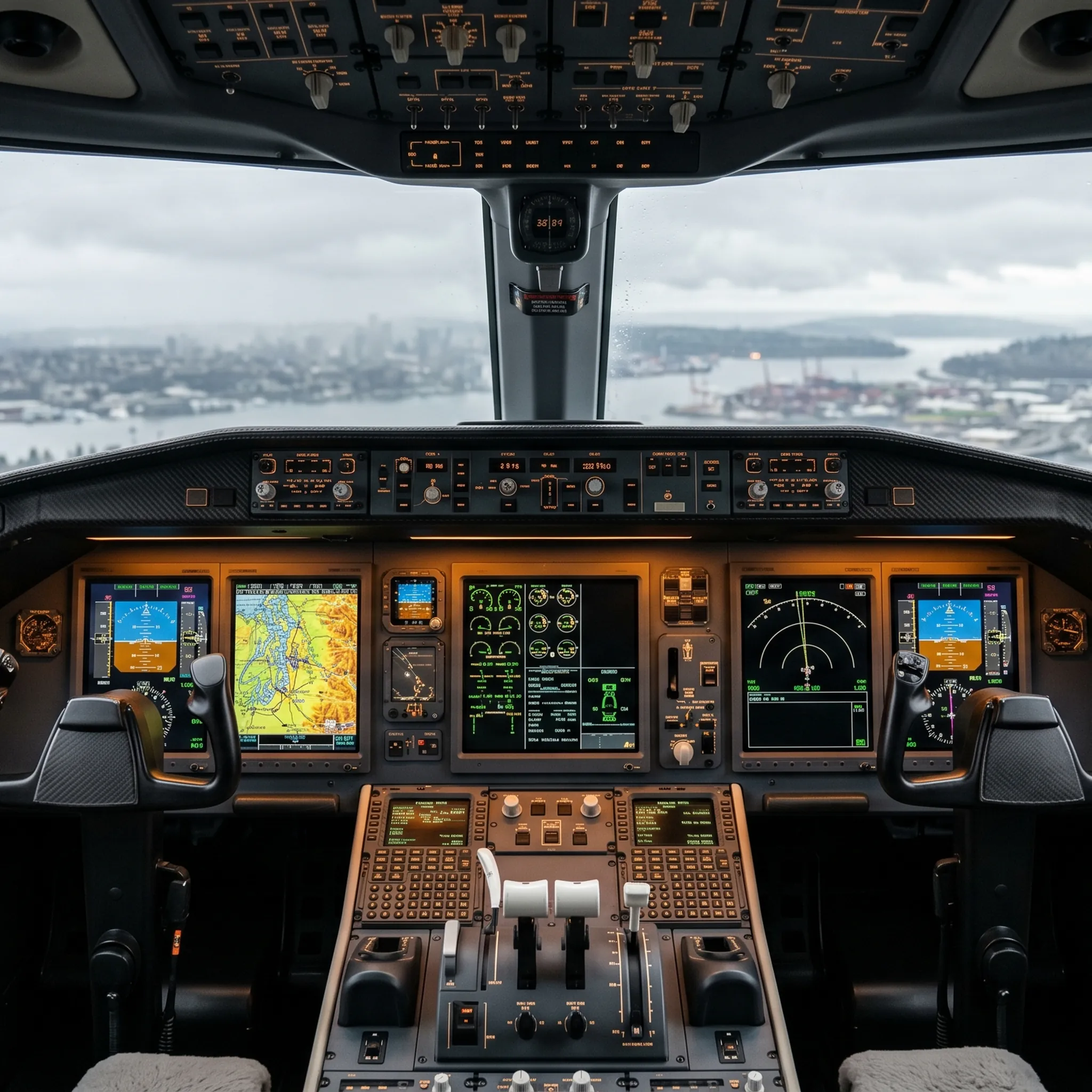
The five VFR arrivals each have a name tied to Seattle geography. The Vashon, Cougar, 520, Blake, and Valley routes all reflect the topographic reality of flying into a city wedged between Puget Sound, Lake Washington, and Class B airspace that belongs to SeaTac. The Valley arrival is the one demanding the most attention from flight crews. It requires pilots to stay below 1,600 feet while threading a narrow corridor between KSEA and KRNT near Auburn Municipal Airport. That’s a tight ceiling in an active zone, and it puts a premium on situational awareness.
On the departure side, routes like the Dawgs and Vashon require precise maneuvering to stay clear of the Seattle VA Medical Center and the floatplane traffic that moves constantly over Lake Washington. Crews are being directed to memorize visual landmarks for compliance, including a few that have raised eyebrows in pilot briefings: the Tukwila Family Fun Center and a distinctive blue-and-gold IKEA building serve as legitimate navigational reference points in the official four-page technical guide.
What This Means If You’re Flying In
For anyone booking a charter flight or repositioning a personal aircraft to Seattle this summer, there are a few practical realities worth knowing before your crew files the flight plan.
- Brief your crew early: These VFR routes require familiarity with local visual landmarks, not GPS waypoints alone. Pilots new to KBFI need dedicated ground study time before arrival.
- Allow extra buffer time: The new procedures add routing structure that didn’t exist before. Flight times into KBFI may run slightly longer than historical data suggests.
- FBO slots will be scarce: Boeing Field has limited ramp space. If you haven’t already confirmed hangar or tie-down arrangements, do it now. The premium spots will go fast as June approaches.
- Noise restrictions are real: The routes include noise mitigation elements. Operators who ignore them face scrutiny, and local community relations around the airport are a genuine concern for airport management.
- Consider Renton as an alternative: For smaller aircraft, KRNT offers relief from KBFI congestion. It’s further from downtown but worth evaluating if your scheduling needs flexibility.
Airport spokesperson Cameron Satterfield framed it clearly: general aviation is the “bread and butter” of Boeing Field, and the new procedures are designed to accommodate World Cup traffic without pushing out the core user base. That’s a reassuring message, though the practical reality is that peak match days will test every FBO operation on the field.
The Bigger Picture for Celebrity and VIP Travel
Major international sporting events have always concentrated private aviation traffic in ways that strain regional infrastructure. The Super Bowl produces it every February. Formula 1’s U.S. rounds do it at Circuit of the Americas. But the World Cup is in a different category when it comes to global reach. International team delegations travel with full aircraft, often utilizing ultra-long-range platforms like the Gulfstream G700 or Bombardier Global 7500 arriving directly from Europe, the Middle East, and South America without a technical stop.
Those aircraft need ramp space, ground handling, fuel, and crew rest facilities. For the top-tier operators managing VIP client flights into Seattle, the new Boeing Field procedures are just one piece of a larger logistics puzzle that includes coordinating slot times, customs clearance for international arrivals, and ground transport that can move principals out of the airport before any crowd builds.

Planning Ahead Is the Only Strategy That Works
The operators who handle high-profile clientele during major events share one piece of advice unanimously: you cannot start planning too early. The airspace procedures are now published and pilots can begin familiarizing themselves today. FBO relationships need to be locked in now. Ground transport arrangements, customs pre-clearance for international arrivals, and hotel logistics around match days all benefit from a six-week head start minimum.
Seattle has done serious work to prepare its airspace for what’s coming. The FAA and Boeing Field deserve credit for thinking through the complexity of layering World Cup traffic onto an already-busy operation. For the private jet travelers arriving to watch history made on the pitch, the experience on the ground will depend almost entirely on whether their team prepared as thoroughly as the people managing the skies above Puget Sound.