

The brochure says 7,500 nautical miles. Your flight is 5,400. It should be straightforward. Then your operator calls to suggest a fuel stop in Anchorage, and the math suddenly stops making sense.
What happened? You loaded 12 passengers, a set of golf clubs, ski bags for everyone, and enough catering for a long weekend. That’s what happened. And it changed the physics of your entire flight.
The payload-range trade-off is one of the most misunderstood concepts in private aviation, and it affects every trip, every aircraft, and every charter quote you’ve ever received. Understanding it doesn’t require an engineering degree. It requires about five minutes and a willingness to think about weight differently.
One Weight Budget, Three Competing Demands
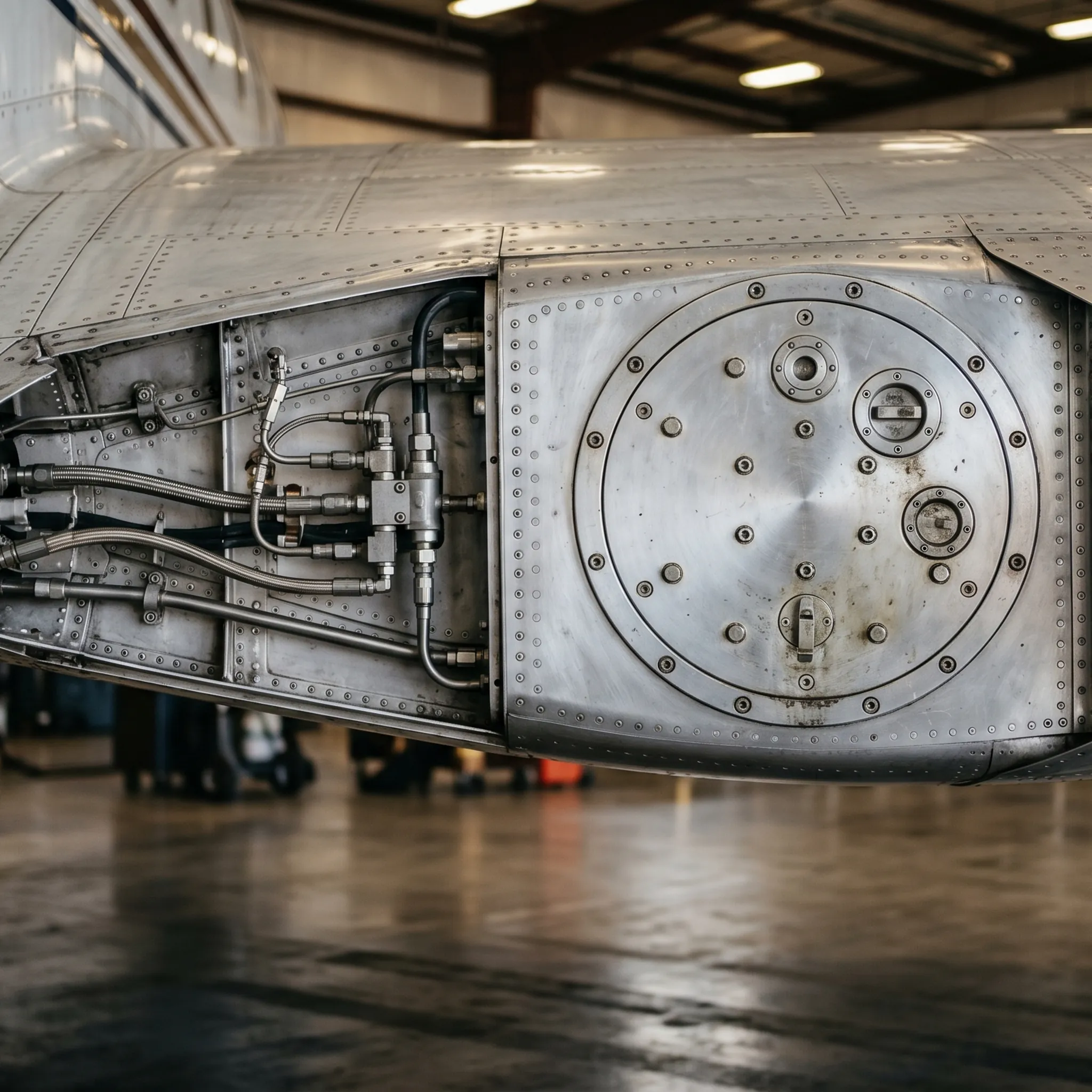
Every aircraft has a Maximum Takeoff Weight, universally abbreviated as MTOW. Think of it as a fixed budget that cannot be exceeded. The aircraft’s own structure, systems, and fluids claim the largest share automatically. That’s the basic empty weight. What remains after you subtract that from the MTOW is called the useful load—the weight available for everything else: fuel, passengers, and baggage.
Because fuel and payload occupy the same finite weight budget, every additional passenger forces a calculated reduction in range—it is a completely unforgiving equation. Manufacturers publish range figures at a standardized, often optimistic payload condition, typically four passengers with a modest baggage allowance at long-range cruise speed. That’s the best-case scenario. Real-world charters rarely look like that, especially when a corporate group or family is involved.
What the Numbers Actually Mean in Practice
Take the Gulfstream G650ER as a concrete example. Its published range of 7,500 nautical miles puts routes like New York to Singapore within theoretical reach. But that figure assumes roughly four passengers and standard baggage. Load 14 passengers for a full corporate charter, add their gear, and add proper catering for a 14-hour flight, and the effective range can drop by 700 to 1,100 nautical miles depending on total payload weight.
The Bombardier Global 7500 faces the same physics with its 7,700-nautical-mile published figure. The four-zone cabin genuinely accommodates up to 19 passengers. But fill every seat, load the baggage hold, and that nonstop New York to Singapore route may no longer be nonstop.
The table below shows how this plays out in representative terms for an ultra-long-range large-cabin jet. The numbers are illustrative for the category, not aircraft-specific, but the pattern holds true across every aircraft type.
| Load Scenario | Estimated Payload | Approximate Range Impact |
|---|---|---|
| 4 passengers, standard bags | ~800 lbs | Full published range |
| 8 passengers, full luggage | ~1,800 lbs | Reduced by 400–600 nm |
| 14 passengers, full luggage and catering | ~3,200 lbs | Reduced by 900–1,200 nm |
The Hidden Cost: NBAA IFR Reserves
Here’s the factor that surprises even experienced private aviation travelers: the published range figure assumes the aircraft arrives at its destination with virtually no fuel remaining—a theoretical scenario that never occurs in practice. In reality, FAA and NBAA IFR reserve requirements mandate that every instrument flight rule departure carry enough fuel to reach its destination, fly to an alternate airport, and still land with approximately 45 minutes of fuel remaining at normal cruise consumption.
That reserve requirement alone can subtract 200 to 400 nautical miles from the aircraft’s effective operating range before a single passenger boards. And the calculation doesn’t stop there. When destination weather is marginal—low ceilings, reduced visibility, or convective activity in the area—your operator must file an alternate airport, sometimes two. Each alternate adds meaningful fuel burn to the reserve stack. On a transatlantic routing where the destination is experiencing weather and the nearest suitable alternate is 150 to 200 nautical miles away, the cumulative impact on usable range can be striking. The result is that an aircraft with a 7,500-nautical-mile published ceiling may practically deliver closer to 6,800 to 7,000 nautical miles on a fully legal, fully conservative real-world flight plan. This is not a flaw—it is responsible operation—but it is a reality every owner and charter client should factor into route planning from the outset.
The Variables Most Travelers Overlook
Passenger headcount is the obvious factor. But experienced operators know the sneaky contributors that quietly eat into the weight budget before anyone notices.
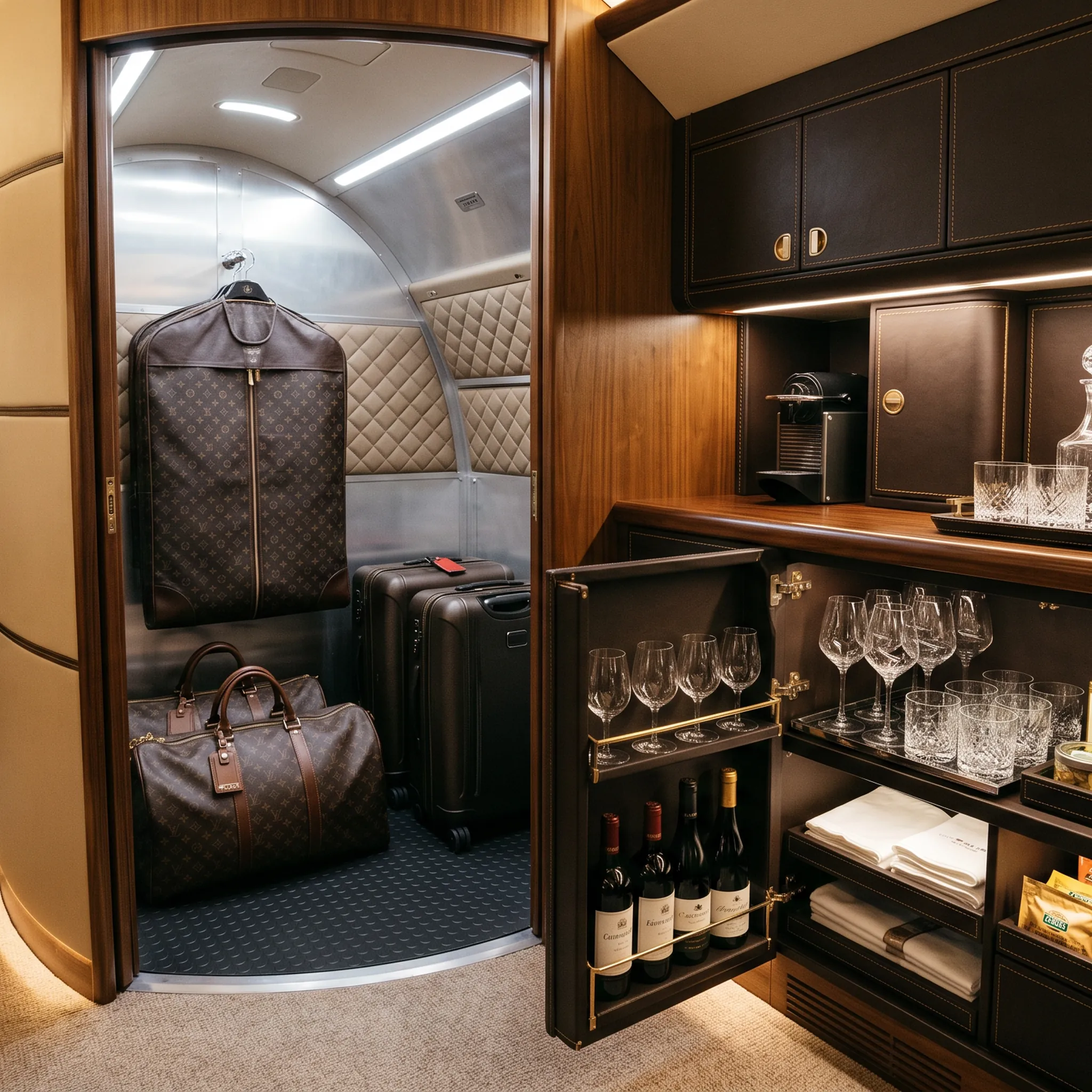
- Sports equipment: A set of golf clubs runs 30–40 lbs. Six sets, and you’ve already added 240 lbs before anyone packs a suitcase.
- Full galley catering: A proper catering setup for 10 passengers on a long-haul flight can add 250–400 lbs of provisions, ice, and equipment.
- Crew baggage: A two- or three-person crew adds weight the passenger manifest doesn’t capture.
- Hot-and-high conditions: Departing a high-elevation airport on a warm day costs additional fuel at takeoff, which means either carrying less payload or accepting a shorter range before the next fuel stop.
- Winds aloft: A strong headwind on a transatlantic crossing can require extra fuel reserves that further tighten the available payload.
None of these are dealbreakers on their own. But stacked together on a long-haul routing, they’re the difference between a nonstop flight and an unexpected fueling call in Shannon.

What This Means When You’re Booking or Flying
For charter clients, your operator runs these calculations before every departure. They’re required to by regulation, and the good ones do it early in the booking process rather than the night before. If your load profile doesn’t support the nonstop range, they’ll either confirm a fuel stop as part of the itinerary or recommend a different aircraft. Neither is a problem if you know about it in advance.
If you’re flying on a jet card program, your agreement almost certainly specifies range assumptions for each aircraft category. The fine print matters here. A card promising transatlantic capability on a large-cabin category might deliver that cleanly at four passengers and light bags. At eight passengers with proper luggage, the same aircraft on the same route may need a stop. Read those pages. Ask the question directly before you book a long routing for a larger group.
For fractional owners, this is a conversation worth having with your program manager before you need it. Know your typical flying profile. Know which of your regular routes work nonstop at your usual group size, and which ones call it close. That clarity upfront prevents surprises on travel days when everyone is already at the FBO.
One Habit That Makes a Real Difference
The most practical thing you can take from understanding the payload-range trade-off is this: give your operator the full picture early. Not the day before departure. Early. Full passenger count, an honest estimate of luggage (be specific if you’re bringing sports gear or oversized items), and any catering requests that might add significant weight.
The best operators handle this math invisibly. You board, the flight is nonstop, everything works. The moments when passengers notice anything went sideways are almost always the moments someone didn’t share the full picture during the booking process.
Range numbers tell you what an aircraft is capable of in ideal conditions. Payload tells you what your specific trip demands. The gap between those two figures—widened further by reserve requirements and real-world weather—is where your operator earns their fee. Know the trade-off, share the details, and the math usually works out beautifully.