
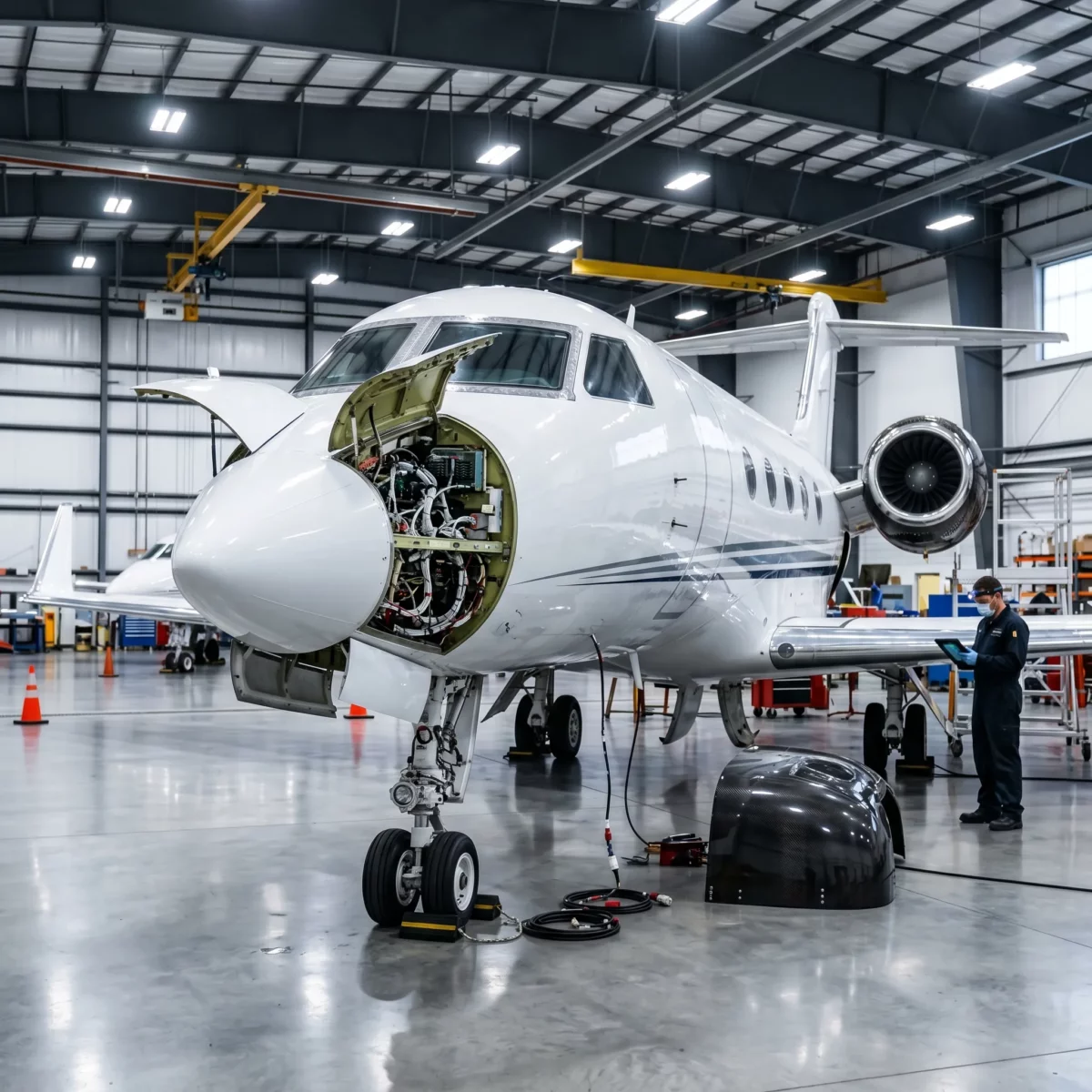
For a private jet owner, few calls are as expensive as the one confirming a last-minute AOG event. Aircraft on Ground disruptions carry direct costs—replacement aircraft, repositioning fees, rebooking penalties—but the deeper damage is to the reliability relationship that justifies private aviation’s premium. Commercial carriers operate at completion rates above 99% in normal conditions. Private operators managing distributed fleets under dual regulatory frameworks face a reliability gap that has historically been closed with experience and intuition rather than data. That’s starting to change.

What Jet Linx Just Did, and Why It Matters
Jet Linx, one of the top-10 private jet operators in the U.S. with a fleet of approximately 100 aircraft, has partnered with aviation software company Veryon to overhaul how it tracks maintenance and identifies recurring defects. The tools at the center of this deal are Veryon Tracking and Veryon Defect Analysis, a pair of platforms designed to reduce unplanned downtime and keep aircraft airworthy across a distributed fleet.
This isn’t a minor software upgrade. Jet Linx operates aircraft under both Part 91 and Part 135 regulations, meaning some planes are privately owned while others fly paying charter customers. Managing compliance across those two regulatory frameworks, across dozens of home bases, with different maintenance crews at each location, is genuinely complex. Getting it wrong means grounded aircraft. Getting it right means more availability for owners and more reliable service for charter clients.
The Problem With How Maintenance Has Always Been Done
Here’s something most private jet owners don’t realize: maintenance records in aviation are still largely narrative. A technician writes in a logbook, in their own words, what they found and what they fixed. One tech calls it a compressor stall. Another writes intermittent power loss on start. A third logs hot section anomaly. Technically, they could all be describing the same recurring defect on the same aircraft.
That inconsistency is how repeat defects hide in plain sight. The problem isn’t negligence. It’s the absence of a system that connects the dots across different technicians, different bases, and different logbook entries. When a defect returns three times over six months and nobody catches it, eventually the aircraft goes AOG at the worst possible moment.

Where the AI Comes In
The Veryon platform uses a system called AIRE, which applies artificial intelligence and natural language processing to maintenance records. Instead of requiring technicians to use standardized codes or terminology, the software reads their entries and identifies patterns regardless of how each person described the issue. It can flag a recurring defect even when the language varies significantly across logbooks.
For a multi-base operator like Jet Linx, this capability closes a real gap. A technician in Omaha and a technician in Dallas may have each addressed the same underlying issue on the same aircraft, written it up differently, and moved on. Under a traditional system, those entries live in isolation. Under AIRE, they connect. The system surfaces the pattern, flags it for review, and gives the maintenance team a chance to fix the root cause before it grounds the aircraft again.
Jason Vanis, SVP of Operations at Jet Linx, specifically cited the Defect Analysis product as the standout capability in their evaluation of several competing platforms. That’s telling. Defect analysis sits upstream of everything else. Get that right, and you reduce the frequency of unplanned maintenance across the board.
What This Means for Day-to-Day Operations
- Faster troubleshooting: Technicians can see how similar issues were resolved previously, reducing diagnostic time on the hangar floor
- Standardized repair quality: Junior technicians benefit from the institutional knowledge of more experienced colleagues, captured in the system’s defect history
- Continuous compliance tracking: Inspection due dates and airworthiness status stay current and centralized, not buried in individual logbooks at separate locations
- Proactive defect elimination: Recurring snags get identified and addressed before they escalate to an AOG event
The Bigger Picture for Business Aviation
Veryon Defect Analysis already supports over 25% of the global commercial airline fleet. Its expansion into business aviation is more recent, with coverage now extending to more than 300 business jets worldwide. The technology was built for the operational complexity of commercial carriers, where a grounded aircraft costs tens of thousands of dollars per hour. Bringing that same rigor to private aviation is a meaningful step forward for an industry that has historically relied on paper logs, tribal knowledge, and the intuition of experienced mechanics.
The private jet world has always lagged commercial aviation on maintenance technology. That gap has real consequences for owners and charter clients. Fractional programs and jet card operators stake their reputations on aircraft availability. A fleet that grounds frequently loses clients fast. Owners who base their aircraft with management companies expect them to fly when needed, not sit in a hangar waiting for parts.

What Private Jet Owners and Charter Clients Should Take Away
If you fly with Jet Linx or evaluate operators for charter, this move signals something important about how the company manages its fleet at scale. Predictive maintenance in private aviation isn’t just a technology story. It’s a reliability story. The operators investing in tools like Veryon are betting that data-driven maintenance will give them a competitive edge in the form of better availability metrics and fewer disrupted trips.
For owners placing their aircraft under a management program, questions about maintenance technology deserve a spot on your evaluation checklist. How does your operator track recurring defects? Do they use a centralized maintenance platform? How quickly do they identify a pattern before it turns into a pattern of AOG events? These questions used to be answered with “we have experienced technicians.” Now the better answer involves software, AI, and structured data.
The industry trend is clear. The operators who modernize their maintenance infrastructure now will deliver meaningfully better reliability over the next decade. The ones who don’t will keep calling their clients with bad news at the worst possible moment. For Jet Linx, this partnership with Veryon is a direct investment in making sure those calls happen a lot less often.