
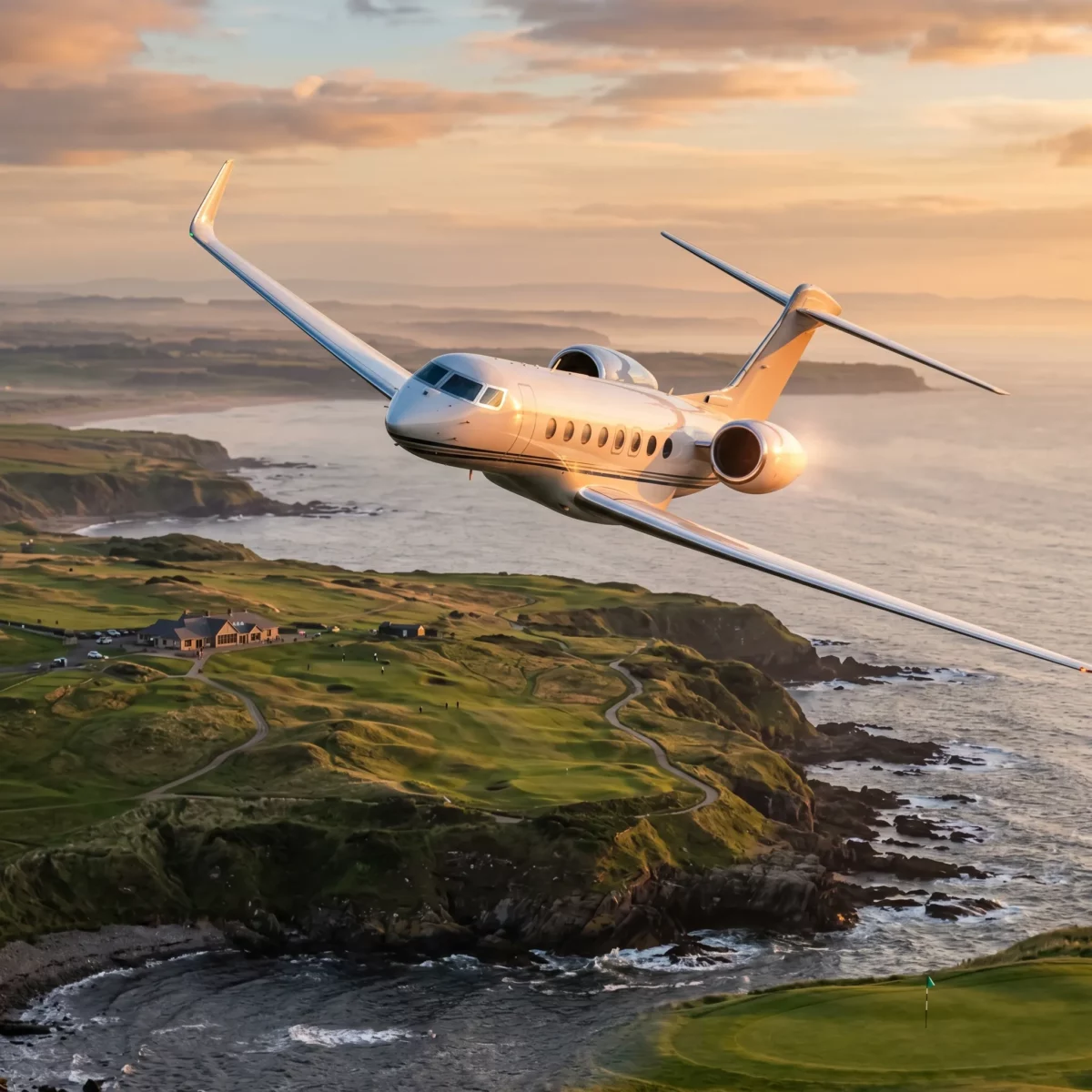
Every July, a small stretch of Lancashire coastline becomes the center of the golf world. Royal Birkdale is demanding enough as a course. Getting there privately, on your schedule, with your equipment and your guests, is its own kind of challenge. The 154th Open Championship runs July 16 through 19. If you haven’t started your aviation planning, you’re already behind.
This isn’t hyperbole. Northwest England during a major championship creates one of the most congested private aviation environments in Europe. Slot restrictions tighten weeks in advance. Handling queues stretch. Crew duty hours become a genuine scheduling variable, not an asterisk in fine print. The operators who’ve done this before know: logistics begin months out, not weeks.
Choosing Your Arrival Airport
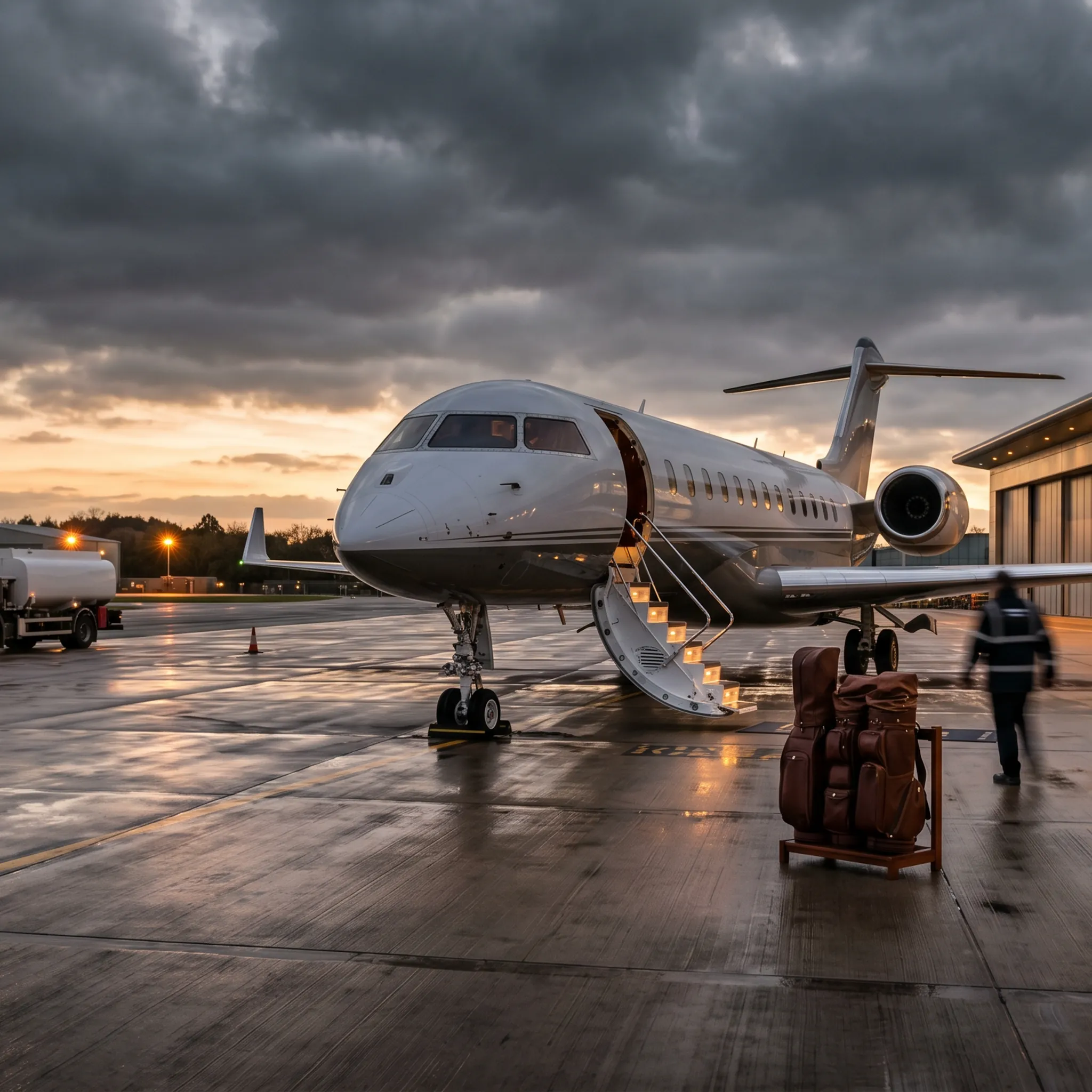
Three airports serve Royal Birkdale realistically for private aviation, and each comes with a different calculus depending on your aircraft and priorities.
Liverpool John Lennon Airport sits closest at 28 miles from the course. The proximity is appealing, but Liverpool handles significant commercial traffic alongside business aviation. During peak championship days, expect competition for ramp space and handling resources. If your timing is flexible and your aircraft is midsize or smaller, Liverpool works well for European sectors.
Manchester Airport, 43 miles away, is the logical choice for transatlantic arrivals. It handles ultra-long-range wide-body and large-cabin jets without the infrastructure strain you’d find at smaller regional strips. If you’re flying in from the U.S. on a Gulfstream G700 or Bombardier Global 7500, Manchester is where you want to land. The extra drive time is a small trade for proper ground handling and the customs infrastructure that international arrivals require.
Blackpool Airport, at 38 miles out, is the insider option many experienced private flyers overlook. It operates as a dedicated business aviation environment with minimal commercial traffic. If your priority is a seamless, low-friction arrival without navigating commercial terminal chaos, Blackpool delivers that quiet efficiency. Aircraft size limits apply, so confirm your jet’s performance data against Blackpool’s runway specs before committing.
What Aircraft Makes Sense for the Mission
The answer depends almost entirely on where you’re departing from. For European routes, light and midsize jets handle the distances comfortably. A Cessna Citation XLS or Embraer Phenom 300E covers London to the Northwest in under an hour. These aircraft are efficient for intra-European sectors, though during peak championship periods availability tightens as fleet inventory shifts toward repositioning missions.
Transatlantic departures require a different category entirely. The physics are straightforward: you need an aircraft with the range to reach Manchester non-stop while also carrying luggage for multiple passengers across multiple days. Golf bags, tournament attire, and hospitality gifts add weight that lighter aircraft can’t accommodate without a fuel stop.
The Bombardier Challenger 650 handles transatlantic segments from the U.S. East Coast well. For West Coast departures, Los Angeles or San Francisco require true ultra-long-range performance. The Gulfstream G700 and Bombardier Global 7500 are the workhorses here, with both platforms offering the range margins and cabin volume that a group flying from California genuinely needs.
The Cost Reality
Charter pricing for Open Championship week covers a wide range depending on routing, aircraft category, and how far in advance you book.
| Route | Aircraft Type | Est. One-Way Cost |
|---|---|---|
| London to Blackpool | Light Jet | From $4,000 |
| New York to Manchester | Large Cabin Jet | $45,000 – $75,000 |
| Los Angeles to Manchester | Ultra-Long-Range | Up to $148,000 |
Those numbers reflect one-way charter costs. But the full picture includes handling fees, fuel, crew positioning, and overnight expenses if your aircraft overnights in the UK between legs. Crew duty hour regulations under EASA rules also affect multi-day scheduling. If your pilot team flies inbound on Thursday and you want to depart Sunday evening, the crew rest requirements need to be planned in advance, not sorted out at the FBO.
Aircraft availability drives the other major pricing variable. During championship week, the inventory of suitable jets in position shrinks fast. Operators responding to the same demand wave will price accordingly. Booking through a reputable charter broker who specializes in major event logistics, with access to a broad fleet network, puts you in a better negotiating position than calling operators directly in June.
What the Serious Planners Do Differently
The travelers who arrive at Royal Birkdale without friction aren’t necessarily flying bigger jets or spending more money. They planned earlier and thought through the details that trip up everyone else.
- Slot coordination: Peak arrival windows on Thursday and Friday require confirmed landing slots at Liverpool and Manchester. These aren’t guaranteed by booking an aircraft. Your operator or broker needs to secure them separately.
- Ground transportation pre-arranged: The road between any of these airports and Southport moves slowly during major event traffic. A pre-arranged car service with a driver who knows the area beats a rideshare app under any conditions.
- Return flexibility built in: Weather on the Lancashire coast in July is unpredictable. Building departure flexibility into your return planning, even a few hours, avoids pressure decisions on a Sunday evening with a full aircraft and deteriorating visibility.
- Handling confirmed at both ends: FBO selection at your departure airport matters as much as arrival. Some FBOs have preferred ramp positioning agreements with operators during major events. Confirm yours is one of them.
- Crew rest factored in: For transatlantic flights, crew duty time on the inbound leg affects when your pilots are legally available to fly home. Plan the schedule around the regulations, not around the golf.
Why The Open Draws Private Aviation’s Busiest Week
Golf’s four majors attract private aviation traffic, but The Open occupies its own position. It rotates through links courses on the British coast, which means each year brings a different logistical puzzle for returning enthusiasts. Royal Birkdale last hosted in 2017. The nine-year gap, combined with the course’s reputation as one of the purest championship tests in the world, has amplified demand for this particular edition.
Corporate hospitality adds another layer. Major sponsors fly clients in from across Europe and the U.S. for multi-day packages. Some of those groups travel on managed fleets under fractional programs like NetJets or VistaJet, which coordinate their own scheduling and positioning separately. Individual charter customers compete for the same ramp space and the same handling windows. Understanding that dynamic, and booking accordingly, shapes the entire planning approach.
The Open Championship at Royal Birkdale happens once every several years. The aviation logistics around it are complex but entirely manageable with the right planning and the right partners. Start now, and the only thing you’ll need to worry about when you arrive is which group you’re watching first.