

Larrañaga says a new Falcon 10X order could mean waiting until 2030, though Dassault’s schedule may shift. Sarah Mespelt Larrañaga, principal at Sarah Larrañaga Aviation Design, sees plenty of buyers who won’t wait. They’re buying a proven private jet and rebuilding the inside.
The shift is quiet, but it changes how private aviation buyers weigh delivery time against cost.
The Backlog Problem
Flagship new builds in the class of the Falcon 10X, G700 or Global 8000 run $75 million and up before a single custom touch. Then comes the queue. Larrañaga describes multi-year waits at the top of the market, and anyone who needs an aircraft now has to look elsewhere.
So they look at the used market. Popular targets include the Gulfstream G550 and G650, the Bombardier Global 6000, 6500 and 7500, and the Falcon 7X and 8X. Prices vary widely by model and age. Older G550s and Falcon 7Xs sit in the low-to-mid $20 millions. G650s and Global 6500s generally land in the $30 million to $50 million-plus range. A newer Global 7500 costs more still. Delivery happens in months, not years. If you’re weighing that route, our guide to where to buy a pre-owned private jet covers the sourcing side.

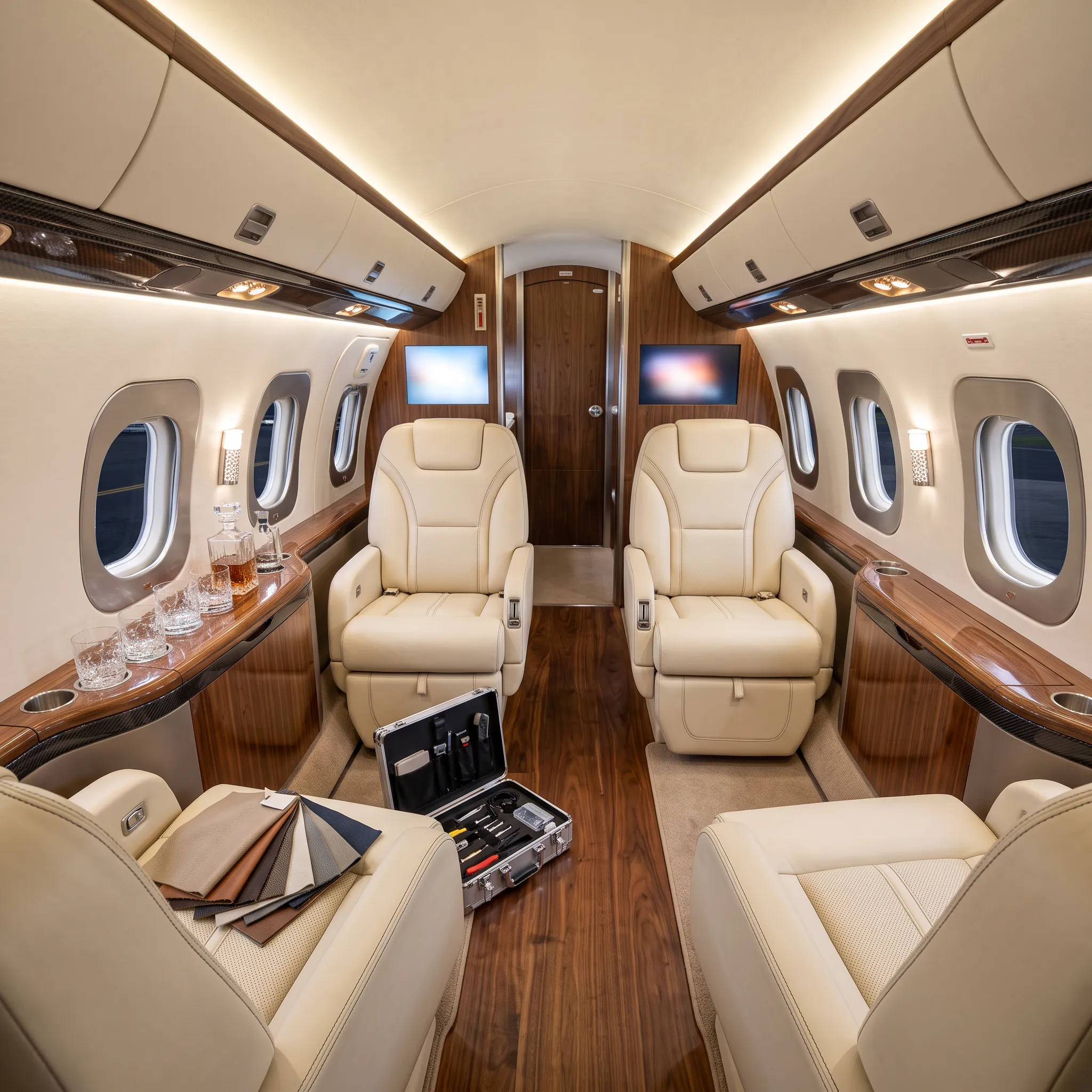
What a Typical Refresh Includes
According to Larrañaga, the average core update runs about $5 million. A $35 million used jet plus a $5 million core refresh lands near $40 million. A full bespoke cabin can cost considerably more. Compare that with a new G700 or Global 7500-class jet at $75 million and up, and the gap is still large. Most projects touch the same handful of systems:
- Avionics and cockpit equipment: modern displays and upgraded flight-deck gear that keep an older airframe current. Ask your shop which specific upgrades and compliance items apply to your airframe.
- Cabin-management systems: lighting, entertainment and climate controls you run from a phone or tablet.
- Starlink high-speed internet, so the cabin connects like your living room.
- Bespoke touches, from new seating to a full cocktail bar.
The result is a proven airframe with a cabin that feels brand new. For many owners, the interior is what they live with most anyway.
Timing the Work With Maintenance
James Carroll of Duncan Aviation points out that you can fold the refit into scheduled maintenance. The jet is already sitting in a hangar for an inspection, so the upgrades ride along instead of adding a second downtime block.
Every extra week on the ground is a week you’re not flying, or paying for charter lift to cover the gap. Full interior refits commonly take months rather than weeks, so ask for a written schedule and plan the avionics, interior and inspection work together.
The Resale Catch
Independent analyst Rolland Vincent offers a fair warning. Highly personalized modifications can hurt resale appeal and value. A cocktail bar that delights you may leave the next buyer cold.
Spend heavily where everyone benefits: avionics, connectivity and cabin systems. Skip the bar.
Quick Comparison
| Factor | New Build | Refurbished Pre-Owned |
|---|---|---|
| Typical cost | Flagship large-cabin: $75 million and up | Roughly $20 million to $50 million-plus, plus about $5 million core refresh |
| Delivery | Years, Falcon 10X toward 2030 per Larrañaga | Months, plus refit downtime |
| Customization | Full from the start | Broad, within airframe limits |
What It Means for Buyers
If you need the jet inside 18 months, buy used. If you can wait and want a clean sheet, order new. Manufacturers still sell every aircraft they can build, so the retrofit route is mostly for buyers who can’t sit in line.
Before you commit, put these questions to any completion center:
- What is the written downtime estimate, and what happens if it slips?
- Can the work be scheduled alongside a major inspection?
- Which items are reversible for resale?
- What is fixed-price scope, and what is allowance?
If you’re new to the ownership math, start with everything you should know about private jets. Then get a completion-center quote on the specific airframe before you bid on it.