
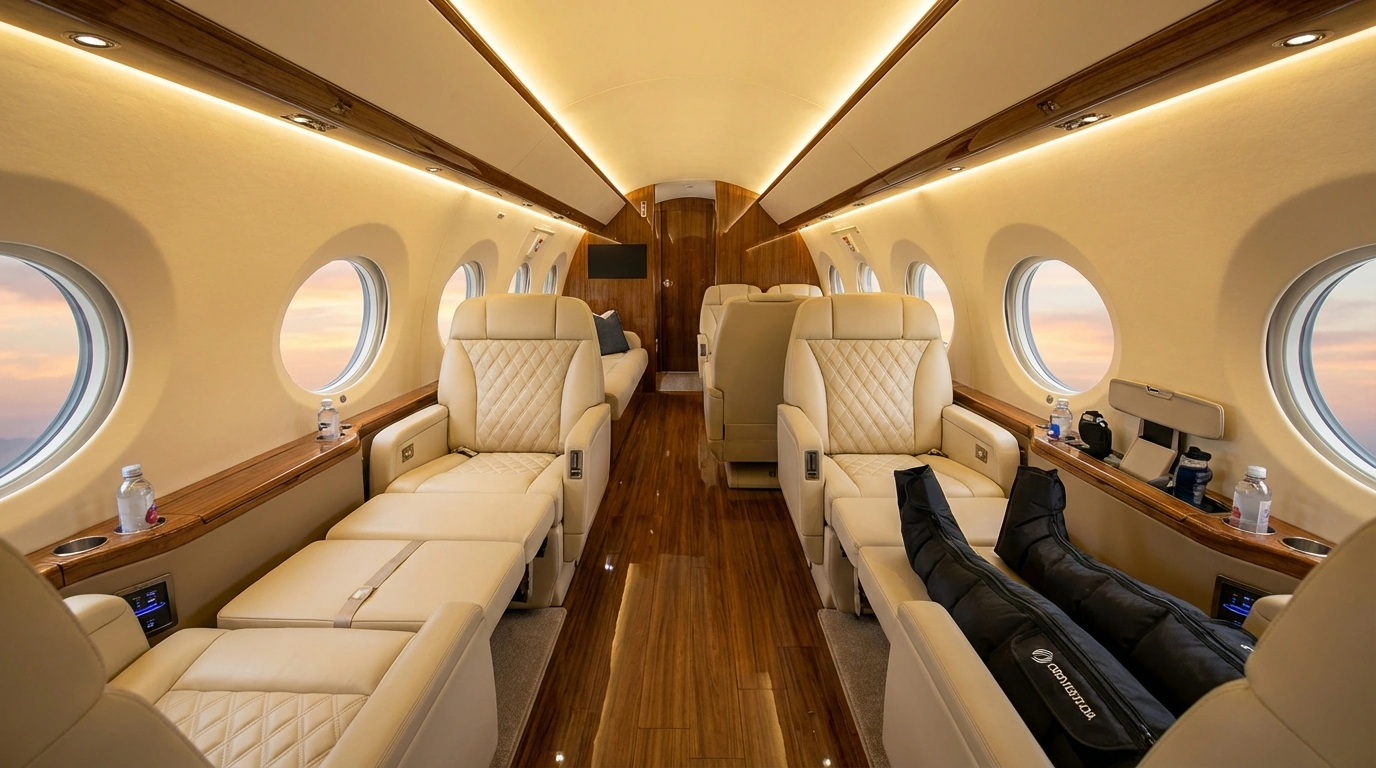
The NBA schedule is brutal. Eighty-two games across six months, spanning over 50,000 miles of travel per season. For the league’s top earners, commercial aviation stopped making sense years ago. What’s revealing isn’t that they fly private. It’s how they fly private, and which aircraft they choose to survive the grind.
The past year has shown clear patterns in which jets NBA stars prefer. These aren’t random charter bookings. Players are making calculated decisions about aircraft types based on range, cabin configuration, and recovery capabilities. When you’re 6’10” and need to step off a plane ready to perform in front of 20,000 people, the aircraft matters.
The Gulfstream Dominance
The Gulfstream G550 and G650 dominate NBA player preferences. It makes sense. The G650 offers a stand-up cabin height of 6’5″ and a flat-floor design that allows for customized sleeping configurations. For athletes who routinely exceed seven feet tall, that extra vertical space translates directly to sleep quality.
According to charter operators familiar with NBA clients, top-tier players often split their travel between aircraft types based on route requirements. A typical pattern involves a customized Gulfstream G280 for shorter East Coast routes, then switching to a G650ER for transcontinental and international travel. The distinction matters. The G280 handles the Cleveland-to-Miami-to-New York triangle efficiently. The G650ER covers Los Angeles to Miami nonstop, even against headwinds. That’s 2,700 nautical miles without refueling.
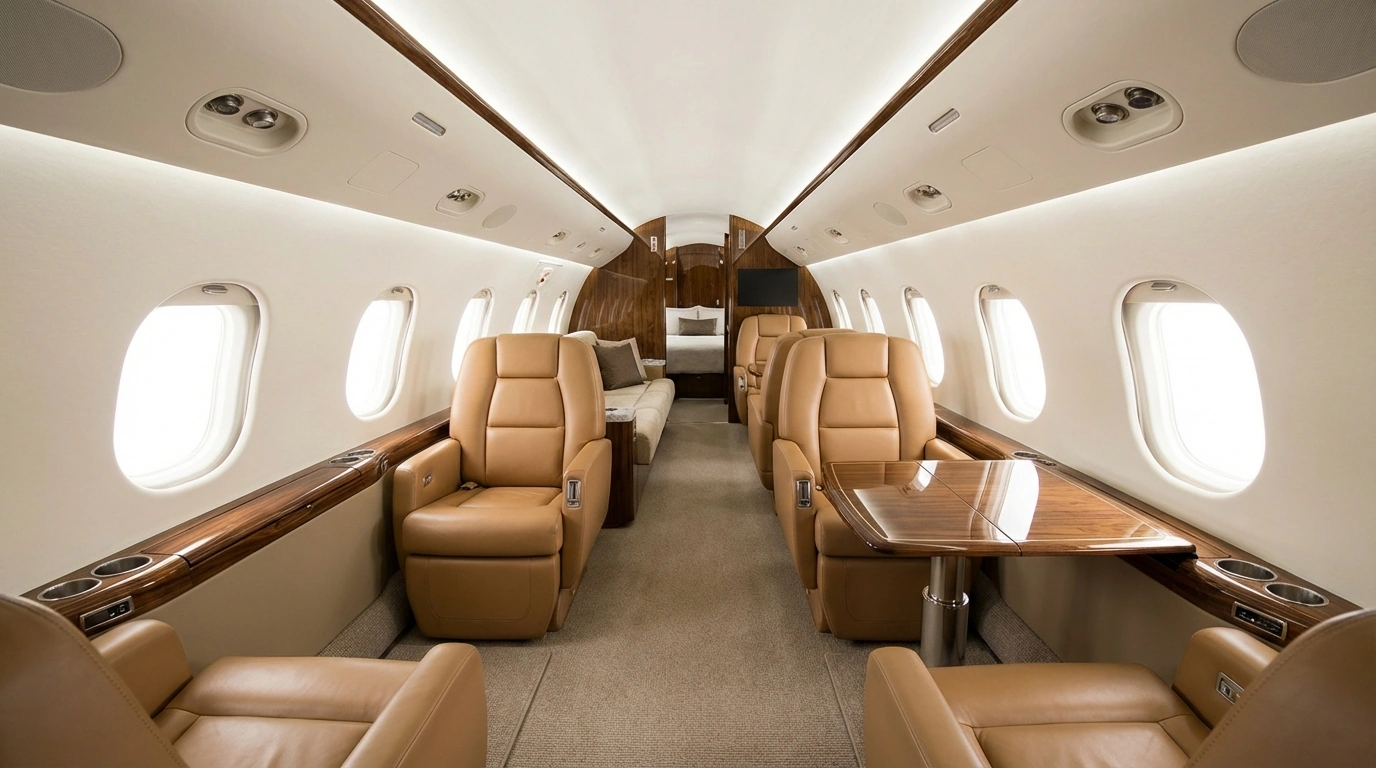
The Bombardier Global 6000 has also gained traction among elite players. The cabin width on the Global series runs slightly wider than comparable Gulfstreams, offering 7 feet 11 inches of space. That matters when you’re installing custom training equipment or recovery systems.
Customization for Athletic Performance
Standard luxury configurations don’t cut it for professional athletes. These cabins get stripped and rebuilt around recovery and performance maintenance. Charter operators report that preferred configurations among max-contract players often feature cabin layouts that prioritize flat sleeping surfaces over traditional seating. Some rear cabins convert to 6’8″ massage tables with built-in compression therapy systems.
Oxygen enrichment systems have become standard on NBA player jets. Operating at 41,000 feet, cabin pressure typically simulates 8,000 feet elevation. Supplemental oxygen systems bring that down to 6,000 feet equivalent, reducing fatigue and improving recovery time. For a player landing in Denver after a red-eye from Boston, that small detail affects game-night performance.
Temperature zoning matters more than most operators realize. Basketball players run hot. Literally. Resting metabolic rates for NBA athletes exceed average adults by 30-40%. Custom HVAC configurations allow front cabin temperatures around 68°F while the rear sleeping area runs at 62°F. It sounds excessive until you consider sleep quality’s impact on a $50 million contract.
Galley Configuration Shifts
Traditional galleys get replaced with hydration stations and meal prep areas designed around nutritionist specifications. We’re not talking about catering. These are performance nutrition systems. Refrigeration units maintain precise temperature zones for supplements and recovery drinks. Induction cooktops allow for prepared meals following exact macronutrient ratios.
Route Patterns and Operational Reality
The most common routes reveal interesting patterns. Los Angeles to New York remains the highest-frequency corridor, followed by Miami to Los Angeles and Houston to San Francisco. These routes favor ultra-long-range aircraft that can make the trip nonstop in both directions, regardless of wind conditions.
What doesn’t get discussed enough is the scheduling complexity. NBA teams often play back-to-back games in different cities. A Tuesday night game in Portland followed by Thursday in Miami creates a tight window. Players using private aviation can leave Portland at midnight, sleep during the flight, and land in Miami with 36 hours to recover. Commercial routing might require connections and kill half a day.
Charter operators working with NBA clients report that transcontinental red-eyes spike during playoff season. Players visit family, attend to business interests, and maintain training routines between games. The aircraft becomes a mobile hotel room that happens to cover 2,500 miles while they sleep.
The Emerging Trend: Fractional and Card Programs
Younger players are increasingly choosing fractional ownership and jet card programs over full ownership. NetJets and Flexjet have both reported upticks in NBA clientele since 2024. The math works differently for athletes with 10-15 year career windows compared to business owners planning decades ahead.
Fractional programs offer guaranteed availability and predictable costs without the depreciation headaches of ownership. A player flying 100-150 hours annually can access Global 6000 or Gulfstream G550 inventory through a card program for roughly 40% less than operating a wholly-owned aircraft. Maintenance, crew, insurance, hangar costs all disappear from their balance sheet.
The downside? Less control over cabin customization. Fractional aircraft maintain standard luxury configurations. You can’t install permanent custom medical equipment or training rigs. For some players, that tradeoff works. For max-contract superstars flying 200+ hours yearly, ownership still makes more sense.
What This Means for Private Aviation
NBA player preferences signal broader trends in business aviation. The shift toward wellness-focused cabin design extends beyond athletics. Corporate clients are requesting similar oxygen systems, temperature zoning, and sleep-optimized layouts. The difference is that NBA players pushed operators to develop these capabilities years before the broader market demanded them.
Aircraft manufacturers are paying attention. Gulfstream’s upcoming G800 features cabin altitude systems that maintain 2,900 feet of pressure altitude at cruise. That’s better than ground level in Denver. Bombardier’s next-generation Global series will offer similar systems as standard equipment, not optional upgrades.
For anyone evaluating private aviation options in 2026, the lesson from NBA travel patterns is clear. The aircraft you choose shapes your performance on the ground. Whether that’s closing a deal, delivering a presentation, or scoring 30 points against a conference rival. The right aircraft doesn’t just transport you. It prepares you to perform when you arrive.