
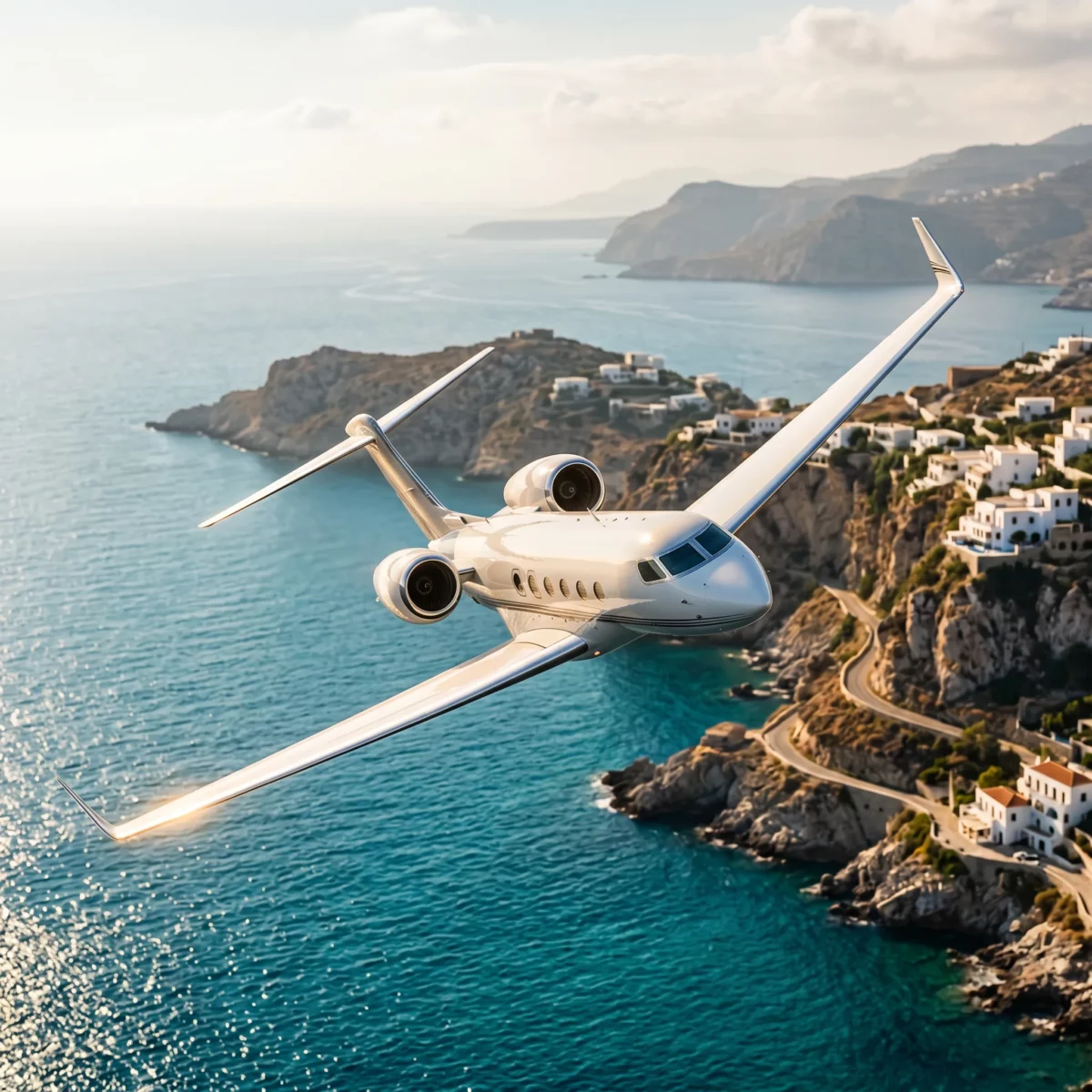
Every June, a quiet migration begins. From Dubai, Riyadh, and Abu Dhabi, ultra-high-net-worth travelers start filing flight plans toward Europe. Their destinations read like a greatest-hits list: Ibiza, Mykonos, the French Riviera, Santorini. But what’s changed this summer is the scale of it. Charter broker Chapman Freeborn reports that demand for private jet travel to Europe is not just holding steady despite geopolitical headwinds and fuel cost pressures. It’s growing. And it’s growing in very specific places, on very specific aircraft.
The Aircraft That Dominate the Circuit
The Mediterranean summer circuit creates a particular operational challenge. Gulf travelers arrive on ultra-long-range jets from Dubai or Riyadh, then spend two or three weeks island-hopping across Europe. That means the workhorse aircraft for this market needs to do two very different jobs: cross continents and navigate short hops between islands with challenging runways.
For the transatlantic and Gulf-to-Europe legs, the Gulfstream G650ER and Bombardier Global 7500 remain the dominant choices among serious private aviation clients. Both offer the range to comfortably connect Dubai to Nice non-stop, with cabin environments that make a six-hour flight feel like a penthouse suite at 45,000 feet. The Dassault Falcon 8X is also a strong performer on these routes, particularly popular among French and European owners for its fuel efficiency and three-engine reliability on overwater sectors.
Once in Europe, the aircraft often changes. Shorter inter-island legs require something more nimble. Here’s how the main options stack up for the Mediterranean hopping circuit:
| Aircraft | Best For | Typical Charter Rate |
|---|---|---|
| Gulfstream G280 | Nice to Ibiza, Mykonos to Santorini | $8,000 – $11,000/hr |
| Embraer Phenom 300E | Short island hops, lighter groups | $4,500 – $6,500/hr |
| Dassault Falcon 2000LXS | Flexible range, challenging airports | $9,000 – $13,000/hr |
| Bombardier Challenger 350 | Groups of 8 to 10, mid-range legs | $7,500 – $10,000/hr |
The Falcon 2000LXS deserves a special mention. Its ability to operate from shorter strips makes it genuinely useful in the Greek islands, where runways at Mykonos and Santorini can limit heavier cabin-class aircraft. For clients who want consistent luxury without switching aircraft mid-trip, it threads the needle.
Ibiza’s Transformation Into a Serious Luxury Destination
Ibiza used to be synonymous with a certain kind of excess. Loud, young, relentless. That image has shifted considerably. The island has quietly repositioned itself as a premium destination, drawing a clientele that’s less interested in nightclub residencies and more interested in ultra-private villa compounds, yacht berths, and Michelin-level dining.
The numbers back this up. Chapman Freeborn recorded a 29% increase in charter flights from GCC countries to Ibiza last year. That’s a significant single-year jump, and the trajectory for 2026 is pointing higher still. Claudia Krajhanzl, Vice President at Chapman Freeborn, specifically flagged Ibiza as a standout performer this season.
Ibiza Airport (LEIB) has become something of a status arrival point. The FBO operations there have improved considerably in recent years, with better handling facilities for larger cabin aircraft. Summer slot availability is tight, though. If you’re planning a July or August arrival, your broker needs to be working on that 60 to 90 days out. Peak-season slots at LEIB move fast, and repositioning costs spike when operators have to deadhead aircraft in from mainland Spain.
Greece and the Art of the Island Hop
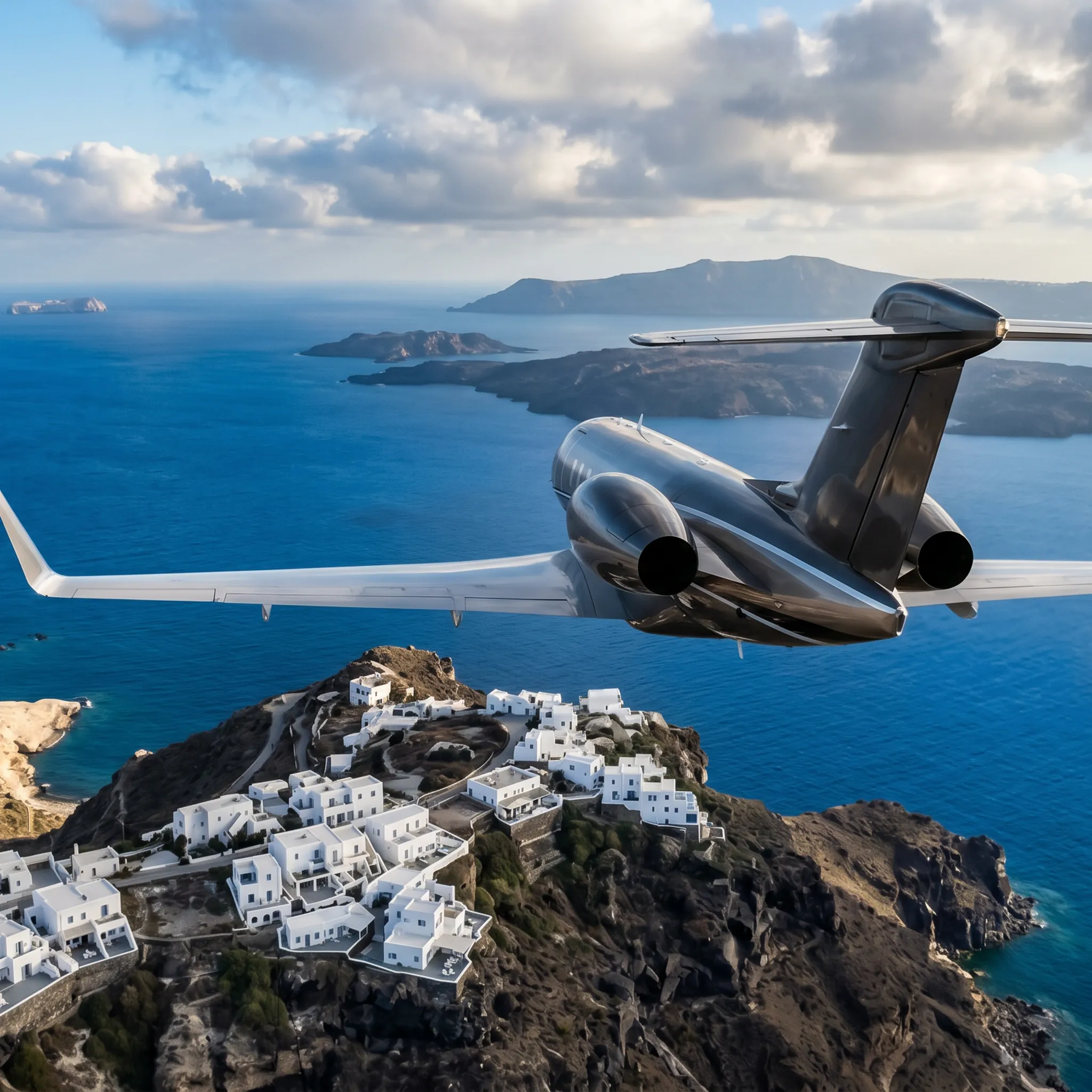
Greece has always attracted private aviation clients, but the demand profile has matured. Clients used to land in Athens and stay put. Now the pattern is genuinely different. Travelers build itineraries that combine Athens, Mykonos, Santorini, and sometimes Corfu or Crete within a single week-long Mediterranean visit, often pairing each island stop with a superyacht segment.
That yacht-to-jet integration is a real operational factor. Handling agents and charter brokers spend considerable time coordinating aircraft availability with marina departures. The best experiences happen when both sides of that equation are booked through a single point of contact who understands both industries.
What draws GCC travelers to Greece specifically? Chapman Freeborn points to the combination of cultural depth and yachting infrastructure. The Aegean offers something the Western Mediterranean struggles to match: genuine remoteness between the luxury touchpoints. That combination of accessibility and escape is hard to replicate.
- Athens International (LGAV): Primary hub for connections from the Gulf, good FBO options
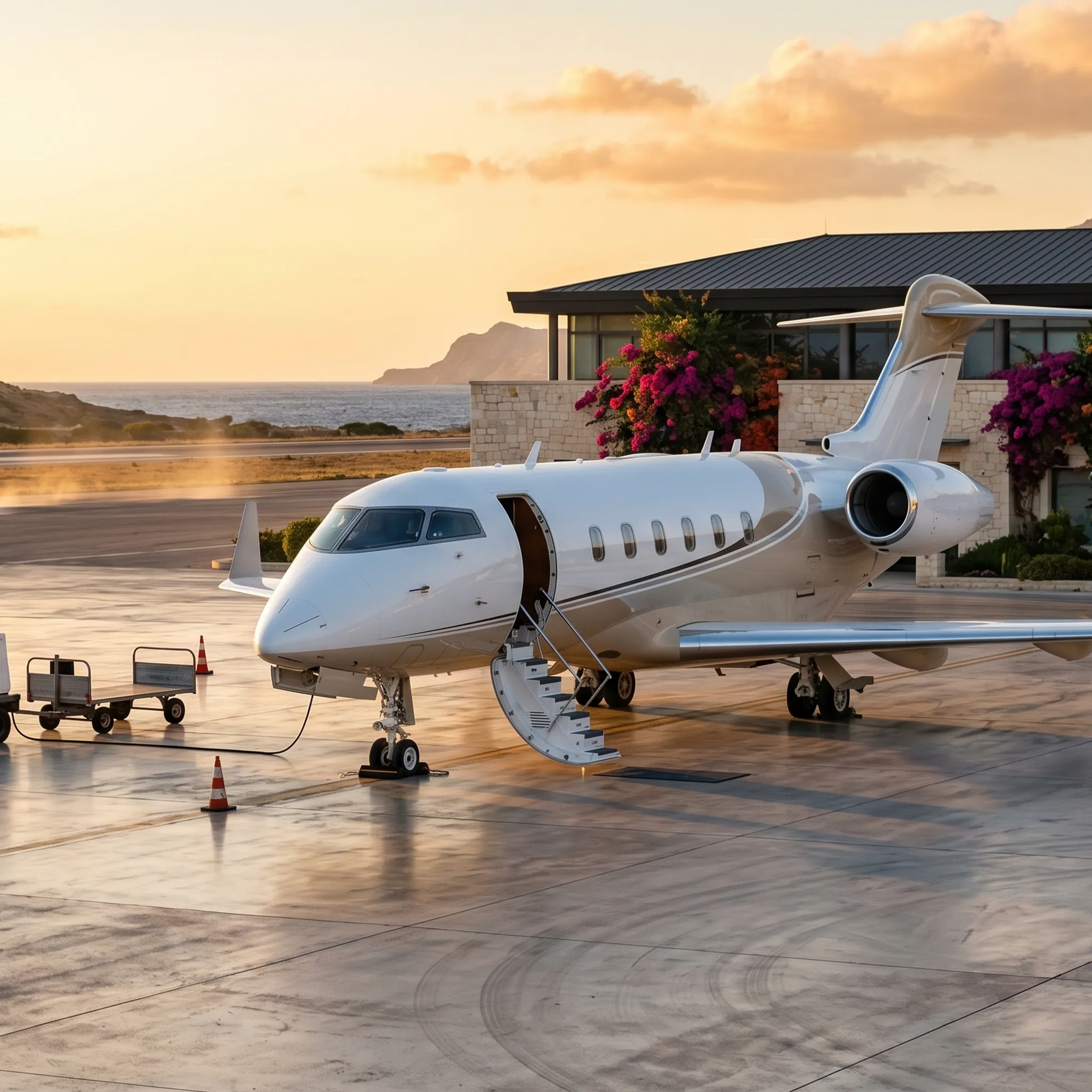
- Mykonos Airport (LGMK): Short runway limits larger jets, strong demand for Citation and Phenom class aircraft
- Santorini Airport (LGSR): Scenic but operationally demanding, wind conditions require experienced crews
- Corfu Airport (LGKR): Longer runway, growing popularity, less congested than Mykonos
The Classic Anchors Are Holding
London, Nice, and the French Riviera haven’t lost their pull. Nice Côte d’Azur Airport (LFMN) remains one of the busiest private aviation hubs in Europe during summer. The combination of Monaco proximity, the Cannes Film Festival legacy, and direct access to St. Tropez via helicopter transfer makes it genuinely irreplaceable on the circuit.
St. Tropez itself is accessed via La Môle Airport (LFTZ), a short strip that handles light and midsize charter aircraft. The preferred arrival for serious travelers who want to avoid the crowds at Nice is a combination approach: land the big jet at Nice, clear customs with priority handling, then transfer via helicopter or smaller aircraft to La Môle. It adds complexity, but it also adds considerable privacy.
What Chapman Freeborn‘s data really signals is that the top tier of the private aviation market has found ways to stay insulated from broader economic noise. Fuel costs are up. Geopolitical uncertainty hasn’t disappeared. Yet demand from GCC travelers for bespoke European charter itineraries is stronger than ever. When clients prioritize flexibility and personal experience above everything else, price sensitivity drops significantly.
For anyone building their own Mediterranean summer itinerary, the advice is consistent across every operator and broker worth speaking to: plan earlier than you think necessary, understand the operational realities of your chosen airports, and build flexibility into your schedule. The Mediterranean in summer is beautiful and logistically demanding in equal measure. The clients who enjoy it most are the ones who treat the journey itself as part of the destination.