
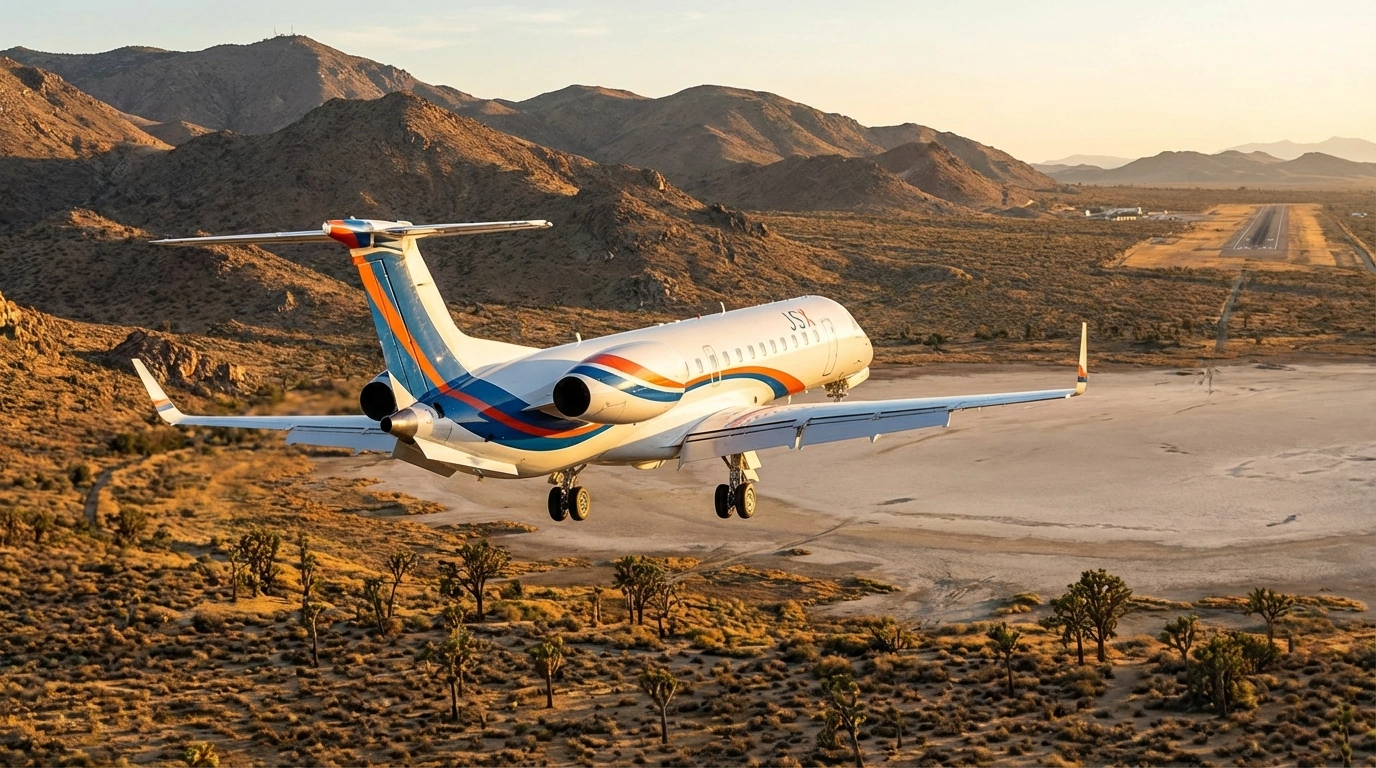
The five-hour slog from Los Angeles to Indio just got a lot shorter. JSX has announced a pop-up route connecting Santa Monica Airport to Jacqueline Cochran Regional Airport for the 2026 Coachella Valley Music & Arts Festival. It’s a 50-minute flight versus hours of crawling through desert traffic. For festival-goers willing to pay $606 each way, the math suddenly makes sense.
This isn’t JSX’s first experiment with event-based flying, but it signals something bigger. The semi-private aviation market has found a sweet spot: high-demand routes during major cultural events, where the premium over commercial travel feels justified and full charter costs feel excessive.
The Flight Specifics
The outbound flight departs April 9, 2026, timed perfectly for Coachella’s first weekend. The return leg launches April 13. JSX is using its standard shared charter model, which means you’re buying individual seats on what’s essentially a scheduled private flight.
Check-in opens just 20 minutes before departure. No TSA lines. No gate waiting. You show up at a private terminal, walk onto the aircraft, and leave. The entire experience takes about 30 minutes from car to takeoff. Compare that to the typical two-hour airport buffer most travelers build in for commercial flights.
Seats are available for purchase online right now. The aircraft operates as a public charter, which gives JSX regulatory flexibility that traditional airlines don’t have. They can launch routes quickly, test demand, and scale up or down without the bureaucratic weight of Part 121 operations.
Why Event Aviation Works
Festival season has become a proving ground for semi-private operators. The formula is straightforward: identify a high-value event, map the most painful travel route, and offer a premium alternative at a price point below full charter.
Full charter from Los Angeles to the Coachella Valley runs anywhere from $8,000 to $15,000 depending on aircraft type. Split that among six passengers, and you’re looking at roughly $1,300 to $2,500 per person. JSX undercuts that significantly while still delivering the core benefit: speed and convenience.
The demographic makes sense too. Coachella attracts professionals with disposable income who value time efficiency. They’re exactly the audience that semi-private operators target. Not quite ready to charter a Gulfstream, but definitely done with commercial airline hassles.
Regional Airports as Enablers
Santa Monica Airport has become JSX’s West Coast anchor. The location is ideal for reaching LA’s Westside and beach communities without the LAX chaos. Jacqueline Cochran Regional, meanwhile, sits just minutes from the festival grounds. Door to door, you’re looking at maybe 90 minutes total. The drive? Easily five hours on a Friday afternoon, potentially longer if traffic gets ugly.
These regional airports were built for exactly this kind of traffic. They handle corporate jets, charter operations, and niche services that major commercial hubs can’t accommodate efficiently. As semi-private operators expand, expect more routes leveraging underutilized regional infrastructure.
The Semi-Private Difference
Semi-private sits in an interesting middle ground. You’re not chartering the aircraft. You don’t control the schedule. But you’re also not dealing with commercial terminals, security theater, or the possibility of getting stuck in a middle seat next to someone’s emotional support peacock.
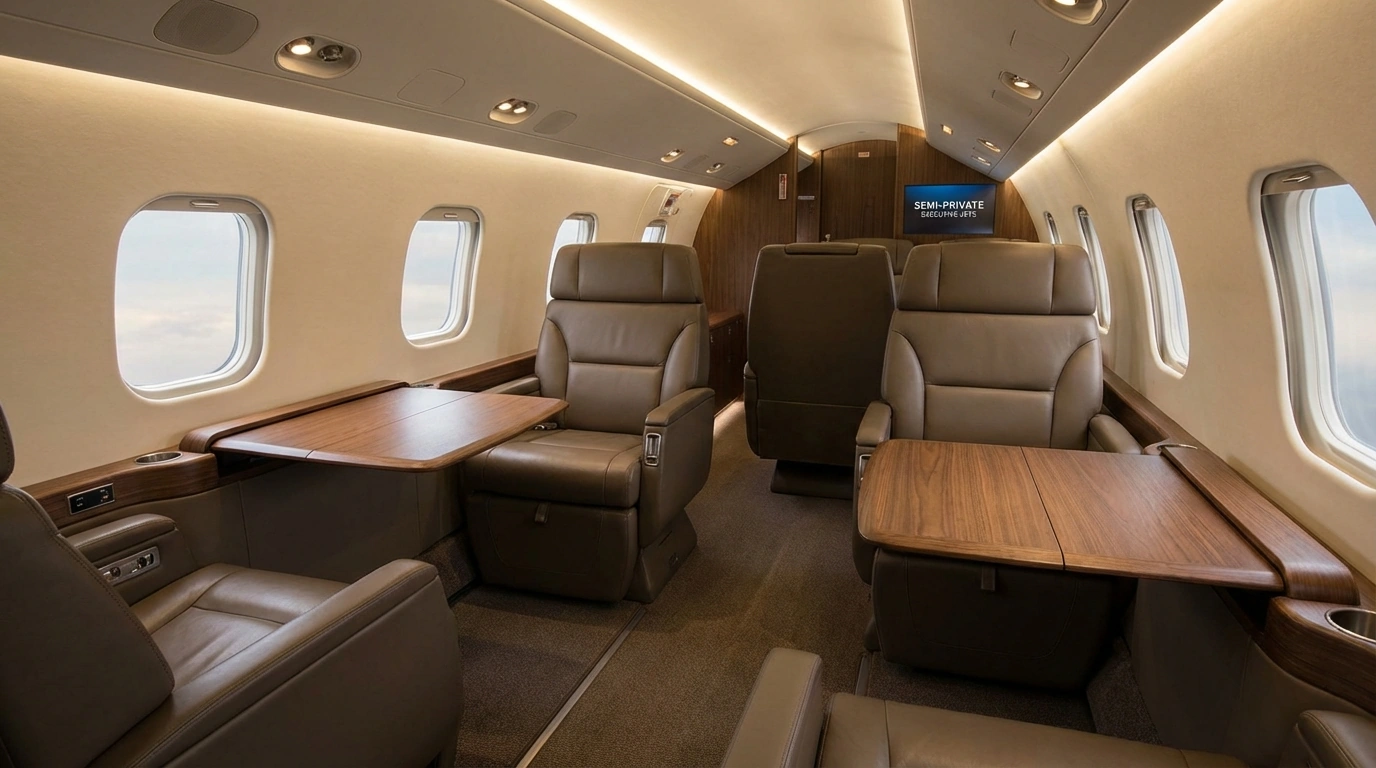
JSX flies Embraer ERJ-135 and ERJ-145 aircraft configured for 30 passengers. The cabins offer leather seats, complimentary snacks and beverages, and enough legroom to actually use a laptop. It’s comfortable without being extravagant. Think business class on a commercial carrier, but without the three-hour airport experience wrapped around it.
The pricing structure matters here. At $606 one-way, JSX is competing against first-class commercial tickets while offering a fundamentally different experience. You’re paying for time savings and convenience, not necessarily luxury. That value proposition resonates with a specific traveler: someone who can afford the premium but doesn’t need the ego boost of a full charter.
What This Signals for Private Aviation
Event-based pop-up routes are becoming a legitimate business model. JSX already operates regular service to Las Vegas and Scottsdale from Santa Monica. Adding Coachella as a seasonal route tests whether festival demand can sustain semi-private pricing.
If it works, expect more operators to follow. Major sporting events, music festivals, high-profile conferences, they all create concentrated travel demand on specific dates. Traditional airlines struggle to add capacity for short-term spikes. Charter operators can deploy aircraft quickly but lack the per-seat economics that make pricing accessible.
Semi-private operators like JSX occupy that gap. They can spin up routes in weeks, price them competitively, and shut them down when demand fades. It’s agile in a way that traditional aviation rarely achieves.
The Fractional and Charter Impact
This trend also creates competitive pressure on fractional programs and traditional charter brokers. If you’re a NetJets or Flexjet shareholder flying to Coachella, do you burn your hours on a routine trip? Or do you book a $606 JSX seat and save your allocation for international flights where fractional really shines?
Charter brokers face similar questions. Why pay $12,000 to charter a light jet when six seats on JSX cost $3,636 total? The charter still wins for schedule flexibility and privacy, but the economic gap is narrowing.
Looking Ahead
The Coachella pop-up is a test. If JSX fills those flights consistently, they’ll likely expand to other festivals and events. Burning Man. Art Basel Miami. The Masters. Any gathering that draws affluent travelers to inconvenient locations becomes a potential route.
For the broader private aviation industry, this represents a shift. The traditional binary choice between commercial and charter is dissolving. Semi-private operators are carving out territory by targeting specific use cases where their model offers clear advantages. Event travel is one. Short regional hops are another. Leisure destinations currently underserved by commercial carriers represent a third.
The question isn’t whether event-based aviation will grow. It’s how fast the market will expand and which operators will execute best. JSX is making its bet. If you’re heading to Coachella in April, you now have options beyond the rental car and the freeway.