
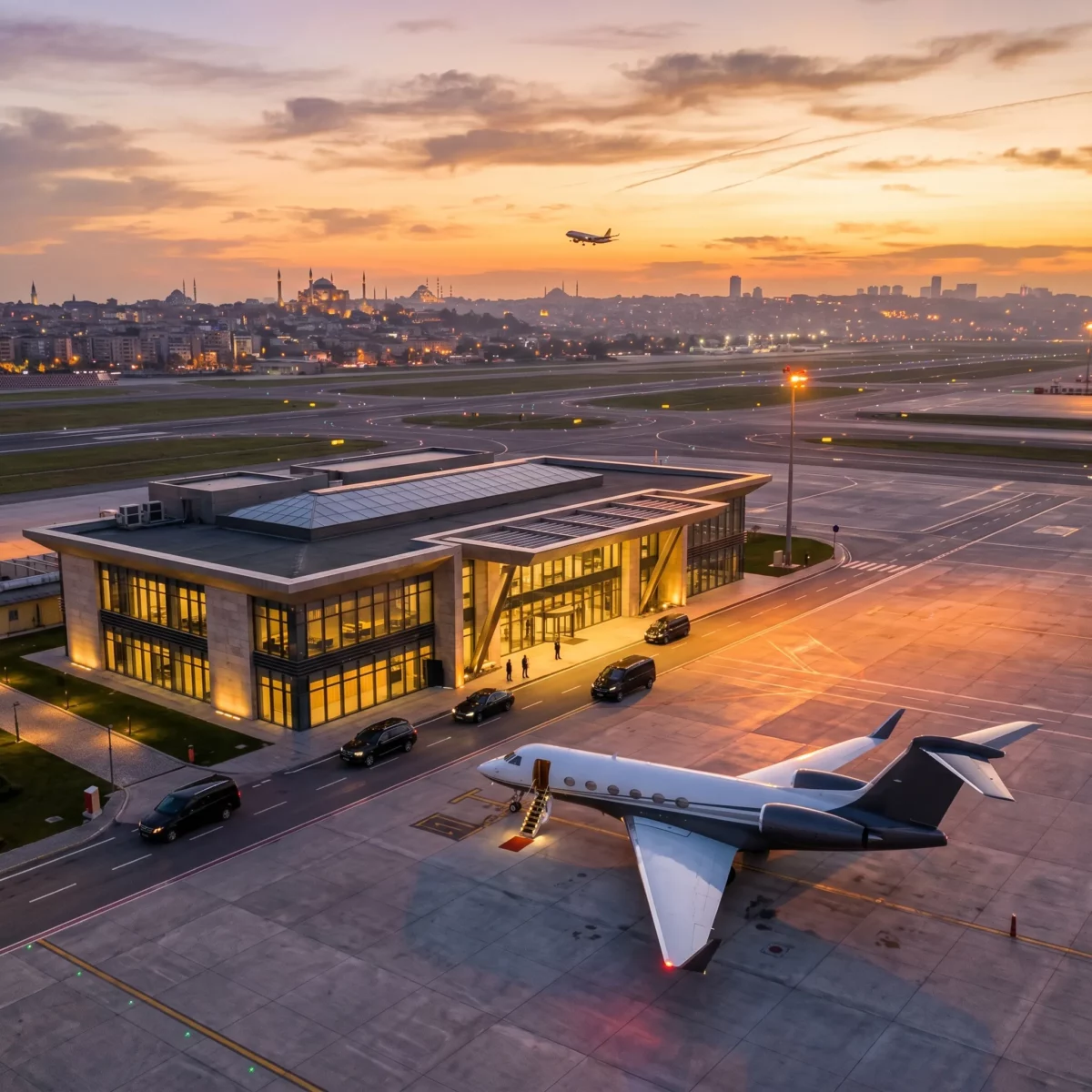
Jetex has opened a new VIP terminal at Istanbul Airport, and the timing makes complete sense. Istanbul has quietly become one of the most strategically important transit points in private aviation, sitting at the crossroads of Europe, the Middle East, and Asia. The question was never whether a premium ground facility would arrive here. It was who would build it and when.

What Makes This Terminal Different
The new facility operates as a hybrid VIP terminal, a format that’s gaining traction in major hub cities. It serves both high-end commercial passengers and private jet travelers under one roof, which sounds odd at first. Traditionally, private aviation ground facilities and commercial terminals occupy completely separate worlds. But the hybrid model reflects how many ultra-high-net-worth travelers actually fly: private on some legs, commercial business class on others, depending on route availability and aircraft positioning.
Practically speaking, this means a traveler flying a private jet into Istanbul can clear the facility and transition to a commercial connection without touching the main terminal. The reverse works just as well. Arrive on a long-haul commercial flight, clear customs in the VIP environment, and board a waiting private aircraft with zero friction.
The facility includes private lounges with bespoke concierge services, which at this level means exactly what it sounds like: staff tasked with high-stakes logistics like last-minute tarmac-to-villa helicopter transfers or bespoke in-flight menus curated by Michelin-starred local chefs — anticipating every need before it’s voiced.

Why Istanbul Specifically
Istanbul Airport has grown aggressively since opening in 2018 to replace Atatürk Airport. It now handles over 80 million passengers annually and ranks among the busiest airports in Europe. But for private aviation, the city’s appeal goes deeper than passenger volumes.
Geographically, Istanbul sits roughly equidistant between London and Dubai. That positioning makes it a natural tech stop for ultra-long-range aircraft that could theoretically overfly the city but don’t need to. It also makes it a legitimate destination for a growing segment of Turkish and regional business travelers who’ve embraced private aviation in the past decade.
The growth of high-net-worth wealth in Turkey, the Gulf states, and Central Asia has created real demand for premium ground infrastructure at Istanbul. Jetex clearly sees this as a long-term play, not just a ribbon-cutting moment.
- Strategic positioning: Istanbul sits within range of most of Europe, the entire Middle East, and large parts of Asia on a single fuel stop
- Growing regional wealth: Turkey, the Gulf, and Central Asia have seen significant high-net-worth growth since 2020
- Tech stop demand: Ultra-long-range aircraft flying Asia-Europe routes often route through Istanbul for crew rest or fuel
- Business hub status: Istanbul connects major financial centers in Frankfurt, London, Dubai, and Singapore
The FBO Expansion Story Nobody’s Talking About
Jetex’s Istanbul opening is part of a broader expansion story that’s reshaping how charter flights and private travel work on intercontinental routes. The traditional FBO model, anchor facilities at major North American and European bases, is giving way to a global network logic. Operators and travelers increasingly expect the same level of ground service in Istanbul or Riyadh that they get at Teterboro or Farnborough.
That gap used to be significant. Touching down at an unfamiliar airport in a country with complex customs procedures, finding ground transportation, managing fuel arrangements — it added friction that experienced private travelers learned to dread. Purpose-built facilities from operators like Jetex exist specifically to absorb that friction.
The concierge component deserves more attention than it typically gets. At major Western FBOs, concierge service often means coffee and a car service number. At a hybrid VIP terminal operating in a genuinely complex transit hub, it means local expertise: the right contacts for last-minute permits, deep knowledge of local regulations, and relationships with ground handlers who can actually solve problems.
What This Means If You’re Flying the Region
For private aviation travelers who regularly fly between Europe and Asia, Istanbul just got more interesting. The route economics between Western Europe and Southeast Asia have always made intermediate stops appealing, even for aircraft capable of direct service. A planned stop in Istanbul with a proper ground facility beats an unplanned diversion anywhere.
For travelers who mix commercial and private travel across a typical year, the hybrid terminal concept addresses something real. Not everyone flies private on every leg. Some routes simply don’t make economic sense for a private aircraft. Having a premium ground environment that serves both modes of travel acknowledges how sophisticated travelers actually behave.

The Broader Trajectory for Luxury Ground Infrastructure
The private aviation industry spent most of the past decade focused on aircraft technology. Range records, cabin innovation, sustainable aviation fuel. Ground infrastructure got less attention. That’s changing.
As business aviation expands into new geographies, the quality of the on-ground experience has become a genuine differentiator. A Gulfstream G700 or Bombardier Global 7500 delivers an exceptional in-flight experience. But that experience begins and ends on the ground. Terminals like this one represent an investment in the full journey, not just the flight time.
Istanbul is unlikely to be the last move Jetex makes in this part of the world. This opening represents the culmination of a decade-long expansion strategy targeting the core of the Trans-Eurasian flight corridor — one that’s shifting focus from destination cities to the major transit hubs that connect them.
For anyone routing regularly between Europe and Asia, Istanbul’s new VIP terminal belongs on your radar well before the next flight plan gets filed.