
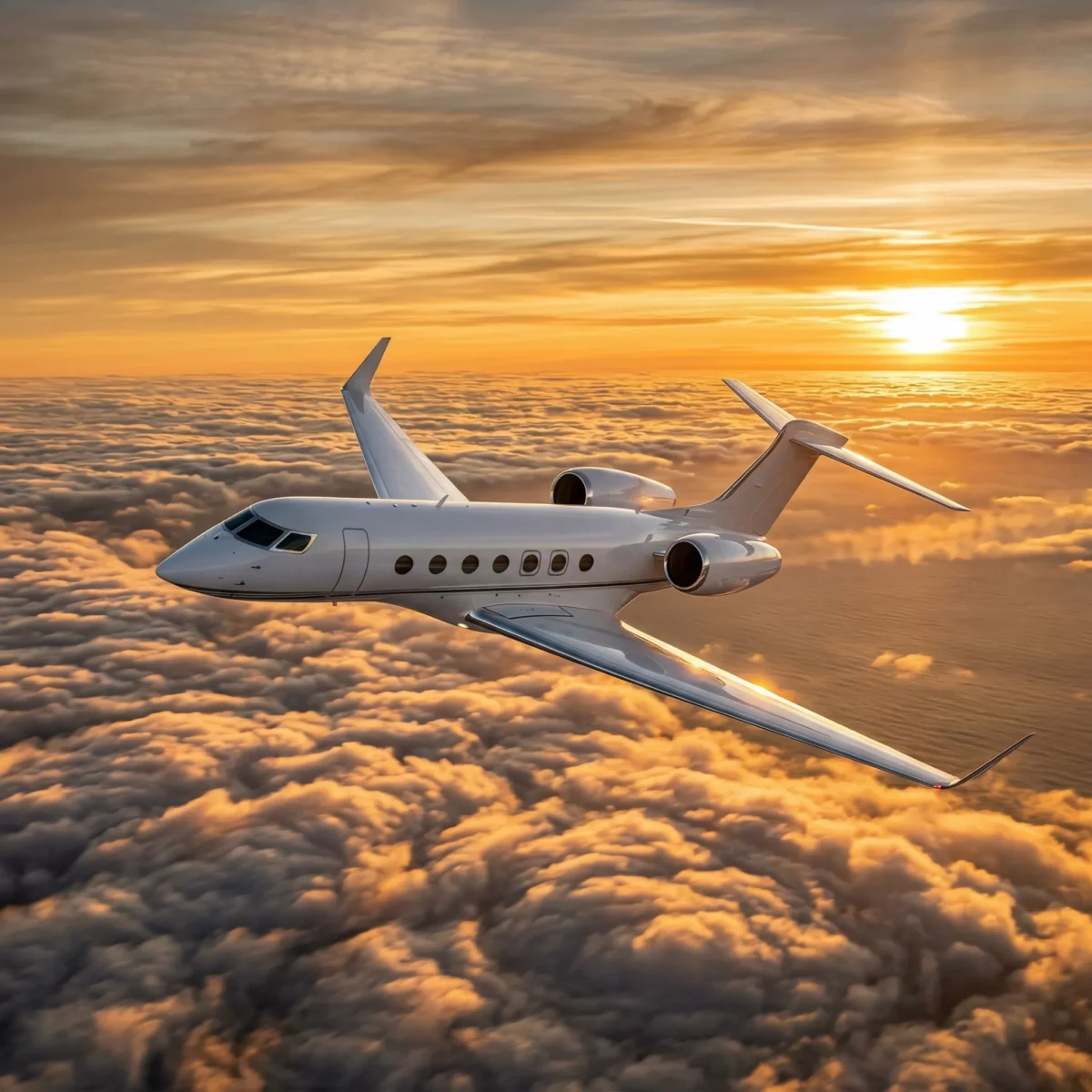
The first Gulfstream G800 has been delivered to a customer. With that single handover, Gulfstream officially entered a new era in ultra-long-range private aviation. The G800 now holds the title of the world’s longest-range purpose-built business jet, and the numbers backing that claim are worth paying attention to: 8,000 nautical miles of range at a cruising speed of Mach 0.85. That’s enough to fly nonstop from Hong Kong to New York, or London to Singapore, without a fuel stop.
For owners who’ve been tracking this program since Gulfstream first teased the aircraft, the delivery is a significant moment. For everyone else evaluating options in the ultra-long-range segment, it changes the calculus.
How Gulfstream Got to 8,000 Nautical Miles
The G650ER, for years the gold standard in ultra-long-range travel, offered around 7,500 nautical miles of range. The G800 adds another 500 nautical miles. That might not sound dramatic, but at intercontinental distances, those extra miles unlock routes that simply weren’t possible before. More city pairs become nonstop destinations. More clients can skip the fuel stop in a Gulf city or a European hub.
The range gains come from a combination of sources, not one single magic ingredient. Gulfstream redesigned the wing to be more aerodynamically efficient, reducing drag across the full cruise envelope. The aircraft also benefits from Rolls-Royce Pearl 700 engines, the same powerplants used on the G700. These engines deliver improved specific fuel consumption compared to older powerplants, meaning the aircraft burns less fuel per nautical mile at cruise altitude. Over an 8,000-mile journey, that efficiency compounds significantly.
Fuel capacity matters too. The G800’s airframe carries more fuel than the G650ER, but the engineers had to balance that against structural weight. The result is an aircraft that flies farther without becoming heavier than it needs to be. That balance is harder to achieve than most people realize.
Flying Higher, Flying Faster
The G800 cruises at up to 45,000 feet, with a ceiling of 51,000 feet. At those altitudes, the aircraft sits above most weather systems and above the congested airways that commercial traffic uses. For passengers, the practical benefit is a smoother, quieter ride. For the aircraft, flying at high altitude means thinner air and less drag, which contributes directly to the efficiency numbers.
Top speed sits at Mach 0.925, matching the G700. That’s fast. On a 16-hour route, even a small speed advantage over older aircraft trims meaningful time from the journey. An owner flying Hong Kong to New York isn’t just buying range. They’re buying hours back in their schedule.
The Cabin: Four Living Areas at Any Altitude
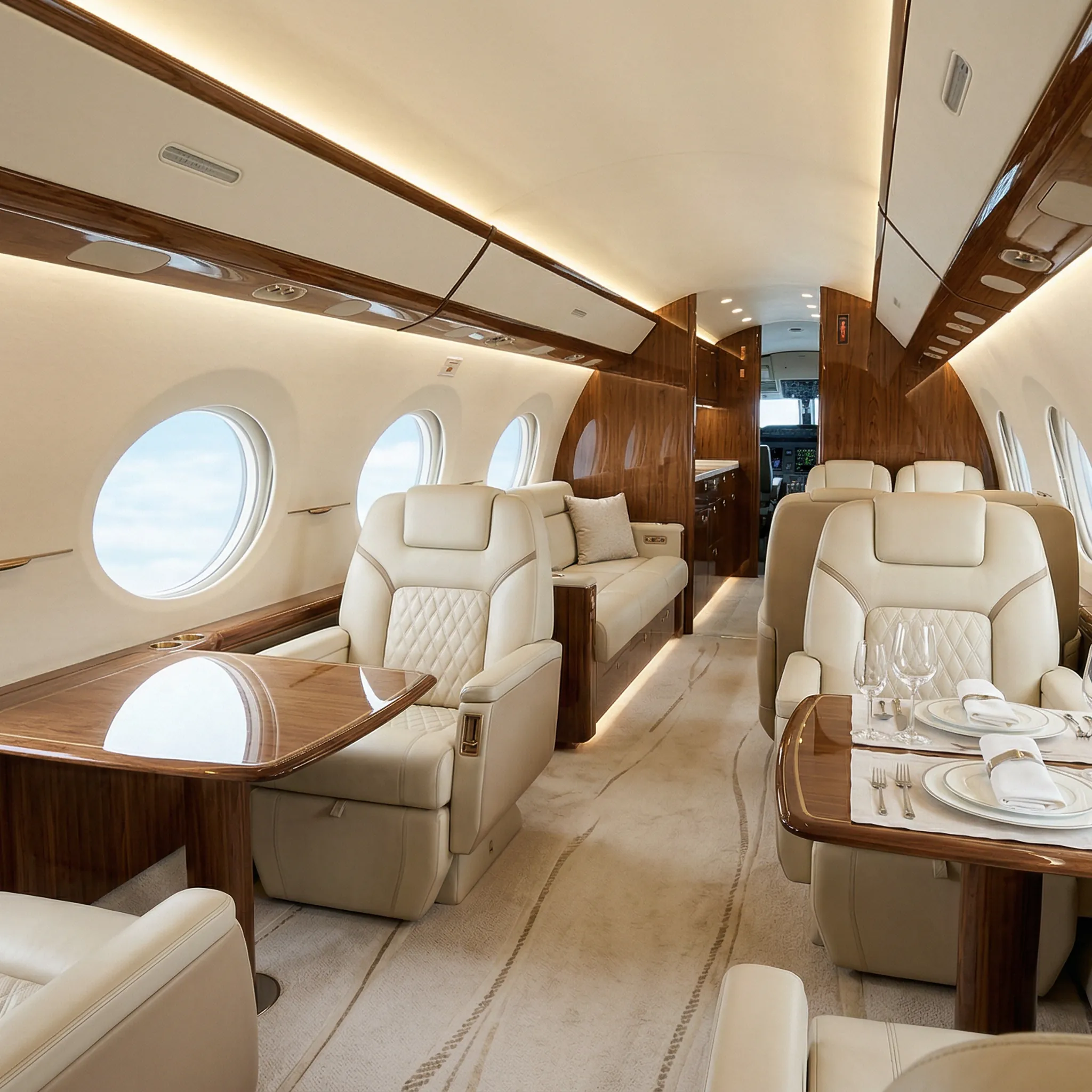
Gulfstream gave the G800 the same four-zone cabin concept found on the G700. That means a dedicated dining area, a conference space, a lounge, and a private stateroom, all within a cabin that’s remarkably quiet by any measurable standard. Gulfstream’s Cabin Sound Levels testing consistently shows their aircraft among the quietest in service, and the G800 continues that tradition.
The windows are worth mentioning. Gulfstream uses the largest oval windows in the industry, and on a daytime flight above the Pacific at 45,000 feet, the natural light they bring in transforms the cabin feel. It’s a subtle detail that becomes obvious the moment you’re onboard.
The Gulfstream Symmetry Flight Deck carries over from the G700, with its active control sidesticks and touch-screen avionics. Pilots who’ve transitioned from older Gulfstream models consistently cite the reduction in workload, particularly on long oceanic routes where crew fatigue is a real consideration.
Where the G800 Sits in the Market
The G800 occupies specific territory in the ultra-long-range segment. It sits above the G700 in range capability, though the G700 offers a wider cabin and slightly more interior volume. The choice between the two generally comes down to mission profile. If your routes regularly push past 7,000 nautical miles, the G800 makes sense. If most of your flying falls short of that threshold, the G700 delivers more cabin space for the same journey.
Bombardier’s Global 7500 remains the primary competitor at this range. The two aircraft trade advantages depending on what matters most to a specific buyer. Cabin configuration, range at high-speed cruise, and fleet support all factor into that comparison. Neither aircraft is objectively superior in every category, which is why both have healthy order books.
For charter operators, the G800’s entry into service opens routes that have historically been difficult to serve without a fuel stop. That matters for ultra-high-net-worth clients who place a premium on nonstop travel, particularly on Asia-to-Americas routes where fuel stops have always been an inconvenience if not a genuine constraint.
What the First Delivery Signals
Gulfstream has a strong track record of executing on delivery promises once a program reaches entry-into-service. The first delivery of the G800 suggests the production line is ramping and that customers further down the order queue should expect their timeline to hold. That’s meaningful for anyone who placed a deposit in 2022 or 2023 and has been managing their travel plans around the expected handover date.
The business aviation market in 2026 continues to see demand for ultra-long-range aircraft outpace available inventory. New deliveries from Gulfstream, Bombardier, and Dassault are all being absorbed quickly. For buyers who haven’t yet secured a position on an order book, the lead times for a new G800 are already extending well into the latter part of this decade.
The G800 doesn’t just represent a technical achievement. It represents a shift in what’s possible for owners who need to connect the world’s most distant city pairs without compromise. That first delivery, however quietly it happened, marks a genuine milestone.