
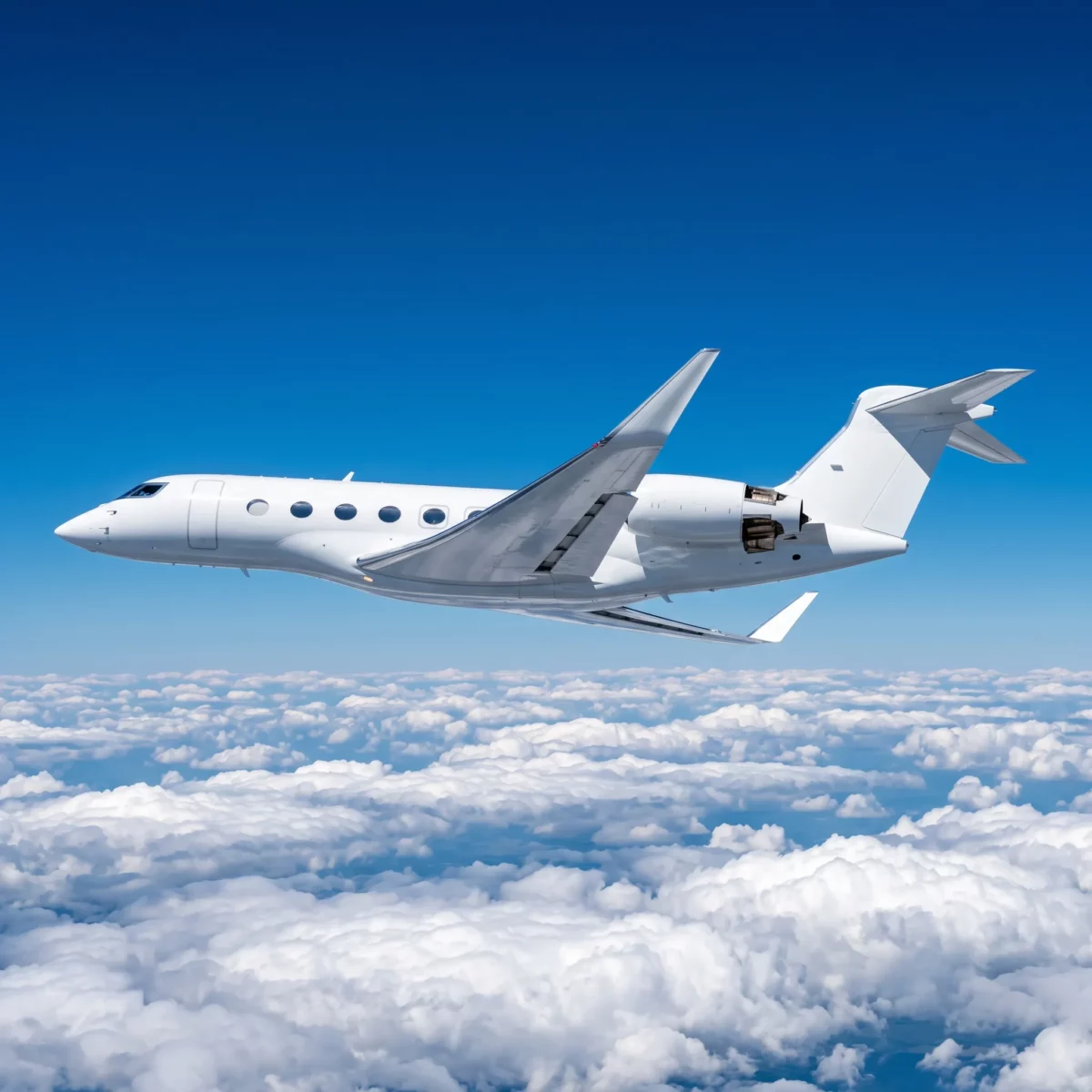
A Gulfstream G800 just flew a high-altitude test flight burning nothing but sustainable aviation fuel. Not a blend. Not the usual 30 or 50 percent mix operators tout at industry conferences. 100% SAF, running through both Rolls-Royce Pearl 700 engines, at cruise altitude, on an aircraft still in its test program. For an ultra-long-range jet built to cross oceans nonstop, that’s a meaningful milestone, not a marketing stunt.
Rolls-Royce confirmed the flight this week, and the significance goes beyond a single test flight logged in a program that’s already racked up thousands of hours. It’s proof that the engine architecture powering Gulfstream’s newest flagship doesn’t need conventional Jet-A to perform at altitude, under real flight loads, on a real mission profile.

Why the Pearl 700 Matters Here
The Pearl 700 isn’t a modified legacy engine wearing a sustainability badge. Rolls-Royce designed it specifically for the G700 and G800 platforms, and fuel flexibility was baked into the combustor design from the start. That’s different from retrofitting older turbofans to tolerate SAF blends, which is how much of the industry has approached the fuel transition so far.
What makes 100% SAF compatibility technically tricky isn’t combustion. Most modern jet engines can burn SAF just fine chemically. The challenge sits in seals, fuel system materials, and energy density consistency across a full flight envelope, from takeoff thrust to high-altitude cruise. A short taxi test on SAF tells you little. A full flight profile at altitude, with the engine cycling through real thrust demands, tells you a lot.
- Engine: Rolls-Royce Pearl 700, purpose-built for the G700 and G800
- Fuel: 100% Sustainable Aviation Fuel, no Jet-A blending required
- Test type: High-altitude flight, not a ground run or taxi test
- Aircraft: Gulfstream G800, ultra-long-range flagship still in flight testing
What This Means for G800 Owners and Operators
If you’re taking delivery of a G800, this test doesn’t change your aircraft’s performance numbers today. The published range, 8,000 nautical miles at Mach 0.85, stays the same whether you’re burning Jet-A or SAF, because SAF is a drop-in fuel. Same energy density, same handling, same infrastructure at the FBO. That’s the whole point.
What it does change is confidence. Owners flying transoceanic legs, London to Singapore, New York to Dubai, want assurance that fueling with SAF at whatever airport happens to stock it won’t compromise performance on a 14-hour leg over open water. This flight test is Gulfstream and Rolls-Royce building that confidence into the certification record before the first customer aircraft ever leaves the factory.

The Supply Problem Nobody’s Solved Yet
Here’s the part that doesn’t get enough attention. Engine compatibility was never really the bottleneck. Supply is. SAF currently makes up less than 1% of global aviation fuel volume, and production is concentrated at a handful of refineries, mostly in the U.S. and parts of Europe. Even with an engine fully certified for 100% SAF, most G800 owners will land at airports where the only fuel available is conventional Jet-A.
That’s not a knock on the technology. It’s a supply chain problem that engine manufacturers can’t solve alone. Gulfstream’s parent, General Dynamics, has leaned into SAF partnerships at its own FBO network, but the broader private aviation industry needs refineries, not just certified aircraft, before 100% SAF becomes a routine fueling option rather than a special request.
How This Stacks Up Against the Competition
Gulfstream isn’t alone in chasing SAF compatibility, but the G800’s test comes at a moment when ultra-long-range buyers are asking sharper questions about sustainability credentials before signing purchase agreements.
| Aircraft | Engine | SAF Status |
|---|---|---|
| Gulfstream G800 | Rolls-Royce Pearl 700 | 100% SAF flight-tested |
| Bombardier Global 7500 | GE Passport | Approved for SAF blends up to 50% |
| Dassault Falcon 10X | Rolls-Royce Pearl 10X | Designed for 100% SAF capability |
Dassault has made similar claims for the Falcon 10X, and it’s clear the entire ultra-long-range segment is racing toward full SAF compatibility as a standard feature rather than an option. That competitive pressure benefits buyers, regardless of which badge ends up on the tail.
Where the Program Goes From Here
The G800 remains in certification testing, with Gulfstream targeting deliveries in the coming months. This SAF milestone joins a growing list of flight test achievements, but it’s one that will matter more with each passing year, as SAF production scales and regulatory pressure on aviation emissions tightens across Europe and eventually the U.S.
For buyers weighing a G800 against other ultra-long-range options, this test flight is worth asking about directly. Not because it changes today’s fueling reality, but because it signals which manufacturers are building for a future where SAF isn’t the exception. It’s the expectation.