

Gulfstream’s newest business jet, the G300, has completed its maiden flight. The super-midsize aircraft took to the skies for the first time in January 2026, marking a significant milestone for a jet designed to replace the popular G280. With a 3,600 nautical mile range, the G300 positions itself as a serious contender for operators who need true transcontinental capability without stepping up to a large-cabin aircraft.
The first flight lasted several hours and focused on basic systems validation and flight handling characteristics. Gulfstream’s test pilots reported smooth performance across the initial test points. This successful flight kicks off what will likely be an 18 to 24-month certification campaign before the aircraft enters service.
Why the G300 Matters in a Crowded Market
The super-midsize category has become intensely competitive. Operators can choose from the Bombardier Challenger 3500, the Cessna Citation Longitude, and the Embraer Praetor 600. Each offers roughly similar cabin dimensions and passenger capacity. What sets them apart comes down to range, speed, and airport performance.
The G280, which the G300 replaces, has been a strong seller for Gulfstream since its 2012 entry into service. Operators appreciated its 3,600 nautical mile range, the same figure Gulfstream quotes for the G300. That range allows nonstop flights from Los Angeles to London or New York to Moscow, routes that push the limits of what a super-midsize can accomplish.
The G300 keeps that range capability while incorporating over a decade of aerodynamic and systems improvements. For fractional operators like NetJets and Flexjet, that matters. Better fuel efficiency translates directly to lower operating costs. Improved dispatch reliability means fewer maintenance delays.
What’s New Under the Skin
Gulfstream has been characteristically quiet about specific technical details prior to first flight. The company typically reveals specifications gradually as flight testing progresses. However, industry observers expect several key improvements over the G280.
The wing design likely incorporates refinements from Gulfstream’s larger aircraft. The G700 and G800 programs have generated significant aerodynamic data that filters down to smaller platforms. Expect to see optimized winglets and potentially revised wing contours that reduce drag without compromising low-speed handling.

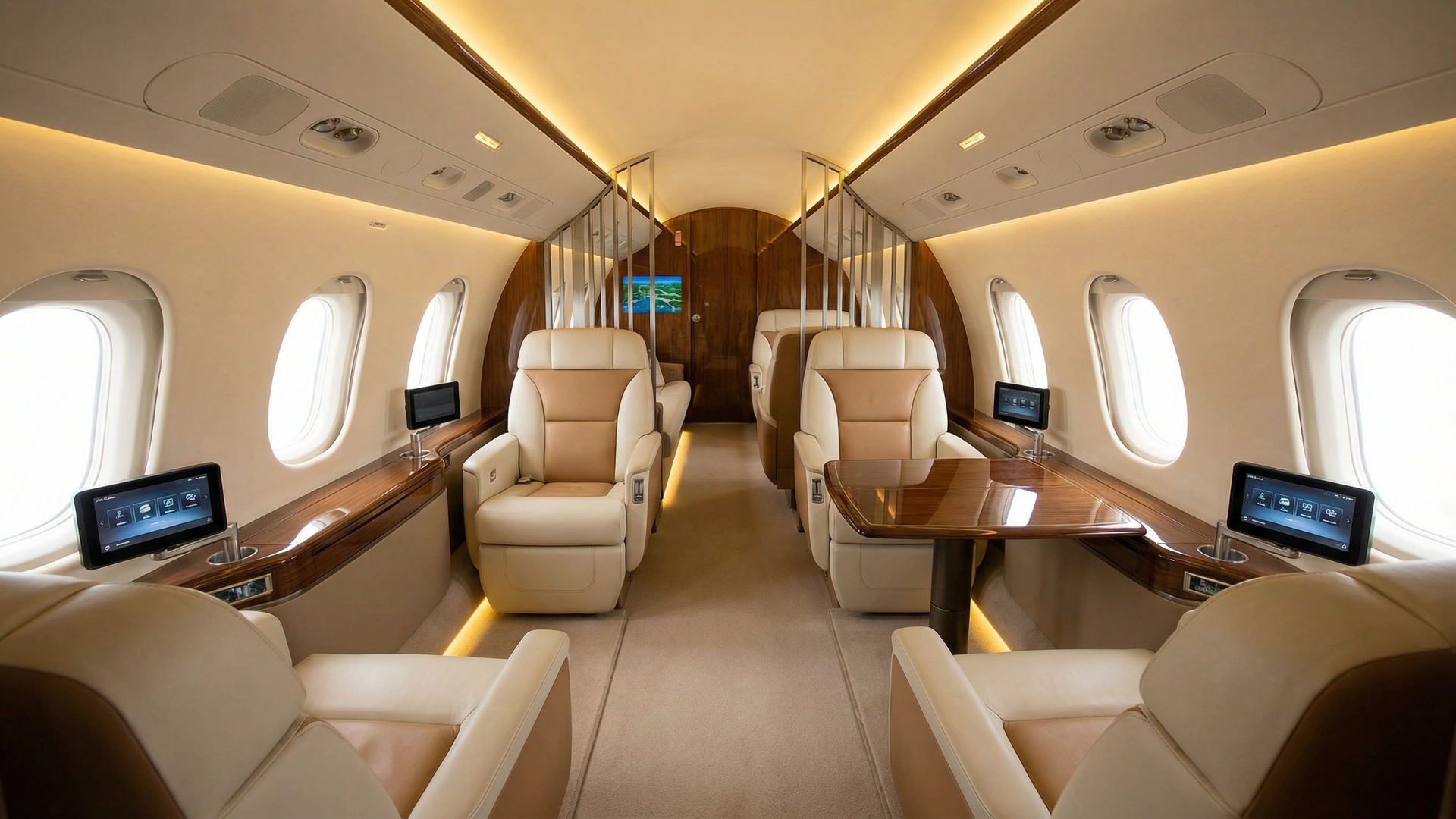
Inside, the G300 will almost certainly feature Gulfstream’s latest cabin management system. Passengers have come to expect comprehensive connectivity and intuitive controls. The Gulfstream Cabin Experience found on larger models sets a high bar for lighting, window size, and environmental controls. Bringing those elements to a super-midsize cabin requires careful engineering. Every pound matters in this category.
The cockpit will use the Symmetry Flight Deck, Gulfstream’s touchscreen-based avionics suite. This represents a significant upgrade from the G280’s Rockwell Collins system. Pilots transitioning from other Gulfstream types will find familiar interfaces and procedures. For operators running mixed fleets, that commonality reduces training costs and improves pilot scheduling flexibility.
Range Performance and Real-World Operations
A 3,600 nautical mile range sounds impressive on paper. Real-world performance depends on payload, winds, and reserve requirements. Most operators plan for four to six passengers plus baggage when calculating maximum range missions. Add two more passengers, and you might give up 200 to 300 nautical miles of capability.
That still leaves plenty of useful range. New York to London becomes routine. Los Angeles to Chicago, Miami, or Seattle all work with comfortable reserves. For operators serving the Caribbean from the East Coast, the G300 can reach any island nonstop and return with minimal payload restrictions.
The aircraft competes directly with the Praetor 600, which offers slightly better range at 4,018 nautical miles. The Challenger 3500 counters with 3,400 nautical miles and a lower acquisition cost. The Citation Longitude trades some range for better short-field performance. Each aircraft carves out a specific niche within the super-midsize segment.
What This Means for Buyers and Operators
Gulfstream’s decision to develop the G300 rather than stretch the G280’s production run signals confidence in the super-midsize market. Corporate flight departments continue to see this category as the sweet spot between operating costs and capability. You get intercontinental range without the fuel burn and crew requirements of a large-cabin jet.
For fractional operators, the G300 offers a platform to replace aging G280 inventory. Fleet renewal happens continuously in fractional programs. As aircraft age out of the fleet at seven to ten years, operators need modern replacements that meet current emissions standards and customer expectations for cabin technology.
Charter operators will watch pricing carefully. If Gulfstream can deliver the G300 at a competitive acquisition cost, it becomes an attractive option for Part 135 fleets. The Gulfstream name carries weight with charter clients. Many will specifically request a Gulfstream when booking, even in the super-midsize category where cabin dimensions vary little between manufacturers.
The Path to Certification
First flight marks the beginning of a comprehensive test program. Gulfstream will likely use three to four test aircraft to complete certification. Each aircraft focuses on specific aspects of the flight envelope. One handles performance testing, another tackles systems validation, a third focuses on environmental testing in extreme conditions.
The company has not announced an official certification timeline. Based on recent Gulfstream programs, expect FAA type certification in late 2027 or early 2028. First deliveries would follow shortly after. Launch customers have likely already placed deposits and begun customizing cabin configurations.
The super-midsize market needed fresh competition. The G300 brings Gulfstream’s engineering resources and service network to a category where those factors matter as much as raw performance numbers. For operators evaluating their next aircraft acquisition, the choice just got more interesting.