
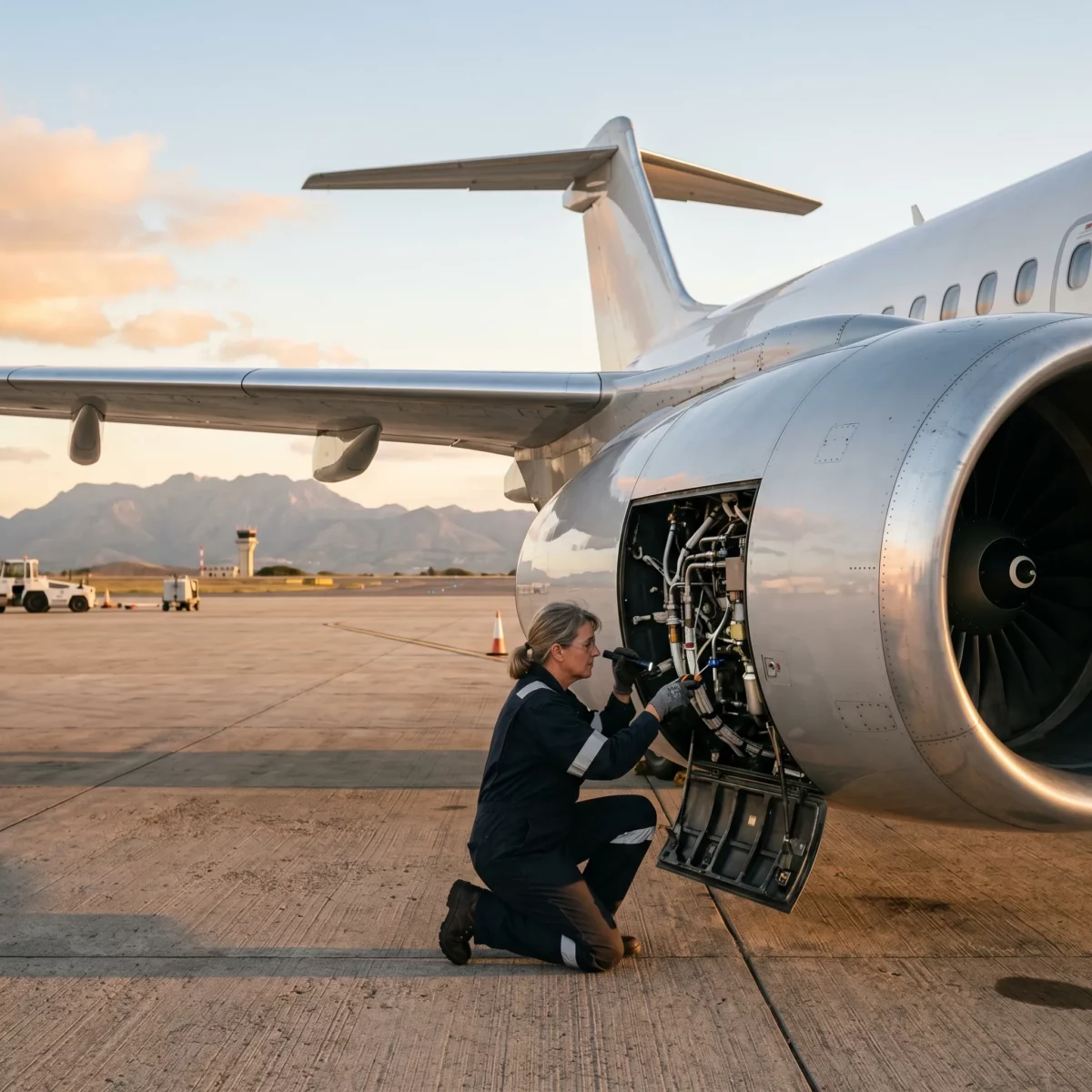
Picture this: your ultra-long-range private jet has just landed in Ulaanbaatar, Mongolia, after a 10-hour flight from Dubai. The nearest Bombardier service center is roughly 2,000 miles away. Your next leg departs in six hours. And somewhere between descent and shutdown, a hydraulic pressure warning flagged briefly on the maintenance system. On a commercial airline, you’d call engineering. Here, engineering is already on board. Meet the flight mechanic, one of private aviation’s most specialized and least talked-about roles.

What Is a Flight Mechanic?
A flight mechanic, sometimes called an airborne maintenance engineer or informally a “flying spanner,” is a licensed aircraft technician who travels as part of the crew on select private jet missions. They don’t fly the aircraft. They don’t serve meals. Their job is to keep the aircraft serviceable in locations where outside technical support simply doesn’t exist.
This role is distinct from a standard ground engineer. A ground engineer services the aircraft at a fixed facility, within reach of parts stores, maintenance manuals on server networks, and a team of specialists one phone call away. A flight mechanic operates alone, in unfamiliar airports, with whatever they’ve packed. That’s a different job entirely.
Most passengers on corporate jets never know there’s a mechanic on board. They might assume the person sitting quietly near the rear is another crew member or security. That low profile is intentional. The mechanic’s presence is a contingency, not a statement that something is wrong.
When Operators Add a Mechanic to the Crew
Not every private jet charter or owner-operated flight carries a flight mechanic. The decision usually comes down to three factors: destination remoteness, mission duration, and aircraft complexity.
- Remote or unsupported destinations: Locations in Central Asia, sub-Saharan Africa, the South Pacific, or polar routes where FBO infrastructure is minimal or non-existent
- Extended itineraries: Multi-week trips through several countries, where a single technical issue could cascade and strand the aircraft far from support
- High-value or time-critical missions: Heads of state movements, medical evacuation support, or executive travel with zero flexibility on schedule
- Brand-new or recently modified aircraft: Some operators add a mechanic during early service periods when the aircraft and crew are still building familiarity with the type
- Aircraft with known complexity: Large-cabin jets with sophisticated hydraulics, pressurization systems, and avionics sometimes warrant additional technical oversight on demanding itineraries
The decision also reflects the operator’s risk tolerance. A fractional ownership program running a disciplined, hub-and-spoke network rarely needs roving mechanics. An owner flying their Gulfstream G700 from New York to Kathmandu and back might feel very differently.
What They Actually Do Between Takeoff and Landing
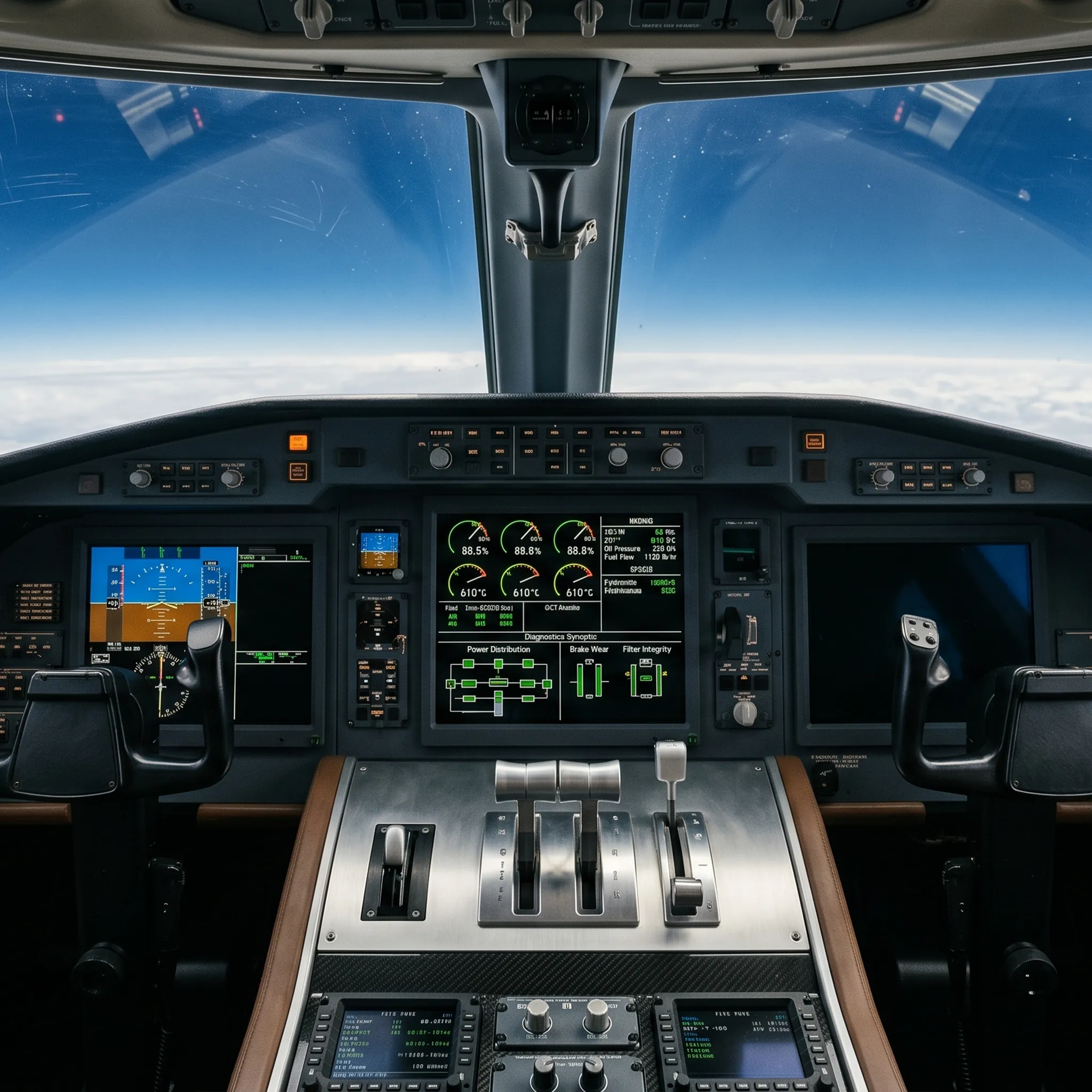
During flight, a mechanic’s primary role is monitoring. On modern glass-cockpit aircraft, onboard diagnostic systems generate a continuous stream of data about engine performance, hydraulic pressures, fuel system behavior, and dozens of other parameters. The flight mechanic reviews this alongside the flight crew, translating raw data into decisions.
On the ground, the pace changes. A typical turnaround at a remote airfield might look like this:
- Post-flight inspection within 30 minutes of shutdown, covering engines, landing gear, control surfaces, and any in-flight flagged items
- Review of the aircraft’s maintenance tracking system for any deferred items approaching limits
- Coordination with the flight crew on the next leg’s fuel burn, route altitude, and expected weather to anticipate any systems stress
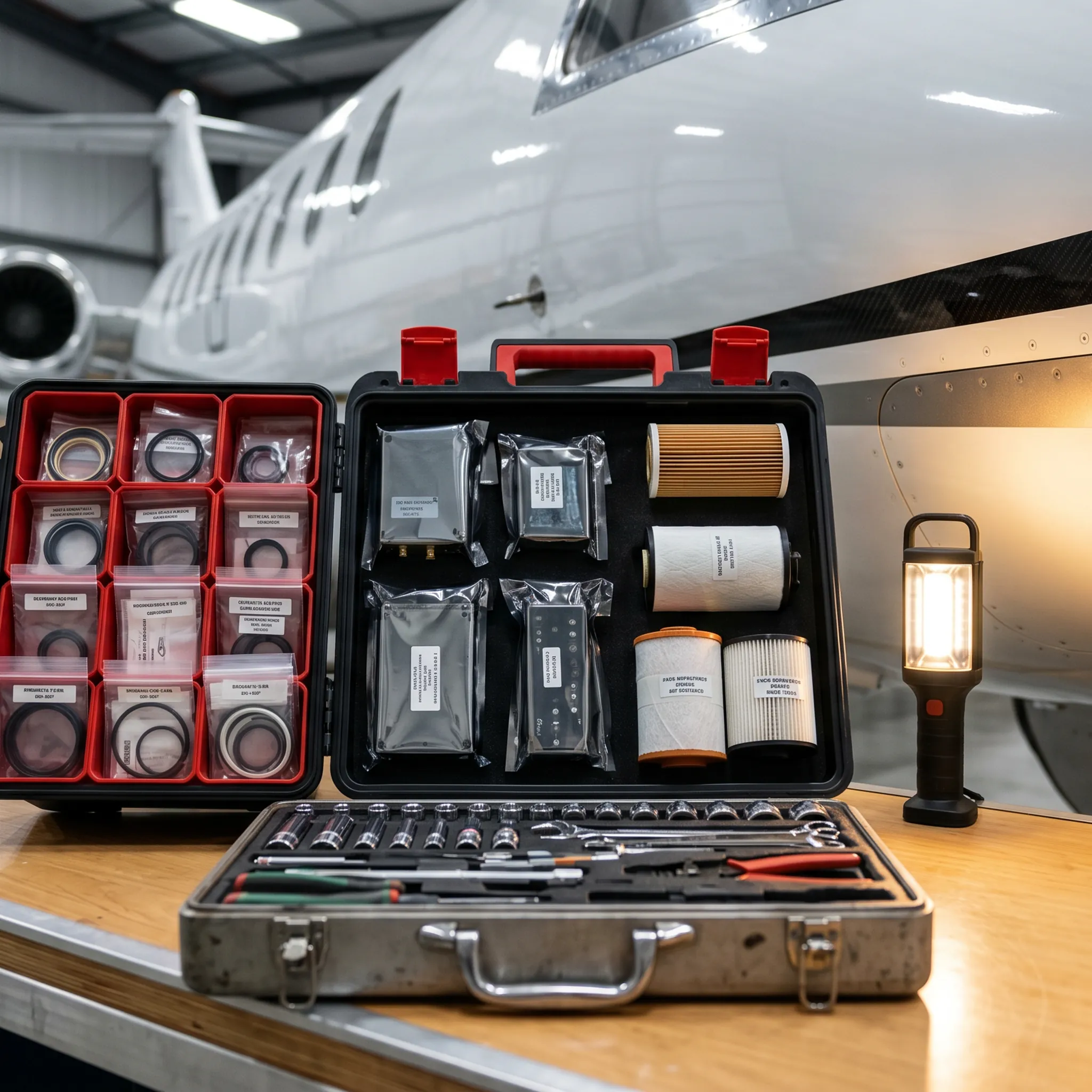
- Minor rectifications using the mission spares kit carried on board
- Documentation and sign-off in the aircraft’s technical log before the next departure
That spares kit deserves attention. An experienced flight mechanic packs for the aircraft and the route, not for every eventuality. Seal kits for hydraulic components, replacement avionics line replaceable units for the specific chassis, oxygen system parts, common filter elements. The kit reflects the mechanic’s read on what’s actually likely to go wrong, based on the aircraft’s history and the destination environment. It’s not guesswork. It’s informed preparation.
The Regulatory Side That Most People Miss
Carrying a flight mechanic isn’t just a preference. In some countries and under certain operating rules, it’s a regulatory requirement. Some ICAO member states require a licensed engineer to accompany foreign-registered aircraft operating within their airspace on extended itineraries. Other operators include mechanics as a condition of their air operator certificate when flying beyond designated support regions.
The mechanic’s licensing also matters. A technician holding FAA Airframe and Powerplant certification may not be authorized to release an aircraft to service under EASA regulations, or under a specific country’s civil aviation authority. Serious operators plan around this. Some carry mechanics with dual or multiple national licenses, specifically for multi-continent trips. Others coordinate in advance with the destination authority to establish what approvals will be recognized.
This is where the gap between good trip planning and great trip planning shows up. For a private aviation client, it’s rarely visible. But when a maintenance issue surfaces at 2 a.m. in a country with minimal aviation infrastructure, the difference becomes obvious fast.
How This Affects the Charter or Ownership Experience
If you’re chartering a private jet for a complex international itinerary and your operator mentions a flight mechanic as part of the crew, treat that as a signal of professionalism, not a warning flag. It means the operator has assessed the mission honestly and resourced it appropriately.
For aircraft owners planning remote travel, the question of whether to include a mechanic is worth raising directly with your chief pilot or chief of maintenance. The cost of positioning a qualified technician for two weeks on a global expedition is real. So is the cost of an AOG (aircraft on ground) situation in a location with no recovery options for days.
Some of the most experienced private aviation departments in the world run a simple internal calculation: if the destination has fewer than three qualified MRO providers within a four-hour flight, a flight mechanic travels with the aircraft. No exceptions.

A Role Built for the Edges of the Map
Private aviation’s ability to operate genuinely anywhere depends on infrastructure that doesn’t always exist at the destination. The flight mechanic fills that gap. They’re the reason a Bombardier Global 7500 can operate a government charter to a remote Pacific island and depart on schedule the next morning, without access to a single authorized service facility.
For most business aviation clients, this role stays invisible. That’s exactly how it should work. You board, you fly, you arrive on schedule, never knowing that someone in the back spent the turnaround verifying that every system was exactly where it needed to be. The best maintenance story is always the one that doesn’t become a story at all.