

Family offices once called a charter broker whenever a principal needed to get somewhere. A survey commissioned by Airbus Corporate Jets (ACJ) suggests many now plan aviation the way they plan any other major holding. Family office executives in the ACJ-commissioned survey expect to fly more over the next two years, and 85% of respondents cite international operations as a driver.
That figure describes a client who thinks in portfolios and who increasingly shapes demand for the biggest cabins in business aviation.
From Occasional Charter to Strategic Asset
A family office manages wealth across generations. That often means real estate in several countries, private equity stakes, operating businesses, philanthropy and a few homes. Someone has to get to all of it, and rarely on a convenient schedule.
As those holdings spread out, the travel pattern changes. A single weekend trip becomes a loop through London, Dubai and Singapore. Commercial first class works poorly for that. Booking charter flights one leg at a time is little better, since availability and cabin quality shift with every request.
The more sophisticated family offices now treat aviation like any other asset class. They model flight hours, compare ownership structures, and ask whether a private jet belongs on the balance sheet at all. The shift from buying individual trips to planning capacity is the most interesting part of the ACJ findings.
Why Global Operations Push Demand Upward
International flying changes the math. Range, cabin comfort and customs flexibility start to matter more than hourly rate. A light jet that handles a regional hop cannot manage a 12-hour leg with a principal who needs to work and sleep.
That is why large-cabin and long-range aircraft sit at the center of this trend. Principals want to land rested and ready for a meeting, and a nonstop route makes that possible. Airliner-derived corporate aircraft keep drawing interest for the same reason, and the pattern fits the broader return of business travel to private aviation we have seen this year.
Family offices also bring something operators like: predictability. Their flying is planned, repeated and tied to long-term holdings, which makes them attractive to manufacturers and management companies alike.

The Jet Classes They’re Targeting
Not every family office needs a flagship. The aircraft choice follows the route map and the size of the traveling party. Here is how the categories tend to break down.
| Jet class | Typical use | Example types |
|---|---|---|
| Super-midsize | Regional routes and some transatlantic routes, depending on payload and weather | Challenger 350, Citation Longitude (about 3,500 nm range) |
| Large cabin, long range | Nonstop intercontinental, small teams | Gulfstream G650, Global 7500 |
| Corporate airliner | Family travel, delegations, extended stays | ACJ TwoTwenty (A220-based), ACJ319neo, ACJ320neo family |
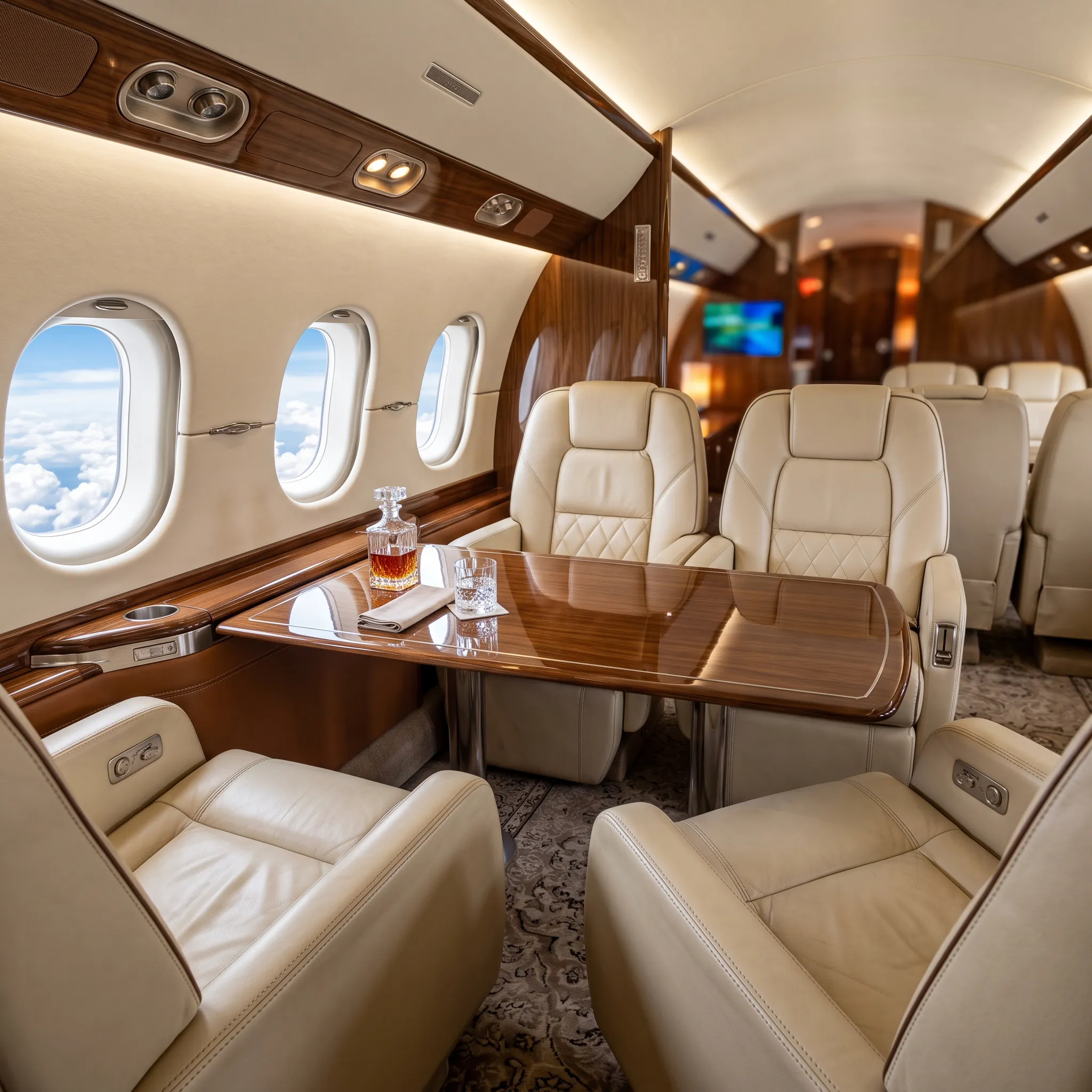
The top tier is where Airbus has its stake. The ACJ TwoTwenty is derived from the Airbus A220, while the ACJ319neo and the ACJ320neo family are built on the A320 family. Their cabins can be configured with standing-height space, separate zones for family and staff, and a bedroom suite. That layout suits an office moving a principal, a spouse, children and advisers at once. Among large-cabin business jets, the Gulfstream G650 and Global 7500 cover the nonstop intercontinental brief with smaller groups.
At the faster end of the market, new long-range models keep raising the bar. Our look at the Global 8000 and G300 shows how speed and range are stretching what a single leg can do.

What Family Offices Actually Weigh
Buying is only one route, and the sharpest offices compare several structures before they commit.
- Outright ownership: full control over cabin design and crew, with the heaviest capital and management burden.
- Fractional or jet card access: guaranteed availability without the asset. The break-even against ownership depends on annual hours, so ask each program for its own utilization math and run it against your actual flight plan.
- Charter with a preferred operator: flexible, though quality varies by aircraft and crew.
- Leasing arrangements: a middle path, so read our guide to wet lease versus dry lease before signing anything.
Ownership brings its own questions. Who manages the aircraft? Where does it base? How does it fit the office’s tax and liability structure? These are finance and legal questions, and they decide whether a jet saves money or drains it.
Security and privacy rank high too. A principal with global holdings wants control over who knows the itinerary and who handles the aircraft on the ground. A dedicated crew and a known cabin go a long way toward that.
What This Means for the Market
Family offices want large cabins and long range, and those are the segments where supply is tightest. New long-range aircraft already come with long waits for delivery slots, and every buyer who commits to a build position pushes the queue out for the next one. Operators with strong international support, from overflight permits to ground handling, are best placed to win this client.
Charter customers will feel the effect too. Every large-cabin jet that moves into a family office’s private fleet is one fewer available on the charter market in peak weeks.
My view is that the ACJ survey points to a market where the best operators will stop selling flights and start selling fleet plans. A family office that flies the same international loops every quarter needs a multi-year capacity plan, and the operator who builds that plan will keep the account for a decade.