
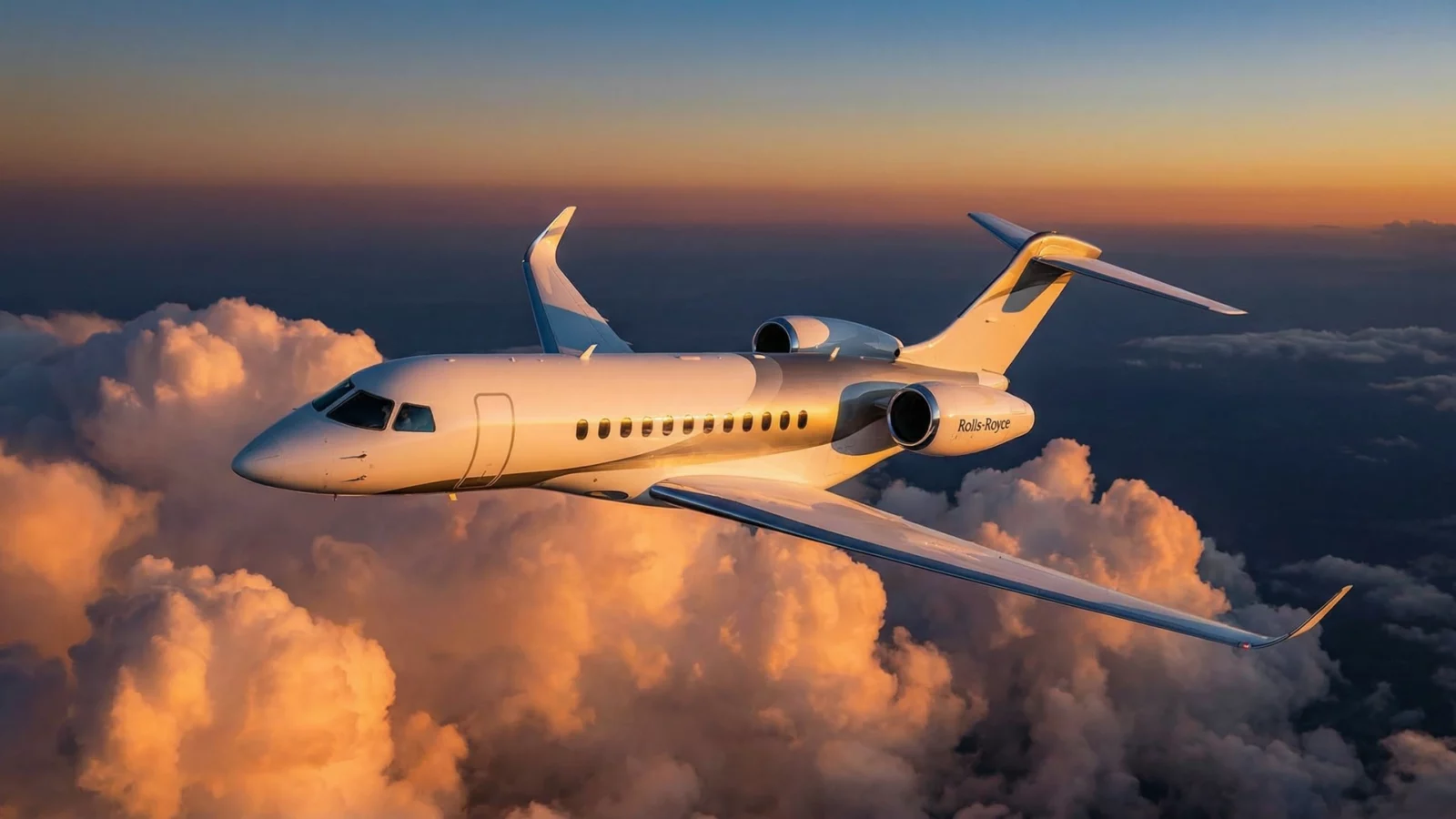
The Rolls-Royce Pearl 10X has cleared a critical hurdle. Rolls-Royce just completed certification testing for the engine that will power Dassault’s upcoming flagship, the Falcon 10X. This keeps the ultra-long-range business jet on track for 2027 certification. For buyers choosing between the top tier of private aviation, the competitive landscape just got more interesting.
The Pearl 10X represents more than a new powerplant. It’s Dassault’s answer to a market currently dominated by the Bombardier Global 7500 and Gulfstream G700. Both aircraft have set benchmarks in range, cabin size, and operating efficiency. The Falcon 10X arrives late to this fight, but it’s bringing advantages that could reshape buyer preferences.
What Makes the Pearl 10X Different
Rolls-Royce designed the Pearl 10X exclusively for the Falcon 10X. That’s relatively uncommon in business aviation, where engines often power multiple airframes. The focused development means the engine integrates tightly with Dassault’s aerodynamic design and systems architecture.
The engine delivers 18,000 pounds of thrust per unit. That’s enough to push the Falcon 10X to a projected range of 7,500 nautical miles. Real-world numbers matter more than marketing specifications, but if Dassault hits this target, it puts the aircraft squarely between the Global 7500 at 7,700 nautical miles and the G700 at 7,500 nautical miles. The differences are marginal, which means other factors will drive purchase decisions.
Fuel efficiency is where the Pearl 10X could shine. Rolls-Royce claims significant improvements in fuel burn compared to previous-generation engines. Operating costs matter, especially for owners flying 300-plus hours annually. A 5-10% reduction in fuel consumption translates to hundreds of thousands of dollars over the aircraft’s lifetime.

The Falcon 10X’s Competitive Position
The Falcon 10X enters a market with two established players. The Global 7500 has been delivering since 2018 and has proven reliability. The G700 began deliveries in 2024 and brings Gulfstream’s reputation for cabin comfort and long-range performance. Both have loyal customer bases.
What does Dassault offer that’s different? Cabin height, for one. The Falcon 10X promises 6 feet 8 inches of headroom, the tallest in its class. That extra height creates a noticeably different onboard experience. For taller passengers or anyone who’s felt the psychological weight of a lower ceiling on a 14-hour transpacific flight, it matters.
The other differentiator is Dassault’s trademark advanced flight controls. The company pioneered digital flight controls in business aviation and continues refining them. Pilots consistently rate Falcon aircraft highly for handling characteristics, especially in challenging weather or crosswind landings. That translates to dispatch reliability and fewer weather delays.
Range Comparisons That Actually Matter
Published range figures assume optimal conditions. Light loads, perfect winds, cruise speeds optimized for fuel economy. Real operators care about practical range with typical passenger counts and baggage.
With eight passengers and standard baggage, the Falcon 10X should connect city pairs like Los Angeles to Sydney, New York to Hong Kong, or London to Buenos Aires. Those routes require 7,000-plus nautical miles. The Global 7500 already does this reliably. The G700 does it with more cabin volume. The Falcon 10X will do it with that extra headroom and potentially lower fuel bills.
Timeline and What Buyers Should Know
Engine certification testing completion moves the program forward, but several milestones remain. Dassault still needs to complete flight testing, demonstrate performance guarantees, and work through the certification process with aviation authorities. The 2027 certification target looks achievable, but private aviation has seen delays before.
For buyers with deposits on the Falcon 10X, this news offers reassurance. For those still deciding between the top ultra-long-range options, the timeline matters. The Global 7500 is available now with minimal wait times. The G700 has a backlog stretching into 2028 for new orders. The Falcon 10X will likely deliver to its earliest deposit holders in late 2027 or early 2028, with later slots pushing into 2029.
Pricing remains another consideration. Dassault has indicated the Falcon 10X will list around $75 million, matching its competitors. Pre-owned Global 7500 aircraft are now entering the market, offering an alternative for buyers unwilling to wait. The G700 won’t have meaningful pre-owned availability for several more years given its recent entry to service.
The Broader Market Impact
Three manufacturers competing at the top of the ultra-long-range segment is good for buyers. It drives innovation in cabin design, efficiency improvements, and service quality. It also keeps pricing somewhat competitive, though at this level, price is rarely the primary decision factor.
The engine milestone also confirms the health of the business aviation market. Rolls-Royce doesn’t invest this heavily in a new engine without confidence in demand. Order books for all three aircraft suggest the market can support multiple players. High-net-worth individuals continue buying these aircraft for personal use, and corporations see them as essential tools for global operations.
The Falcon 10X will find its buyers. Some will value the cabin height and Dassault’s engineering reputation. Others will stick with Bombardier or Gulfstream based on past experience or brand loyalty. The real winner is anyone shopping in this category. More choice, more innovation, and three aircraft that each deliver exceptional capability. The Pearl 10X engine clearing this milestone brings that three-way competition one step closer to reality.