
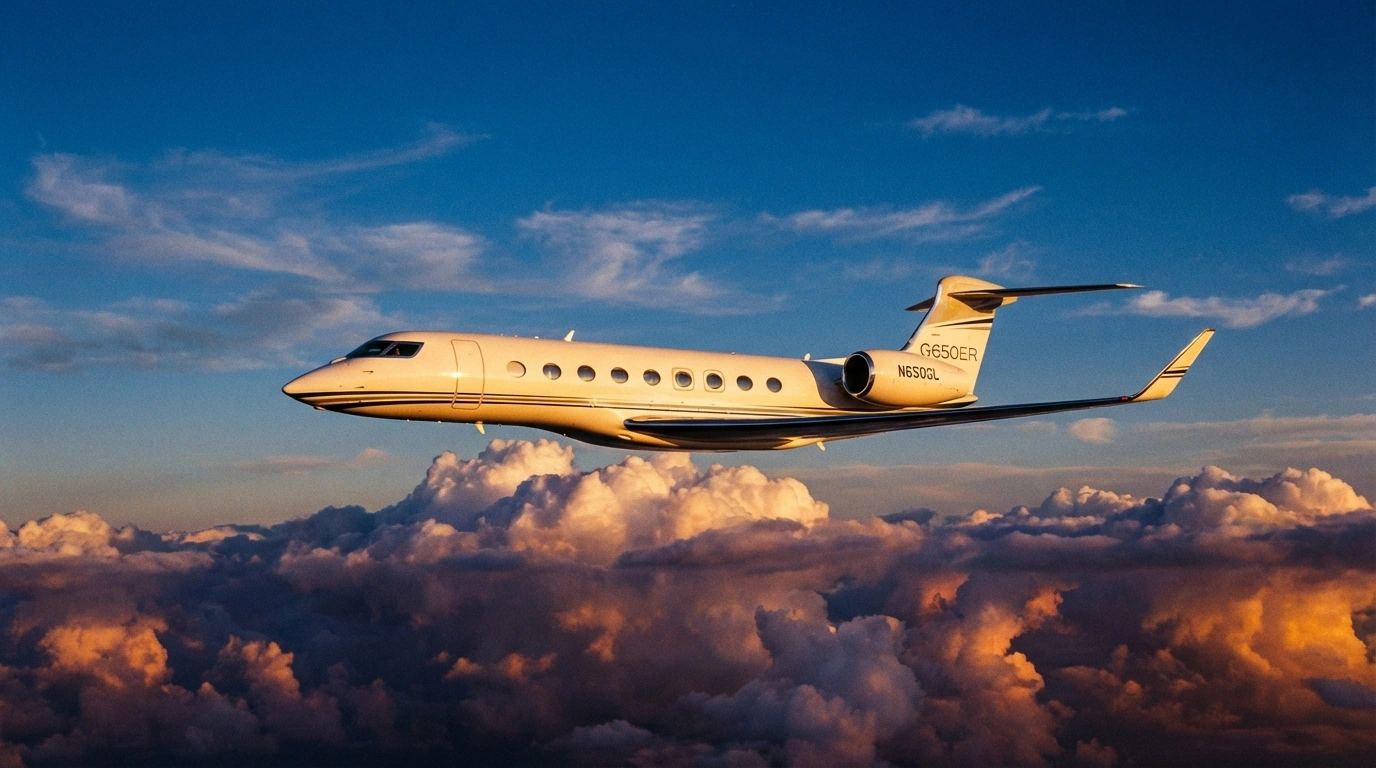
Most private jet owners operate a single aircraft. Elon Musk maintains what amounts to a personal airline. His fleet includes three active Gulfstream jets, with a fourth on the way. This is not extravagance for its own sake. It is operational necessity at the scale Musk operates.
When you run Tesla, SpaceX, and multiple other ventures spanning three continents, a single aircraft becomes a bottleneck. The solution? Build what insiders call a “billionaire air force.” Multiple long-range jets that can position independently, undergo maintenance without grounding your operations, and handle simultaneous demands across your empire.
The Current Fleet
Musk’s active inventory centers on Gulfstream hardware. Two G550s, registered N502SX and N272BG, form the workhorses of the fleet. These aircraft offer 6,750 nautical miles of range, enough to connect Los Angeles to London or New York to Tokyo nonstop.
The flagship is a Gulfstream G650ER, tail number N628TS. This aircraft stretches that range to 7,500 nautical miles and cruises at Mach 0.925, making it one of the fastest civilian jets in service. The G650ER can fly from San Francisco to Singapore without refueling, a capability that matters when you are launching satellites from multiple continents.
Musk retired his Dassault Falcon 900B tri-jet in 2016. The Falcon, registered N900SX, served its purpose but lacked the range and speed his operations now demand. In private aviation, operational needs evolve. Aircraft fleets follow.
Why Multiple Jets Matter
The logic behind operating multiple aircraft escapes most people. It seems redundant. But consider Musk’s typical week: Tesla meetings in Austin, SpaceX launches in Cape Canaveral or Boca Chica, policy discussions in Washington D.C., and manufacturing reviews at Tesla’s Gigafactory in Nevada or Germany.
A single jet would require constant repositioning. Worse, it creates vulnerability. Aircraft need maintenance. Inspections cannot be deferred. When your sole aircraft goes down for scheduled service, you are grounded. Commercial aviation is not an option when your schedule operates in hours, not days.
Multiple jets solve three problems. First, operational redundancy. One aircraft in maintenance does not halt your schedule. Second, simultaneous operations. Your team can travel independently while you focus elsewhere. Third, strategic positioning. Keep one jet on the East Coast, another on the West Coast, a third wherever your next international commitment demands.
The Pilot’s Perspective
Musk held a private pilot license starting in 2002. He flew a Piper Meridian and even an Aero L-39 Albatros military trainer. But he stopped flying in 2008, citing safety concerns and family responsibilities. The decision reflects a broader pattern among ultra-high-net-worth individuals. Once your time becomes valuable enough, the risk calculus changes. You hire professionals.
His current flight operations likely employ multiple crews. FAA rest requirements mean you cannot simply fly pilots continuously across time zones. Multiple aircraft require multiple crews, adding another layer of complexity and cost. But at Musk’s operational tempo, the alternative is worse.
The G700 Upgrade
The fleet is adding a new flagship. Gulfstream’s G700, with an estimated price of $80 million, was expected for delivery in 2025. Given we are now in early 2026, the aircraft has likely joined the fleet or will shortly.
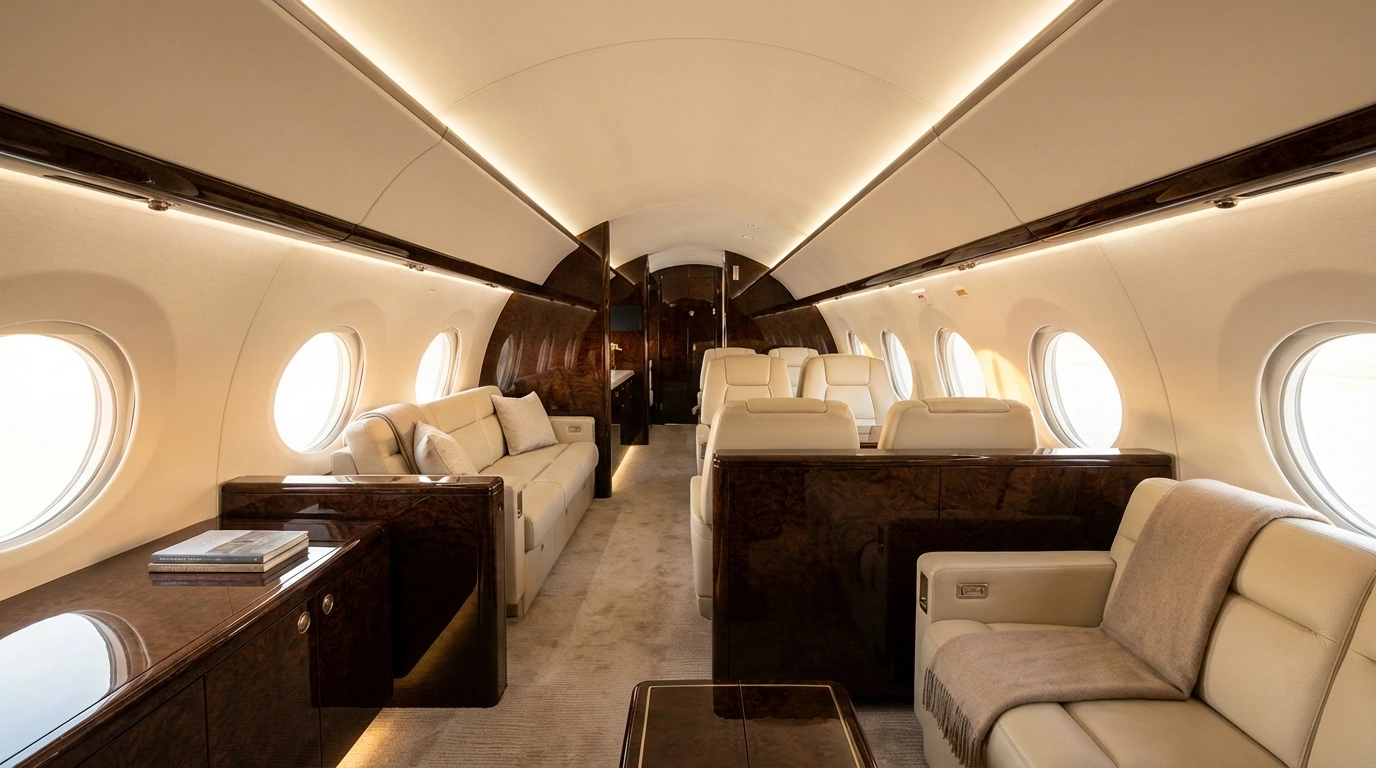
The G700 represents the current pinnacle of business aviation. Its range stretches to 7,750 nautical miles at Mach 0.85, or it can fly 6,650 nautical miles at a blistering Mach 0.90. The cabin is the largest in business aviation, offering 2,765 cubic feet of volume and five distinct living areas. For someone who essentially lives in the air, cabin space translates directly to productivity.
The G700’s maximum speed of Mach 0.935 makes it the fastest purpose-built business jet currently available. When every hour matters, that speed advantage compounds over long sectors. A New York to Dubai flight saves nearly an hour compared to older generation aircraft. Multiply that across hundreds of flights annually, and the math speaks clearly.
Certification Delays and Delivery Reality
Gulfstream faced certification delays throughout 2024 that pushed G700 deliveries back. This is normal in aviation. New aircraft programs always encounter certification hurdles. The FAA does not rush approvals, regardless of customer pressure or manufacturer timelines. For buyers like Musk, delays are frustrating but manageable when you already operate multiple jets.
The Broader Trend
Musk is hardly alone in operating multiple long-range jets. Other tech billionaires have followed similar paths. Jeff Bezos operates two Gulfstream G650ERs. Larry Ellison’s fleet includes multiple large-cabin jets. Mark Zuckerberg reportedly operates Gulfstream hardware through corporate ownership.
This represents a shift in how the ultra-wealthy approach private aviation. A generation ago, a single large jet signaled arrival. Today, multiple jets signal operational sophistication. It is less about status and more about logistics. These individuals run global operations that require global mobility on demand.
The choice of aircraft also tells a story. Nearly all gravitate toward Gulfstream. Why? Reliability matters when you operate at this scale. Gulfstream’s service network spans the globe. Parts availability is better. Resale values hold stronger. When an aircraft becomes a business tool rather than a luxury item, these factors outweigh subjective preferences about cabin aesthetics or brand prestige.
What This Means for Private Aviation
The billionaire air force phenomenon drives innovation in business aviation. Manufacturers know their most demanding customers want more range, more speed, and more reliability. The competition between Gulfstream, Bombardier, and Dassault to serve this market pushes the entire industry forward.
It also highlights a gap in the market. Between traditional ownership and fractional programs lies a need for ultra-flexible, multi-aircraft access. Some operators now offer dedicated fleet management for clients who need multiple jets but prefer not to own directly. The model handles crewing, maintenance, scheduling, and compliance while giving the client the operational benefits of a personal fleet.
For the rest of the private aviation market, Musk’s approach offers lessons. Even at smaller scales, operational flexibility matters. A jet card that offers guaranteed access across multiple aircraft types provides redundancy without the capital commitment. Fractional programs that allow mixing aircraft sizes within your allotment provide similar flexibility.
The principle scales. Whether you fly 50 hours annually or 500 hours, having backup options when your primary solution fails will save more than it costs. Musk simply operates at a scale where the backup option is another $70 million aircraft.
The Path Forward
As Musk continues expanding his business interests, his aviation needs will likely grow. The addition of the G700 suggests he sees no slowdown in his travel demands. Political engagement in Washington D.C., manufacturing operations across three continents, and space operations in multiple countries require the kind of mobility only a personal fleet provides.
The real innovation may come in how these fleets operate. Flight planning software, predictive maintenance, and optimized positioning algorithms can squeeze more efficiency from multiple aircraft. Some operators now use artificial intelligence to optimize which aircraft serves which mission based on positioning, maintenance status, and passenger requirements.
For now, Musk’s billionaire air force remains a tangible symbol of modern executive life at the highest levels. The private jet has evolved from executive perk to essential tool. When you operate at global scale and speed, the aircraft become as fundamental as the internet connection or the smartphone. Musk’s fleet simply makes that reality impossible to ignore.