

A hundred airplanes doesn’t sound like much when you think about the size of the global business jet fleet. But when one dealer delivers a hundred new Pilatus aircraft in just eight years, that’s a story worth telling. Cutter Aviation hit that milestone this month, and the reasons behind it say a lot about how private aviation actually works in the American Southwest.
Cutter became an authorized Pilatus Sales and Service Center in 2018. Since then, the Phoenix-based company has been quietly building one of the busiest Pilatus dealer networks in the country. The 100th delivery isn’t a marketing gimmick. It’s a data point that confirms something pilots and owners in Arizona, New Mexico, and West Texas have known for years: the PC-12 and PC-24 fit this terrain better than almost anything else flying.

A Region Built for Turboprops
The Southwest isn’t kind to conventional aircraft. Runways sit at elevation. Summer temperatures push density altitude to punishing levels. Many of the airstrips serving ranches, resorts, and small communities are short, unpaved, or both. This is exactly the environment Pilatus engineered its aircraft to handle.
The PC-12 needs only about 2,170 feet of runway to land, gravel included if needed. Its single Pratt & Whitney PT6 engine shrugs off high-altitude, high-heat conditions that force plenty of twin-engine jets to cut payload or delay departures on a hot Scottsdale afternoon. Owners splitting time between a Phoenix headquarters and a ranch outside Sedona or a lake house in New Mexico don’t treat that capability as an option to check off — they build their entire flight schedule around it.
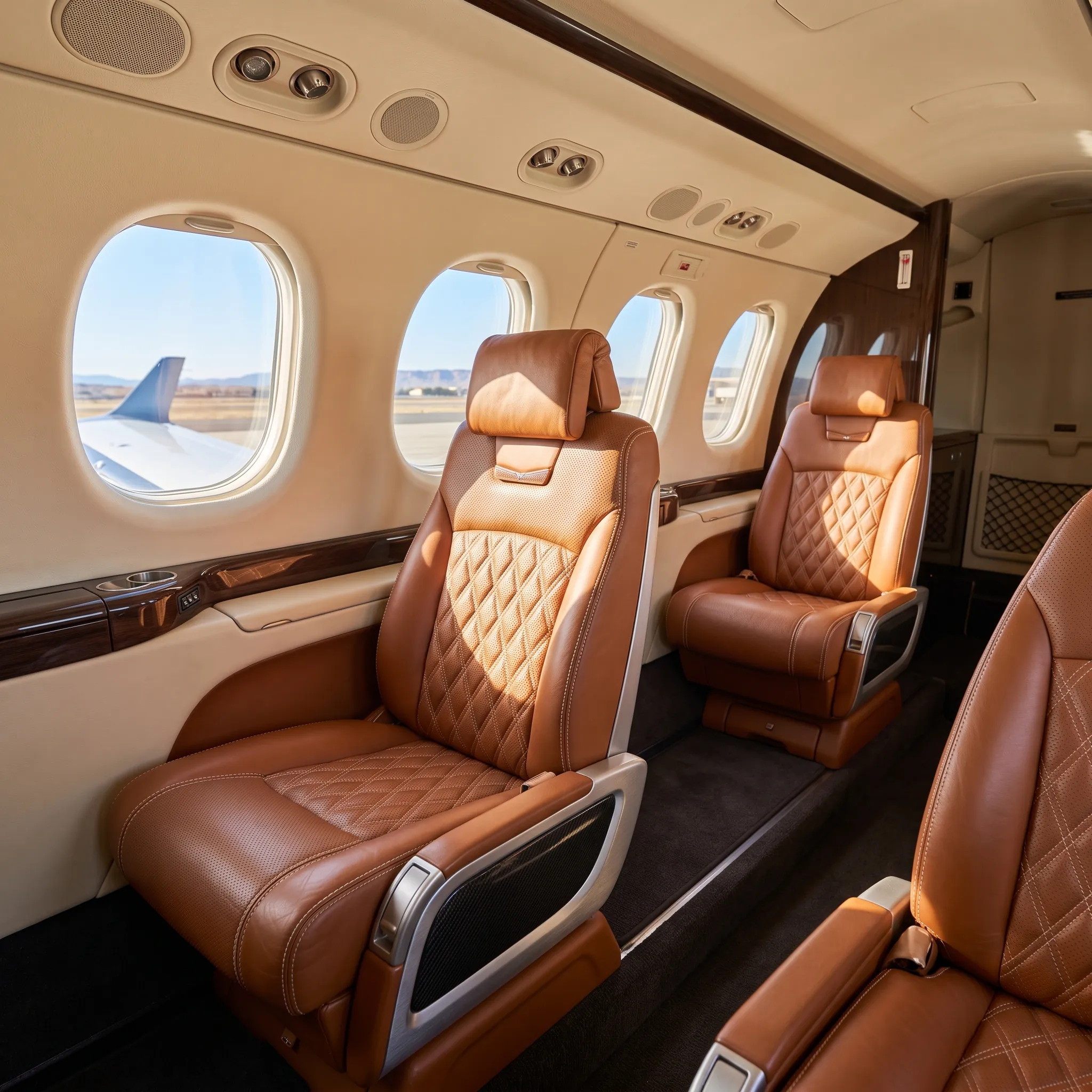
The PC-24, Pilatus’s light jet, extends that same philosophy with more speed and a bigger cabin, while still keeping the short-field, rough-strip access that made the PC-12 a Southwest favorite in the first place.
What Makes These Aircraft Work Here
- Short-field performance: Both models operate comfortably from runways under 3,000 feet, opening up dozens of small airports commercial jets can’t touch
- High and hot capability: Engineered to maintain performance at elevation and in extreme heat, a daily reality across Arizona and New Mexico
- Unpaved surface tolerance: The PC-12’s rugged landing gear handles gravel and dirt strips that serve remote ranches and hunting lodges
- Single-pilot certification: Lowers operating costs for owner-flown missions, a common setup among Southwest ranch and business owners
Cutter’s Local Advantage
Timing and geography both worked in Cutter’s favor. The company already had deep roots in the region through its FBO network, giving it existing relationships with the ranch owners, oil and gas executives, and agricultural operators who make up a huge share of Pilatus’s Southwest customer base. When Cutter added the Pilatus dealership in 2018, it wasn’t starting from zero. It was activating a network that already understood the aircraft’s appeal.
Service support matters just as much as sales in this equation. Owners flying into remote strips need to know parts and maintenance are close by, not a multi-hour flight away. Cutter’s service centers across Arizona, New Mexico, and Texas give Pilatus owners exactly that kind of coverage. Cutter executives point to that proximity as a key reason many of its Pilatus buyers come back for a second or third aircraft.
How the PC-12 and PC-24 Compare
| Specification | Pilatus PC-12 NGX | Pilatus PC-24 |
|---|---|---|
| Engine type | Single turboprop | Twin jet |
| Range | 1,803 nm | 2,000 nm |
| Max speed | 290 knots | 440 knots |
| Takeoff distance | About 2,460 ft | About 2,930 ft |
| Typical price | $5.6 million | $12 million |
What This Means for Buyers
For anyone shopping in this category, the Cutter milestone is a useful signal. A hundred deliveries in eight years means strong resale liquidity, an established parts pipeline, and a dealer network that has actually stress-tested these aircraft against Southwest conditions rather than just selling them on paper specs.
It also points to a broader trend in private aviation: buyers increasingly want capability over prestige. A PC-12 won’t turn heads at a major FBO the way a midsize cabin jet might, but it will get an owner into a strip that jet can’t touch, and it will do it on a fraction of the operating cost. That’s a trade a growing number of Southwest owners are happy to make.
Looking Ahead
Cutter hasn’t disclosed specific delivery targets for the years ahead, but the pace of the past eight years suggests demand across the region isn’t slowing down. As Pilatus continues refining both the PC-12 and PC-24, buyers weighing a turboprop against a light jet in this market should expect the Southwest’s appetite for these aircraft to keep growing.