
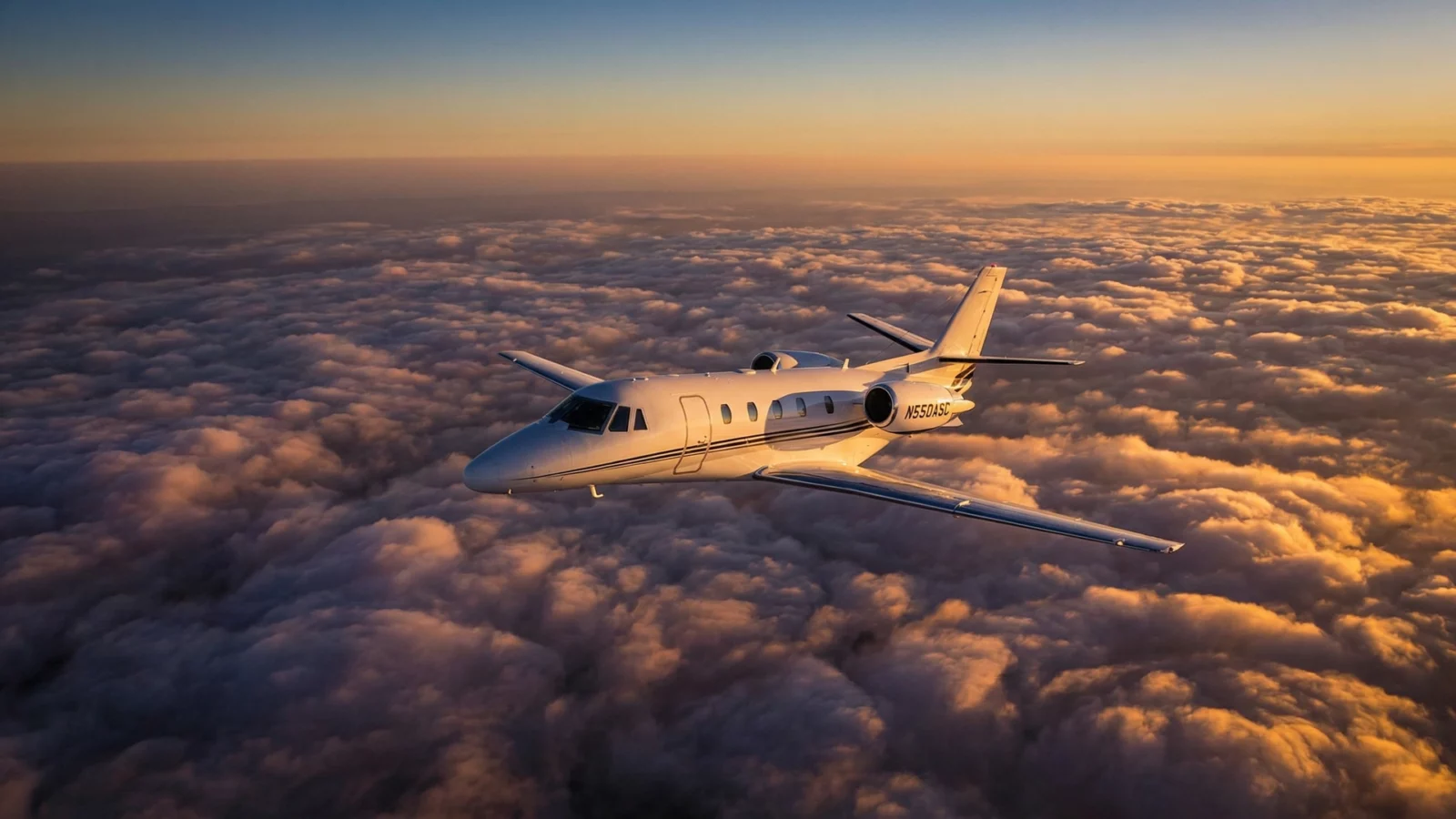
Textron Aviation just delivered its first Citation Ascend. The handoff marks the official entry into service for a midsize jet that has quietly generated serious interest among operators and owners who know the category well. The reason? Textron addressed two persistent complaints about midsize aircraft: cabin comfort and cockpit workload.
The Ascend arrives at an interesting moment for business aviation. The midsize segment has traditionally asked pilots and passengers to accept compromises. You get better range than a light jet, but you sacrifice the stand-up cabin of a super-midsize. You get modern avionics, but often not the full suite found in larger aircraft. The Ascend changes that calculation.
The Flat Floor Finally Arrives in the Midsize Class
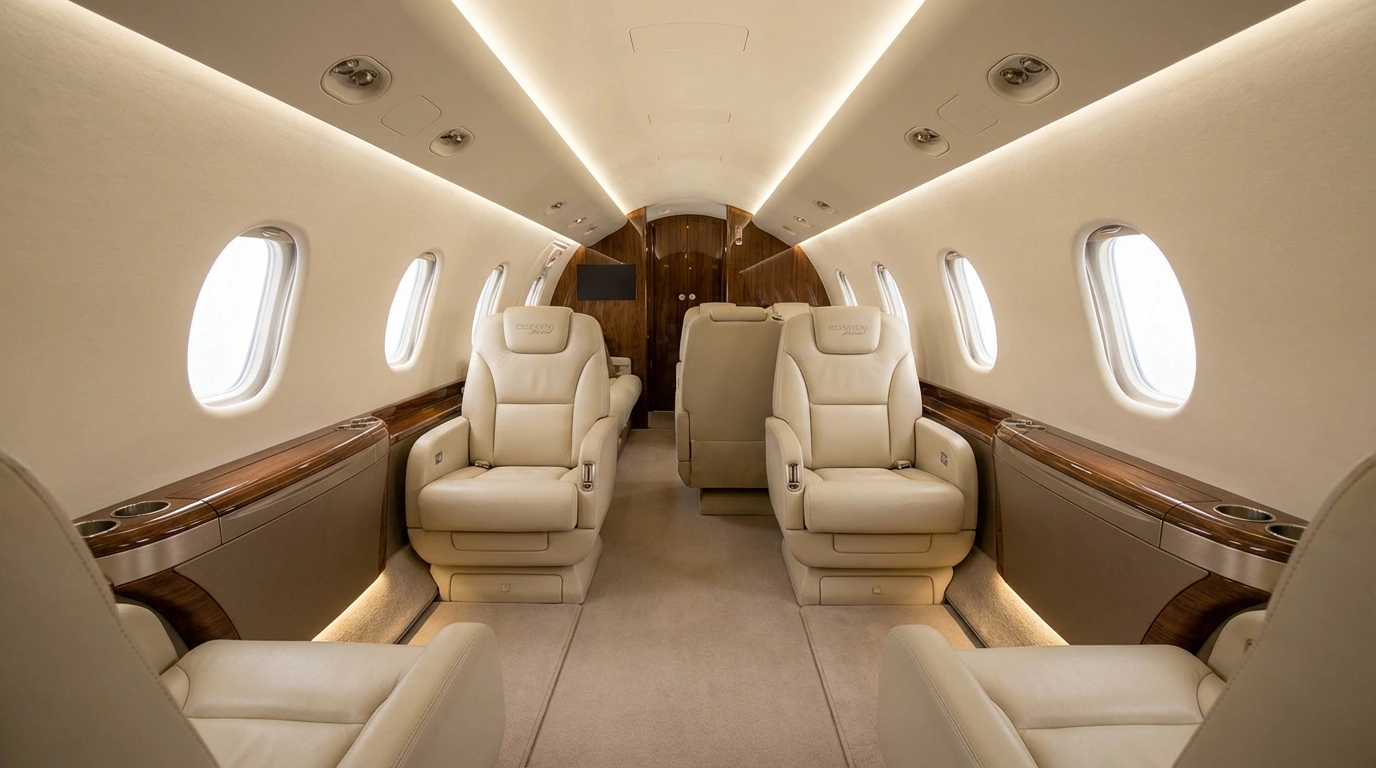
Walk into most midsize jets and you’ll find a cabin step. It’s a structural reality of the category, where fuselage dimensions create a raised center aisle. Passengers adapt, but it’s not ideal. Luggage rolls awkwardly. Walking through the cabin requires attention. The space feels less open than the numbers suggest.
Textron engineered the Ascend with a completely flat floor from cockpit to lavatory. The cabin height measures 5 feet 8 inches throughout, with a width of 6 feet 1 inch. Those dimensions create genuine stand-up comfort for most passengers. More importantly, the flat floor opens up sightlines and makes the 25-foot cabin feel larger than it is.
The design detail that matters most? Textron relocated systems and fuel tanks to preserve that flat floor without sacrificing baggage capacity. The Ascend still offers 90 cubic feet of storage, enough for extended trips without careful Tetris-style packing.
Garmin G5000 Brings Heavy Jet Avionics to the Midsize Cockpit
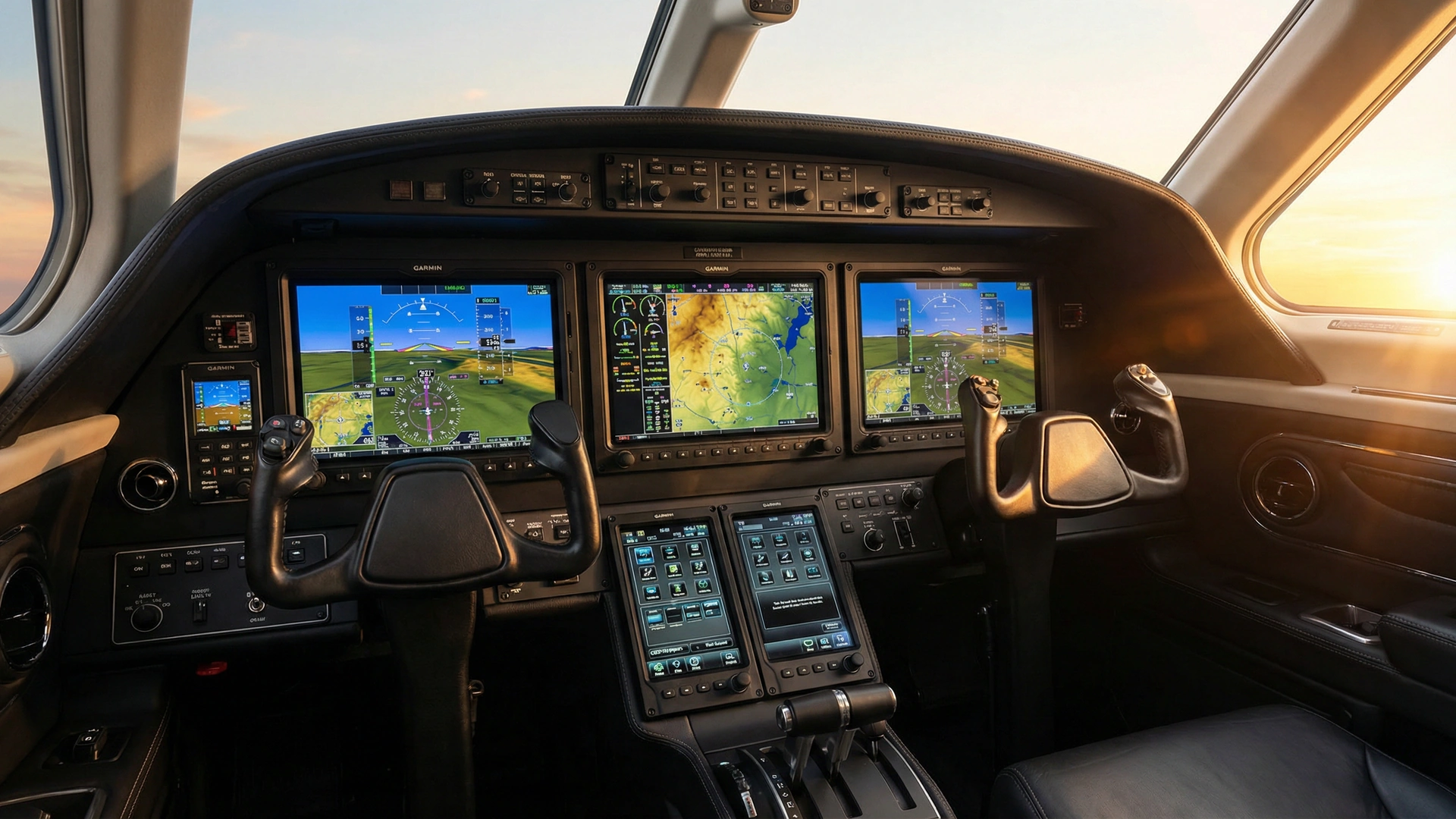
The Ascend’s cockpit features the Garmin G5000 integrated flight deck. This is the same system found in aircraft costing twice as much. Three high-resolution displays give pilots a comprehensive view of flight data, weather, terrain, and traffic. The touchscreen controllers simplify data entry, reducing the button-pushing that slows down workload in older flight decks.
For pilots transitioning from other Citation models, the G5000 represents a significant upgrade in situational awareness. The synthetic vision system overlays terrain and runway information onto the primary flight display, particularly useful for approaches into challenging airports. The weather radar integrates seamlessly, giving real-time updates on convective activity along the route.
Single-pilot certification was a design priority. The autothrottle system manages power settings from takeoff through landing, reducing workload during critical phases of flight. Combined with the advanced autopilot, a single pilot can manage the aircraft safely while maintaining the attention needed for complex airspace and weather decisions.
Performance Numbers That Actually Matter
Textron rates the Ascend for a maximum range of 4,250 nautical miles with four passengers. That translates to nonstop flights from New York to London, Los Angeles to Hawaii, or Miami to São Paulo. For charter operators, that range opens up transatlantic routes typically reserved for super-midsize or heavy jets.
The aircraft cruises at 466 knots with a maximum altitude of 45,000 feet. Those numbers put it firmly in the midsize performance envelope, competitive with the Embraer Praetor 500 and the Cessna Citation Latitude. Where the Ascend differentiates itself is in takeoff performance. It needs just 4,810 feet of runway at maximum takeoff weight, providing access to airports that larger jets cannot reach.
Fuel efficiency matters more in 2026 than ever before. The Ascend burns approximately 237 gallons per hour at typical cruise speeds. For operators running the math on hourly operating costs, that efficiency combined with modern systems creates a compelling case against older midsize aircraft that cost nearly as much to operate but lack the cabin and avionics upgrades.
Market Positioning and What This Means for Buyers
Textron has not released official pricing, but industry estimates put the Ascend around $21 million. That positions it between the light jets in the $10-15 million range and the super-midsize aircraft starting around $28 million. For buyers evaluating options, the Ascend offers a middle path with capabilities that lean toward the larger category.
Charter operators have already shown interest. The flat floor cabin photographs well, an important consideration for marketing. The range capability allows operators to bid on longer missions typically flown by more expensive aircraft. And the G5000 avionics reduce training time for pilots transitioning between different aircraft in the fleet.
Fractional ownership programs are watching closely. The Ascend fills a gap between the light jets that work well for short regional flights and the larger aircraft needed for transcontinental or international missions. For fractional owners who typically fly in the 50-100 hour annual range, access to an Ascend could provide mission flexibility without the jump to a higher share class.
The Bigger Picture for Business Aviation
The Citation Ascend entering service represents more than another aircraft delivery. It signals Textron’s commitment to the midsize category at a time when other manufacturers have focused resources on larger, longer-range jets. The midsize segment accounts for a significant portion of charter flights and fractional operations, making it strategically important despite the headlines going to ultra-long-range flagships.
For pilots, the Ascend offers a chance to fly modern avionics and systems without stepping up to a heavy jet type rating. For passengers, it delivers a cabin experience that rivals larger aircraft on flights under four hours. And for operators, it provides economic efficiency that makes sense in a market increasingly focused on cost per nautical mile.
The first delivery is just the beginning. Textron has a backlog of orders to work through, with deliveries expected to ramp up throughout 2026. As more Ascends enter service, the aircraft will prove itself in real-world operations across different mission profiles and operating environments. That’s when the market will deliver its final verdict on whether Textron successfully redefined expectations for the midsize class.