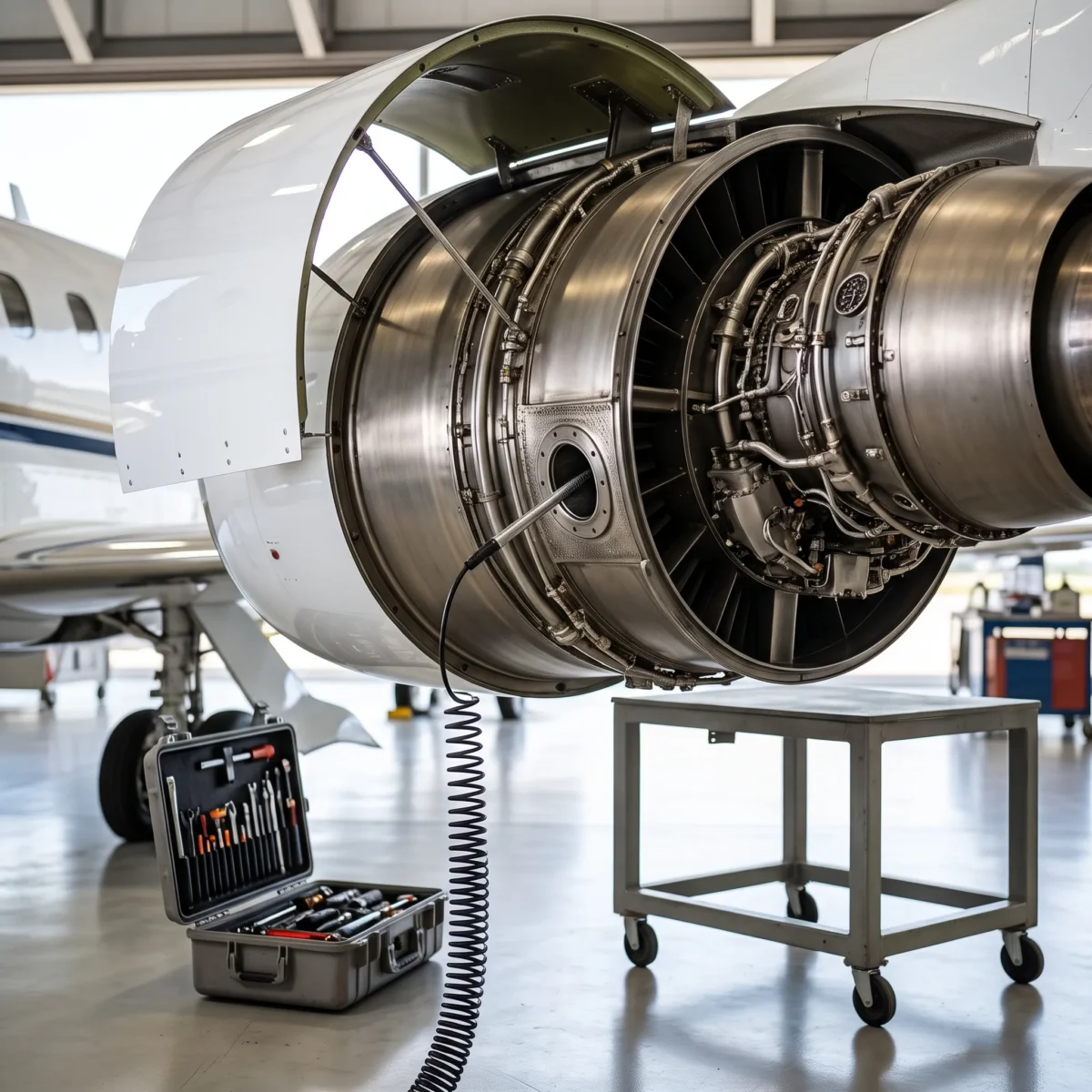
A technician threads a probe thinner than a pencil into a jet engine. On a monitor, the inside of a turbine appears in sharp detail, and a hairline crack at the trailing edge of a first-stage blade shows up as a thin bright line. That moment can decide whether you sign a purchase agreement or walk away from a deal.
It’s called a borescope inspection, and in private aviation it may be the most consequential step of any acquisition. Here’s how it works and why experienced buyers insist on it.
What a Borescope Actually Does
A borescope is a slim optical probe, rigid or flexible, with a light and a high-resolution camera at the tip. Technicians feed it through small inspection ports built into the engine casing. The ports exist for exactly this purpose, so nothing needs to come apart. On a small turbofan such as the Pratt & Whitney Canada PW300 series, for example, there are ports along the compressor, combustor, and turbine sections, and a technician can work through them without removing the engine from the aircraft.
That matters because a full teardown of a turbofan means days or weeks of labor and hangar time. A borescope covers the key areas in a few hours to a day, depending on the engine and how many stages are inspected. It’s non-destructive testing at its most practical. The work should be done by a technician trained and qualified in non-destructive testing, typically at a certified engine shop or an OEM-authorized service center, and the cost is a small fraction of what a teardown would run. Ask the shop for a quote, since pricing varies with the engine and the number of ports.
Modern probes can articulate, so the tip bends to look around corners inside the gas path. Many record video and capture measured images. That means an inspector can size a defect, compare it to the manufacturer’s limits, and save the evidence for the engine records.
What Inspectors Look For
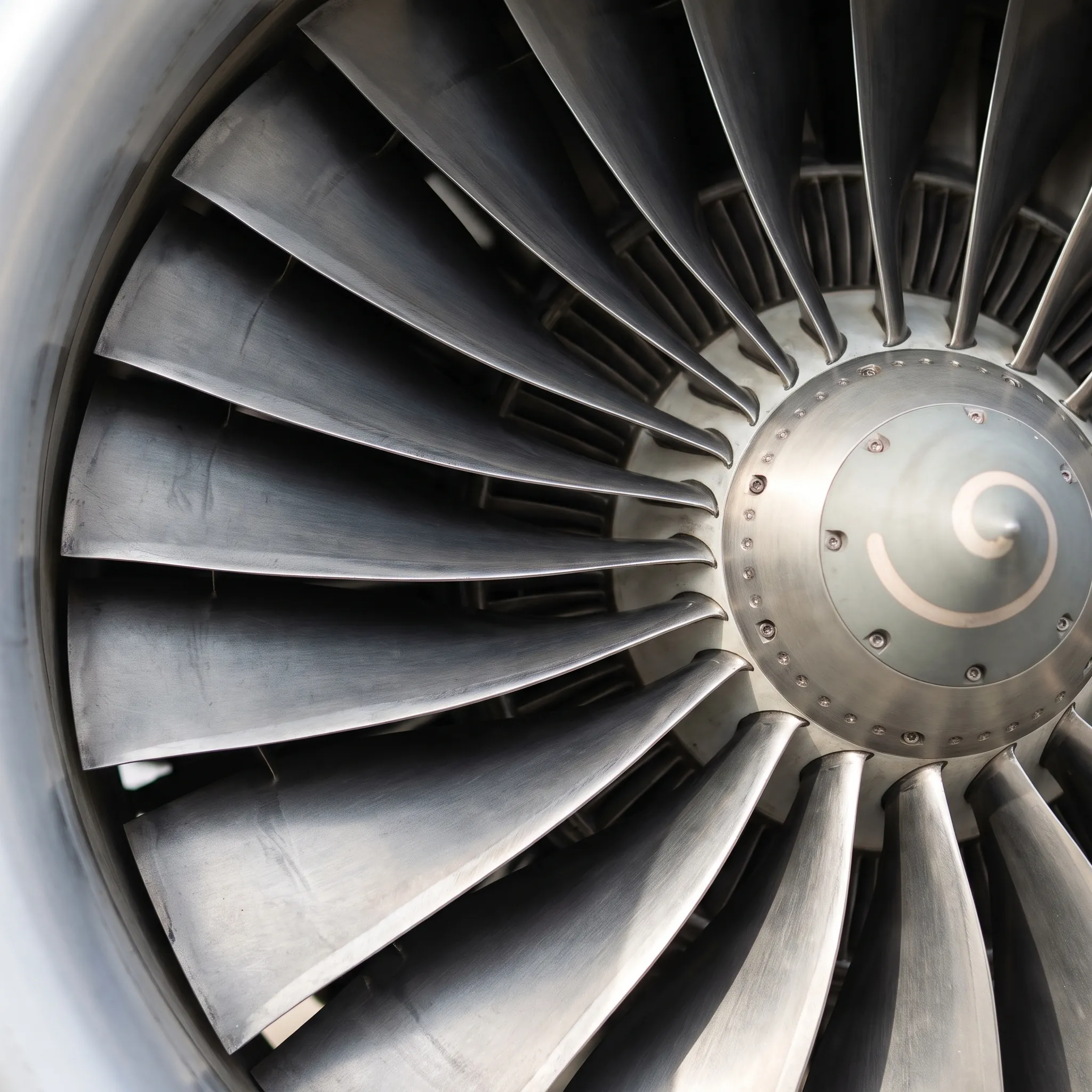
An engine’s hot section lives in brutal conditions. In modern engines, gas temperatures at the turbine inlet can exceed the melting point of the blade alloys, and the parts survive through internal cooling air and thermal barrier coatings. Borescope work is mostly about checking how well that protection is holding up.
- Compressor stages: nicks, dents, and erosion from ingested sand, dust, or runway debris
- Combustor liners: cracking, burn-through, or warped sections that point to uneven fuel spray
- Turbine blades and vanes: coating loss, burn marks, tip rub, and blocked cooling holes
- Seals and visible oil traces: discoloration or residue near accessible areas that may suggest a leak
Each finding gets measured against limits in the manufacturer’s maintenance manual. A small nick on a compressor blade may be blended out on the spot, while a cracked turbine vane means the engine comes off the wing. The gray zone in between is where the inspector’s experience counts for a lot.
Why It Matters Most in a Pre-Buy
Engines are the biggest single cost on a business jet’s maintenance ledger. A hot section inspection or overhaul can run from several hundred thousand dollars to well over a million per engine, depending on engine type and scope, so a twin can reach seven figures quickly. That figure belongs to the engine work a borescope might trigger, not to the borescope itself. Logbooks tell you what was done. A borescope tells you what condition the metal is in today.
That’s why it anchors any good pre-buy inspection. A jet can look flawless, with fresh paint and a clean cabin, while an engine hides blade damage that surfaces six months after delivery.
Buyers use findings in several ways:
- Negotiate the price down to cover upcoming work.
- Require the seller to complete repairs before closing.
- Ask for an engine program transfer or credit.
- Walk away when the trend looks bad.
Many buyers hire an independent shop, not the seller’s preferred one. Pay attention to who holds the probe, and ask to see the raw images, not just a summary.
Beyond the Purchase
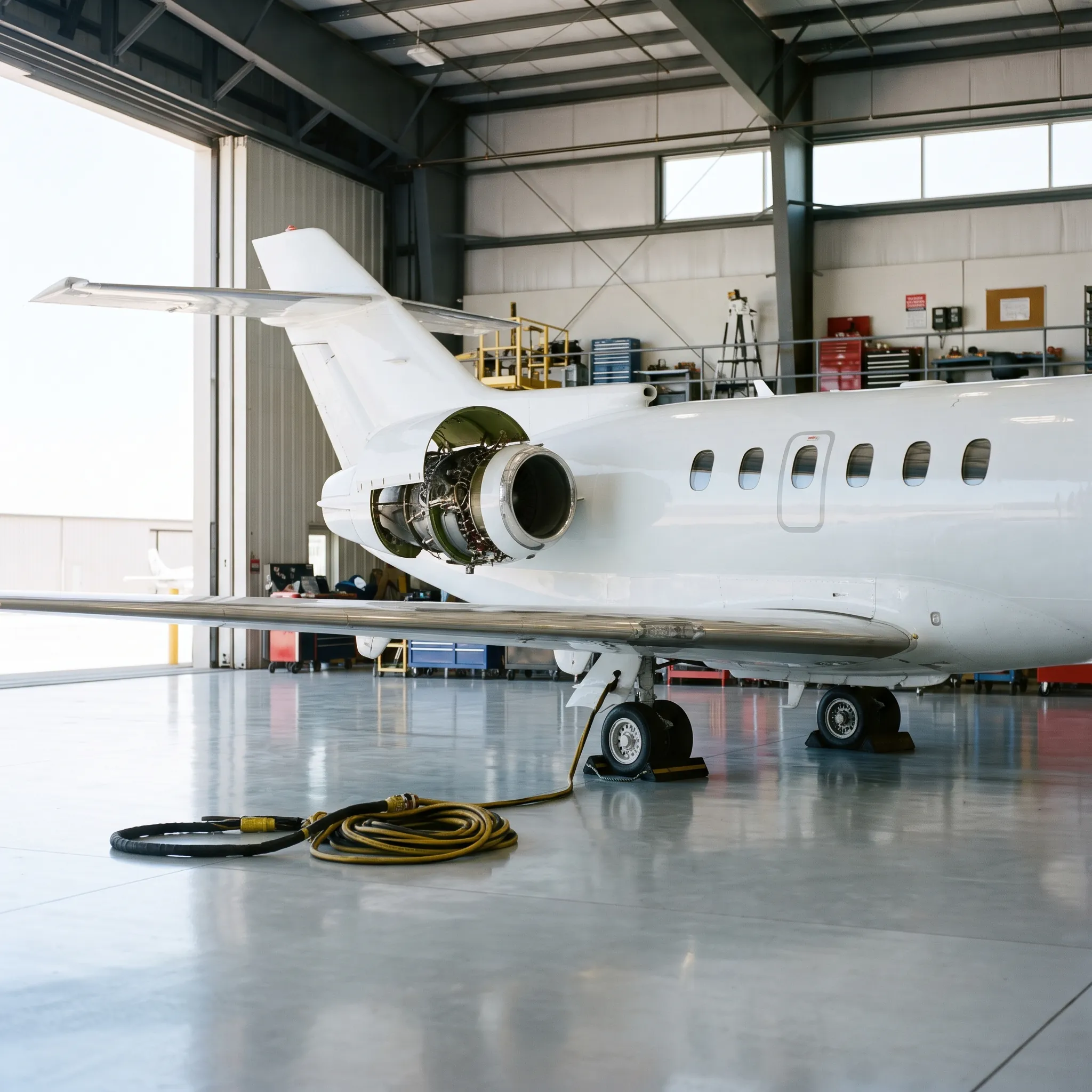
Borescopes aren’t just for deals. Operators run them at scheduled intervals and after events such as a bird strike, foreign object ingestion, or an overtemperature start. Catching a cracked blade early can mean a modest repair instead of a failure that damages the whole engine.
Engines enrolled in manufacturer-backed hourly programs, such as Rolls-Royce CorporateCare or Pratt & Whitney ESP, are still borescoped at intervals, and condition findings feed into decisions about when an engine goes in for heavy work. Program terms differ, so check what your contract covers. Fractional and charter operators track borescope trends across the fleet to schedule engine removals, which is part of why the aircraft you board stays dependable, much like the planning behind fractional fleet access.
Questions Worth Asking
If you’re buying, ask when the last borescope was done and by whom. Ask for trend data across several inspections, since one clean look says less than a steady pattern. And ask how the engine’s operating history, such as dusty airfields or frequent short hops, might have shaped wear.
What a Good Finding Looks Like
Picture a pre-buy where the images show light tip rub on a second-stage turbine blade. Within limits, it’s something to monitor and price in, and a buyer with the measured images in hand can ask for a credit toward the next inspection interval. A buyer with only a one-page summary has nothing to negotiate with.