

The Bombardier Global 8000 can now operate freely across European airspace. The aircraft received certification from the European Union Aviation Safety Agency in early 2026, completing its regulatory trifecta after approvals from Transport Canada and the FAA late last year. For European high-net-worth individuals eyeing the world’s fastest business jet, this certification removes the final barrier to ownership.
The timing matters. Gulfstream has dominated the ultra-long-range market for years with the G650ER and newer G700. Bombardier’s entry into European operations brings genuine competition to a segment where options have been limited. The Global 8000 doesn’t just match Gulfstream’s capabilities. In some areas, it exceeds them.
What EASA Certification Actually Means
Regulatory approval sounds bureaucratic. But EASA certification carries real implications for how and where you can operate an aircraft. Without it, flying a Global 8000 through European airspace meant navigating restrictions and special permits. Now, European operators can base the aircraft in London, Paris, or Geneva without complications.
The certification also signals confidence from European regulators in Bombardier’s engineering. EASA maintains some of the world’s strictest aviation standards. Getting approval means the aircraft meets demanding safety and performance benchmarks that matter when you’re crossing oceans at Mach 0.95.
The Speed and Range Equation
The Global 8000 delivers 8,000 nautical miles of range at a top speed of Mach 0.95. That combination opens routes that previously required fuel stops or pushed the limits of existing aircraft.
Consider London to Sydney. Or Paris to Singapore with full payload. The Global 8000 extends nonstop capability between city pairs that matter to European business travelers. The aircraft reaches these destinations faster than any competing business jet.
The wing design deserves attention. Bombardier engineered unique leading-edge slats that provide performance characteristics normally associated with much lighter aircraft. The practical benefit? Access to 30% more airports than closest competitors, according to Bombardier. For European operators, that means reaching shorter runways at smaller airports across the continent and beyond.
Cabin Altitude Makes a Difference
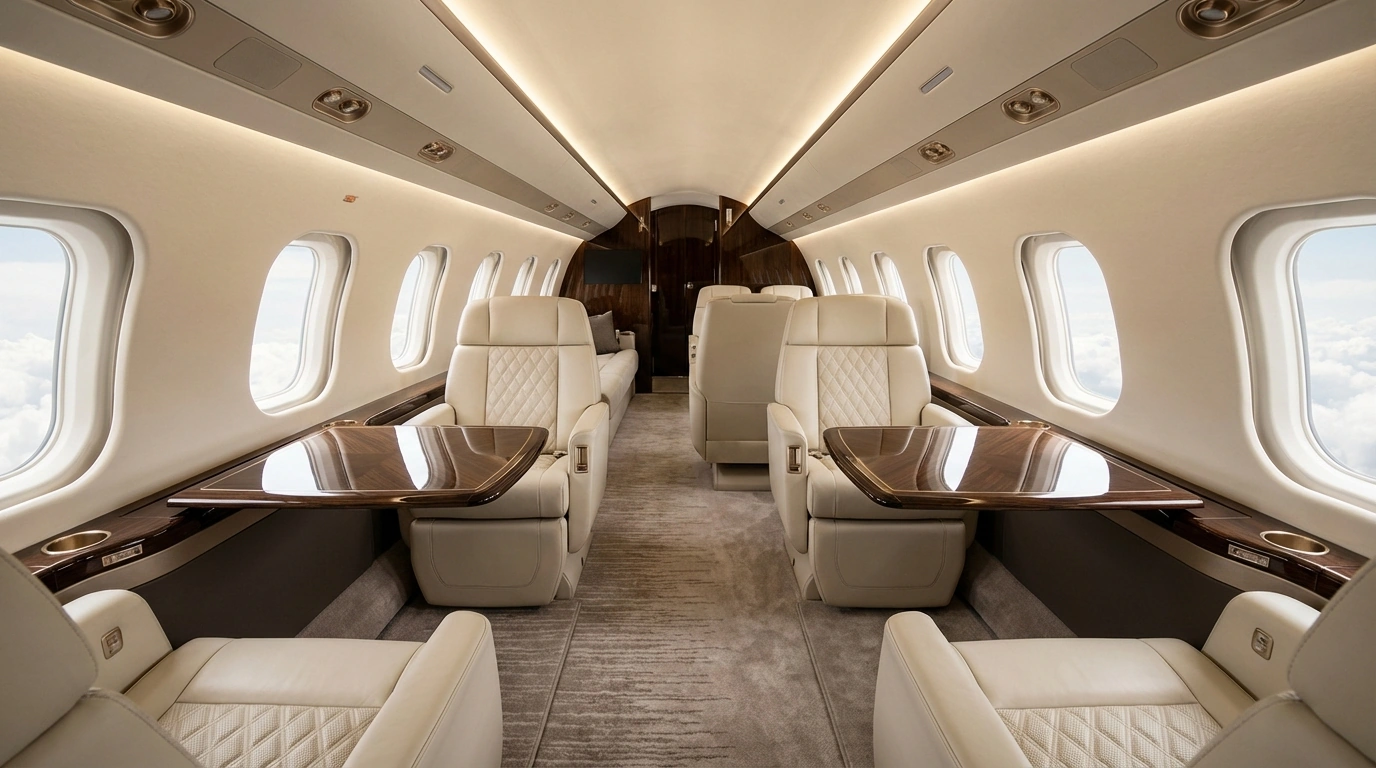
The Global 8000 maintains a cabin altitude below 2,900 feet while cruising at 41,000 feet. That’s the lowest in its class. The specification isn’t marketing language. Lower cabin altitude reduces fatigue on long flights. You arrive sharper, more rested, ready for whatever meeting or event brought you across multiple time zones.
For European executives flying to Asia or returning from the Americas, that difference compounds over frequent trips. The four-zone cabin layout gives passengers space to work, meet, dine, and rest without feeling cramped during 14-hour flights.

The Gulfstream Question
Gulfstream has owned this market segment. The G650ER set the standard for ultra-long-range performance. The newer G700 pushed boundaries further with its spacious cabin and impressive specifications. European buyers have gravitated toward Gulfstream for good reason. The aircraft deliver, and the support network is comprehensive.
Bombardier’s challenge was never about building a competitive aircraft. It was about building one that gave buyers a genuine reason to reconsider their default choice. Speed provides that differentiation. At Mach 0.95, the Global 8000 is measurably faster than anything Gulfstream offers. That’s not a minor advantage on transcontinental and transoceanic routes.
Range figures tell another story. The Global 8000 matches or exceeds the G700 depending on payload and operating conditions. Combined with superior runway performance, Bombardier has built a legitimate alternative to Gulfstream’s flagship.
What Operators Are Watching
Fractional operators and charter companies based in Europe are evaluating their fleet strategies. Adding the Global 8000 gives them something competitors might not offer. Speed sells. Clients booking ultra-long-range flights care about time savings.
European FBOs are preparing for Global 8000 operations. The aircraft’s performance characteristics and growing order book suggest it will become a regular presence at major business aviation hubs across the continent. Support infrastructure is ramping up accordingly.
Bombardier’s existing European service network provides an advantage. With over 5,200 aircraft currently operating worldwide, the company has established maintenance and support capabilities that matter when you’re operating complex aircraft far from home base.
Market Implications
The ultra-long-range business jet market is small but valuable. Buyers at this level expect perfection. They compare specifications carefully. They talk to other owners. They understand the differences between competing aircraft.
EASA certification means European buyers can now make direct comparisons between the Global 8000 and Gulfstream’s offerings without regulatory concerns clouding the decision. That’s good for buyers. Competition drives innovation and improves service across the industry.
For Gulfstream, Bombardier’s entry into fully operational European status creates pressure. The next aircraft developments from both manufacturers will reflect this competition. Buyers ultimately benefit from that dynamic.
The Global 8000 proves that the ultra-long-range segment still has room for innovation. Speed records matter. European operators now have access to the world’s fastest business jet without restrictions. That changes calculations for anyone evaluating aircraft in this category.