
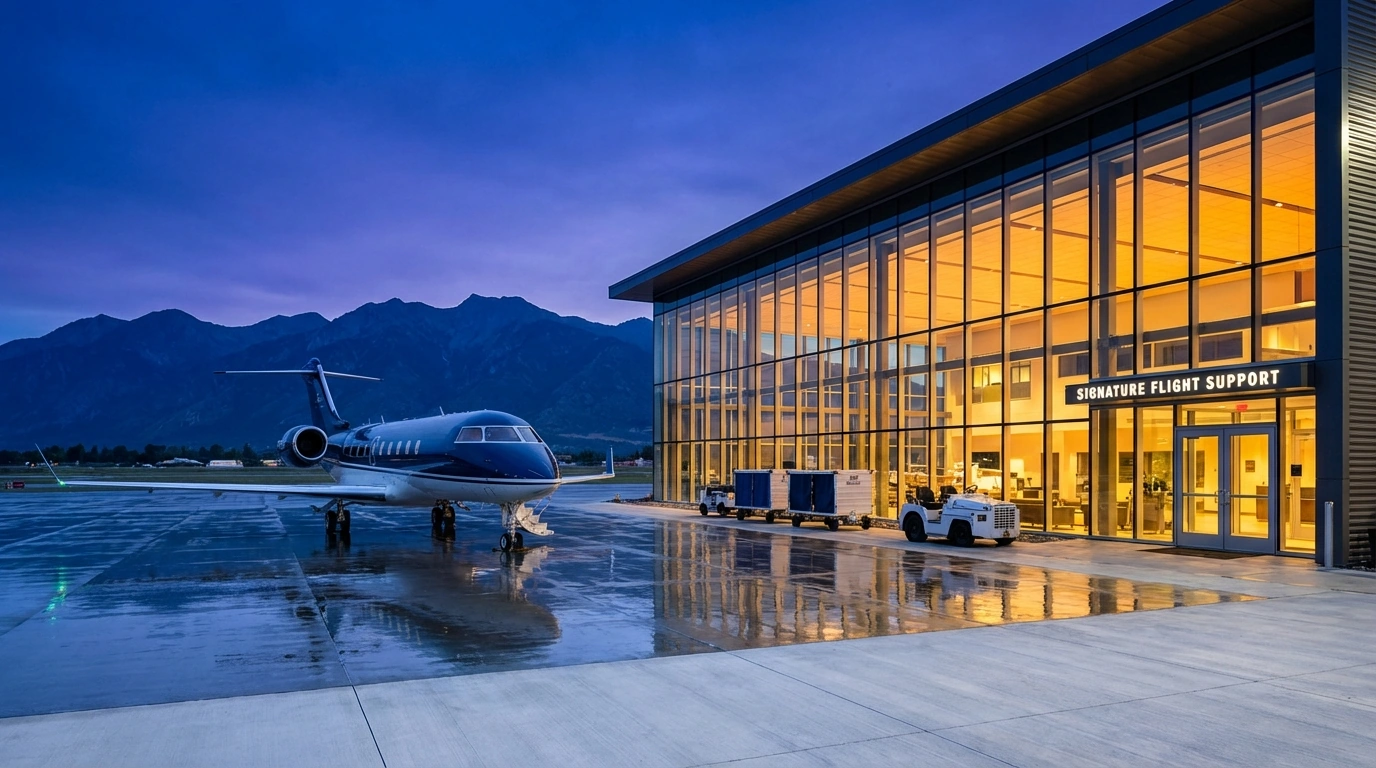
Your aircraft touches down at Teterboro. You unbuckle as the engines spool down. Within minutes, you step onto the ramp and into a gleaming FBO terminal. A concierge greets you by name. Your car waits at the curb. The experience feels seamless, almost magical.
But behind this carefully choreographed arrival, a complex operation has been running since before your wheels touched the ground. The Fixed Base Operator, or FBO, functions as the central nervous system of private aviation ground operations. Understanding how these facilities work reveals why some private terminals deliver exceptional experiences while others fall short.

The Dual Nature of FBO Operations
Every FBO operates on two parallel tracks. The first track serves passengers. The second serves aircraft. Both must function flawlessly for a departure to proceed smoothly.
The passenger-facing side gets the attention. Luxury lounges, gourmet catering, spa-quality restrooms, private conference rooms, and white-glove concierge services create the visible experience. At signature locations like Atlantic Aviation’s Scottsdale facility or Signature Flight Support’s Los Angeles Van Nuys location, you will find amenities that rival five-star hotels.
These amenities matter. When you are paying $8,000 to $15,000 per flight hour for a midsize jet, you expect more than coffee and a couch. Elite FBOs deliver wine cellars, full-service gyms, children’s play areas, and even on-site customs and immigration services for international arrivals.
What Happens While You Wait
The technical side runs simultaneously but out of sight. Line service technicians handle the critical work. They position the aircraft, connect ground power units, provide potable water, service lavatories, and manage baggage loading. Fueling operations alone require precise coordination. A Gulfstream G650 holds up to 4,300 gallons of Jet-A. At current prices averaging $6 to $8 per gallon, that is a $25,000 to $34,000 fuel bill that must be processed correctly.
Quality control matters here more than most passengers realize. Fuel contamination can ground an aircraft. Improper de-icing procedures in winter can create safety hazards. Damage during towing or pushback can delay departure by days. The best FBOs maintain rigorous training standards for line service staff and invest in proper equipment.

Services That Distinguish Elite FBOs
Not all FBOs offer the same capabilities. At major business aviation hubs, you will find significant variation in both amenities and technical services.
Hangar Availability
Transient hangar space protects your aircraft from weather, provides security, and in extreme temperatures, makes the cabin comfortable for boarding. At busy locations during peak travel periods, hangar space becomes scarce. FBOs with substantial hangar capacity command premium fees. NetJets and Flexjet often negotiate preferred hangar access as part of their network agreements.
Maintenance Coordination
Top-tier FBOs maintain relationships with on-field maintenance facilities. When an aircraft needs service, the FBO can coordinate everything from minor repairs to scheduled inspections. This matters during AOG situations, when aircraft are grounded due to mechanical issues. An FBO with strong vendor relationships can reduce downtime significantly.
Crew Services
Professional flight crews have different needs than passengers. Dedicated crew lounges, flight planning rooms, weather briefing services, and crew cars for local transportation all factor into an FBO’s value proposition. Many operators choose their preferred FBOs based largely on how well they support flight crews.
The Economics Behind the Experience
FBOs generate revenue through multiple streams. Fuel sales provide the foundation. Ramp fees, hangar fees, and facility fees add to the total. Some FBOs waive ramp fees if you purchase a minimum fuel quantity, typically 50 to 100 gallons.
High-performing FBOs invest heavily in their facilities. Atlantic Aviation spent $36 million on its new West Palm Beach location. Signature Flight Support operates over 200 locations globally and continually upgrades facilities to meet evolving customer expectations.
This investment reflects the competitive nature of the business aviation market. Aircraft owners and charter operators vote with their wheels. Poor service at an FBO can shift millions in annual fuel revenue to a competitor across the field.
What to Look for As a Private Flyer
When you have flexibility in choosing which FBO to use at a given airport, several factors should guide your decision.
- Location on the airport: Proximity to the runway you will be using affects taxi time and fuel burn. At large airports, this can save 10 to 15 minutes.
- Security protocols: Elite FBOs maintain strict access control, video surveillance, and discrete handling of high-profile passengers.
- Reputation among crews: Ask your pilots which FBOs they prefer. They know which facilities provide efficient ground handling and professional service.
- Peak period performance: Any FBO can deliver good service on a slow Tuesday. The best prove their worth during major events when traffic surges.
- International capability: For international flights, you need an FBO with customs and immigration facilities. Not all locations offer this.
The Future of Ground Operations
Technology is reshaping how FBOs operate. Digital flight planning, automated fuel ordering, mobile apps for service requests, and contactless payment systems now streamline operations at leading facilities.
Sustainability efforts are also gaining traction. Signature Flight Support has committed to offering sustainable aviation fuel at multiple locations. As SAF availability increases, expect more FBOs to provide this option. For charter clients and aircraft owners focused on reducing their carbon footprint, access to SAF may become a decisive factor in FBO selection.
The passenger experience continues to evolve too. Some FBOs now offer direct aircraft-side vehicle access, eliminating the terminal visit entirely. Others provide sleeping suites for passengers facing long connections or weather delays.
The FBO industry reflects broader trends in private aviation. As the market grows and becomes more competitive, operators must deliver excellence on both the visible and invisible aspects of ground handling. Your seamless departure depends on dozens of tasks executed correctly by professionals you will never see. That is the real magic behind private aviation’s most critical gateway.