
Reliability has always been the hardest thing to sell in private aviation. You can promise it in a brochure. You can put it in a contract. But the moment a VIP client sits on a runway waiting for a delayed aircraft that was supposed to be the whole point of flying privately, all of it falls apart. That’s why what Wheels Up just accomplished deserves more attention than it’s getting.
Through May 2026, the company has recorded 74 days of 100% flight completion, already surpassing the total number of such days across the entire 2025 calendar year. For a company that spent most of its post-IPO years battling integration chaos and profitability questions, that’s not a small number. That’s a signal.

Delta’s Fingerprints Are All Over This
George Mattson, who stepped in as CEO in October 2023 after serving on Delta’s board, didn’t arrive with a new vision so much as a borrowed one. The metric he uses to track operational performance, called Brand Days, came straight from Delta’s own operational playbook. It’s a deceptively simple idea: measure the days when every single scheduled flight completes as planned. No cancellations, no significant delays that break the promise to the customer.
Delta built its reputation as the most reliable major U.S. airline partly by obsessing over this kind of metric. Mattson is betting the same discipline translates to the private aviation market, where the stakes per passenger are exponentially higher and the tolerance for failure is essentially zero. For a celebrity or executive whose schedule is built around a 7 a.m. departure, almost reliable isn’t the same as reliable.
The Fleet Reset That Made It Possible
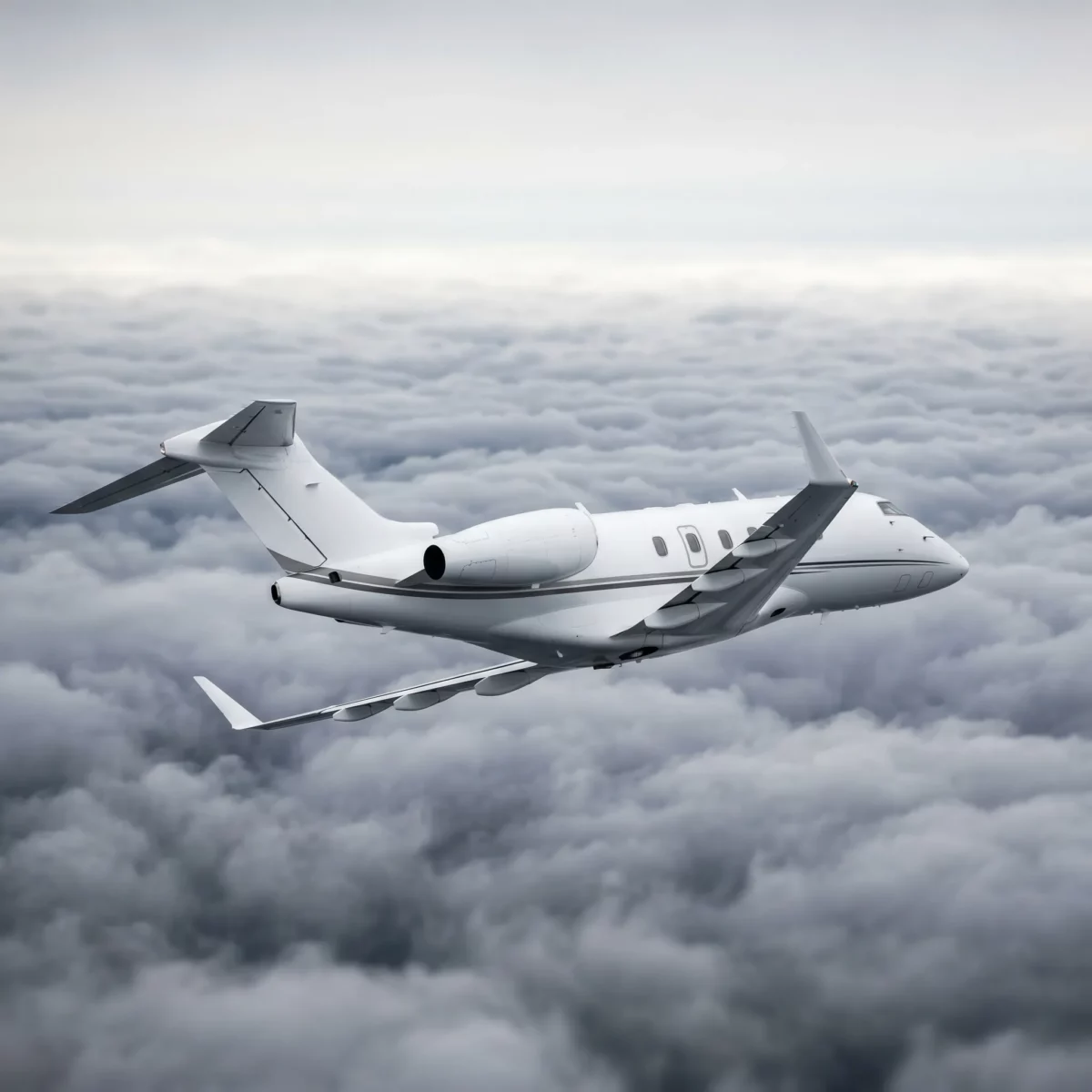
Operational reliability at this scale doesn’t happen by accident. Wheels Up spent 18 months quietly overhauling its fleet, adding and removing more than 200 aircraft in the process. What emerged is a deliberately simplified operation built around two aircraft types: the Embraer Phenom 300 and the Bombardier Challenger 300.
That choice wasn’t arbitrary. According to WingX data, these are the two most popular jet types in North America in 2026. Running a fleet around the most common platforms in North America means more trained crews, more available parts, more maintenance capacity, and fewer surprises. It’s the airline operating model applied to private aviation, and when you’re managing hundreds of daily departures, standardization matters more than variety.
| Aircraft | Category | Typical Range |
|---|---|---|
| Embraer Phenom 300 | Light Jet | ~2,000 nm |
| Bombardier Challenger 300 | Super Midsize Jet | ~3,100 nm |
The tradeoff is obvious. A two-type fleet limits the breadth of trip profiles Wheels Up can serve. But for the domestic and near-international routes that make up the bulk of U.S. private aviation demand, these two aircraft cover an enormous amount of ground. For the company’s core client, a focused fleet is a feature, not a limitation.
The Competitive Landscape: NetJets, Delta, and the Ownership Picture
Here’s where the story gets more interesting for anyone watching the industry closely. Berkshire Hathaway owns NetJets, long considered the gold standard for reliability in fractional aviation — the benchmark against which every serious private aviation program is ultimately measured. Warren Buffett famously exited all of Berkshire’s publicly held airline positions in 2020 and has not returned to the sector, so any suggestion of a new financial stake in commercial aviation carriers should be treated with skepticism unless specifically sourced.
What is clear and documented is that Delta Air Lines holds a 36% ownership position in Wheels Up. That stake creates a direct and meaningful alignment of financial incentives: Delta’s leadership has every reason to want Wheels Up to succeed as part of a coherent premium travel strategy. Delta views Wheels Up as a pipeline to its most valuable corporate customers, and the operational improvements underway are a direct reflection of that strategic priority. The result is an interesting structural dynamic — the two most prominent names in private aviation reliability now sit on opposite sides of the same competitive conversation, with Delta’s balance sheet firmly behind one of them.
What This Means If You Fly Wheels Up
For current members and anyone evaluating the program, the operational data matters in a very practical way. The private aviation market is full of programs that compete on aircraft, destinations, and pricing. The ones that retain clients long-term compete on trust. A 100% completion day means every client on the schedule that day got exactly what they paid for. Multiply that by 74 days in roughly five months, and you’re looking at a genuine operational culture shift.
Mattson’s longer-term ambition is more aggressive. He’s targeting the 90% of the addressable market that has never flown privately, using Delta’s extensive corporate account relationships as the entry point. Rising fuel prices haven’t dampened demand, and the company is already anticipating a meaningful boost from the upcoming 2026 FIFA World Cup — the first edition of the tournament to span three countries simultaneously, with matches distributed across host cities in the United States, Canada, and Mexico.
That geography matters for private aviation in a specific way. Travelers moving between U.S. venues such as Atlanta, Dallas, Los Angeles, and New York, while also connecting to Canadian cities like Toronto and Vancouver and Mexican hosts including Monterrey and Mexico City, will generate exactly the kind of regional hub-and-spoke itineraries that the Phenom 300 and Challenger 300 are optimized to serve. The Phenom 300’s roughly 2,000 nm range handles the domestic legs with ease, while the Challenger 300’s 3,100 nm capability covers the cross-border corridors without constraint. For a fleet built around standardization and reliability, a tournament that essentially turns North America into a single, interconnected travel network is a near-perfect use case.
- Simplified fleet: Phenom 300 and Challenger 300 reduce maintenance complexity and improve crew availability
- Brand Days metric: Tracks 100% completion days, borrowed directly from Delta’s operational culture
- Delta partnership: 36% ownership stake creates strong incentive alignment and access to corporate accounts
- Growth catalyst: 2026 FIFA World Cup traffic across U.S., Canadian, and Mexican host cities expected to drive near-term demand on exactly the routes these aircraft serve best
- Market expansion: Company is actively targeting first-time private flyers, not just the existing addressable market
A Turnaround Story Still Being Written
Wheels Up has faced real skepticism since its 2021 IPO, and some of it was earned. The company grew too fast, promised too much, and delivered inconsistently. Profitability remains a work in progress. But the operational trajectory through the first half of 2026 tells a story that competitors should watch carefully.
NetJets has spent decades building the gold standard for reliability in fractional aviation. Closing that gap requires consistent execution over years, not months. Wheels Up isn’t there yet. But for VIP travelers and high-profile clients who need a program that shows up when it says it will, 74 days of perfect completion in five months is worth paying attention to. The question is whether the company can sustain it at scale, especially as it pushes into new markets and adds clients. That’s the harder part. And it’s the part that will define whether this is a genuine turnaround or just a strong stretch of good weather.