

Wheels Up is making its biggest operational move in years. The company is nearly doubling its fleet of Embraer Phenom 300 and Bombardier Challenger 300 aircraft. For a company that spent much of 2023 and 2024 fighting for its survival, this is a significant statement of intent.
The expansion targets two of the most popular categories in private aviation: light jets and super-midsize. These aren’t accidental choices. They’re the aircraft that most members actually fly on. Getting availability right in these categories is the difference between a program people trust and one they cancel.

Why These Two Aircraft
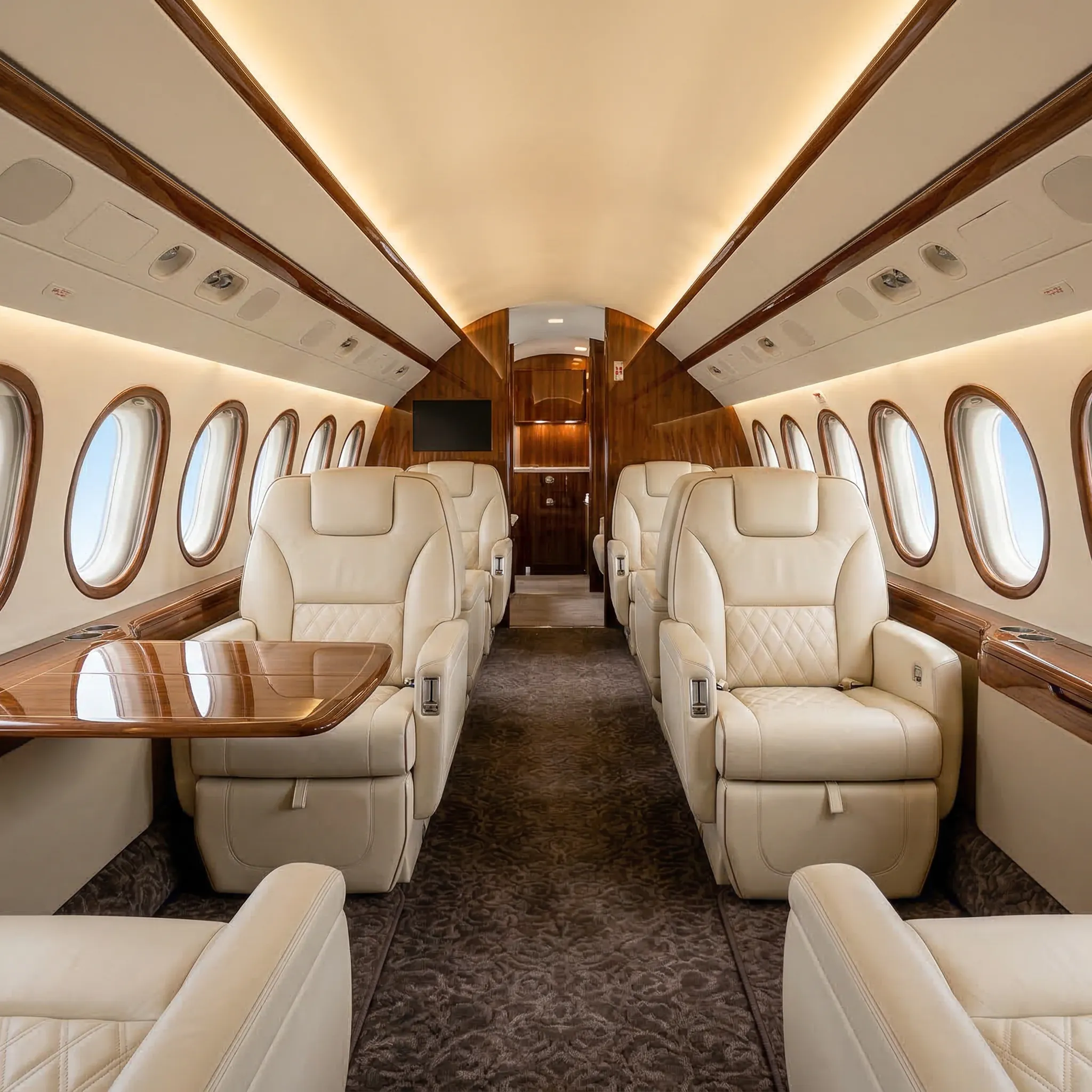
The Phenom 300 and Challenger 300 sit at opposite ends of the size spectrum, but they share one quality: they’re workhorses. The Phenom 300 series remains one of the best-selling light jets on the market, with a range pushing 2,000 nautical miles and a cruise speed of 464 knots, paired with a cabin that punches well above its class. Pilots appreciate it. Passengers appreciate it even more.
The Challenger 300, now sold as the Challenger 3500 in its current production form, is a different proposition entirely. This is a proper super-midsize, capable of coast-to-coast flights with a full cabin of eight passengers and their bags, cruising at Mach 0.80 across a range exceeding 3,400 nautical miles. Connectivity on revamped configurations typically includes Gogo AVANCE L5 Wi-Fi, which keeps productivity intact on longer legs. It’s the aircraft you book when the Phenom isn’t enough but you don’t need the range of a large-cabin jet. That middle ground is where a significant share of private flying actually happens.
Filling these categories with more aircraft means fewer times a member hears the word they dread most: unavailable.
The Availability Problem and What Fleet Size Actually Fixes
Here’s something Wheels Up members know from experience. Having a membership card doesn’t guarantee a seat. Programs with thin fleets run into availability crunches on peak travel days, around major events, and during holiday periods. Members get told there’s nothing available, or they get offered a different category at a higher rate. Neither option is satisfying when you’ve committed to a program.
Doubling down on fleet size directly attacks this problem. More aircraft in the right categories means more flexibility to route around conflicts, more options for members in secondary markets, and fewer moments where the program simply can’t deliver. It’s an operational upgrade that members will feel before they ever see it on paper.
Availability improvements also matter for last-minute bookings, which is how a meaningful percentage of private jet trips actually get arranged. A program that can say yes on short notice is genuinely more valuable than one that requires weeks of advance planning.
Delta’s Hand in This
Delta Air Lines stepped in as Wheels Up’s financial anchor in 2023, providing capital and strategic direction at a moment when the company needed both. Since then, the relationship has quietly shaped how Wheels Up thinks about operations. Delta understands fleet management at a scale few companies do. Running an airline means knowing exactly what happens when you’re short on aircraft and what it costs in customer trust.
This fleet expansion looks like that philosophy applied to private aviation. Rather than continuing to underserve demand with a thin fleet, the strategy centers on matching aircraft availability to the categories members actually fly — building the operational reliability that converts occasional users into committed, long-term members. It’s not a glamorous approach, but it’s the kind that keeps a company solvent and growing.
There’s another angle worth noting. Delta’s network gives Wheels Up a meaningful sourcing advantage. Relationships, financing structures, and fleet planning expertise from the commercial side can translate into better aircraft acquisition terms. That matters when you’re expanding quickly.
What Existing Members Should Expect
If you’re already a Wheels Up member flying on the Phenom 300 or Challenger 300, this news is straightforwardly good. More aircraft in your preferred category means better availability, and better availability means you can actually use the membership you’re paying for.
The subtler benefit is in peak day performance. Programs get judged hardest during Thanksgiving week, around major sporting events, and during spring break. These are the moments that reveal whether a fleet is actually sized for its membership base or just running tight on a good day. A near-doubling of aircraft in these two categories gives the program real capacity headroom for exactly those moments.
Pricing is unlikely to drop as a direct result of this expansion. Fleet growth costs money, and operators don’t pass those costs back as discounts. But if the expansion improves reliability and reduces the frustrating moments that push members to cancel, it may deliver value in a way that’s harder to quantify but equally real.
A Signal About Where Wheels Up Is Headed
Companies in recovery mode don’t expand fleets. They cut costs, reduce exposure, and wait. The fact that Wheels Up is doing the opposite suggests that leadership believes the market conditions justify growth, and that the Delta partnership has stabilized the business enough to make this kind of bet.
For anyone evaluating Wheels Up against other jet card programs or fractional ownership options, the fleet expansion is relevant data. A company adding aircraft is a company with enough confidence in its own future to invest in it. That confidence, backed by a major airline partner, changes the calculus for prospective members who might have been waiting to see whether the turnaround held.
Private aviation is a trust business. You’re not buying access to a catalog of aircraft. You’re buying the expectation that someone will show up when you need to be somewhere. Wheels Up is investing in that expectation, and members will find out how well it translates to reality over the next eighteen months.