
You’ve found the aircraft. The price looks right. The seller’s records seem clean. Before you wire a single dollar, one process stands between you and a potentially catastrophic mistake: the pre-buy inspection, or PPI. It’s the most important thing you’ll do in any aircraft purchase, and most buyers still don’t fully understand what it involves.
More Than a Checklist
A pre-buy inspection is a comprehensive technical evaluation of an aircraft conducted by an independent maintenance provider before the sale closes. The key word is independent. Your PPI team should have zero relationship with the seller. Their loyalty is to you and the facts alone.
What most buyers picture is someone walking around the aircraft with a clipboard. The reality is far more involved. A thorough PPI on a large-cabin business jet can take anywhere from three to seven days, involve a team of specialists, and uncover issues no seller disclosure would ever voluntarily highlight.
Think of it as hiring a forensic accountant before acquiring a company. Move beyond the visible surface—you must reconstruct the aircraft’s entire maintenance history, hunting for patterns, anomalies, and the absence of entries that should be there.
The Documentation Review Comes First
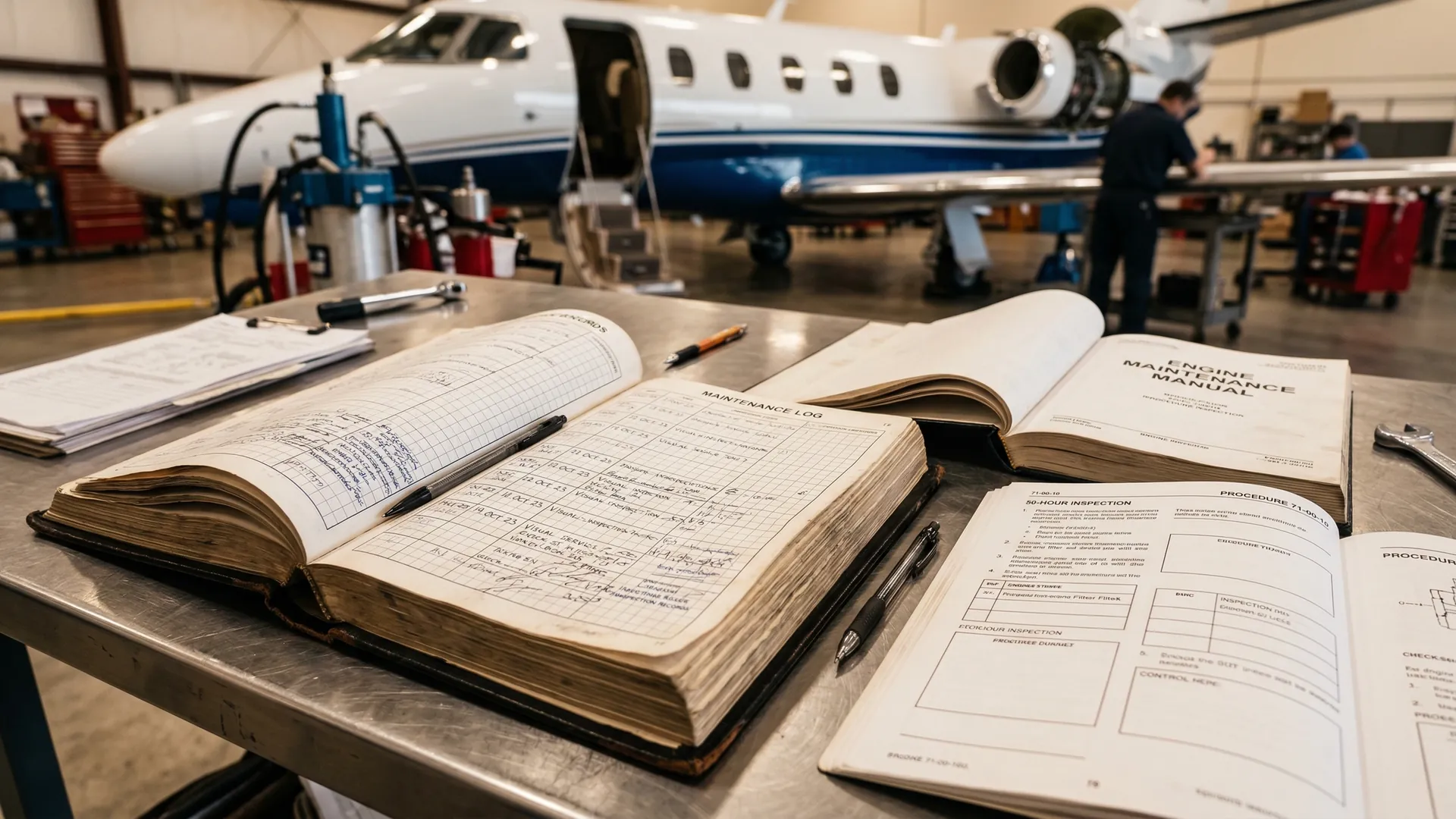
Before anyone touches a wrench, the inspection team digs into the paper trail. This is where experienced inspectors earn their fees. Aircraft maintenance logbooks record every inspection, repair, modification, and component replacement over the jet’s life. On an older aircraft, that’s thousands of entries.
Inspectors look for deferred maintenance items, which are known squawks that got recorded but never resolved. They cross-reference airworthiness directives (mandatory FAA or EASA compliance actions) against what’s actually been completed. They verify that every major component carries the right paperwork: engine overhaul records, avionics installation approvals, structural repair documentation.
A single missing Form 337 (the FAA document required for major modifications or repairs) can complicate your ownership from day one. Insurance carriers notice. Future buyers will notice. An incomplete paper trail doesn’t just affect safety—it affects residual value, sometimes significantly.
The Physical Inspection: Where Hidden Problems Surface
Once the records check out, the hands-on work begins. Technicians pull panels, open access hatches, and examine systems that most people never see. A few areas deserve special attention.
Corrosion
Corrosion is the silent value-killer in pre-owned aircraft, and its severity varies considerably by airframe construction and operating history. Traditional aluminum-skinned models—Challenger 604s, Hawker 800XPs, and older Embraer Legacy 600s—are measurably more susceptible than modern airframes with advanced anti-corrosion coatings and precision sealing such as the Bombardier Global 5000 or Gulfstream G650, though no airframe is entirely immune. Jets that spent years operating in coastal environments or were stored improperly carry the highest risk regardless of construction. Inspectors probe wheel wells, belly skin panels, fuel probe surrounds, and the lower fuselage structure with particular focus on aluminum-framed aircraft, where moisture intrusion accelerates corrosion in ways that better-sealed and coated modern structures are engineered to resist. Surface corrosion, caught early, is manageable. Structural corrosion can require repairs that cost more than the aircraft’s depreciation buffer.
Borescope Engine Inspections
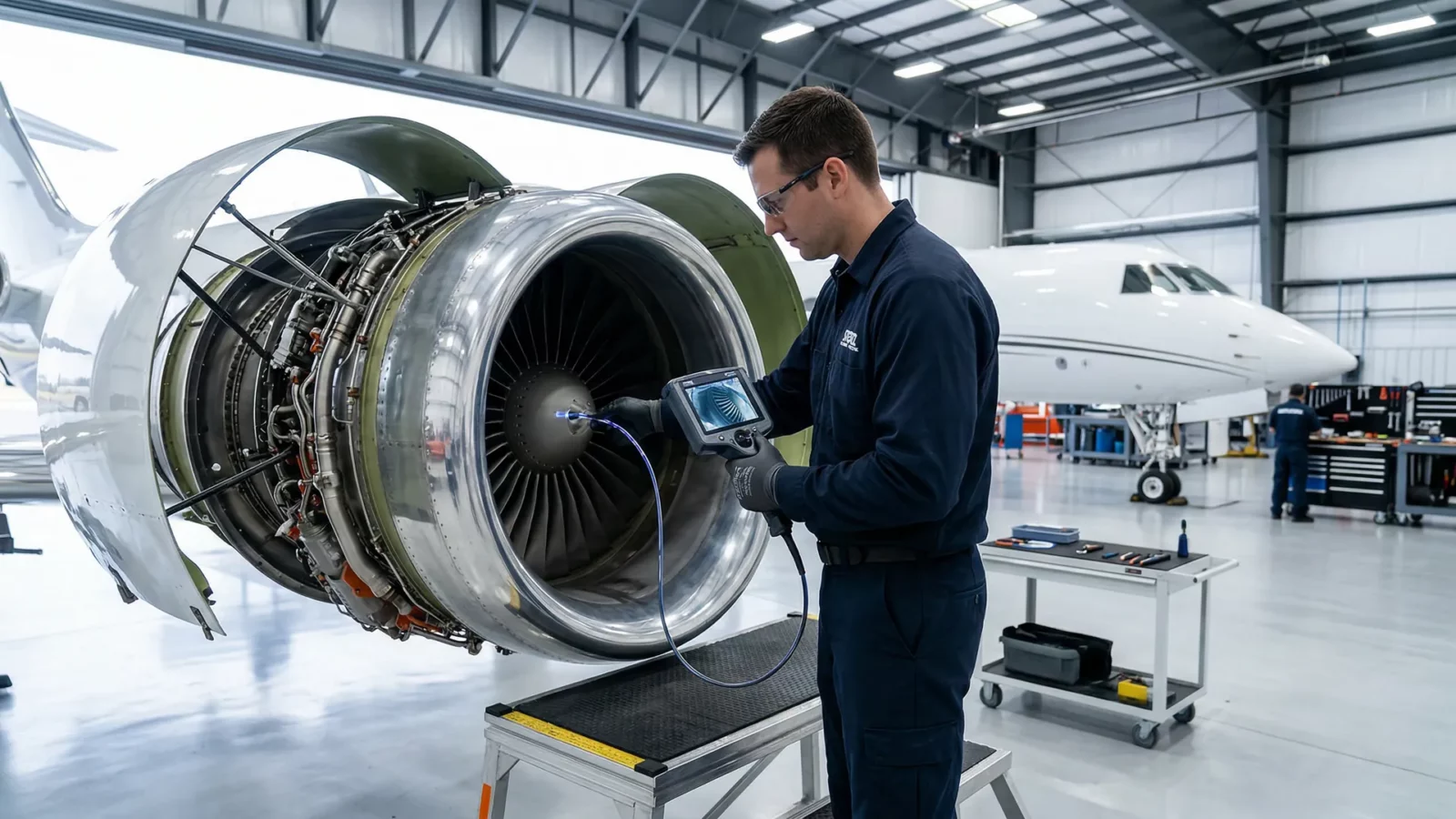
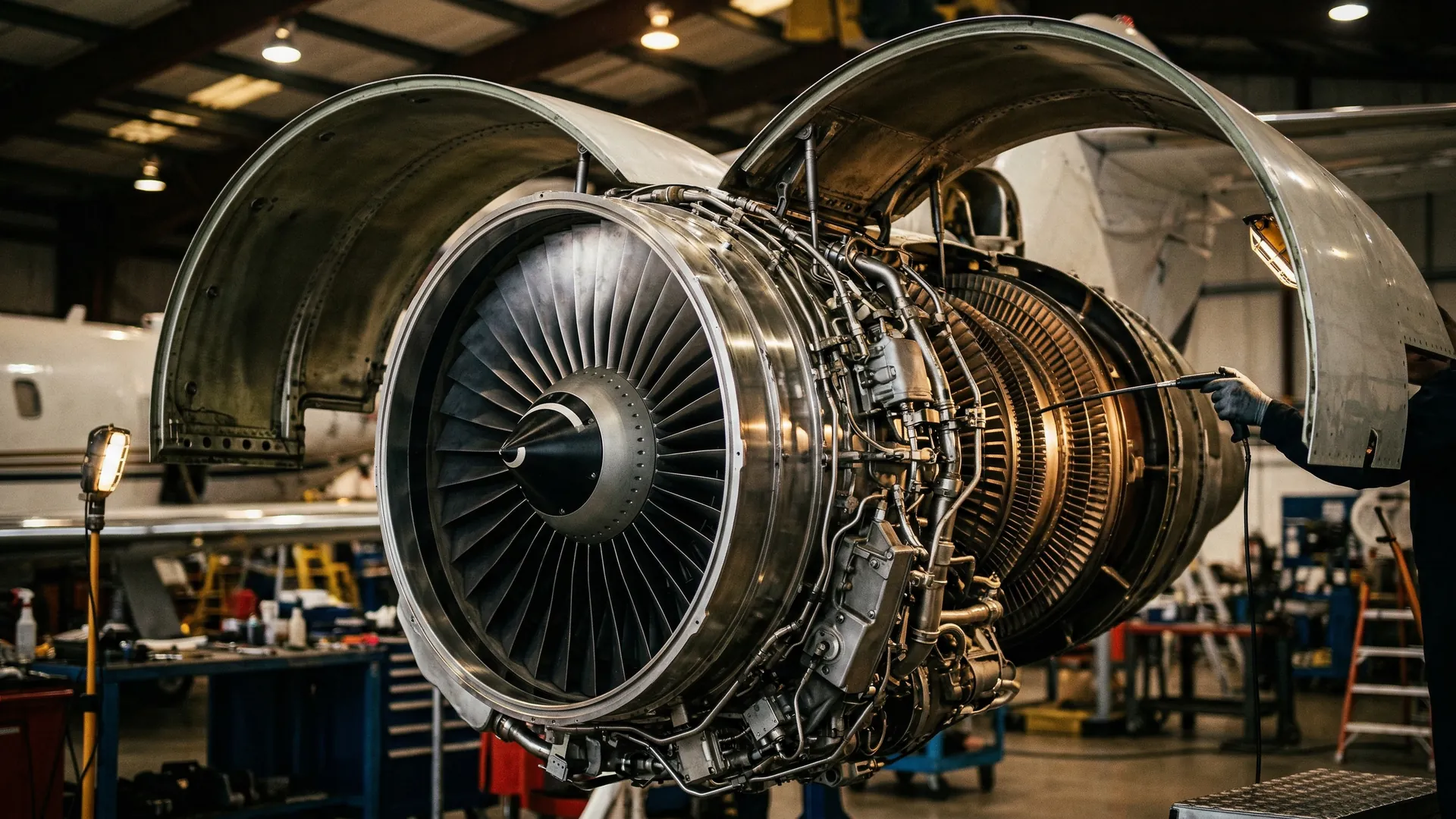
This is non-negotiable on any turbine aircraft. A borescope inspection involves threading a fiber-optic camera through access ports into the hot section of each engine, letting technicians visually examine turbine blades, combustion liners, and compressor stages without a full engine teardown. Inspectors look for cracks, burning, erosion, and tip curl on the blades. What they find determines whether the engines are on track or approaching expensive unscheduled maintenance.
On popular engines like the Rolls-Royce BR725 or Honeywell HTF7000 series, a hot section inspection or engine overhaul can run into the millions. Knowing where an engine sits relative to its inspection intervals before you buy is critical to understanding your true cost of ownership.
Avionics and Systems Checks
Modern business jets carry avionics suites that require specific software versions, database subscriptions, and equipment configurations to remain compliant with current airspace requirements. On deeply integrated platforms like the Bombardier Challenger 350 or Gulfstream G500, software version mismatches between avionics boxes can ground the aircraft until resolved—a detail sellers rarely volunteer. ADS-B Out compliance, RVSM certification, and current IFR database subscriptions aren’t optional. Inspectors verify all of it, plus run functional checks on autopilot, flight management systems, weather radar, and cabin systems.
The Test Flight
A complete PPI includes a test flight, usually performed with the seller’s crew and the buyer’s technical representative on board. This isn’t a demo flight. It’s a systems evaluation conducted under controlled conditions, cycling through hydraulics, pressurization tests, flight control responses, and engine performance cross-checks against the aircraft’s published data.
Subtle anomalies surface here that ground inspections miss entirely. A pressurization system technically within limits but trending in the wrong direction. A generator slow to come online. An autopilot that disconnects at a specific altitude band. These are not necessarily deal-breakers, but each one sharpens your negotiation position before closing.
What Happens With the Findings
Very few aircraft pass a PPI without any findings. That’s not the goal. The goal is a complete, accurate picture of the aircraft’s condition so you can make an informed decision and negotiate accordingly.
Findings typically fall into three categories. Airworthiness items—those the aircraft cannot legally fly without addressing—must be resolved by any legitimate seller before closing. High-priority maintenance items signal work needed in the near term; experienced buyers leverage these findings directly to renegotiate the purchase price. Routine items round out the report: normal wear-and-tear that rolls onto your initial maintenance schedule and rarely affects closing timelines.
A well-conducted PPI on a mid-size business jet typically costs between $15,000 and $40,000 depending on aircraft complexity and the scope of work required. On a large-cabin jet, expect more. That fee is one of the best investments in any aircraft transaction.
Choosing the Right Inspection Facility
Where you conduct the PPI matters. The aircraft should go to an FAA-certified repair station with specific type experience on the make and model you’re buying. A shop that handles Bombardier Challenger 350s daily will know exactly where the common problem areas hide. A generalist shop might miss them entirely.
Many buyers work with independent aviation consultants or aircraft acquisition specialists who maintain relationships with trusted inspection facilities nationwide. If you’re purchasing your first aircraft, that guidance is worth the fee. The consultant’s experience interpreting findings, understanding what they cost to fix, and knowing when to walk away is what you’re really paying for.
The PPI doesn’t guarantee a perfect aircraft. Nothing does. What it guarantees is that you go into ownership with your eyes open, knowing exactly what you’re buying and what it will take to keep it flying.