
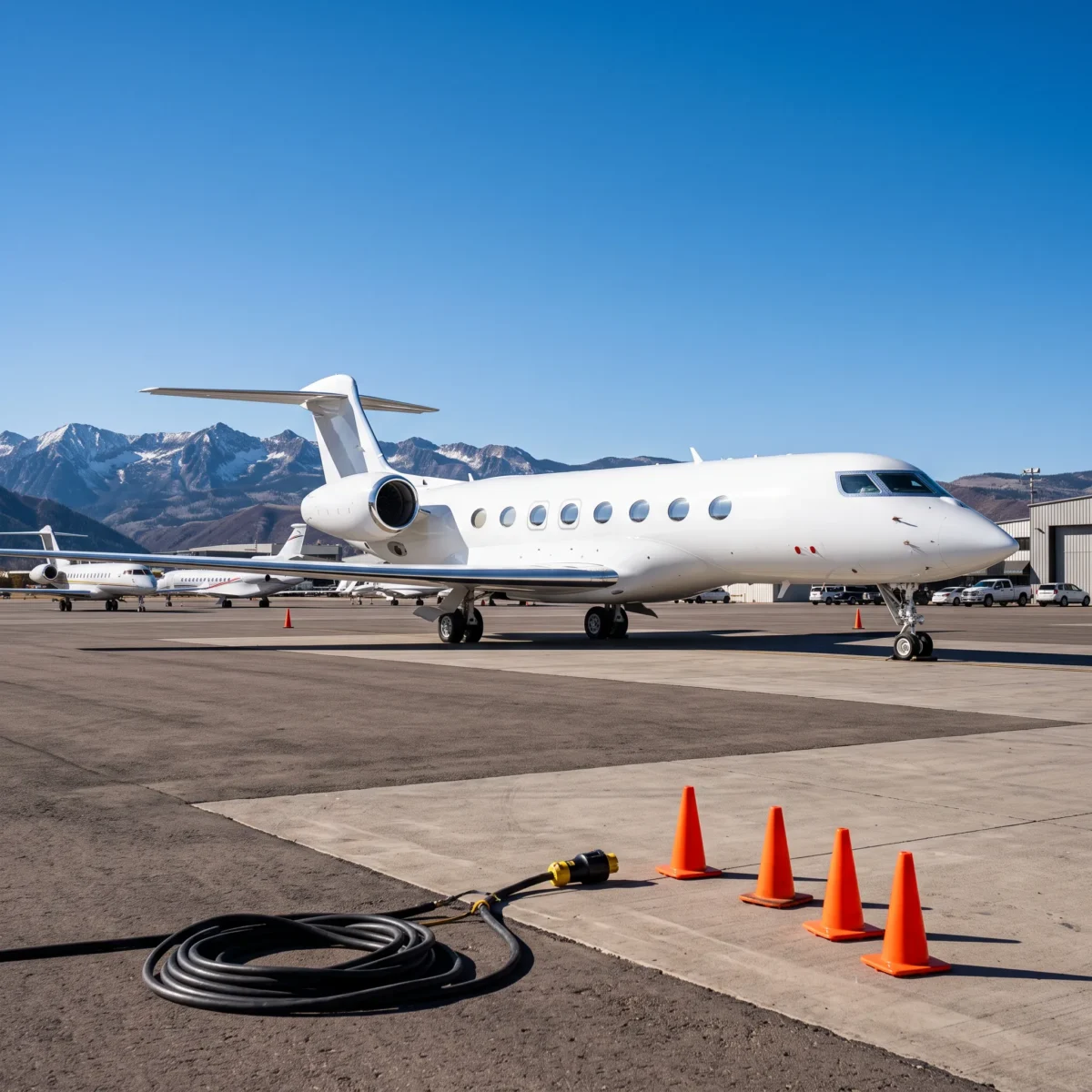
You’ve booked the jet, the crew is confirmed and the aircraft is fueled, and you still might not be able to land. That is the quiet reality of private aviation at the world’s busiest leisure and business airports, where the limiting factor is rarely the airplane or the pilots but the concrete underneath them.
Two terms sit at the center of this problem: PPR and airport slots. They sound similar but work quite differently, and knowing the difference can save you a missed dinner reservation or a very expensive reroute.
PPR: Permission Without a Guarantee
Prior Permission Required means an airport wants to know you’re coming before you arrive. The operator contacts the airport or its handler, supplies the aircraft type, arrival time, passenger count and intended stay, and receives a PPR approval number. Without it, the airport can refuse you.
PPR is an approval to operate, and it often comes with conditions. At many airports it is tied to ramp space, noise rules, customs availability or operating hours, so a PPR can be granted for a 2 p.m. arrival and still require you to depart within a few hours because there is nowhere to leave the airplane overnight.
That’s why a good charter flights broker asks about your return plans before quoting the trip. The outbound leg is the easy part.
Slots: A Formal Time Window
A slot is a different animal. It is a specific, allocated time to land or take off, managed by a national coordinator under international scheduling rules. Think of it as a reservation for the runway itself, with the airport’s capacity as the scarce resource.
Slots are formally allocated at IATA Level 3 airports such as London Heathrow and Gatwick. In the U.S., the FAA limits scheduled operations at Reagan National under its High Density Rule and, through separate orders, at the New York airports, but these controls target scheduled carriers and rarely bind general aviation in the same way. Those orders have changed over the years, so confirm the current status of JFK and Newark with the FAA before you plan around them.
Business aviation usually gets into slot-controlled airports through separate processes, such as reserved allocations for non-scheduled traffic or event-specific coordination, and the rules differ by airport. Teterboro, by contrast, generally relies on parking and PPR-style arrangements rather than formal slots.
For a deeper look at how that scheduling works, our guide on why your private jet can’t always land when you want covers the mechanics.
PPR vs. Slot at a Glance
| Feature | PPR | Airport Slot |
|---|---|---|
| What it controls | Permission to operate and park | Exact arrival or departure time |
| Who grants it | Airport operator or handler | Slot coordinator or aviation authority |
| Typical constraint | Ramp space, noise, hours | Runway and airspace capacity |
Some airports use both, others use one, and a few use neither and simply fill up.
The Real Bottleneck Is the Ramp
Runways get the attention, but the ramp fills first. A busy airport can handle a surprising number of takeoffs and landings, yet a private jet sitting on the ground takes up space for hours or days. Multiply that by dozens of aircraft and the apron fills fast.
This is where airports like Aspen, Cannes-Mandelieu, Nice Côte d’Azur and Teterboro earn their reputation. Aspen sees parking pressure over the Christmas and New Year ski period, Cannes-Mandelieu during the Film Festival in May, and Nice around the Monaco Grand Prix. At Teterboro, FBOs can limit overnight stays when the field is crowded, and they may set parking limits by aircraft size. Limits change by season and by FBO, so ask your operator for current figures.
- Drop and go: passengers are dropped off, and the aircraft repositions to a nearby airport to park.
- Time-limited parking: the aircraft can stay a few hours, then must leave.
- Overnight restrictions: larger jets, such as a Gulfstream G650 or Global 7500, may be refused overnight stays when space is tight.
Drop and go sounds simple until you realize it can mean extra positioning legs, extra landing fees and a jet flying empty twice. Our breakdown of what landing fees and ramp fees actually charge you shows how those costs land on the invoice.

What This Means for Your Trip
Most clients never see any of this because their operator handles it, but the effects show up in ways you’ll notice: a departure time that shifts by an hour, a request to use an alternate airport, or a quote that includes parking at a different field.
Aircraft size matters more than you’d expect. A midsize jet like a Challenger 350 is far easier to place than a large-cabin aircraft, and when ramp space is nearly full, the smaller airplane often gets the yes.
A few questions are worth asking before you commit to a private jet itinerary to a constrained destination:
- Is PPR or a slot required, and has it been confirmed in writing?
- Where will the aircraft park, and for how long?
- What’s the backup airport if the first choice falls through?
- Are parking and repositioning costs included in the quote?
If you’re vetting an operator, our list of things to check before hiring a private jet is a useful companion.

Where This Is Heading
Demand for luxury travel by private aircraft remains strong, and runways and aprons aren’t growing to match. Some airports have already reduced access, as the loss of the closest private jet airport for the Open at St. Andrews showed.
Consider a client chartering a Global 7500 into Aspen on December 28. After drop-off, the jet may have to leave for Rifle or Denver because there is no ramp space, and the return pickup then depends on that repositioning. For peak-date trips, ask your broker for written PPR confirmation at least 72 hours before departure, and keep a backup airport and some schedule flexibility in hand.