
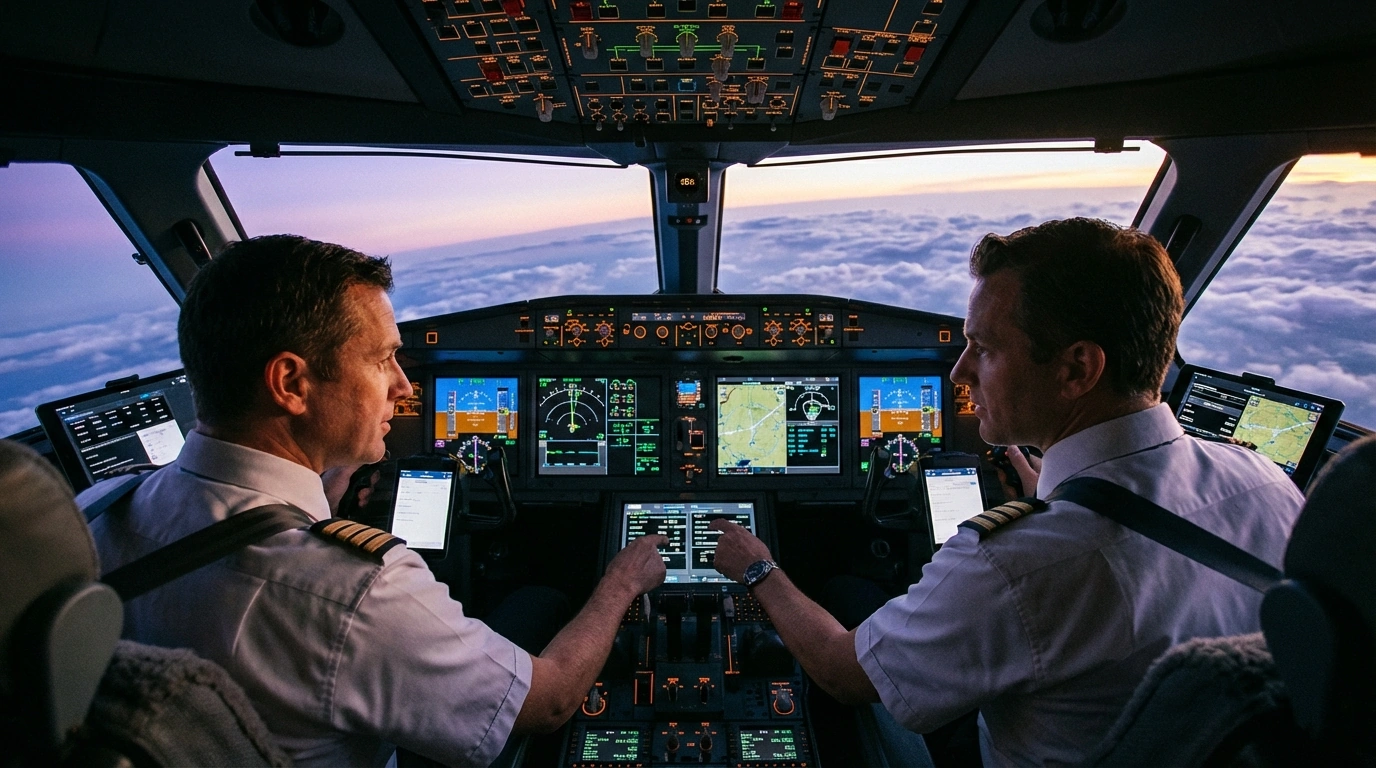
You’re halfway to Tokyo when the charter broker calls. Your crew needs to be swapped at the fuel stop in Anchorage. It sounds like a problem, but it’s actually the system working exactly as designed. The regulations governing pilot duty limits in private aviation exist for one reason: your safety.
The rules might seem like an operational headache, but they prevent something far worse. Fatigued pilots make mistakes. The Federal Aviation Administration knows this, which is why Part 135 operations (the regulatory framework for most charter flights) impose strict limits on how long crews can work.
The 14-Hour Wall
Here’s the baseline: a two-pilot crew operating under Part 135 can work a maximum of 14 consecutive hours of duty time. Note that word, duty. The clock starts when they show up for preflight, not when the wheels leave the ground.
That preflight might take 90 minutes. You might have a two-hour weather delay. Suddenly, a flight that logs eight hours in the air has consumed 11 or 12 hours of duty time. Add in taxi time, potential reroutes, and the margin for error shrinks fast.
After those 14 hours, the crew must have 10 consecutive hours of rest before they can fly again. And that rest period has to be consecutive. It cannot be split or shortened, regardless of how urgent your meeting in Singapore might be.

Flight Hours vs. Duty Hours
This distinction trips up many first-time charter clients. You might think, “We’re only flying seven hours, so we’re fine.” But your pilots don’t just appear at the aircraft five minutes before departure.
They arrive early to review weather, file flight plans, conduct preflight inspections, coordinate with air traffic control, and brief the cabin crew. On the back end, they handle post-flight duties, secure the aircraft, and complete paperwork. All of this counts against their duty day.
For a transatlantic flight from Teterboro to Paris, you might log seven hours of flight time. But the crew’s duty day could easily reach 10 or 11 hours by the time everything is done. That leaves limited margin for delays or complications.
The Deadhead Problem
Now add another wrinkle. Your crew might need to deadhead to position for your flight. Deadheading means flying to your departure airport as a passenger on another aircraft or commercial flight. That time counts toward their duty day, even though they aren’t actually flying your jet.
So if your crew deadheads three hours to meet you in Aspen, they’ve already used three hours of their 14-hour limit before your trip even begins. This is why operators sometimes need to swap crews mid-mission or position a rested crew at your destination ahead of time.
The Augmented Crew Solution
For ultra-long-range missions, operators use what’s called an augmented crew. Instead of two pilots, you get three or even four. This allows pilots to rotate rest periods during the flight, extending the maximum duty time significantly.
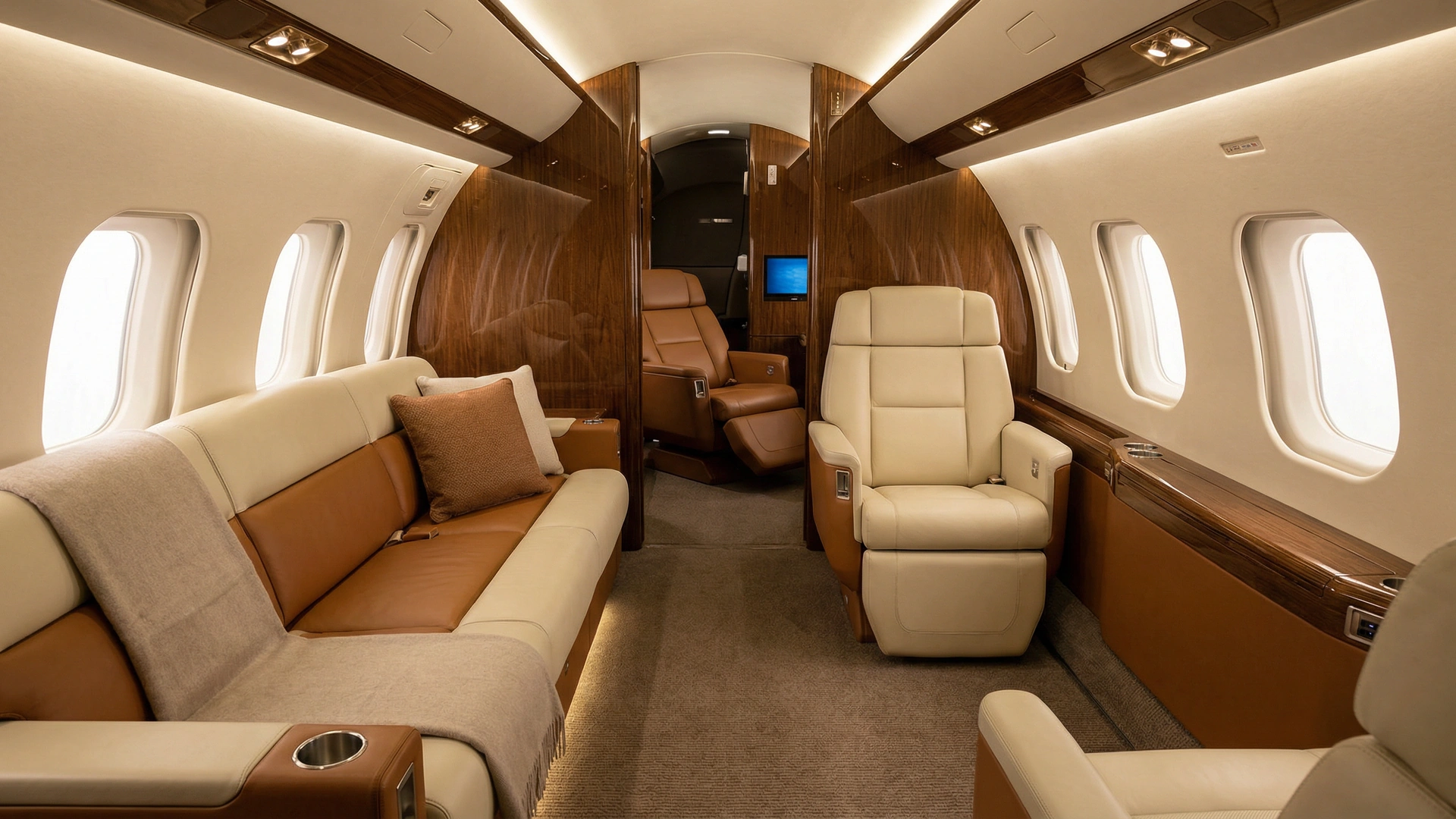
With an augmented crew, Part 135 regulations allow duty periods up to 16 hours (for three pilots) or 18 hours (for four pilots). The aircraft needs to have adequate rest facilities, typically a dedicated crew rest area with a seat that reclines beyond 40 degrees.
This is how operators manage direct flights from the U.S. West Coast to Asia or nonstop transatlantic trips with potential delays. The Bombardier Global 7500 and Gulfstream G650ER, for instance, both have the range for these missions and can be configured with crew rest areas.
What This Means for Your Trip Planning
Understanding these regulations helps you work with your charter broker or fractional provider more effectively. If you’re booking an international trip, ask about crew duty time upfront. A competent operator has already planned for this, but the conversation shows you understand the constraints.
For trips that push the duty limits, expect the operator to position a fresh crew at your destination or plan a crew swap at a logical fuel stop. This isn’t cutting corners. It’s precisely the opposite. The operator is following the regulations that keep you safe.
Some operators build in buffer time for weather delays or air traffic control holds. Others position backup crews at major hubs. The best providers track crew duty time in real-time through sophisticated scheduling software that alerts dispatchers when a crew is approaching their limits.
The Regulatory Reality
These rules apply to Part 135 charter operations and fractional programs. If you own your aircraft outright and employ your own pilots under Part 91, the regulations are different and somewhat more flexible. But most high-net-worth travelers fly under Part 135, where these duty limits are non-negotiable.
The FAA takes violations seriously. An operator that pushes a crew past legal duty limits faces substantial fines and potential certificate action. No reputable operator will risk their business to shave an hour off a crew swap.
For you as a passenger, this regulatory framework is reassuring. It means your crew is rested, alert, and operating within tested safety parameters. The occasional crew swap or schedule adjustment is a small price for that assurance.
The private aviation industry has learned these lessons through decades of operational experience. The duty limits in place today reflect real-world data about human fatigue and pilot performance. When your broker explains why a crew swap is necessary, they’re not making excuses. They’re following the rules that keep business aviation as safe as it is.