
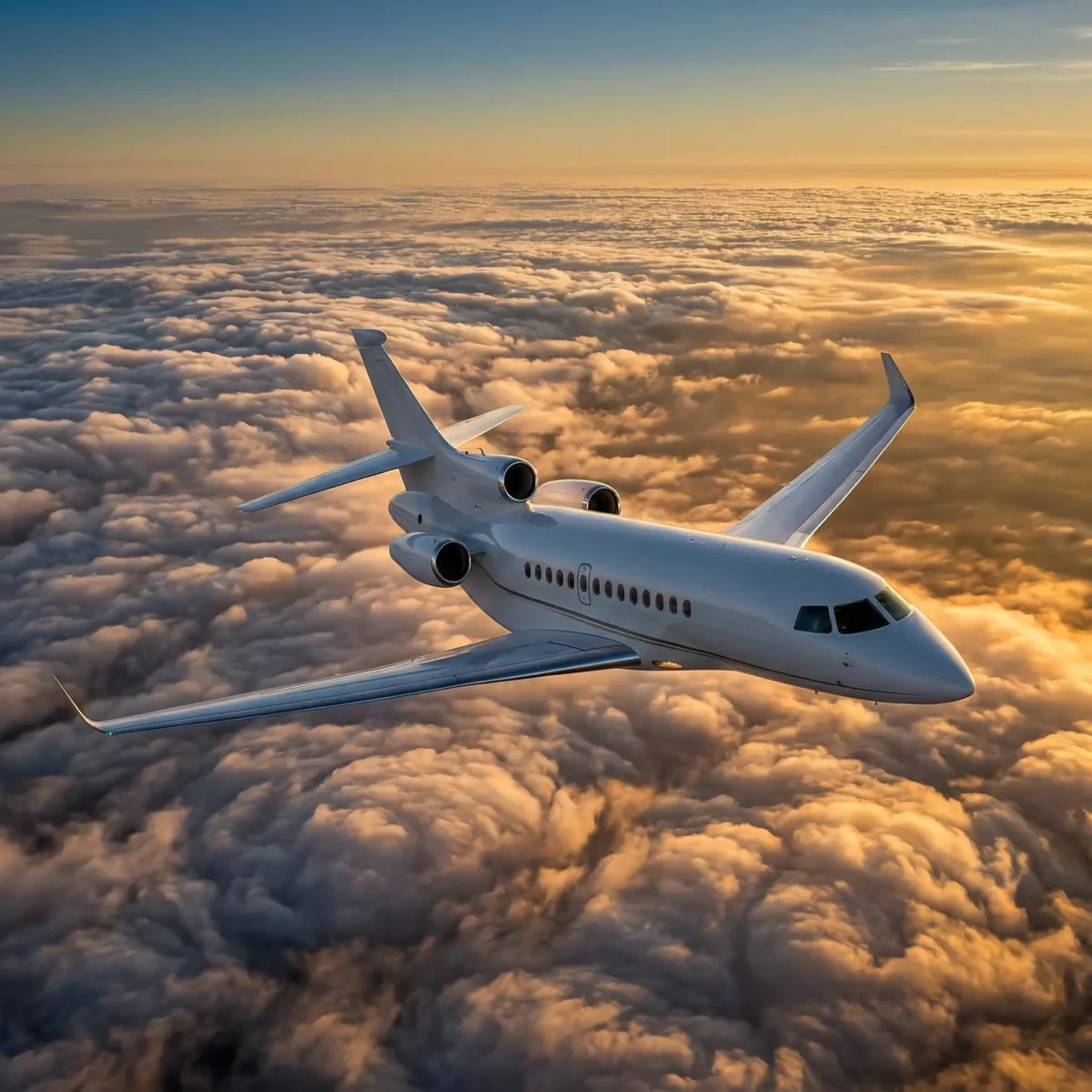
The 2026 Formula 1 calendar doesn’t forgive inefficiency. Twenty-four races across five continents, with sometimes only six days between events on opposite sides of the world. For Max Verstappen, four-time World Champion and the sport’s dominant force, the margins that matter aren’t just on track. His recent acquisition of a brand-new Dassault Falcon 8X says everything about how elite athletes think about time.
Why the Falcon 8X Makes Sense for Verstappen
This isn’t just a trophy asset. The Falcon 8X is one of the most practical ultra-long-range jets in business aviation, and the numbers back that up. With a range of 7,500 miles non-stop, it covers the distances that matter most to an F1 schedule. Bahrain to Melbourne? Done without a fuel stop. Miami to Monaco? No problem. That kind of range eliminates layovers, refueling detours, and the schedule disruptions that come with them.
What makes the Falcon 8X particularly compelling is its efficiency. It burns roughly 30% less fuel than comparable ultra-long-range aircraft. For a jet in this class, that’s a meaningful advantage, both economically and operationally. Fewer fuel stops means fewer points of friction in an already relentless travel schedule.
Dassault built the 8X on its proven trijet platform, which gives it something most long-range competitors lack: the ability to operate from shorter or more constrained airfields. That flexibility matters when you’re accessing airports close to circuits rather than routing through a major hub an hour from the paddock.
The Cabin as a Mobile Headquarters
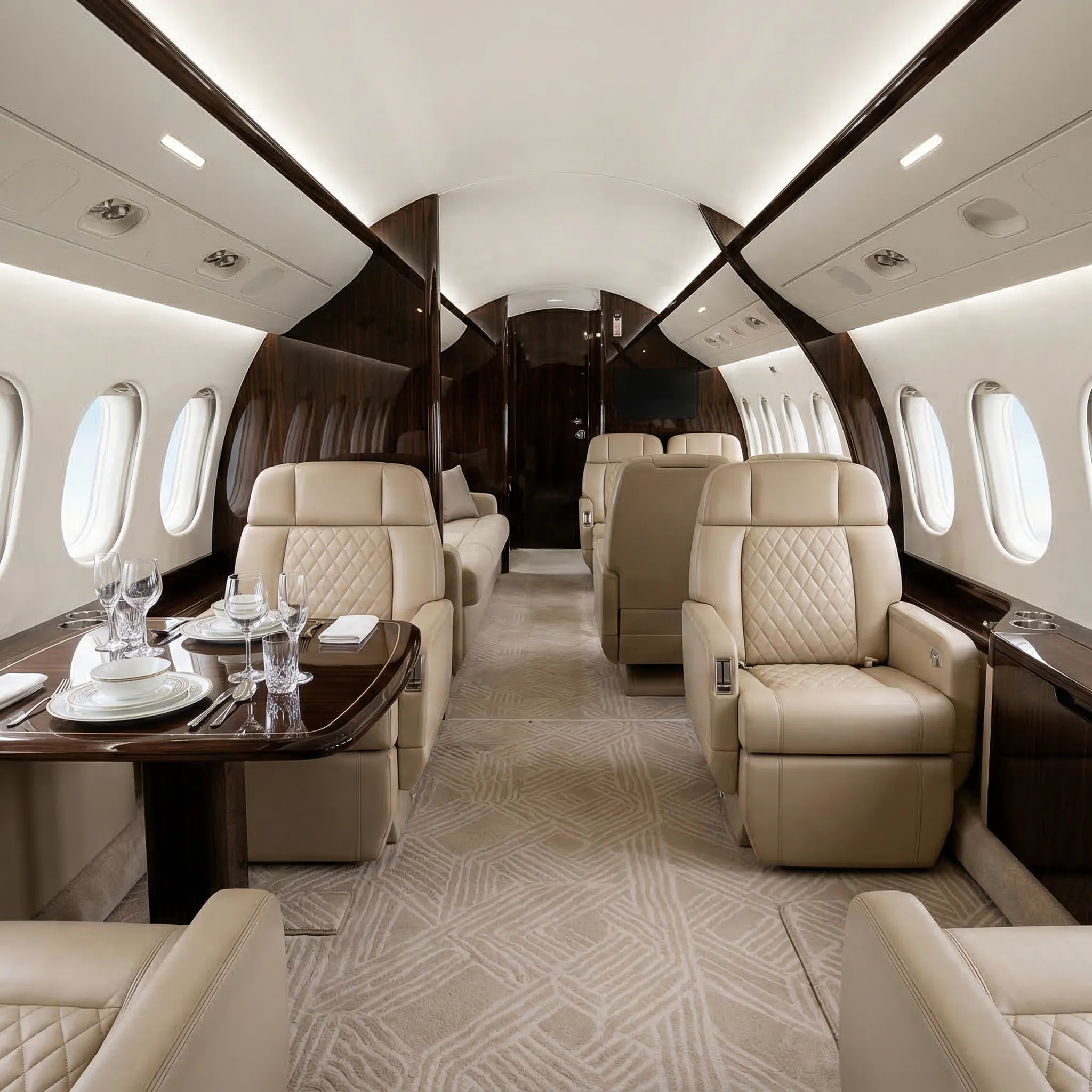
For most private jet buyers, the cabin is about comfort. For an F1 champion, it’s a functional workspace. The Falcon 8X accommodates up to 14 passengers in a fully bespoke configuration, and Dassault’s design team gives buyers real latitude here. Private suites, a dedicated conference area, a proper rest zone. These aren’t afterthoughts. They’re the point.
Verstappen’s team travels with him. Engineers, strategists, personal staff. The aircraft needs to function as a briefing room in the air, a recovery space after a race weekend, and occasionally a media environment. The 8X’s noise-attenuation technology is worth highlighting here. Dassault invested heavily in acoustic engineering across the Falcon line, and the 8X is among the quietest cabins in its class. After three days of paddock noise and a two-hour race, that matters more than most buyers realize until they experience it.
A Tradition That Goes Back Decades in F1
Verstappen joins a long line of Formula 1 drivers who treated private aviation as a competitive tool rather than a luxury perk. Fernando Alonso has been flying a Dassault Falcon 900C for years, a choice that reflects his own methodical approach to logistics. The late Niki Lauda took the concept even further. He founded his own airline, Lauda Air, and understood aviation at an operational level few drivers ever approached.
The common thread is intentionality. These aren’t impulse purchases. They’re strategic assets chosen with specific mission profiles in mind. The Falcon 900C Alonso flies and the 8X Verstappen now owns aren’t just from the same manufacturer by coincidence. Dassault’s aircraft have earned a reputation in this community for reliability, range, and a cabin environment that genuinely supports recovery.
What This Tells Us About High-Performance Private Aviation
The Verstappen acquisition reflects a broader pattern in elite private aviation. The highest-performing buyers, whether athletes, executives, or heads of state, are gravitating toward aircraft that serve specific operational needs rather than simply signaling status. The Falcon 8X checks both boxes, but the performance case drives the decision.
For aviation enthusiasts and prospective buyers watching this space, the 8X represents something worth understanding. Its trijet configuration provides an additional margin of safety and performance at altitude. Its avionics package reflects Dassault‘s deep roots in defense and military aviation. And its range capability, 7,500 miles of it, opens up true point-to-point flexibility that most jets in this category still can’t match.
The 2026 Monaco Grand Prix is expected to be where Verstappen’s new jet enters the wider public conversation. But the real story is what happens between races, in the hours of transit that most fans never see. At this level, ultra-long-range aviation serves as the ultimate recovery tool, ensuring a driver arrives at the paddock arriving ready for the podium.